Manjamanja
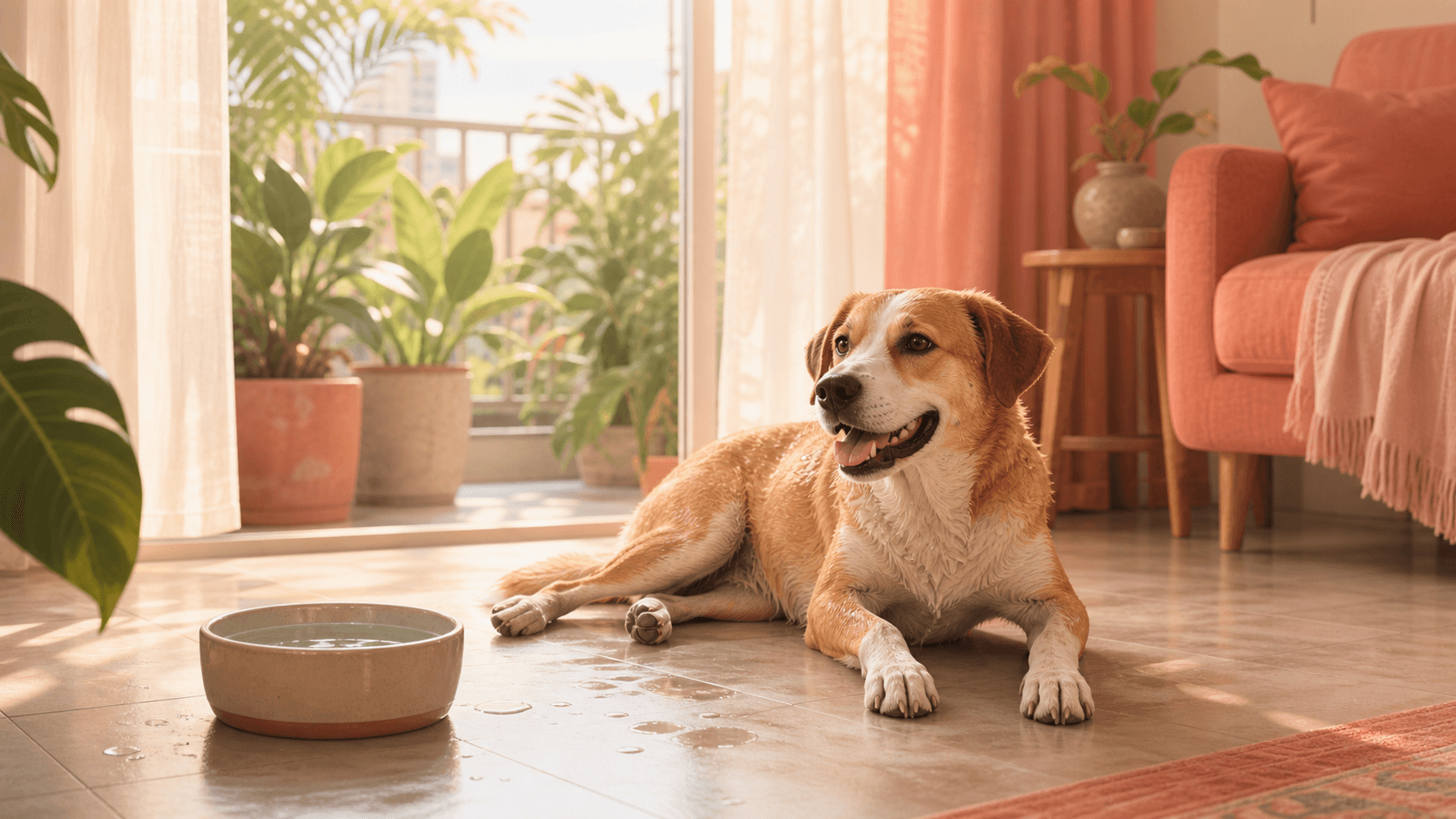
A dog rests beside a fresh water bowl in a bright tropical apartment after a humid walk.
健康与疾病

Pet hydration in humid weather: signs your dog may not be drinking enough

阅读 6 分钟发布于 2026年5月2日作者:Manja,编辑:Ms Ella Moh

A dog can stand right beside a full water bowl and still fall behind on water in a Singapore June. When the evening air is thick and warm, hydration takes more than a bowl on the kitchen floor — you have to watch the walk, the gums, and the dog in front of you.

If your dog shows the urgent signs below — repeated vomiting, weakness, collapse, or heavy distressed panting — call your vet now. This guide helps you notice trouble early and arrive at the clinic ready to describe it; it is not a home diagnosis.

What humid weather changes for dogs

Dogs cool down mainly by panting, not sweating — the only sweat glands they have are in their paw pads. Panting works by evaporating moisture off the airways, and in heavy tropical humidity that evaporation slows right down. Above roughly 80% humidity, a panting dog can barely shed heat at all. So a normal HDB block-loop walk on a sticky evening can leave your dog far hotter and more drained than the distance suggests, and they need to top up that lost fluid even once they're back in the air-con.

Flat-faced breeds carry the most risk. French Bulldogs, Pugs, Bulldogs, Shih Tzus, Boston Terriers, and Boxers have short-nosed anatomy that makes panting — and therefore cooling — much harder; studies put them at several times the heatstroke risk of longer-nosed dogs. If your Frenchie slows, pants hard, or looks wiped after a short walk, read it as a heat signal, not laziness.

Age and health shrink the margin too. Puppies, senior dogs, overweight dogs, and dogs with chronic illness have less fluid reserve when the heat index climbs. Keep a closer eye on them through the hot months, and loop in your vet about any dog already managing an ongoing condition.

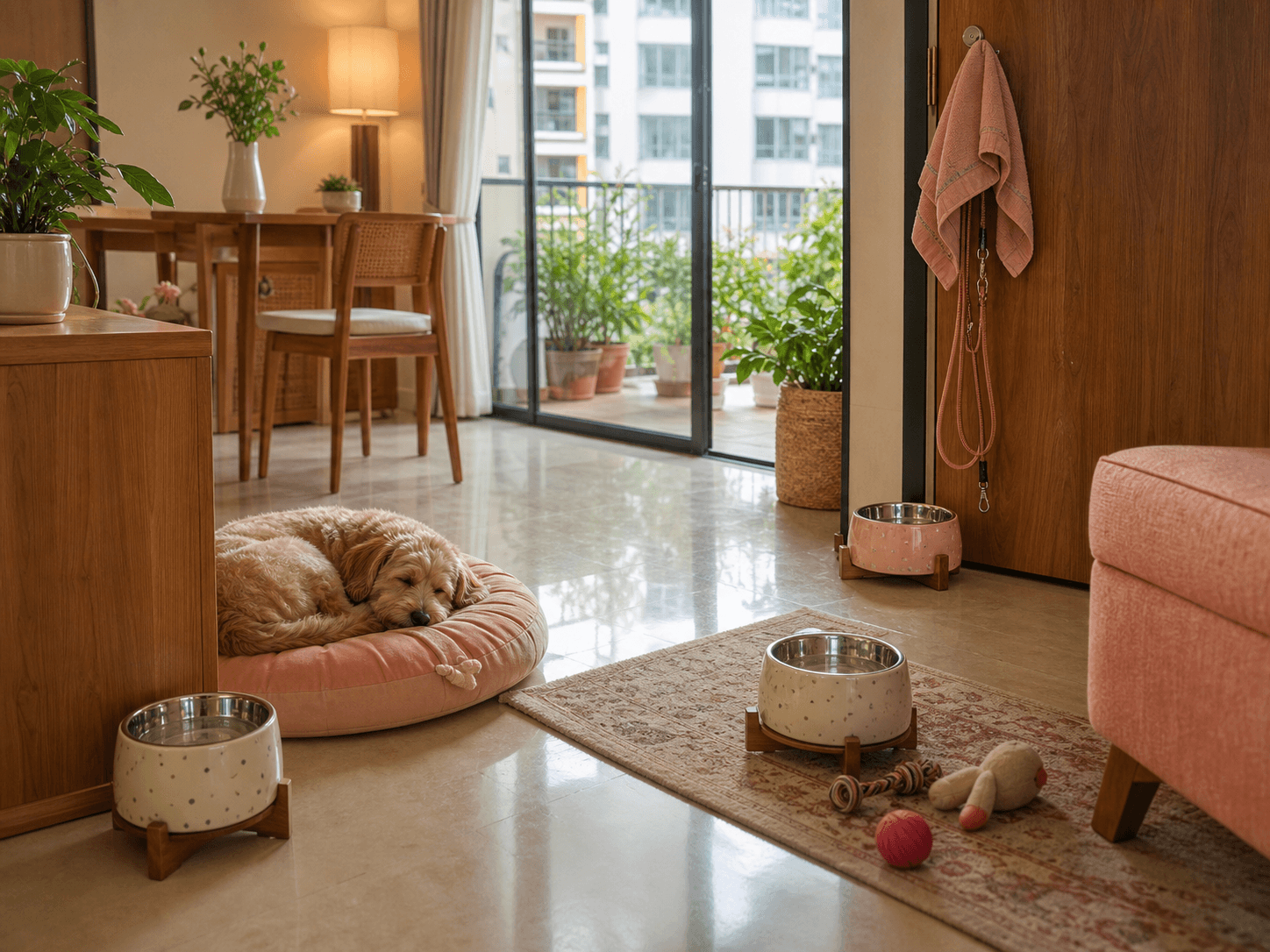
For apartment dogs, make drinking the easiest thing in the room. Keep fresh water in the spots they actually lie around in — not just the kitchen — and refresh it often, scrubbing off any slick biofilm rather than topping up stale water.

Everyday signs your dog may not be drinking enough

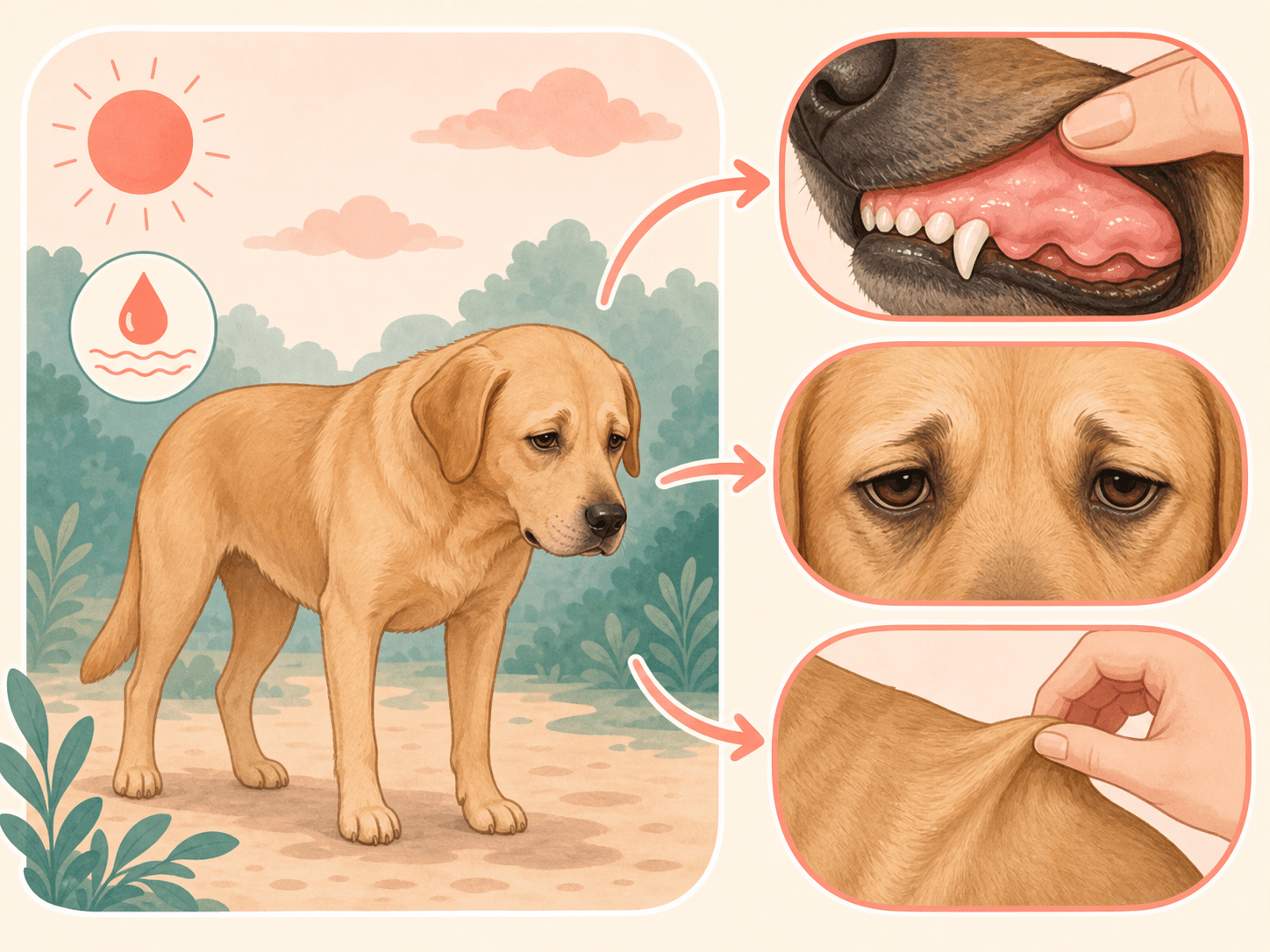
A dog diagram highlights gums, eyes, and shoulder skin as areas owners may check for dehydration signs.
Common visible areas to notice when hydration seems off.

In tropical heat a dog's water needs can jump fast, so it pays to catch the quiet, early signs before they become a problem.

SignWhat it looks like and what to do
Dry, tacky gumsHealthy gums feel slick and wet. If they feel sticky and your finger drags slightly, that tackiness points to dehydration.
Slow capillary refillPress a fingertip gently on the gum until it blanches pale, then lift. Colour should flood back in under two seconds; slower can mean poor circulation or dehydration.
Darker urine, fewer tripsLess frequent peeing, darker colour, or a stronger smell than usual.
LethargyA sudden flatness, or heavy panting after only mild activity.
Loss of skin elasticity (skin tent)Pinch the loose skin between the shoulder blades and let go. In a well-hydrated dog it snaps straight back; if it sinks back slowly — or the eyes look a little sunken — the tissues are running dry. By the time skin tents clearly, a dog is already meaningfully dehydrated, so treat it as a prompt to act, not a measurement.

These checks help you describe what you're seeing; they don't replace a vet's clinical assessment. If the gum or skin signs show up alongside repeated vomiting, diarrhoea, collapse, weakness, or an inability to keep water down — or a dog that's overheated and panting hard with suspected heatstroke — that's urgent. Get to a vet rather than reaching for home remedies.

Make water easier to choose

A dog-friendly apartment has fresh water bowls placed near rest, play, and the front door.
Place water where your dog already passes during the day.

Getting a dog to drink more in heavy humidity is mostly about clean water and comfortable access — not about treating dehydration at home.

TacticWhy it helps
Match the bowl to the dog's buildA wide, heavy bowl is harder for a busy dog to tip over, so drinking is physically easy and they go back to it more readily.
Use a shallow, wide bowl for short-nosed dogsA French Bulldog or Pug can reach the water without pushing its flat face deep or craning its neck, which makes lapping more comfortable.
Refresh the bowl two to three times a dayIn a warm, humid home, standing water turns slimy and starts to smell within hours.
Swap plastic for stainless steel or ceramicThose surfaces resist the micro-scratches that trap odour and bacteria.

These are about comfort and access, encouraging a dog to drink; they aren't a treatment for a dehydrated dog.

Food, treats, and routine tweaks

Lifting your dog's moisture intake can be as small as a tweak to feeding and walk timing.

TweakWhat to do
Add moisture to mealsWet food brings far more water to the day than dry kibble. If your dog only eats kibble, stir warm water into the bowl — as long as they finish the meal. In a humid climate moistened food spoils quickly, so bin anything left uneaten promptly.
Time the drinksOffer fresh water right after meals, after play, and before a walk. Never force a dog to drink; if they can't or won't, or they're repeatedly vomiting, call your vet.
Walk in the cool hoursSkip hard exercise in the midday heat. Aim for early morning or after sunset, and press the back of your hand to the pavement first — if it's too hot for your hand, it's too hot for paws. After daycare or a boarding stay, check that your dog drank while they were out and offer water as soon as they're home.
Skip the salty treatsHigh-sodium snacks drive up thirst. Commercial pet electrolyte products are medical-adjacent supplements, not a casual top-up — clear them with your vet first, especially for a puppy, senior, pregnant dog, or any dog on medication or managing a chronic condition.

When dehydration needs a vet

Knowing when a hydration slip tips into an emergency can save your dog's life.

Call a vet urgently if your dog has repeated vomiting, diarrhoea, collapse, weakness, or can't keep water down. An overheated dog panting hard — possible heatstroke — is another red line. If you suspect heatstroke, start cooling on the way in: wet the coat with cool (not ice-cold) water and sit the dog in the car's air-con while you drive. Phone ahead and ask the team what else to do en route.

Vulnerable dogs get less benefit of the doubt. If a puppy, senior, or chronically ill dog stops drinking, don't wait for things to slide — they have far less fluid reserve to spare.

One thing not to do: don't pour water or fluids into the mouth of a dog that's weak, groggy, or unwilling to drink. Forced liquid can be inhaled into the lungs and cause serious breathing complications. Leave fluids to the clinic, where they can be given safely.

Before your next humid-evening walk, glance at the bowl. Tip it out, scrub off any film, and fill it to the brim with fresh, cool water — so there's a clean drink waiting the moment you both get back.

— Manja

参考来源

分享WhatsAppTelegram