Manjamanja
A boarding staff member calmly receives pets in carriers inside a clean, airy tropical pet boarding facility.
生活方式兔子仓鼠豚鼠

Boarding Your Pet During Festive Travel: What to Check Before You Book

阅读 3 分钟发布于 2026年5月16日作者:Manja,编辑:Ms Ella Moh

Your dog, cat, rabbit, hamster, or guinea pig does not care how pretty the boarding photos look. Before you book, check the parts that actually affect welfare: records, housing, heat control, handling, diet, and emergency plans.

What the risk is and why now

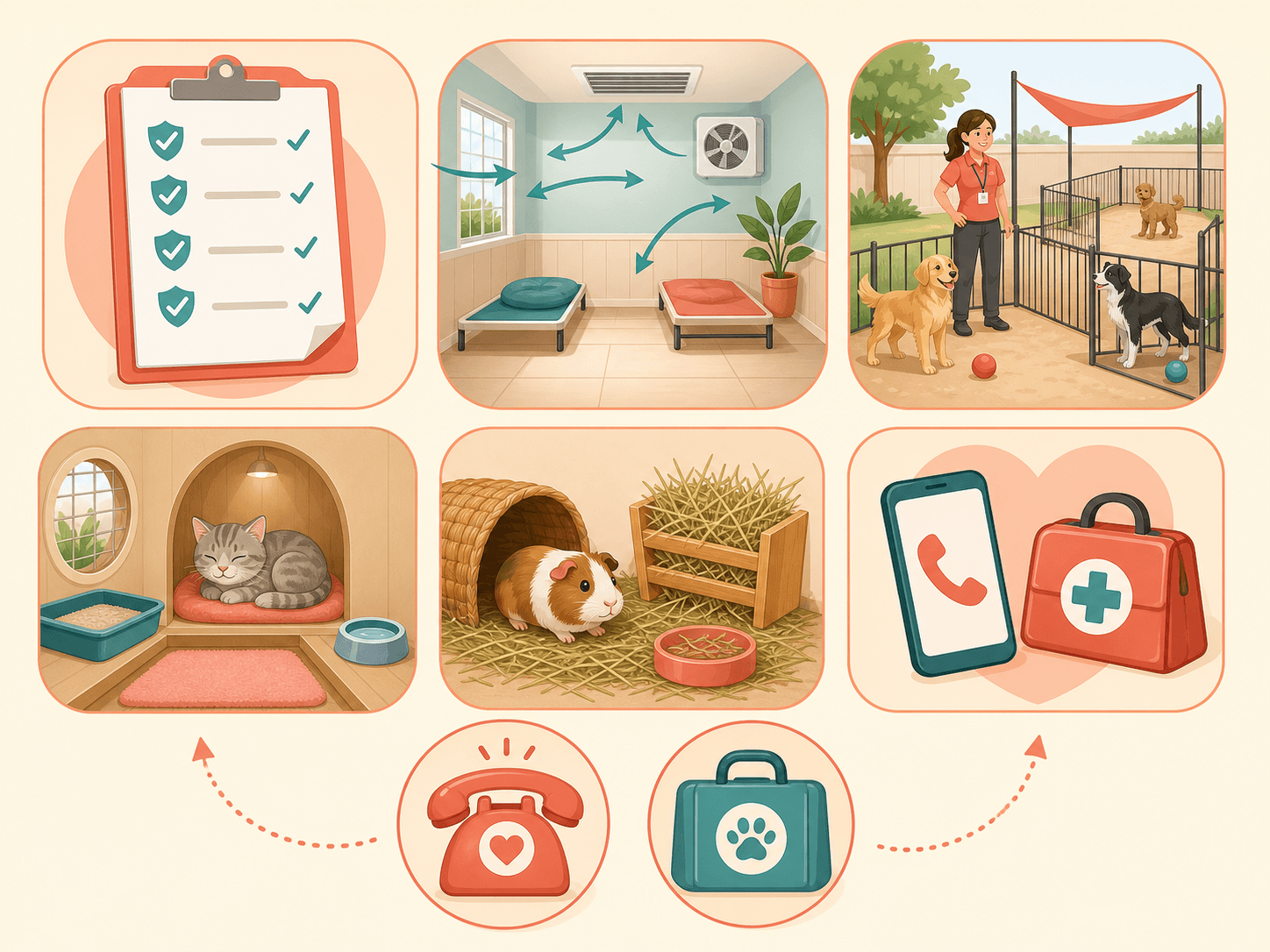
A visual checklist shows key pet boarding safety checks including health records, ventilation, separated housing, species-specific care, and emergency planning.
Look past the nicest photo and ask how the routine actually works.

This guide is for Singapore, Malaysia, and Indonesia pet owners planning boarding around festive travel, school holidays, and long weekends. Manja has no sponsorship, affiliate relationship, paid placement, or commercial tie to any boarding provider mentioned or linked. If provider links or booking widgets are added later, they should go through product disclosure review and human editor approval before translation.

Start with the boring questions. A boarding facility for dogs and cats should ask for current vaccination and health records before communal boarding. Dogs housed together have higher exposure to infectious respiratory disease, so “we love pets” is not a welfare policy. Ask how animals are separated, supervised, handled, and moved if stress rises.

Heat is not background weather in this region. A kennel, cattery, or small-pet room needs ventilation, shade, water access, and staff who know what heat stress looks like. This matters especially for short-nosed dogs, because heat, exertion, stress, and obesity can worsen brachycephalic airway problems. Rabbits also need cool, shaded, well-ventilated housing, not a warm corner beside a window.

For Singapore bookings, check the business against AVS information on pet businesses and animal-related establishments before booking. Use this checklist to prepare for the vet conversation, not to diagnose your pet at home. Young, senior, pregnant, chronically ill, medicated, recently unwell, or post-surgery pets should be cleared with their veterinarian before boarding.

The checks to make before you book

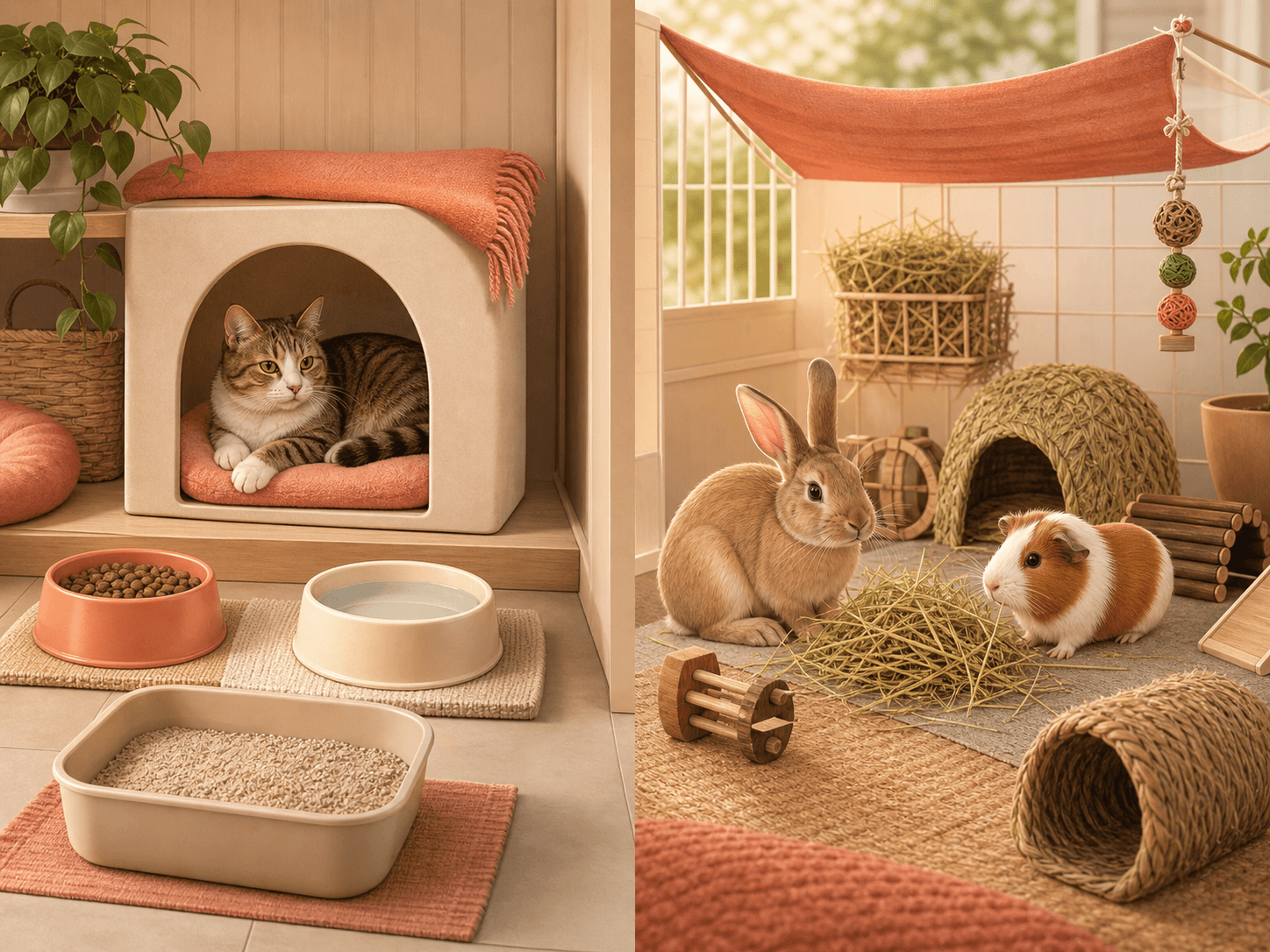
A cat rests in a quiet hiding space while a rabbit and guinea pig stay in separate species-appropriate boarding areas with hay and shade.
Different pets need different boarding setups, not one generic cage plan.

Use a simple home routine: check records, write instructions, then match the facility to your pet’s actual needs. A shy cat from a quiet HDB flat does not need the same setup as a daycare-loving dog. A rabbit or hamster should not be treated like a smaller version of a cat.

Pet or situationWhat to check
Dog or catThe facility asks for current vaccination and health records before communal boarding.
Dog playtimeStaff supervise exercise and separate dogs by size, temperament, and stress level. Dogs should not be left to settle conflict on their own.
Short-nosed dogAsk how staff adjust exercise, heat exposure, and stress, because heat, exertion, excitement, and obesity can worsen breathing limits.
CatLook for quiet, secure housing away from dogs where possible, with hiding places, separate resources, and minimal forced handling.
RabbitConfirm constant hay, suitable housing, exercise space, hiding areas, hygiene, and protection from heat, predators, and unfamiliar animals.
Guinea pigKeep compatible bonded companions together unless welfare or veterinary reasons require separation.
HamsterConfirm secure, escape-proof housing and species-appropriate social management. Syrian hamsters should live alone.

Before boarding, get veterinary clearance for young, senior, pregnant, chronically ill, medicated, recently unwell, or post-surgery pets. Pack prescribed or therapeutic diets, allergy restrictions, medication schedules, and doses exactly as directed by your veterinarian. If a rabbit stops eating or stops passing droppings, treat that as urgent.

When to see a vet

Clear boarding with your veterinarian before booking if your pet is young, senior, pregnant, chronically ill, on medication, recently unwell, or recovering after surgery.

Call the vet now if your rabbit stops eating or stops passing droppings during boarding. That can point to gastrointestinal stasis, which can become serious quickly. For short-nosed dogs, ask the boarding team how they adjust exercise, heat exposure, and stress, because breathing difficulty can worsen with exercise, excitement, heat, stress, and obesity.

Bring current vaccination and health records. Add written feeding instructions, prescribed or therapeutic diet details, allergy restrictions, medication schedules, and doses exactly as directed by your pet’s veterinarian. The boarding team should not change these independently.

The one question to ask before you pay: “What will you do if my pet seems unwell tonight?” A good answer names the staff check, the vet contact, and how fast you will be called.

Before you book, write one page with your pet’s records, diet, medication, emergency contact, and vet clinic number. Put it in the carrier bag.

— Manja

参考来源

分享WhatsAppTelegram