
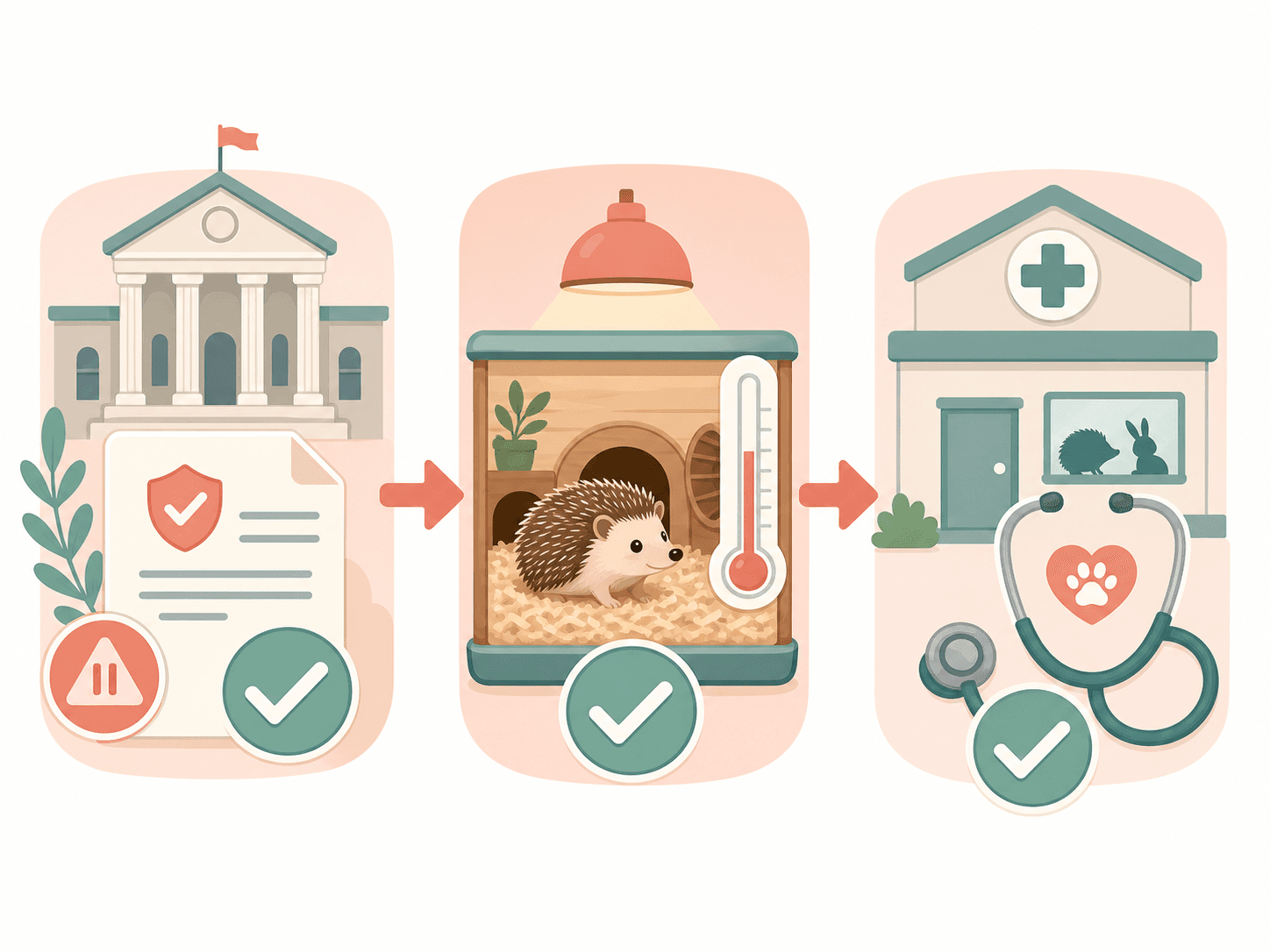
Hidung kecil itu bukan keputusan pertama. Sebelum anda membayar penjual, hubungi doktor haiwan, semak undang-undang, dan tentukan di mana sebenarnya sangkar akan diletakkan apabila pendingin hawa sedang berjalan.
Di Singapore, semak dahulu kesahan memelihara landak mini dengan AVS sebelum membeli. Landak mini tidak tersenarai dalam kategori haiwan peliharaan biasa yang dibenarkan, dan laporan penguatkuasaan di Singapore pernah menyebut denda bagi pemeliharaan landak mini secara haram.
Di Malaysia atau Indonesia, jangan bergantung pada jawapan kedai haiwan seperti “can lah”. Jawapan dari segi undang-undang boleh bergantung pada spesies sebenar, sumber haiwan, status spesies dilindungi, permit, dan kawalan perdagangan. Minta dokumen sebelum anda terpikat dengan wajahnya.
Senarai semak ini bersifat editorial, bukan alat diagnosis. Gunakannya untuk bersedia berbincang dengan doktor haiwan eksotik sebelum anda membawa pulang landak mini.
Ujian rumah apartmen
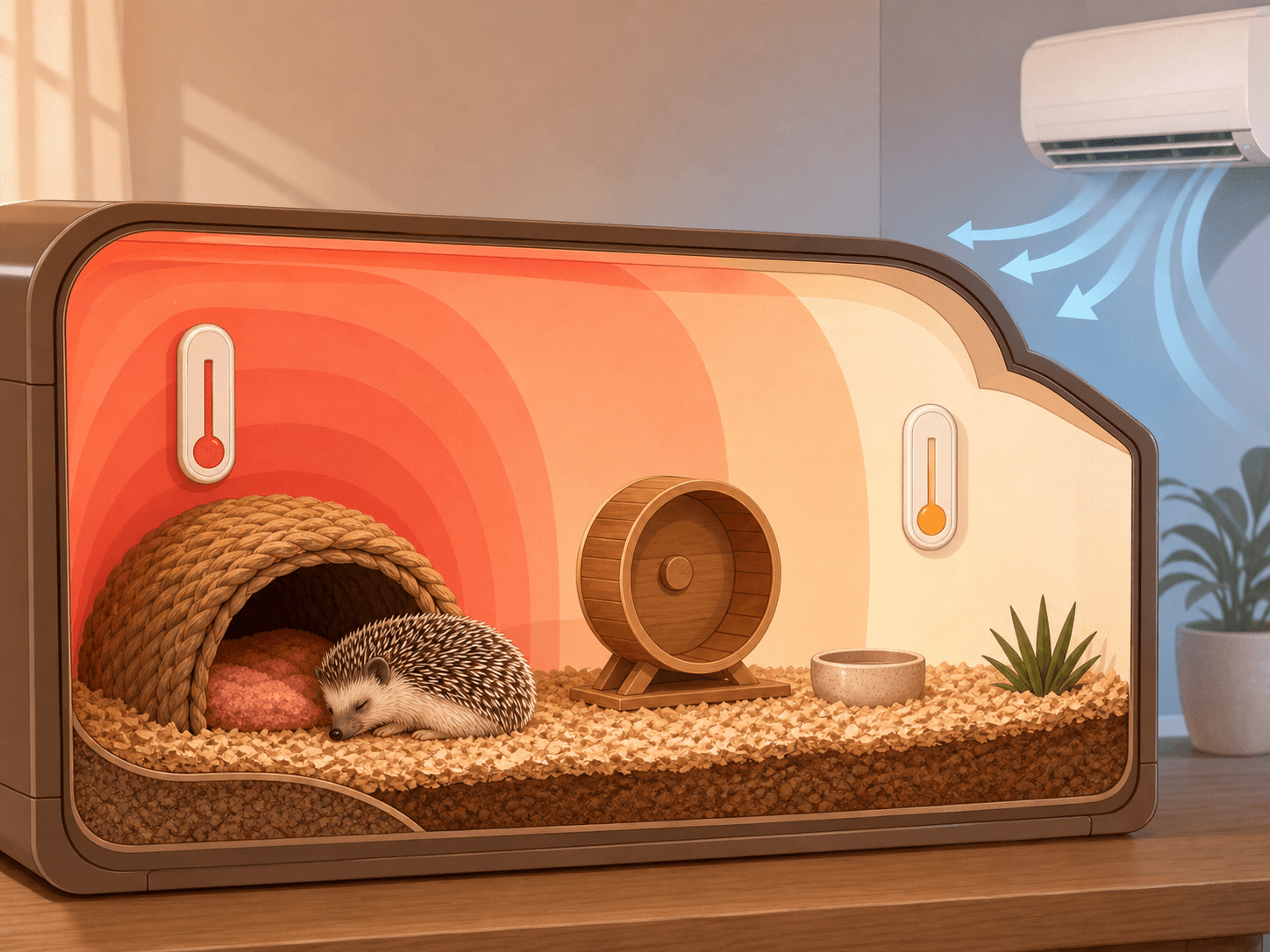
Negara tropika tidak semestinya menyediakan habitat yang sesuai untuk landak mini. Banyak rumah di SG/MY/ID berubah-ubah antara panas lembap dan sejuk pendingin hawa: pintu bilik tidur ditutup, unit kondominium cepat sejuk, dan sangkar di sebelah meja kerja mungkin terasa sangat berbeza pada 2 pagi berbanding waktu makan malam.
Semak habitat dahulu sebelum menilai landak mini itu sendiri. Gunakan termometer, terutama jika sangkar berada di bilik berhawa dingin. Merck memberikan julat suhu persekitaran untuk landak mini pada 72-90°F, dengan 75-85°F digambarkan sebagai optimum. Jadi, meneka berdasarkan “Singapore memang panas” bukanlah pelan penjagaan.
Sebelum membeli, tentukan bagaimana anda akan memantau suhu sangkar, di mana sangkar akan diletakkan, dan siapa yang akan memeriksanya apabila rutin berubah semasa cuti sekolah, tekanan tempat penjagaan haiwan pada musim perayaan, atau hujung minggu yang panjang di luar rumah.
Peralatan yang diam-diam mengundang masalah
Sesetengah masalah bermula daripada susun atur, bukan daripada haiwan itu. Roda jenis dawai atau berjejari patut diganti dengan roda berlantai pejal, dan saiz roda mesti cukup besar supaya belakangnya tidak melengkung semasa berlari: helaian penjagaan Hedgehog Welfare Society menyatakan, “Jangan beli roda yang kurang daripada 11 inci diameter, kerana tulang belakang hedgie akan melengkung terlalu tajam apabila mereka menggunakan roda itu” (Hedgehog Welfare Society, African Hedgehog Care Sheet). Jadi roda pejal 11 inci (28 cm) ialah had minimum, bukan sasaran ideal.
Sangkar itu sendiri memerlukan keluasan lantai yang diukur, bukan sekadar “sangkar”. Helaian penjagaan yang sama menetapkan saiz minimum: “Sangkar paling kecil hendaklah sekurang-kurangnya 18x24 inci, tetapi lebih besar lebih baik” (Hedgehog Welfare Society) — kira-kira 18 × 24 in (46 × 61 cm), sekitar 3 kaki persegi lantai pejal tanpa dawai, dan saiz lebih besar sentiasa lebih baik. Helaian penjagaan eksotik PetMD meletakkan paras yang lebih tinggi lagi, iaitu “sekurang-kurangnya 3 x 2 kaki untuk dimensi lantai” (PetMD, Hedgehog Care Sheet).
Alas yang berhabuk, pasir najis jenis tanah liat, dan pasir najis bergumpal patut diganti dengan alas yang lembut dan rendah habuk.
Jika anda melihat masalah kaki atau tungkai selepas penggunaan roda, hentikan akses kepada roda dan hubungi doktor haiwan eksotik. Jangan tunggu untuk melihat sama ada landak mini itu “akan biasa juga nanti”.
Makanan bukan soal agak-agak
Makanan memerlukan disiplin harian. Landak mini mudah menjadi obes, jadi pemberian makanan perlu dicatu, tetapi catuan itu bukan satu ukuran untuk semua. Makanan komersial untuk landak mini atau insektivor mungkin sesuai jika tersedia, dan daging mentah atau telur mentah patut dielakkan kerana risiko Salmonella.
Sebelum menukar diet, tanya doktor haiwan eksotik tentang jumlah makanan, keadaan badan, perubahan berat, selera makan yang lemah, peringkat hidup, kehamilan, penyakit, dan sama ada diet yang memang boleh anda beli sesuai untuk landak mini tersebut.
Catat perkara yang nampak membosankan: makanan biasa, selera makan, trend berat, dan bentuk badan. Badan yang semakin bulat, tiba-tiba cerewet makan, penurunan berat, kenaikan berat, atau selera makan yang lemah perlu dibawa ke perbincangan dengan doktor haiwan, bukan ditinggalkan untuk carian forum lewat malam.
Cari doktor haiwan sebelum beli sangkar
Landak mini mungkin memerlukan doktor haiwan eksotik atau doktor haiwan yang berpengalaman dengan landak mini, dan klinik biasa untuk anjing dan kucing mungkin tidak mampu mengendalikan penjagaan rutin atau kecemasan. Pilih doktor haiwan sebelum anda memilih landak mini.
Hubungi doktor haiwan itu sekarang jika landak mini anda berhenti makan seperti biasa, turun atau naik berat, berubah keadaan badan, atau kelihatan tidak sihat dengan cara yang anda tidak dapat jelaskan. Lakukan perkara yang sama sebelum perubahan besar pada diet, terutama bagi landak mini yang masih muda, lebih tua, mengandung, sakit, atau sedang pulih.
Untuk panggilan atau lawatan pertama, sediakan maklumat ini: suhu sangkar, jenis alas, jenis roda, makanan biasa, selera makan terkini, trend berat, dan sebarang perubahan tingkah laku. Jika anda masih belum membeli, bawa juga nama spesies, dokumen daripada penjual, serta soalan tentang permit atau kesahan memelihara haiwan itu.
Sebelum wang bertukar tangan
Tanya 3 soalan terus terang:
- Adakah landak mini ini sah untuk saya pelihara di tempat tinggal saya?
- Doktor haiwan eksotik mana yang boleh merawat spesies ini, dan seberapa cepat mereka boleh membantu dalam keadaan kecemasan?
- Bolehkah saya mengekalkan sangkar dalam julat suhu yang diukur setiap hari, termasuk malam berhawa dingin dan hujung minggu ketika saya keluar rumah?
Jika mana-mana jawapan kabur, tunggu dahulu. Masa terbaik untuk menemui kekurangan ialah sebelum landak mini itu berada di rumah anda.