
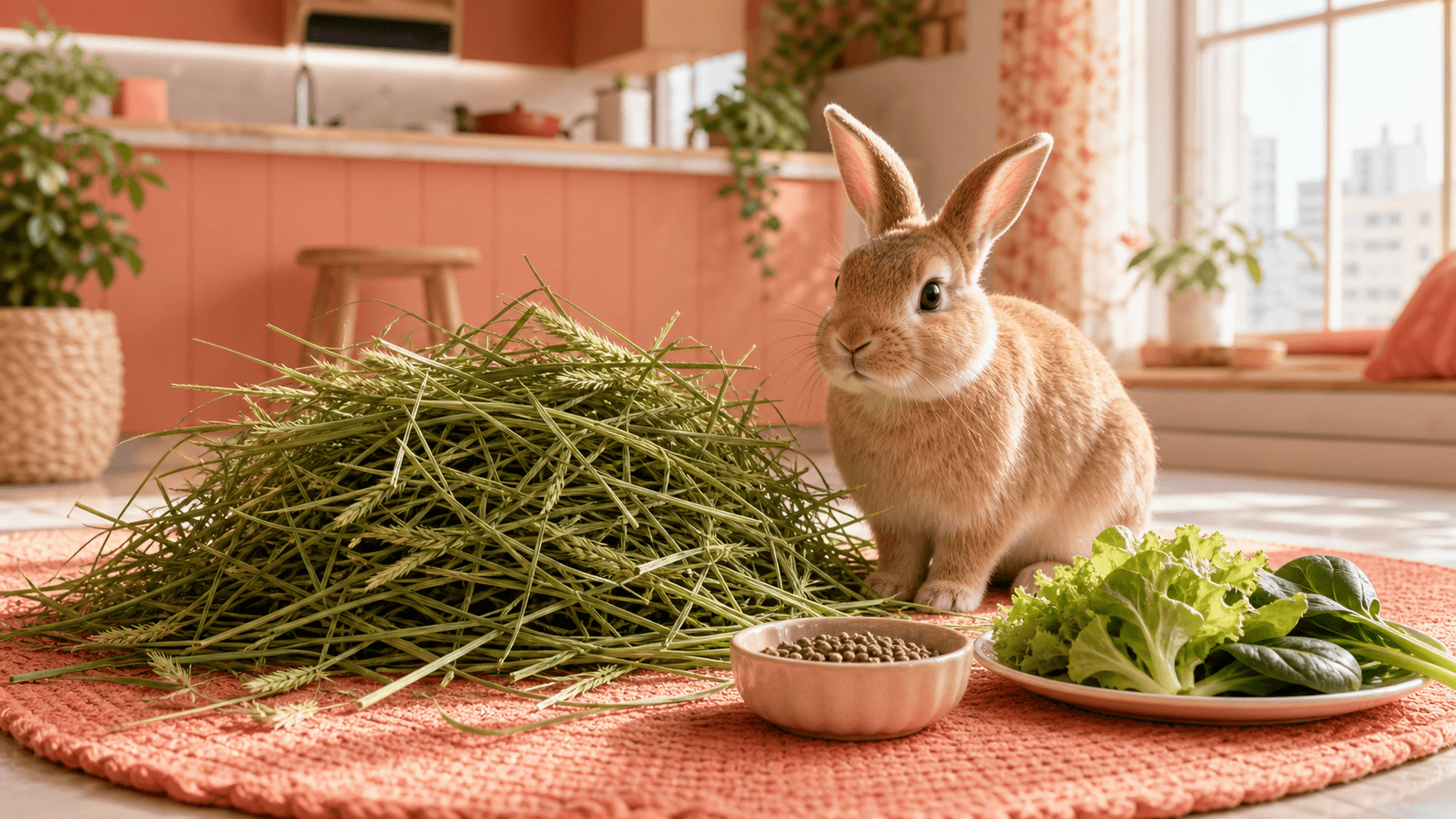
Diet kelinci dimulai dari hay (rumput kering), bukan dari campuran warna-warni di mangkuk. Untuk pemilik kelinci di Singapura, Malaysia, dan Indonesia, tugas hariannya sederhana tapi penting: selalu sediakan serat, jaga sayuran hijau tetap segar, dan anggap serius perubahan nafsu makan. Gunakan panduan ini untuk menyiapkan obrolan dengan dokter hewan yang berpengalaman menangani kelinci, bukan untuk mendiagnosis kelincimu sendiri di rumah.
Apa risikonya dan kenapa perlu diperhatikan sekarang
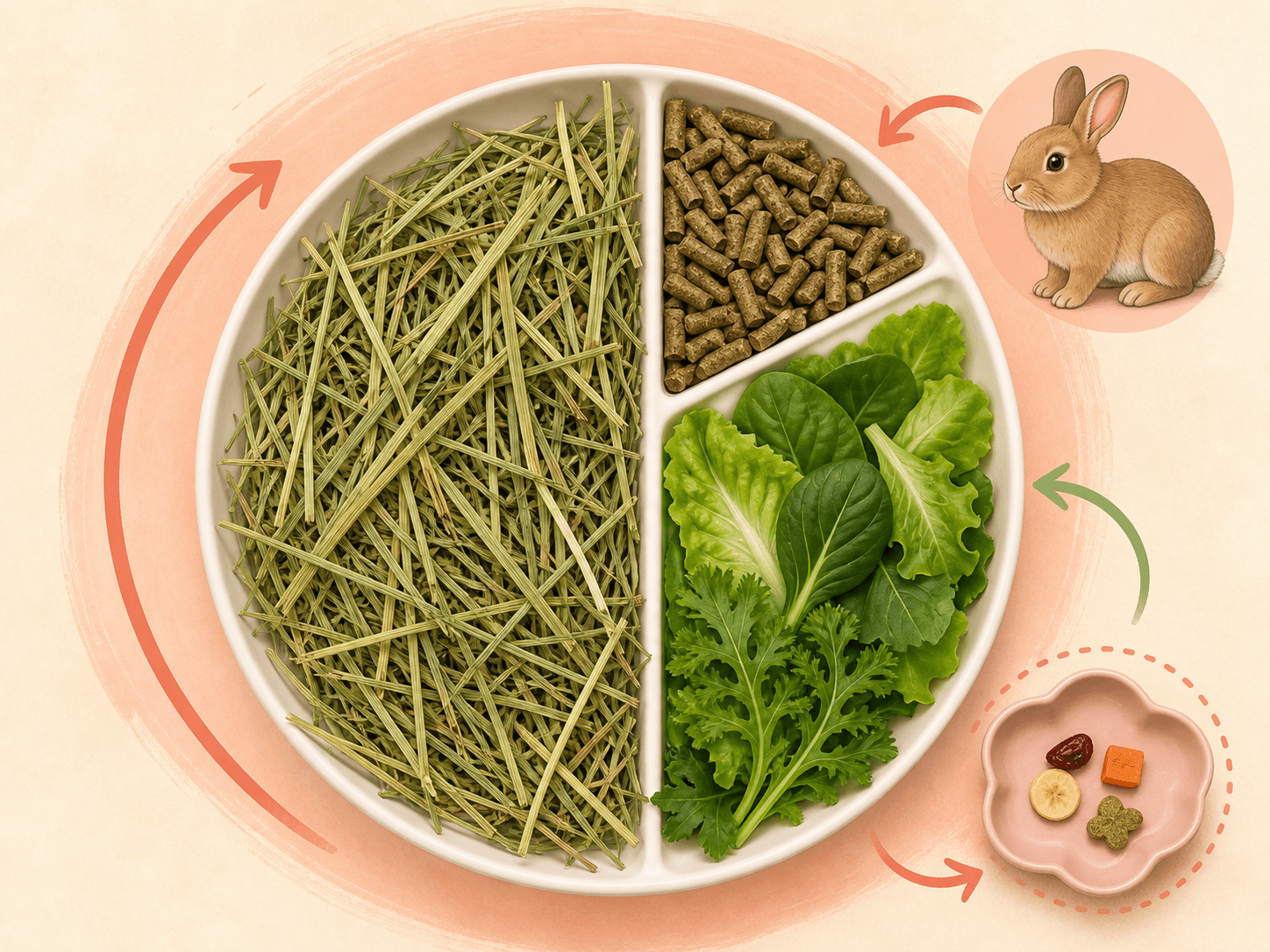
Kelinci membutuhkan hay rumput berkualitas baik tanpa batas sebagai dasar dietnya. Serat panjang membantu pergerakan usus dan keausan gigi yang normal, jadi rak hay bukan sekadar dekorasi. Sebagai gambaran kasar, hay sebaiknya mencakup sekitar 85% dari makanan kelincimu (PDSA), dengan sayuran hijau berdaun sekitar 10% dan pelet hanya sekitar 5% (RWAF). Di rumah tropis yang lembap, hay bisa menjadi basah, berbau apak, berjamur, berdebu, atau tampak rusak lebih cepat dari perkiraan pemilik. Jangan berikan hay dalam kondisi seperti itu.
Ini adalah porsi dasar yang diakui untuk dijadikan acuan; dokter hewan yang berpengalaman menangani kelinci akan menyesuaikannya dengan kelinci masing-masing, berat badan, dan kondisi kesehatannya.
| Bagian diet | Acuan harian yang diakui | Sumber |
|---|---|---|
| Hay rumput | Tanpa batas / pilihan bebas — setidaknya satu ikat sebesar tubuh kelinci setiap hari; ~85% dari diet | PDSA |
| Pelet (dewasa) | 15 g per kg berat badan per hari (≈45 g untuk kelinci 2.5 kg); sekitar 5% dari diet. PDSA menjelaskannya sebagai satu sendok makan nugget sekali sehari, atau dua kali sehari jika kelincimu berbobot lebih dari 3.5 kg | RWAF, PDSA |
| Sayuran hijau berdaun | Segenggam sayuran hijau ukuran tangan orang dewasa dua kali sehari (sekitar 10% dari diet, ~100 g untuk kelinci 2.5 kg) | PDSA, RWAF |
Pelet adalah tambahan yang perlu dibatasi, bukan menu utama, dan tidak boleh menggantikan hay. Patokan praktisnya adalah 15 g pelet per kilogram berat badan per hari — sekitar 45 g untuk kelinci 2.5 kg (RWAF). PDSA menjelaskan jatah yang sama sebagai satu sendok makan nugget sekali sehari, atau dua kali sehari untuk kelinci yang lebih besar, di atas sekitar 3.5 kg (PDSA). Terlalu banyak pelet bisa berbalik merugikan: kalau kelinci diberi pelet berlebihan, ia makan lebih sedikit hay, yang dapat menyebabkan gigi tumbuh berlebihan dan gut stasis (perlambatan gerak usus) (PDSA). Saat belanja, pelet hay rumput polos tinggi serat untuk kelinci dewasa bisa menjadi makanan pokok; merek seperti Oxbow Western Timothy adalah salah satu contoh hay rumput yang banyak tersedia, diberikan bebas pilihan sebagai pendamping (Oxbow).
Kebanyakan kelinci dewasa yang sehat sebaiknya mendapat hay rumput — timothy, orchard grass, atau campuran rumput — sebagai hay rutinnya. Alfalfa adalah legum, bukan rumput, dan kandungan kalsiumnya jauh lebih tinggi: kalsium dalam hay alfalfa (dan clover) sekitar 2–5 kali dari jumlah yang dibutuhkan kelinci dewasa sehat yang tidak berkembang biak, sementara hay rumput mengandung kurang dari setengah kalsium alfalfa (House Rabbit Society). Karena kelinci membuang kelebihan kalsium lewat urine, kelebihan yang terus-menerus dapat memicu bladder sludge (endapan kandung kemih) dan batu. Karena itu, alfalfa disimpan untuk kelinci muda, hamil, menyusui, lansia, atau cedera, sementara kelinci dewasa sehat biasanya lebih cocok dengan campuran timothy dan hay rumput yang lebih rendah kalori dan kalsium (House Rabbit Society).
Sayuran hijau berdaun segar bisa masuk ke dalam diet kelinci. Porsi yang masuk akal adalah segenggam sayuran hijau ukuran tangan orang dewasa dua kali sehari, yang untuk kelinci rata-rata 2.5 kg mendekati 100 g, atau sekitar 10% dari asupan harian (PDSA, RWAF). Kenalkan sayuran hijau secara bertahap, satu jenis baru setiap kali, supaya kamu bisa melihat mana yang cocok untuk kelincimu dan mana yang tidak. Bok choy, chye sim, kai lan, selada romaine atau cos, ketumbar, basil, mint, dan daun wortel sering dicantumkan sebagai sayuran hijau yang sesuai untuk kelinci bila diberikan segar dan dikenalkan dengan hati-hati. Cuci daunnya, jangan berikan bahan yang sudah rusak, dan pantau nafsu makan serta kotorannya setelah setiap makanan baru.
Hindari campuran bergaya muesli dengan potongan warna-warni, biji, serpihan, atau buah kering. Campuran seperti ini mendorong kelinci memilih-milih makanan, tepat kebiasaan yang tidak kamu inginkan. Buah dan sayuran berpati bukan camilan rutin; batasi, dan konsultasikan dengan dokter hewan yang berpengalaman menangani kelinci untuk kelinci yang punya risiko kesehatan.
Tanda yang perlu kamu perhatikan
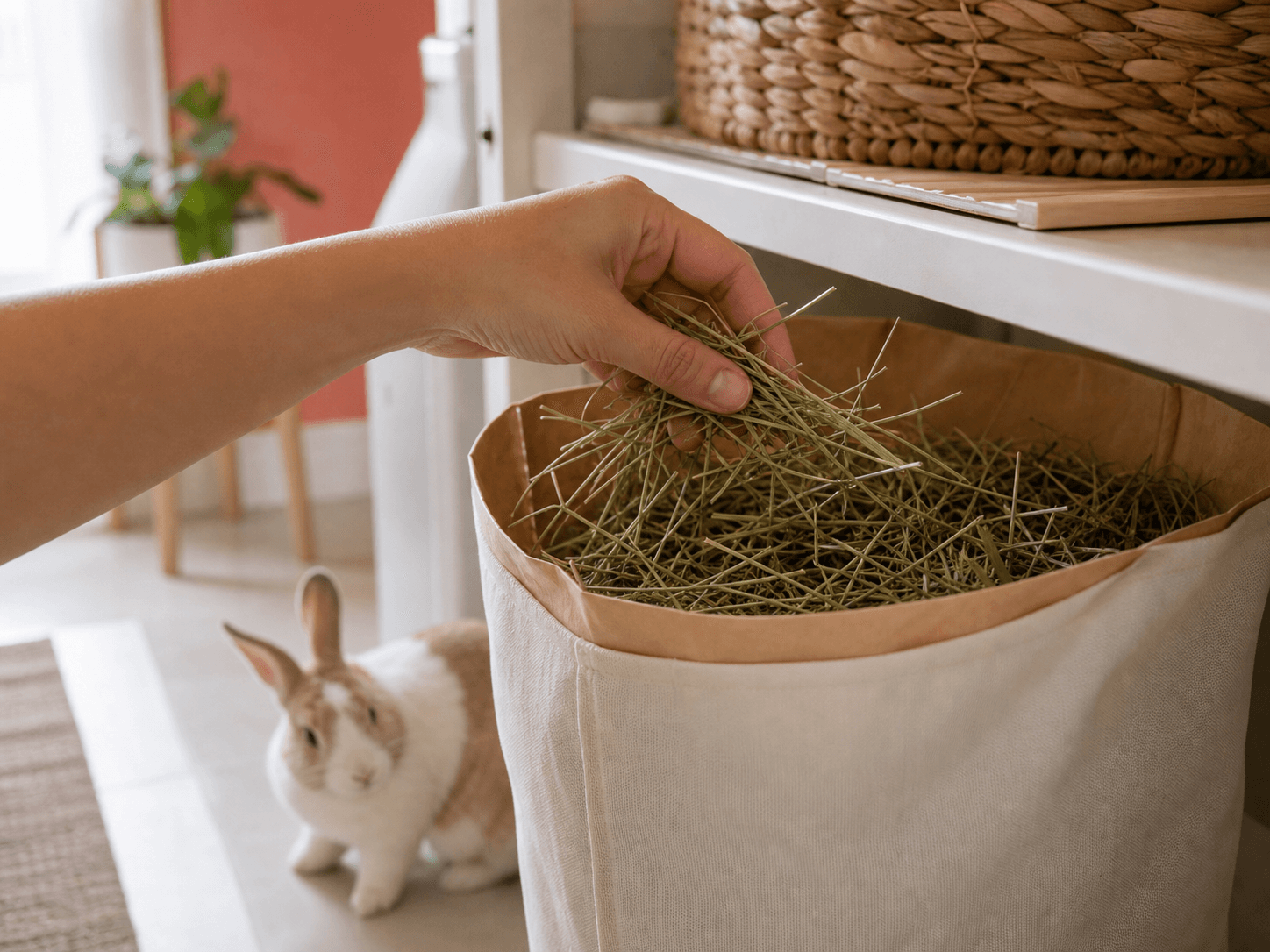
Waktu makan juga berfungsi sebagai pemeriksaan kesehatan. Hay seharusnya menjadi makanan yang terus kelincimu datangi lagi. Kelinci yang tiba-tiba makan lebih sedikit hay bukan sedang lucu, dramatis, atau “cuma pilih-pilih”. Kalau penurunannya bertahan, memburuk, atau muncul bersama perubahan nafsu makan atau kotoran, segera atur pemeriksaan dengan dokter hewan yang berpengalaman menangani kelinci.
| Yang kamu lihat | Yang perlu dilakukan |
|---|---|
| Berhenti makan atau makan lebih sedikit | Anggap mendesak, terutama jika asupan hay juga turun. |
| Kotoran lebih sedikit atau lebih kecil | Segera eskalasi; ini bisa berkaitan dengan berkurangnya pergerakan usus. |
| Diare atau kembung | Jangan tangani seolah-olah hanya pilih-pilih makanan. |
| Tanda nyeri gigi atau perubahan perilaku mendadak | Buat janji pemeriksaan dengan dokter hewan yang berpengalaman menangani kelinci. |
Untuk rutinitas sehari-hari, cek tiga tempat sekaligus: tumpukan hay, mangkuk makanan, dan area litter. Hay rumput berkualitas baik harus selalu tersedia, idealnya tanpa batas, tetapi setidaknya satu ikat sebesar tubuh kelincimu setiap hari, karena serat panjang membantu pergerakan usus dan keausan gigi yang normal (PDSA). Pelet bisa diukur mengikuti acuan per kilogram di atas, tetapi jangan sampai menggeser hay.
Saat menambahkan sayuran hijau, sengaja buat prosesnya sederhana: satu jenis baru setiap kali. Cuci daunnya, berikan porsi segar, dan pantau nafsu makan serta feses setelah setiap makanan baru. Buah dan sayuran berpati adalah makanan sesekali, bukan camilan rutin, karena gula dan pati bisa menggantikan serat.
Kapan harus ke dokter hewan
Hubungi dokter hewan yang berpengalaman menangani kelinci segera jika kelincimu berhenti makan, makan lebih sedikit, atau menghasilkan kotoran yang lebih sedikit atau lebih kecil. Lakukan hal yang sama untuk diare, kembung, tanda nyeri gigi, atau perubahan perilaku mendadak. Ini tanda bahaya, bukan sekadar pendapat soal makan malam.
Penurunan asupan hay penting karena hay adalah dasar diet kelinci. Jika makan hay menurun, lalu bertahan, memburuk, atau muncul bersama perubahan nafsu makan atau kotoran, eskalasi. Jangan mencoba menyeimbangkannya dengan lebih banyak pelet, buah, atau sayuran berpati. Pelet adalah tambahan terkontrol sebanyak 15 g per kilogram berat badan per hari, bukan pengganti hay (RWAF). Buah dan sayuran berpati adalah camilan terbatas yang perlu dikonfirmasi dokter hewan, terutama untuk kelinci dengan risiko kesehatan.
Sebelum janji pemeriksaan, catat apa yang berubah: asupan hay, jenis dan jumlah pelet, sayuran hijau yang baru dikenalkan, camilan yang diberikan, kotoran, nafsu makan, dan perilaku. Kalau kamu baru menambahkan bok choy, chye sim, kai lan, selada romaine atau cos, ketumbar, basil, mint, atau daun wortel, sebutkan. Sayuran hijau ini sering dicantumkan sebagai sesuai bila segar dan dikenalkan bertahap, tetapi toleransi setiap kelinci bersifat individual.
Malam ini, cek rak hay dan litter tray sebelum tidur. Kalau asupan hay atau kotorannya tidak seperti biasa, hubungi dokter hewanmu alih-alih menunggu “pilih-pilih” berlalu.
— Manja