
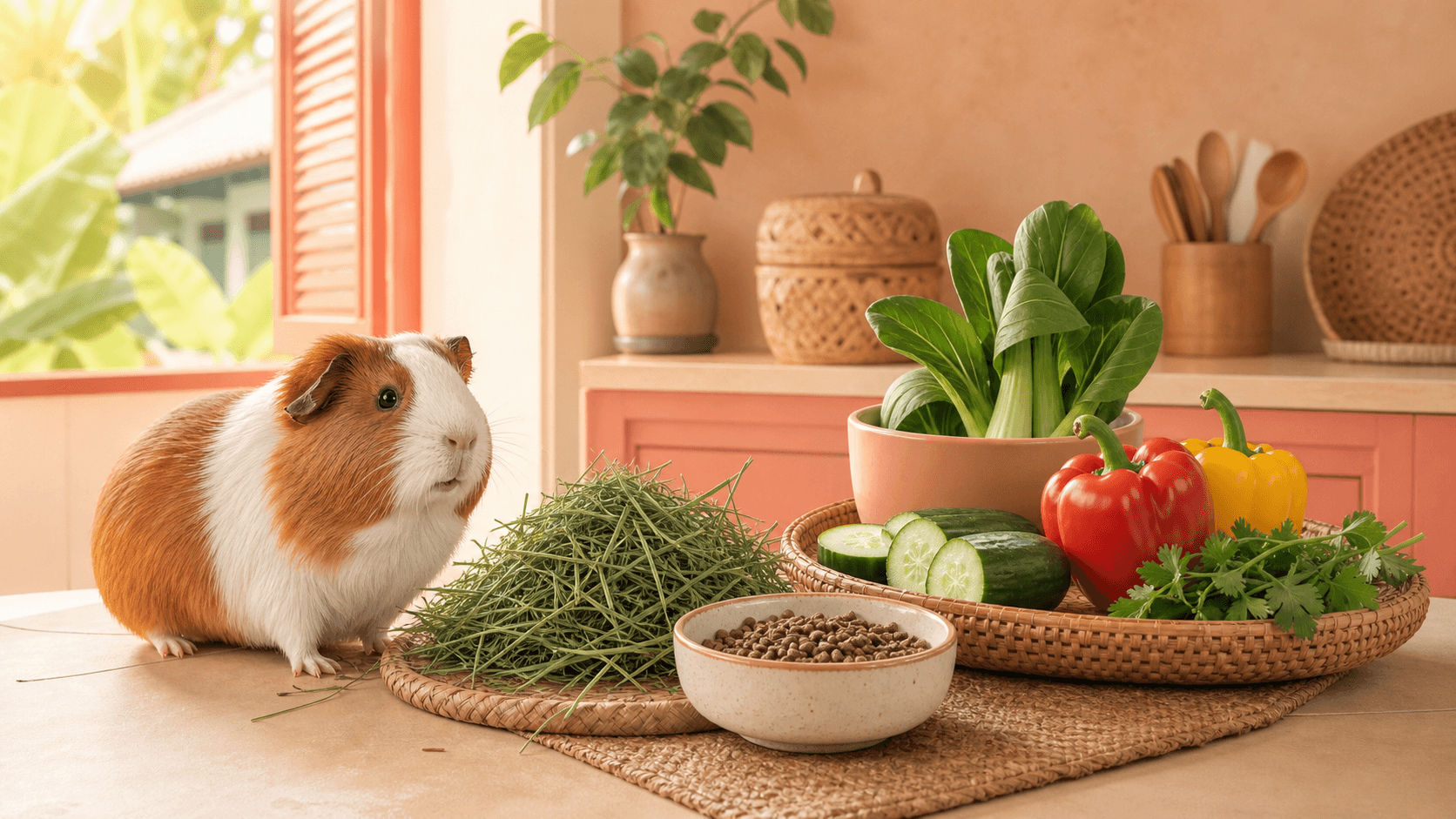
Vitamin C untuk guinea pig bukan topik pelengkap. Untuk pemilik di SG, MY, dan ID yang memakai sayuran pasar, sisa bahan segar dari kulkas, dan herba yang familiar, tugasnya sederhana: rotasikan makanan segar dengan hati-hati, jadikan hay (rumput kering) sebagai pusat pakan, dan tahu kapan perencanaan makanan saja sudah tidak cukup.
Kenapa vitamin C perlu direncanakan
Guinea pig membutuhkan vitamin C dari makanannya karena tubuh mereka tidak bisa memproduksinya dalam jumlah yang cukup. Kalau asupannya kurang, defisiensi bisa berujung pada scurvy (skorbut). Ini panduan untuk guinea pig, bukan jalan pintas pakan kelinci, anjing, atau kucing.
Sebenarnya, berapa banyak yang mereka butuhkan? Angka dasar yang diakui mengikuti berat badan dan tahap hidup, jadi guinea pig dewasa yang sehat dan betina bunting tidak memakai angka yang sama. Angka-angka ini adalah standar rujukan untuk menyusun rencana; dokter hewan yang paham satwa eksotis akan menentukan jumlah tepat untuk guinea pig kamu.
| Tahap hidup | Patokan vitamin C yang diakui | Sumber |
|---|---|---|
| Dewasa sehat (pemeliharaan) | ~10–25 mg/kg per hari (sekitar 20–25 mg/hari untuk guinea pig 1 kg pada umumnya) | MSD Vet Manual, PetMD |
| Sedang tumbuh, bunting, menyusui, atau sakit | 30 mg/kg atau lebih per hari (sekitar 30–40 mg/hari untuk guinea pig pada umumnya) | MSD Vet Manual, PetMD |
MSD Veterinary Manual mencantumkan kebutuhan dewasa sebagai "at least 10 milligrams (mg) of vitamin C per kilogram (kg) of body weight per day (pregnant females need 30 mg per kg per day)" (MSD Vet Manual).
Di rumah beriklim tropis, perencanaan vitamin C butuh perhatian lebih dari yang sering dibayangkan pemilik baru. Vitamin C dalam pelet dan bahan segar bisa menurun seiring waktu, udara, panas, cahaya, kelembapan, dan cara penyimpanan. Kantong pelet yang dibiarkan terbuka di dapur lembap, atau sayuran yang terlalu lama duduk di kulkas, mungkin tidak membantu sebanyak yang kamu kira. Pelet khusus guinea pig biasanya sudah diperkaya vitamin C, tetapi vitamin C itu tidak stabil: rekomendasi yang umum adalah memakai isi kantong dalam 90 hari sejak tanggal produksi, dan pelet yang sudah lebih dari sekitar 6 months mungkin tidak lagi memenuhi kebutuhan harian (PetMD).
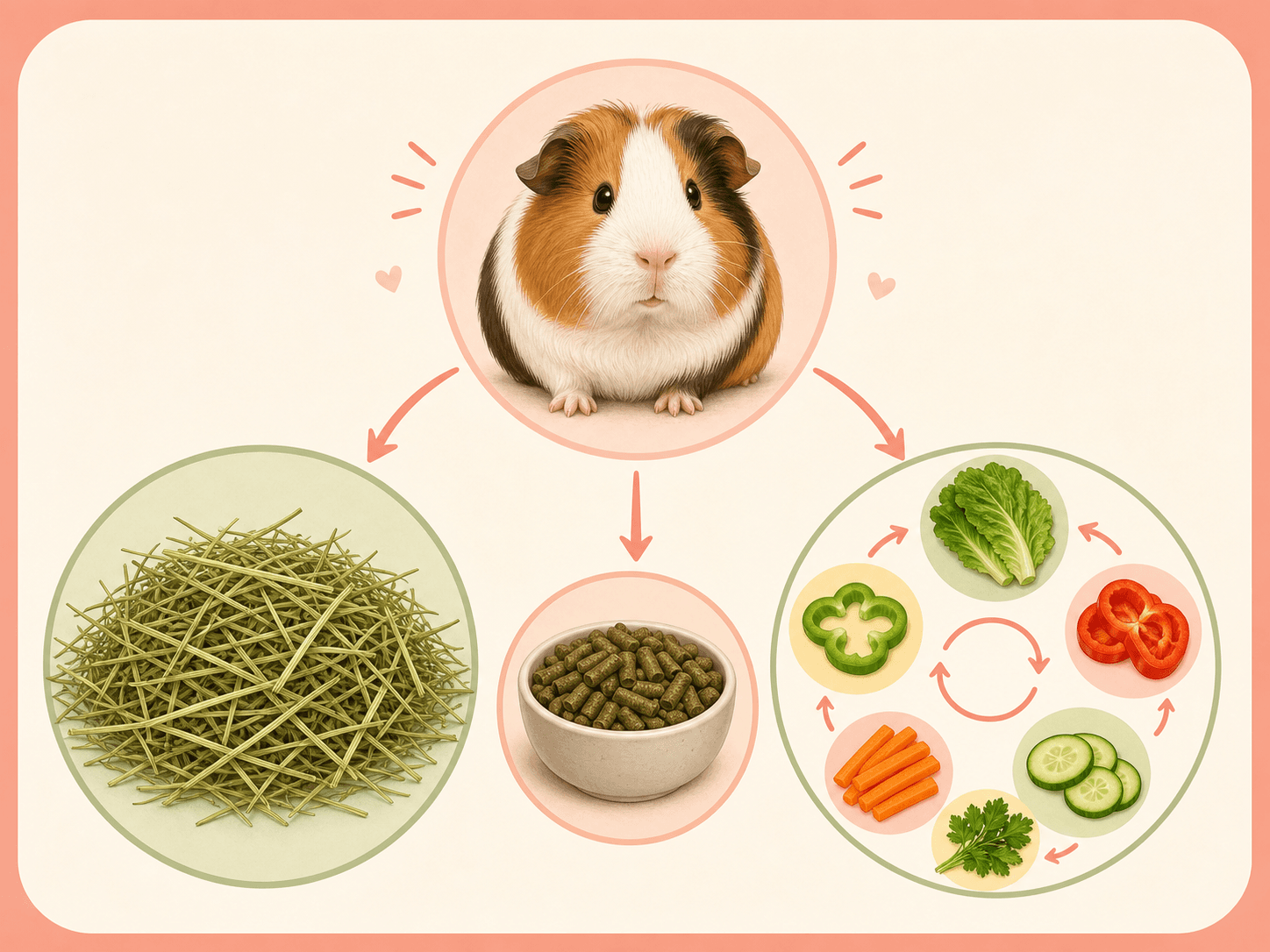
Jaga dasarnya tetap konservatif: hay tanpa batas, porsi pelet fortifikasi khusus guinea pig yang ditakar sekitar 1–2 teaspoons per hari (pelet komersial hanya sekitar 5–10% dari total pakan), dan sayuran segar setiap hari (MSD Vet Manual, RVC feeding factsheet). Sayuran membantu melengkapi pakan. Sayuran tidak menggantikan hay. Paprika adalah penyumbang vitamin C yang benar-benar berguna: paprika merah mentah mengandung sekitar 127.7 mg vitamin C per 100 g dan paprika hijau sekitar 80.4 mg per 100 g, jadi irisan kecil pun bisa membantu secara berarti (USDA FoodData Central: red pepper, FDC 170108, USDA FoodData Central: green pepper, FDC 170427). Peterseli segar bahkan lebih tinggi, sekitar 133.0 mg per 100 g, tetapi kalsiumnya juga tinggi, jadi berikan sesekali saja, bukan setiap hari (USDA FoodData Central: parsley, FDC 170416, RVC feeding factsheet). Satu sayuran yang "bagus" tidak boleh menjadi seluruh rencana.
Pakai panduan ini untuk mempersiapkan obrolan dengan dokter hewan yang paham satwa eksotis, bukan untuk mendiagnosis guinea pig di rumah. Guinea pig yang masih muda, bunting atau menyusui, sudah tua, sedang sakit, dalam pemulihan, tidak mau makan, atau dicurigai mengalami defisiensi membutuhkan lebih dari sekadar rotasi makanan umum.
Tanda yang perlu diperhatikan
Defisiensi vitamin C bukan sesuatu yang bisa didiagnosis hanya dengan menatap mangkuk makanan. Tanda peringatannya tidak spesifik. Tanda-tanda itu bisa mengarah ke defisiensi vitamin C, atau ke penyakit guinea pig lain yang perlu diagnosis dokter hewan.
| Yang kamu lihat | Yang perlu dilakukan |
|---|---|
| Nafsu makan buruk atau menolak makan | Anggap ini sebagai masalah yang perlu dokter hewan. Jangan mencoba memperbaikinya hanya dengan campuran sayuran baru. |
| Pincang, lemah, atau sendi bengkak dan nyeri | Buat janji pemeriksaan dengan dokter hewan yang paham satwa eksotis. Tanda ini bisa tumpang tindih dengan scurvy dan kondisi lain. |
| Diare atau sulit mengunyah | Hentikan tebak-tebakan. Perubahan pakan saja bukan rencana yang aman. |
| Luka sulit sembuh atau bulu tampak buruk | Minta dokter hewan menilai seluruh kondisi guinea pig, bukan hanya mangkuk makanannya. |
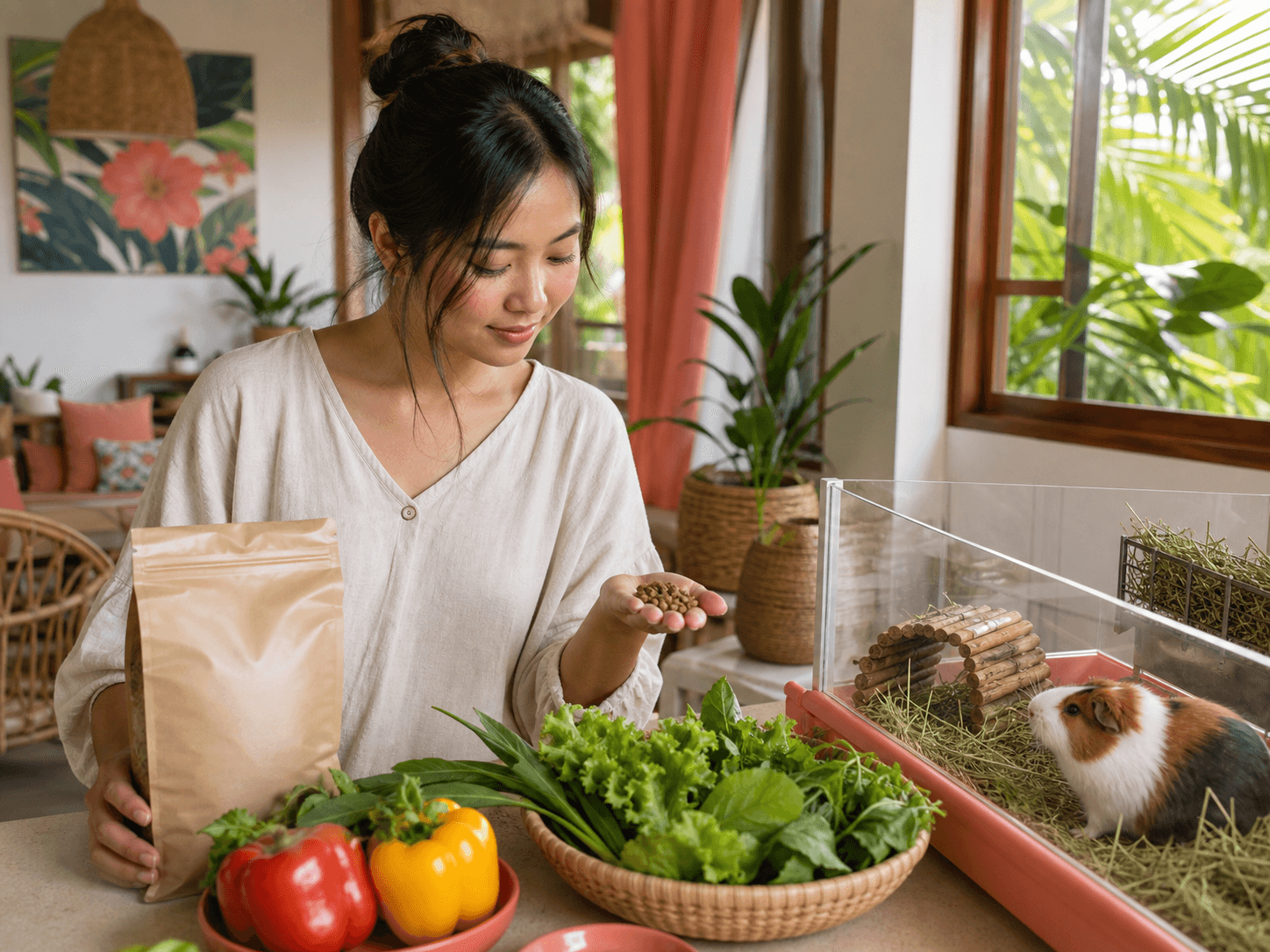
Masukkan pemeriksaan rumah ke rutinitas makan. Isi ulang hay sebelum pagi mulai sibuk, berikan pelet khusus guinea pig sesuai takaran, tambahkan sayuran segar, lalu amati guinea pig-nya langsung: apakah ia makan, bergerak normal, dan memegang makanan tanpa kesulitan yang jelas.
Lebih berhati-hatilah pada guinea pig yang masih muda, bunting atau menyusui, sudah tua, sedang sakit, dalam pemulihan, tidak mau makan, atau dicurigai mengalami defisiensi. Mereka membutuhkan arahan dokter hewan yang paham satwa eksotis, terutama sebelum rencana pemulihan vitamin C atau keputusan memakai suplemen apa pun.
Kapan harus ke dokter hewan
Nafsu makan buruk, menolak makan, pincang, sendi bengkak atau nyeri, lemah, diare, sulit mengunyah, atau luka yang sulit sembuh bukan masalah "coba sayuran baru". Itu masalah dokter hewan. Tanda-tanda ini bisa terjadi pada defisiensi vitamin C, tetapi juga bisa mencerminkan penyakit guinea pig lain yang perlu diagnosis dokter hewan.
Hubungi dokter hewanmu sekarang kalau guinea pig tidak makan, terlihat lemah, diare, tampak nyeri saat bergerak, kesulitan mengunyah, atau punya luka yang tidak sembuh dengan baik. Jangan menunggu rotasi makanan memperbaikinya. Guinea pig membutuhkan sumber vitamin C dari makanan secara terus-menerus, tetapi dugaan defisiensi atau scurvy bukan proyek rumahan.
Jangan menyusun rencana pemulihan dari daftar sayuran umum, label suplemen, atau utas online. Mintalah dokter hewan yang paham satwa eksotis. Bawa kantong pelet, daftar makanan segar, kebiasaan penyimpanan, produk vitamin C apa pun yang dipakai, dan catatan sederhana tentang apa yang berubah: nafsu makan, kotoran, gerakan, cara mengunyah, dan penyembuhan luka.
Malam ini, cek apakah guinea pig kamu makan hay seperti biasa dan bergerak dengan nyaman. Kalau salah satu jawabannya tidak, hubungi dokter hewanmu alih-alih mengganti menu lagi.
— Manja