
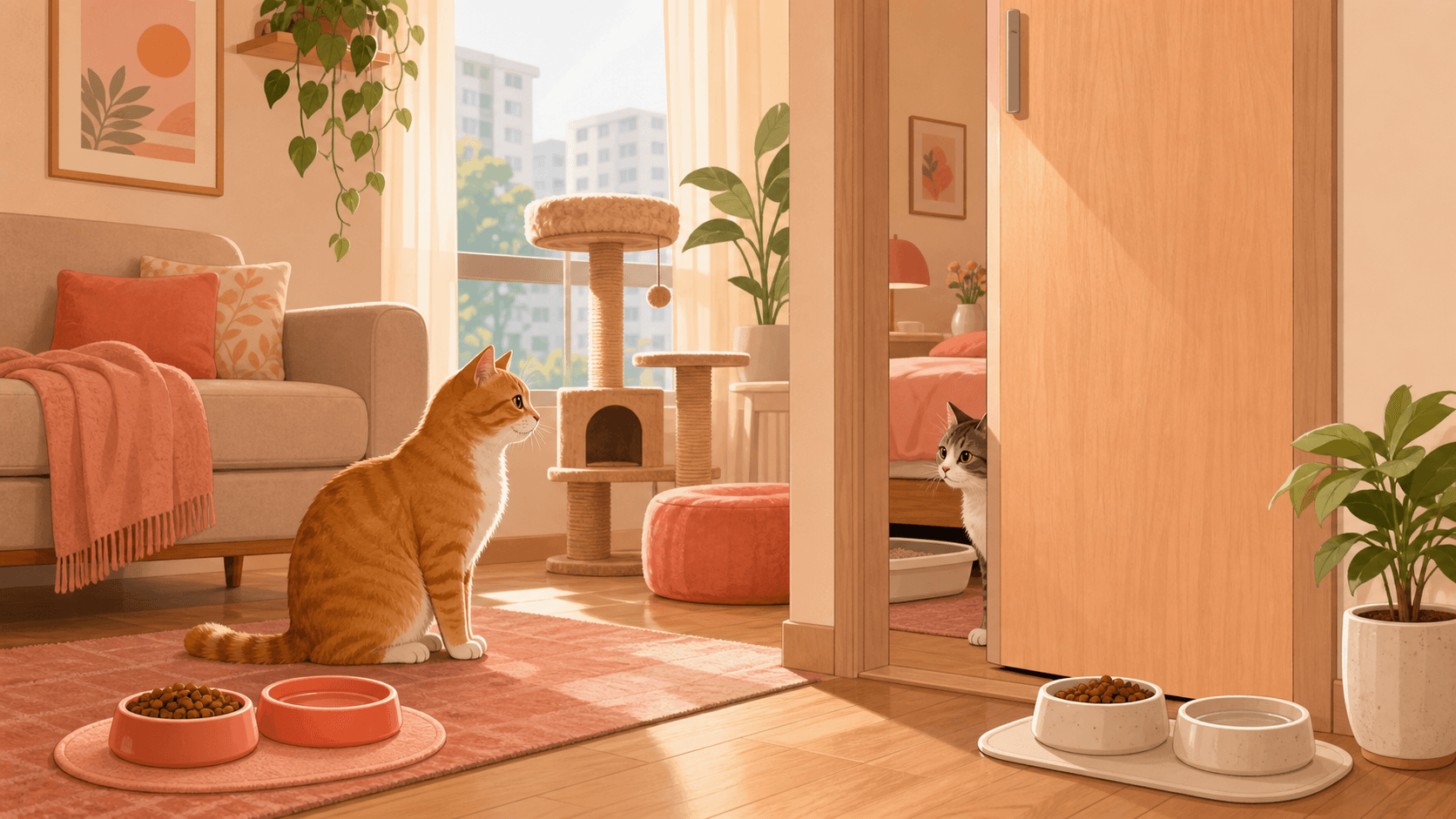
The resident cat does not know you have adopted a future friend. They know a stranger now exists somewhere behind the door, possibly near the sofa, the food bowl, and the best window ledge.
That is why two-cat introductions in a flat should begin with territory, scent, and escape routes. Not optimism.
This is a practical behaviour guide, not a diagnosis. Use it to set up the home and notice patterns; ask your vet for individual advice if behaviour changes suddenly or either cat seems unwell.
Read the room before you open the door
A little early protest is normal. One cat may hide under the bed. The other may hiss once, growl from a distance, or leave the area in disgust. That is not a failed introduction. It is useful information: the cats need more distance, more time, and fewer chances to surprise each other.
The bigger flags are about access and safety. Act if one cat blocks the other from food, water, litter, or resting spots. Step in if there is repeated chasing, contact fighting, injury, refusal to eat, or chronic hiding. Those are welfare problems, not personality quirks.
Singapore homes make the planning more important. In an HDB or condo flat, the same narrow corridor may lead to the litter tray, kitchen water bowl, and favourite bedroom. One confident cat can quietly control that whole route. Under the Cat Management Framework, flat owners also need to keep cats responsibly and prevent nuisance, so a secure indoor setup is part of the job, not a fancy extra.
Before any meeting, give the new cat a separate room or clearly separated zone. Check windows, balcony access, service yards, and grilles. A frightened cat may bolt upward or outward when startled or chased, especially in a high-rise home.
Start with scent, then earn sight
For the first few days, make the other cat boring and predictable.
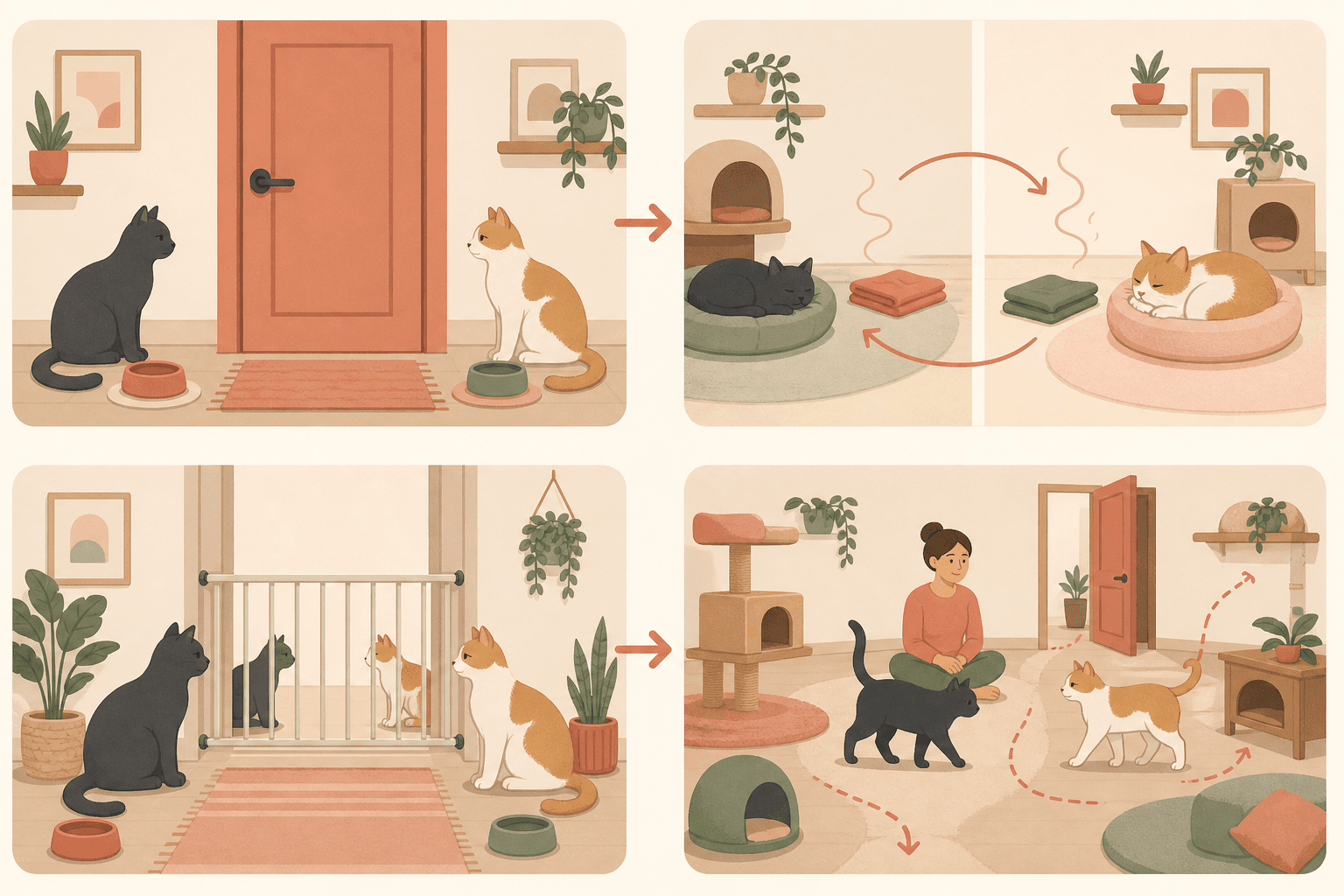
Swap bedding, a soft cloth, or a small towel between the cats. Feed them on opposite sides of a closed door, far enough away that both can eat normally. If one cat stares at the door and abandons the bowl, the setup is too close. Move the food back.
When scent is no longer a major event, add controlled sight. Use a cracked door, baby gate, mesh screen, or carrier barrier. Keep the sessions short. End while both cats are still calm, not after one has started stalking, freezing, or trying to rush the gap.
Move forward only when both cats can eat, groom, sniff, rest, or walk away at the current stage. If either cat hides, stops eating, fixates, or starts guarding the doorway, go back to the easier step. The calendar does not get a vote.
Make blocking difficult
Most apartment-cat conflict is not dramatic at first. It looks like one cat sitting in a doorway. One cat finishing the other cat's food. One cat always appearing near the tray. The quieter cat may simply start eating less, rushing meals, holding urine, or avoiding a room.
Set up the flat so neither cat can control everything from one spot:
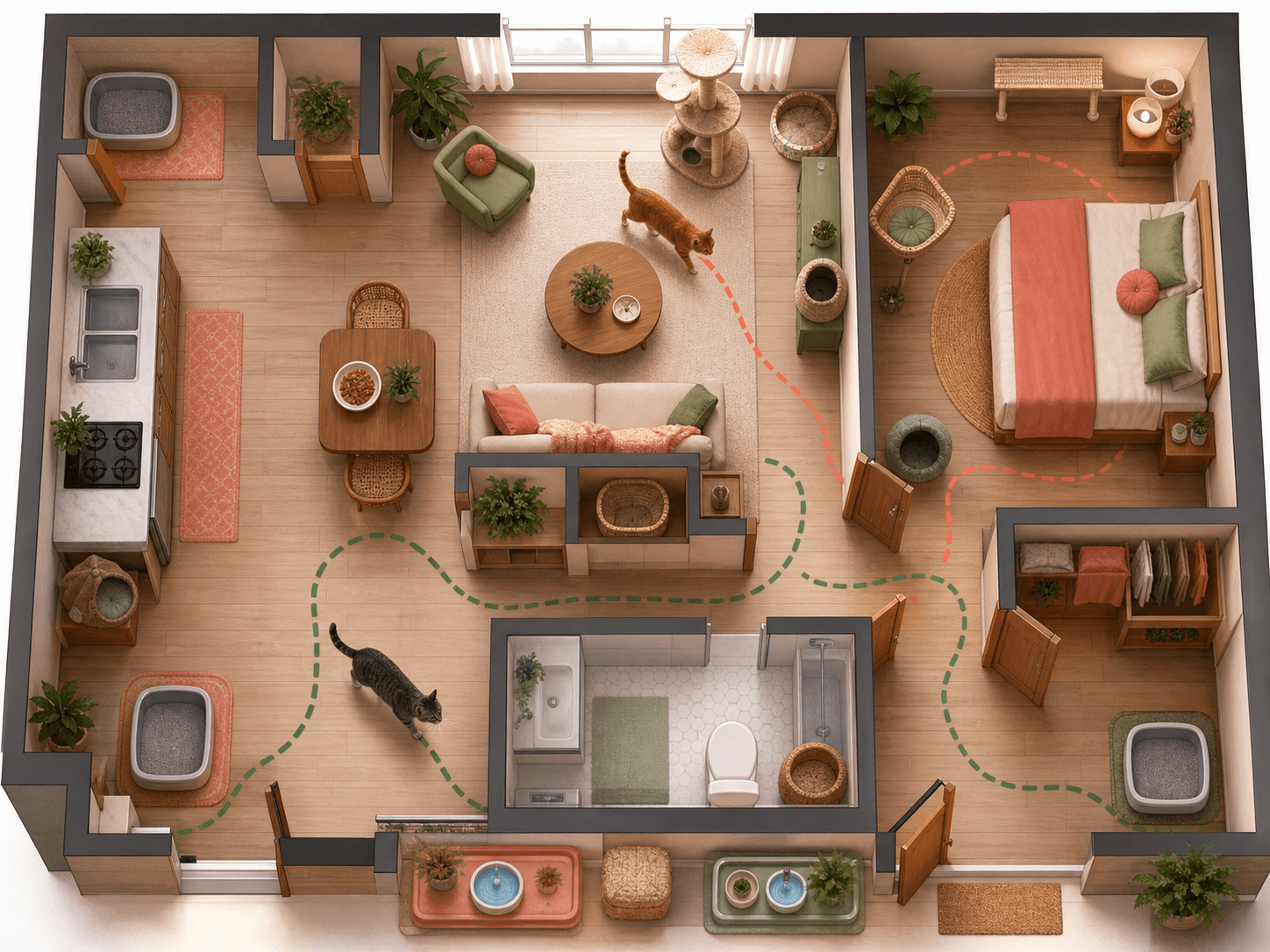
- Litter: aim for one tray per cat plus one extra, in separate places if space allows. For two cats, that means three trays. If three is impossible, prioritise separation over neatness.
- Food and water: duplicate stations and spread them out. Side-by-side bowls can pressure the quieter cat into eating less, rushing, or giving up the area.
- Resting places: add vertical options such as shelves, cat trees, sturdy window perches, or raised beds, so each cat can watch or leave without crossing the other's nose.
- Passing routes: look at tight spots near bedroom doors, kitchen entrances, and service-yard access. If one cat can sit there and control the route, create another path or move the resource.
- Play: run short, separate play sessions during introductions. Shared play can wait until the cats are already relaxed around each other.
In multi-cat flats, litter-box ambiguity is common. If you do not know who used which tray, notice the pattern around it: who waits outside, who enters confidently, who runs out, and who avoids that area after the other cat appears.
When this is more than awkwardness
Treat a sudden personality change as a health clue, not a character flaw. New aggression, house-soiling, hiding, or irritability can point to pain, urinary disease, endocrine disease, cognitive change, or another medical problem.
Bring in a vet promptly if the fighting is getting worse, either cat is injured, one cat cannot reach food, water, or litter safely, or people are being bitten or scratched while trying to intervene. That is no longer "they are sorting it out." That is risk management.
A qualified behaviourist can help when the cats are medically cleared but still stuck in fear, chasing, blocking, or avoidance. Look for force-free methods. Punishment, spraying water, shouting, or forcing cats to "work it out" can make the other cat predict bad things. Very rude. Also very effective at making the problem bigger.
What to note before you ask for help
Write down the boring details. They are usually the useful ones.
Which cat blocked which doorway? Which resource was nearby? Did anyone stop eating, hide, soil outside the tray, or make contact in a fight? Did the tension happen at night, after feeding, after a visitor left, or when the air-con room door closed?
For the next introduction step, map each cat's safe room, food spot, water spot, litter access, and favourite resting place. If one cat can block any of them, fix that before the next meeting.
— Manja