
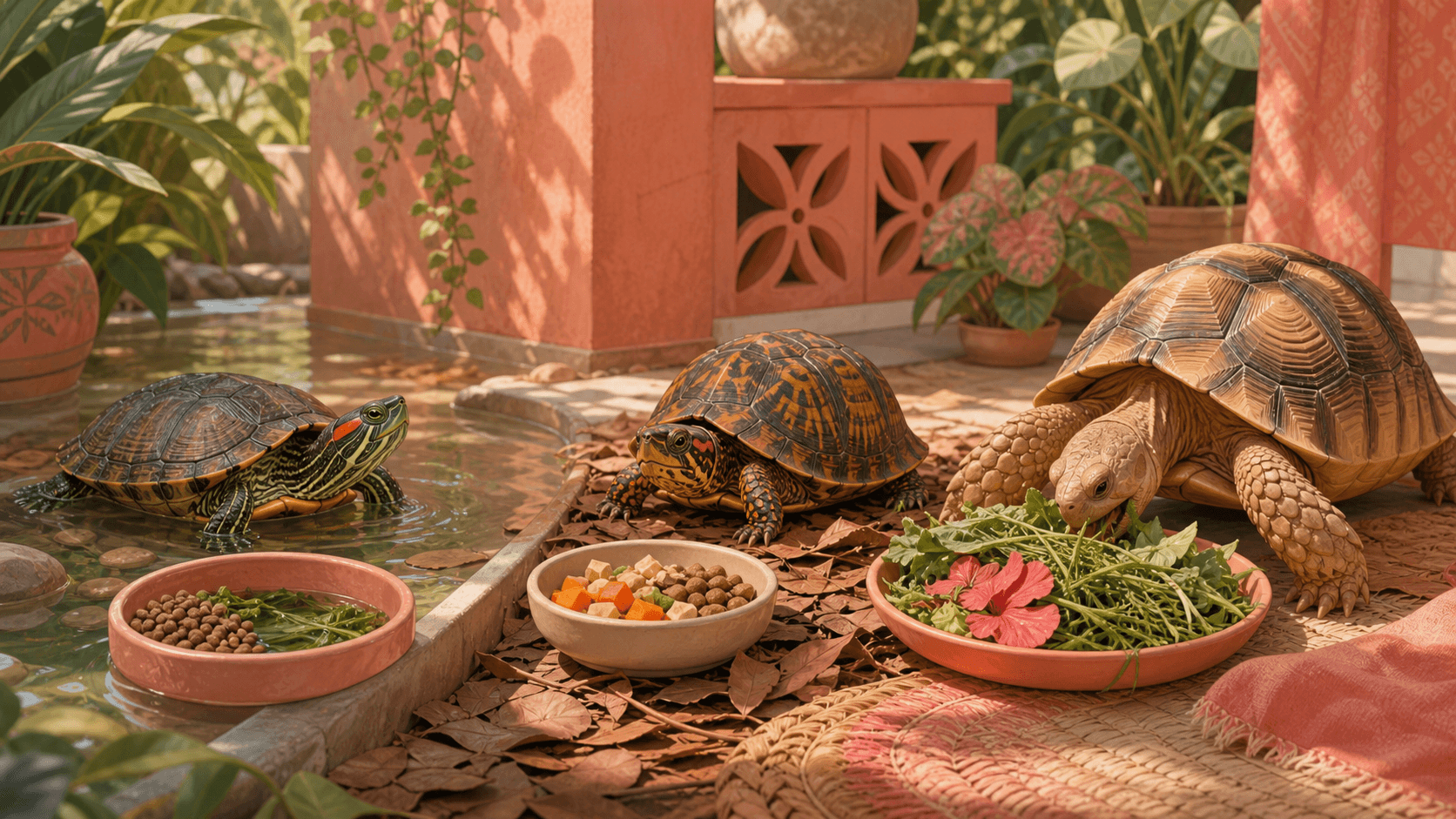
The pet shop shelf makes this look easier than it is. One tub says turtle pellets. A market stall has kangkung. Someone online swears by prawns, fruit, or calcium powder. But a turtle is not a tortoise in a different outfit, and “reptile food” is not one diet.
Before you buy pellets, prawns, kangkung, fruit, calcium powder, or a “shell health” supplement, identify the reptile first and treat the food list as species-specific.
This guide is for preparing a better conversation with a licensed reptile vet, especially if your turtle or tortoise is young, breeding, sick, weak, not eating, or showing shell changes. Do not use it to diagnose soft shell, deficiency, or metabolic bone disease at home.
First, name the animal properly
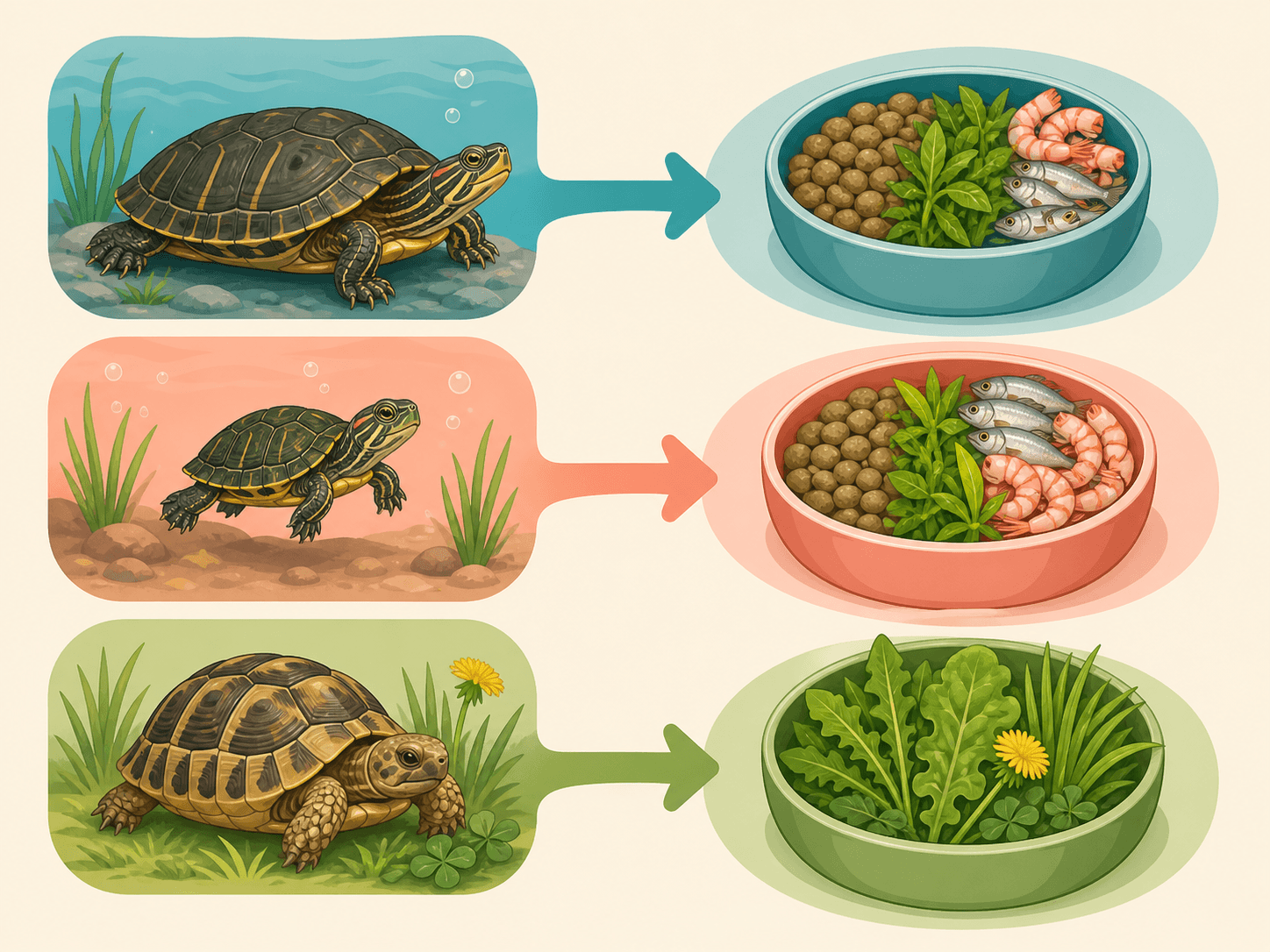
Aquatic turtles, box turtles, and herbivorous tortoises do not belong in one feeding category.
Aquatic turtles are often omnivorous, and the animal-protein share is meant to drop as they grow, not stay fixed. The recognized baseline is roughly tiered by life stage: in a juvenile aquatic turtle, plant matter should be about 25–30% of the diet — so roughly 70–75% animal protein — while in an adult, leafy greens and vegetables should rise to about 50–60% of the diet, leaving animal protein closer to half. Box turtles are also typically omnivorous, but they should not simply be fed like aquatic turtles or grazing tortoises. Herbivorous tortoises need a high-fibre plant diet built around suitable grasses, weeds, hay, and leafy greens: one veterinary baseline (desert tortoise) is that 85% of the diet should be grasses, weeds, and dark, leafy greens, with only 15% hard vegetables. Those are starting baselines, not a prescription — your vet adjusts the exact split for the species and life stage in front of them.
| Reptile type | Recognized baseline | Source |
|---|---|---|
| Aquatic turtle — juvenile | ~70–75% animal protein (plant matter ~25–30%) | PetMD aquatic turtle care sheet |
| Aquatic turtle — adult | ~40–50% animal protein (greens/veg ~50–60%) | PetMD aquatic turtle care sheet |
| Herbivorous tortoise | ~85% grasses/weeds/leafy greens, ~15% hard veg | UC Davis Veterinary Medicine |
| Tortoise — fruit ceiling | fruit ≤ ~10% of diet | Hepper, vet-reviewed |
That difference is easy to lose in Singapore, Malaysia, and Indonesia because food is everywhere. Local market greens, kangkung, fruit, dried shrimp, prawns, pellets, dog food, and cat food may all be nearby. Availability is not suitability.
Kangkung and other local greens may be part of a checked rotation, but they are not proven complete staples. A humid kitchen also makes “just keep a bag of greens around” less reliable than it sounds; wilted, slimy, or old vegetables are not a nutrition plan. Fruit-heavy feeding is especially risky for many grazing or arid herbivorous tortoises: a common vet-reviewed guideline keeps fruit to no more than about 10% of the diet, and the Merck/MSD manual warns that cultivated fruits are poorer sources of protein, calcium, and micronutrients. Treat that 10% as a ceiling, not a target, unless a reptile vet identifies a species-specific reason.
Feeding habits that deserve a pause
Start with the ordinary routine, not the supplement shelf.
An aquatic turtle living mainly on dried shrimp, prawns, meat, dog food, or cat food needs a diet review. These foods may be familiar, easy to buy, and enthusiast-recommended, but that does not make them suitable staples — and a near-100% animal-protein routine sits well above the roughly half-and-half split a healthy adult aquatic turtle is meant to settle into.
A box turtle fed like a grazing tortoise, or like an aquatic turtle, also needs the same pause. Box turtles often sit awkwardly in owner advice because they are neither “just a tortoise” nor “just a pond turtle”. Copying either diet can miss the animal in front of you.
A herbivorous tortoise getting animal protein, dog food, cat food, meat, prawns, or high-protein turtle pellets as staples should be reviewed by a reptile vet — the recognized baseline is a high-fibre plant diet (around 85% grasses, weeds, and leafy greens), not a meat-and-pellet routine. For grazing or arid herbivorous tortoises, a fruit-heavy routine that pushes past the ~10% fruit ceiling is another warning sign unless a reptile vet has identified a species-specific reason.
Iceberg lettuce or very watery lettuce as the main green is weak feeding, not a complete plan. One convenient market vegetable, including local greens such as kangkung, should sit inside a checked rotation, not carry the whole diet.
Shell problems are not fixed by guessing
Soft shell, poor shell growth, weakness, anorexia, or a reptile that already looks unwell should change the owner’s next step: call the vet, not the supplement algorithm in your head.
Call a licensed reptile vet now if your turtle or tortoise has poor shell growth, a soft shell, weakness, anorexia, or is already unwell. Those signs are not a cue to sprinkle calcium, change UVB, swap pellets, or add vitamin D3 by guesswork.
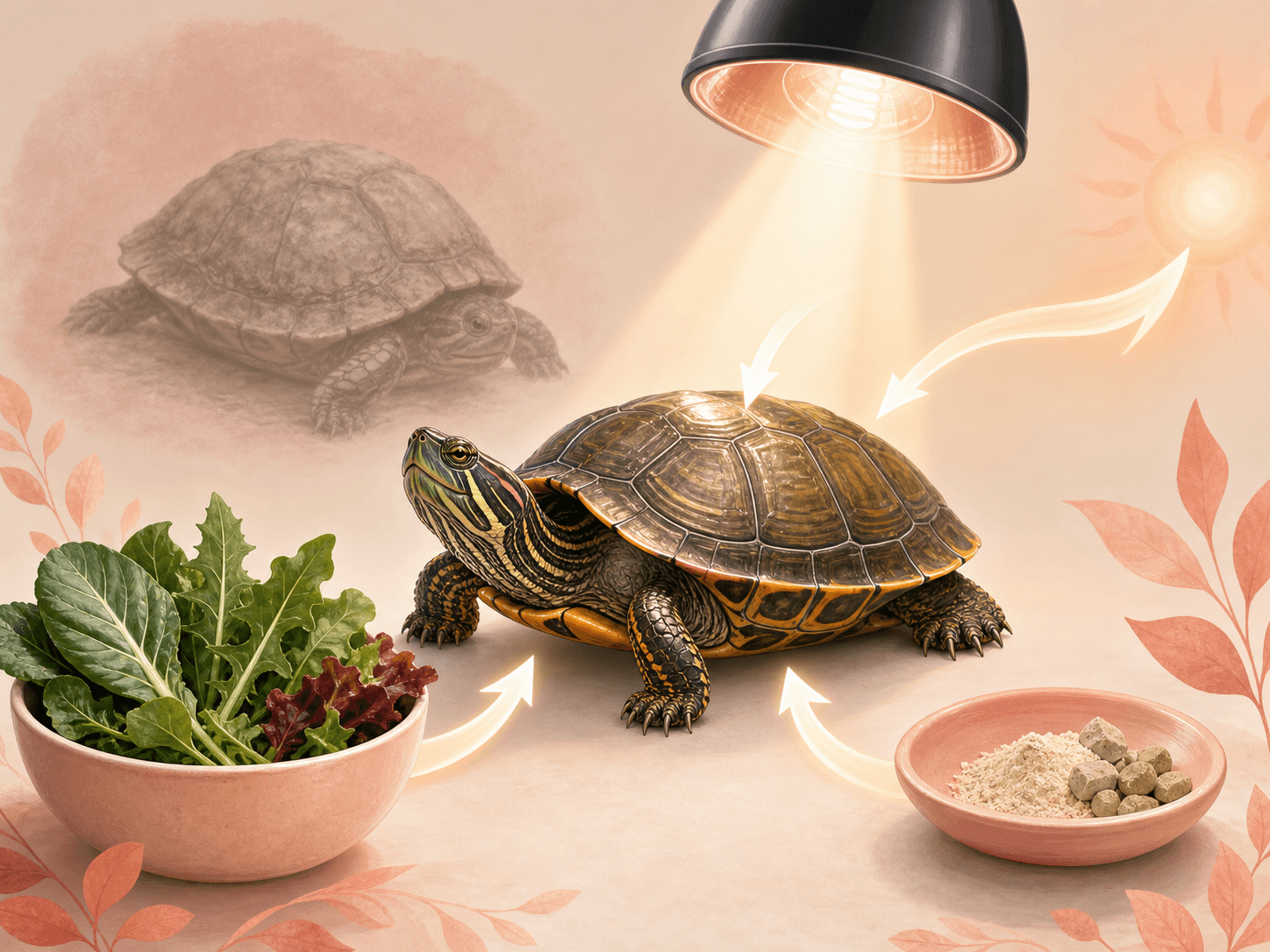
Calcium, vitamin D3, UVB exposure, diet, and husbandry interact, and suspected metabolic bone disease needs veterinary assessment. A turtle in a balcony tub, a tortoise kept near an air-con draft, or a reptile moved between shaded indoor space and bright outdoor time may all have different husbandry details that matter alongside food.
Be extra cautious before changing diet, fortified pellets, calcium, vitamin D3, multivitamins, supplements, or UVB for hatchlings, juveniles, seniors, gravid or egg-laying females, breeding reptiles, chronically ill reptiles, medicated reptiles, anorexic or weak reptiles, immune-compromised reptiles, or any reptile already looking unwell.
What to bring to the appointment
Bring a recent food and supplement history. Include pellets, greens, fruit, dried shrimp, prawns, meat, dog food, cat food, calcium products, vitamin products, and UVB setup details.
Write down the species if you know it. If you are not sure, bring clear photos of the whole animal, shell, head, feet, enclosure, lighting, and usual foods. For rescue handovers, adoption trials, or “my cousin passed me this turtle” situations, bring whatever paperwork or old care notes you were given, even if they look incomplete.
Also note appetite, droppings, activity, shell changes, and any recent diet swaps. A three-day list is better than a confident memory from a stressful consultation room.
For the next vet visit, bring one practical question: “Given this species and setup, what should the regular diet rotation look like, and what should I stop feeding now?”
— Manja