
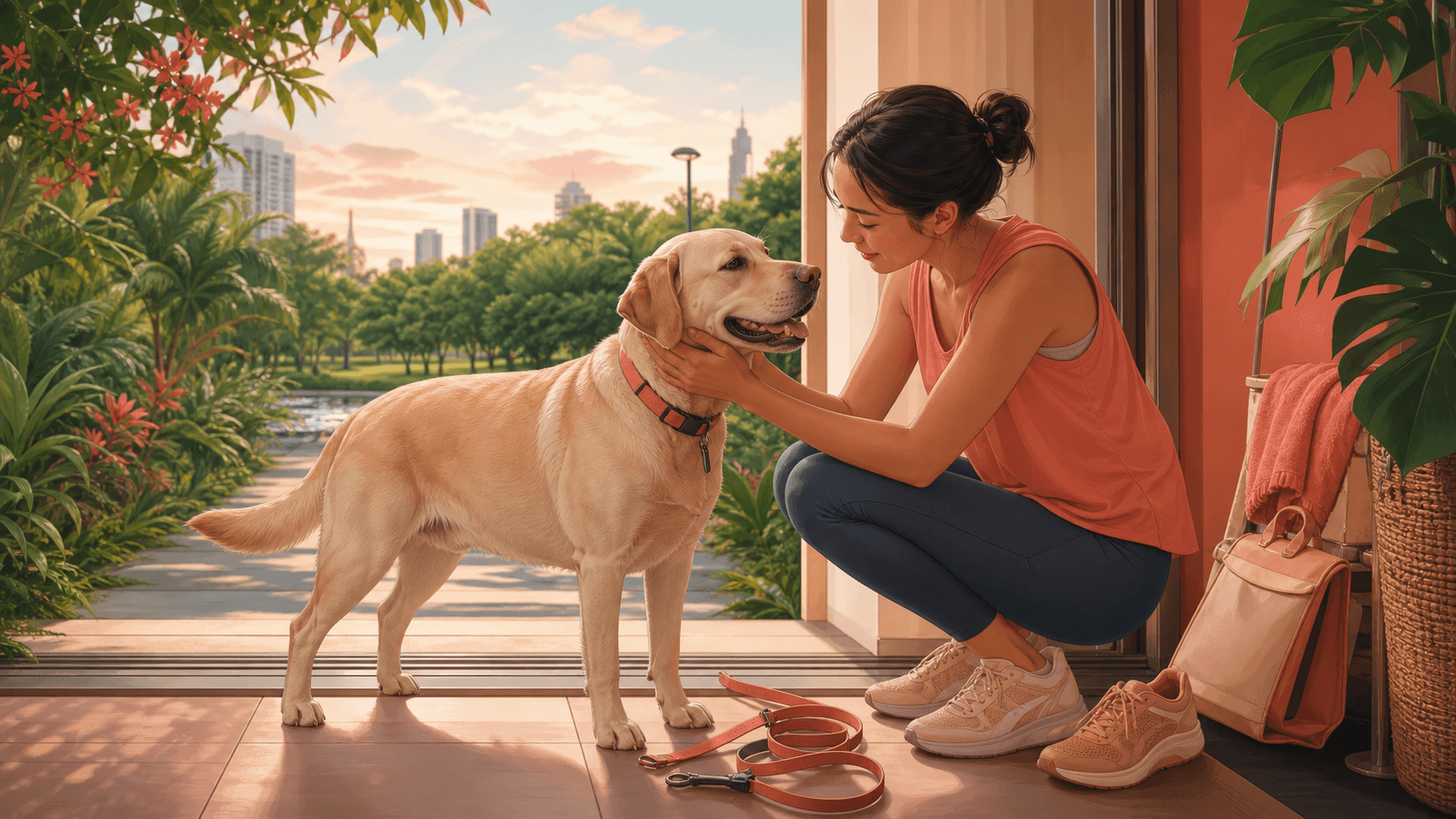
The check starts before the water bowl, the towel rub, or the post-walk flop under the fan.
After a green walk in Singapore, Malaysia, or Indonesia, run your hands over your dog like you are looking for a tiny bead caught in the coat. Ticks are easier to miss than most owners expect, especially on dogs with thick fur, dark coats, floppy ears, or a talent for rolling through wet grass.
This guide helps you spot and remove ticks safely, then decide when the bite needs a vet conversation. It is not a way to diagnose tick-borne disease at home.
Where everyday dogs pick them up
Ticks are not only a hiking problem. City dogs can meet them during ordinary routines: park connector walks, landed-garden sniffing, grass margins beside drains, condo dog runs, and shaded green corridors after rain.
Singapore's park connector network links parks and nature areas, so many dogs pass through vegetated routes again and again. With warm, humid, rainy weather, a year-round tick habit is more useful than thinking in terms of a short “tick season”.
In Malaysia, dogs with landed gardens, semi-outdoor areas, drains, or grass edges should be treated as repeatedly exposed. In Indonesian cities, urban green spaces and corridors can still bring routine tick contact. The point is not to panic after every walk. The point is to make the first check boring and consistent.
Check with your fingers first
Start with touch. An attached tick can feel like a small fixed bump before you can see it clearly.
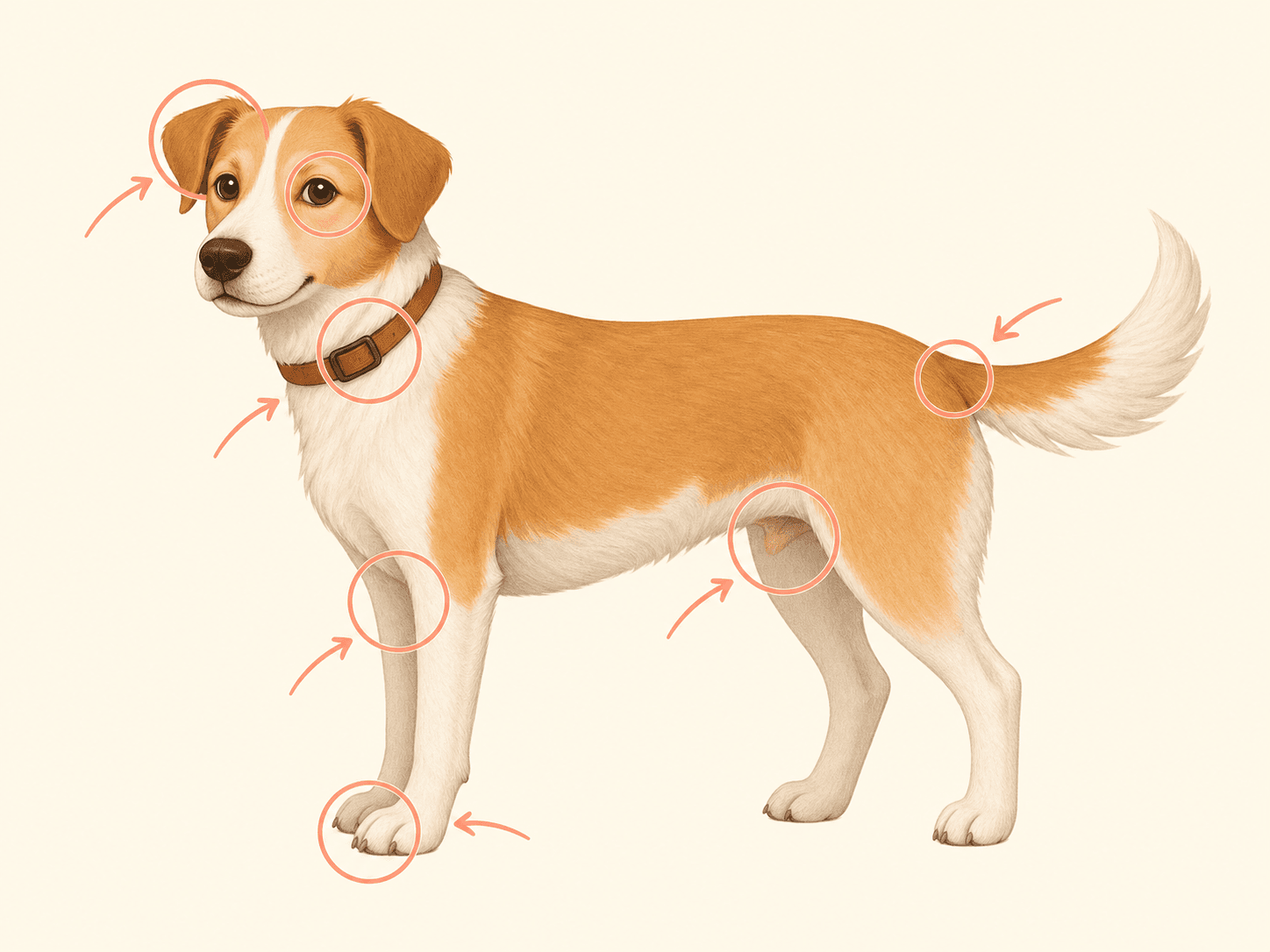
Work slowly through these areas:
- Ears, ear folds, and around the face
- Neck, collar line, and chest
- Armpits and groin
- Between the toes and paw pads
- Around the tail and under the tail base
Part the fur when your fingers find a bump. Look for a tick body fixed to the skin, a dark moving speck in the coat, a scab-like lump, or local redness and swelling around a bite. These are observations, not a diagnosis of tick-borne disease.
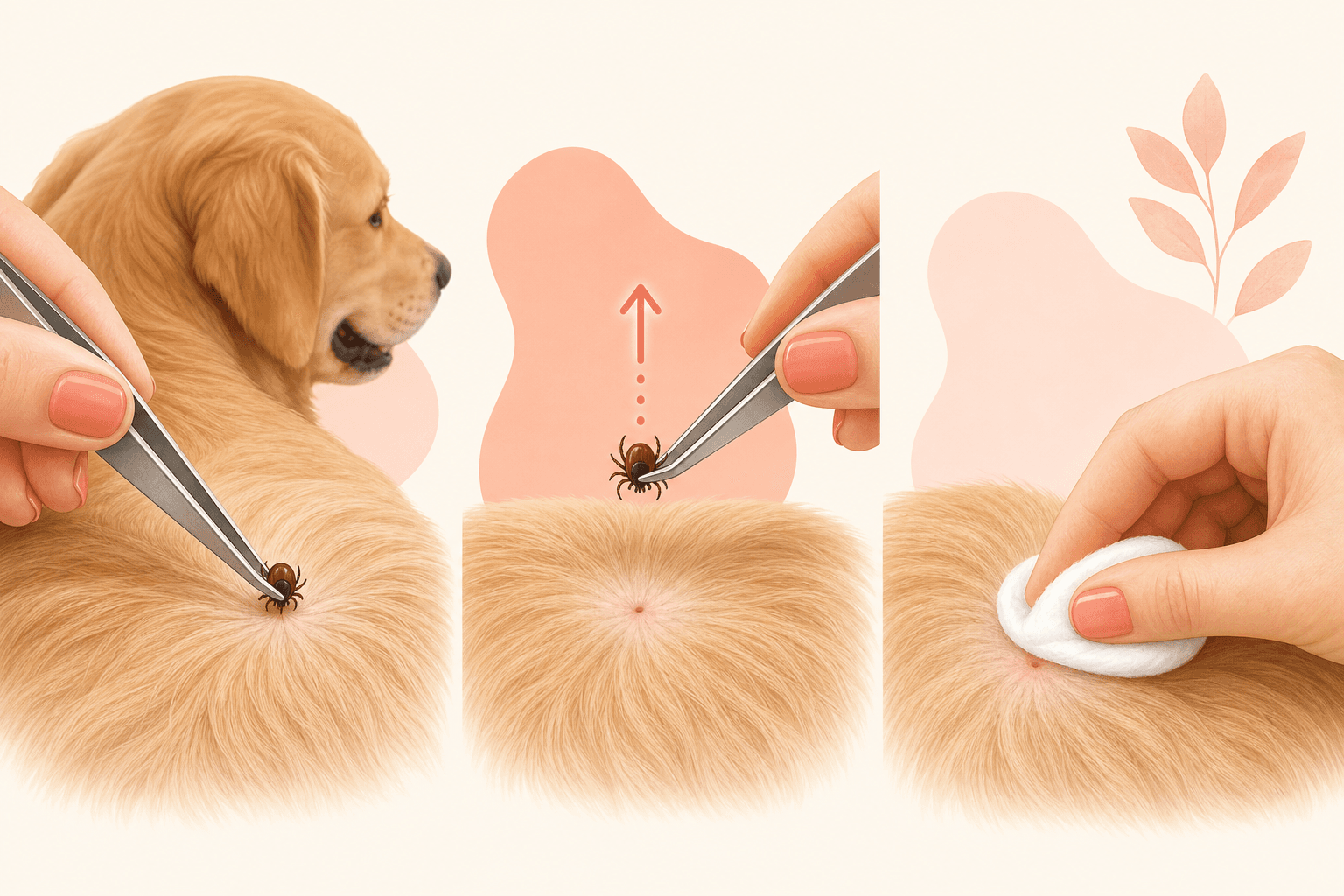
If a tick is attached, use fine-tipped tweezers, grip close to the skin, and pull upward steadily. Do not twist, crush, burn, coat with petroleum jelly, or irritate the tick. After removal, save the tick in a small sealed bag or take clear photos. Where it was attached, what it looked like, and where your dog walked can help your vet assess risk later.
Signs that change the plan
A quiet bite site is one thing. A dog who seems unwell after tick exposure is different.
Call your vet promptly if your dog seems unwell after a tick bite. Watch for lethargy, fever, appetite loss, lameness, swollen lymph nodes, bruising or bleeding, pale gums, dark urine, breathing difficulty, or neurologic signs. Many ticks on one dog also deserves a call.
Treat wobbliness, weakness, voice change, breathing difficulty, or collapse as urgent.
A vet visit matters more when your dog is young, senior, already unwell, on medication, or has known health issues. Tick illness risk and prevention choices are individual, and some signs are easy to underestimate at home.
What to tell the clinic
When you call, keep the useful details close instead of trying to remember them in the lift lobby:
- Date and place of the walk
- Whether the route included wet grass, drains, garden edges, or post-rain dog runs
- Where the tick was attached
- How long it may have been there, if you know
- The tick itself or clear photos
- Your dog’s current tick prevention product
- Any signs since removal
Tick preventives should stay veterinary-led, especially in mixed-pet homes. Dog products must not be casually used on cats.
Before the next green walk, put fine-tipped tweezers and a small zip bag near the leash. The habit you want is simple: walk, water, hands-on tick check, then everyone settles in.
— Manja