
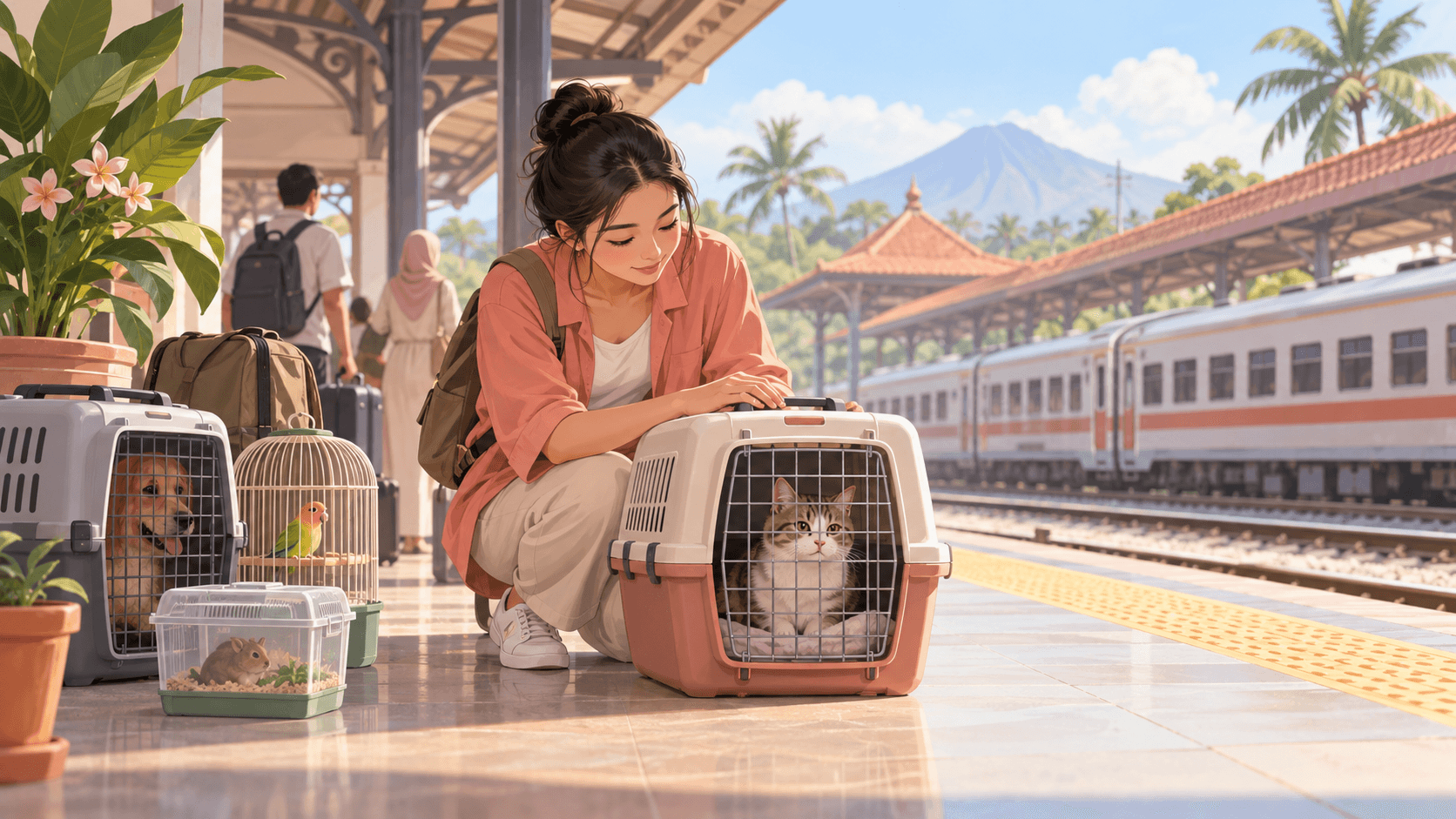
On Java train trips, plan for the handoff before you plan the cute travel photo.
The first job is to confirm the exact carrier or shipping option before booking. Indonesian coverage of KALog describes cats, dogs, rabbits, hamsters, birds, chickens, and ornamental fish as domestic animals accepted for shipment, with cats and dogs most common, but the animals are handled more like cargo than passengers seated beside owners Kompas. That changes the welfare question. Your pet may spend the hardest part of the journey in a station, a carrier, or a handover area, not on the train itself.
Manja is editorial, so use this guide to prepare questions for your vet and the operator, not to decide at home whether a heat-sensitive pet is fit to travel.
Confirm the rule before you pack
Treat Java rail pet travel as an operator-specific process, not a general “pets on trains” routine.
The bundle does not provide current official PT KAI or KAI Logistik rules for every species, route, carrier size, label, fee, or document. That means the practical advice is boring but important: confirm first, then book. Ask whether the animal travels with passengers, as a shipment, or under a separate logistics process.
Do not borrow another country’s train rule and paste it onto Java. India-focused sources describe different procedures for dogs, cats, birds, and sometimes rabbits, including booking steps and documents, but those are India comparisons, not Indonesia policy Petfather. Japan gives a useful size example for small pets, but again, it is not a Java rule.
| Before booking | Why it matters |
|---|---|
| Ask whether pets ride with passengers or move as shipments | KALog coverage describes domestic animals as shipments, not seated companions |
| Confirm species acceptance | Cats, dogs, rabbits, hamsters, birds, chickens, and ornamental fish appear in the Kompas KALog report |
| Ask where the animal waits before departure | Waiting time can add heat, noise, and carrier confinement |
| Ask how pickup works at arrival | The end handoff is part of the welfare plan |
| Separate domestic rail from border movement | Singapore AVS has separate import, export, and transhipment pathways |
For Singapore-linked regional travel, paperwork can become the main journey. AVS treats import, export, and transhipment as separate pet-movement situations, and it has separate pathways for some small mammals such as rabbits, mice, hamsters, gerbils, guinea pigs, and chinchillas AVS import guidance. A Java rail trip is not the same thing as bringing a pet into or through Singapore.
The carrier is the first safety tool
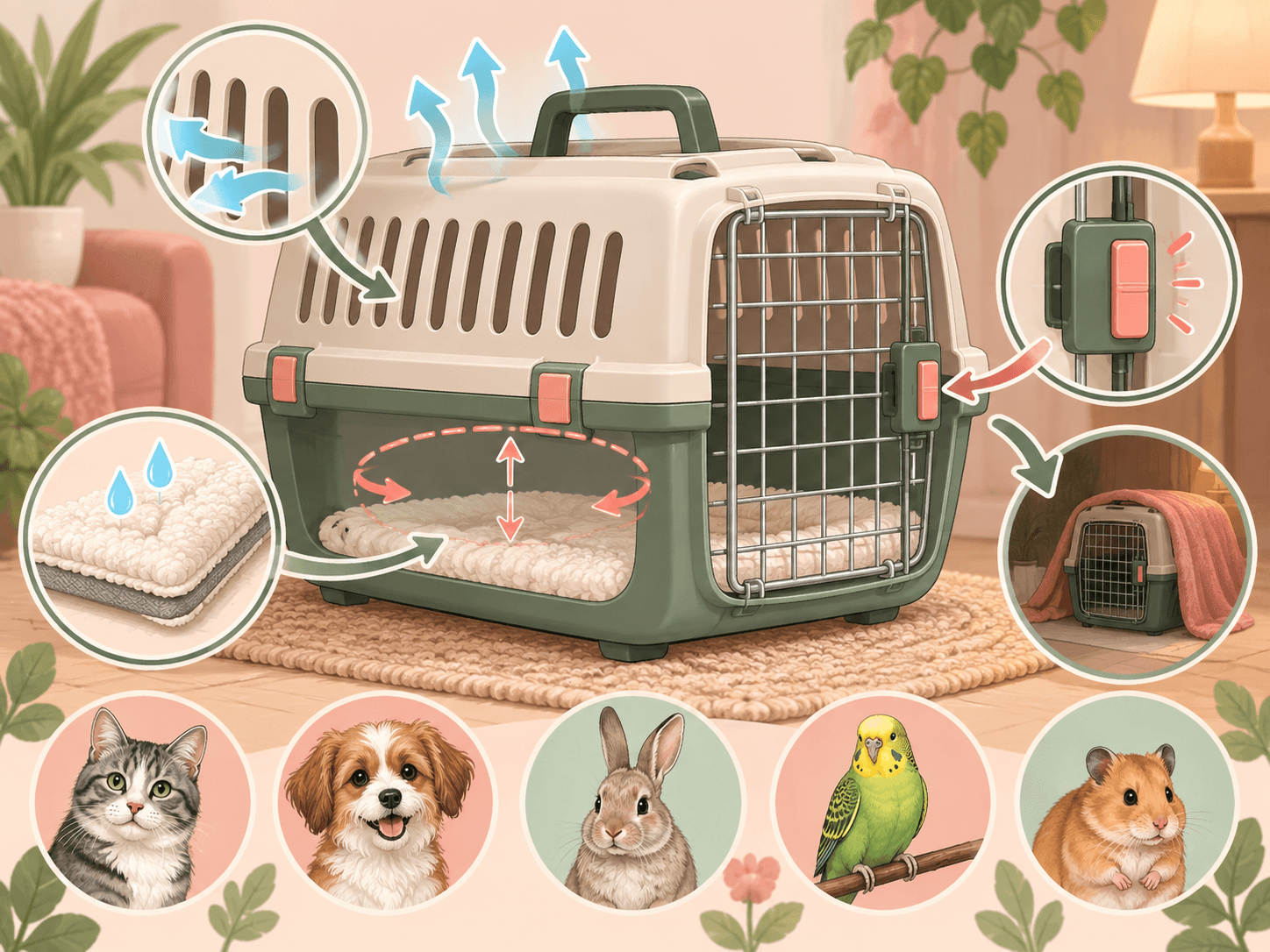
A good carrier lets the animal stand, turn around, lie down, and breathe easily. That is the shared baseline across the travel sources for cats, small dogs, and other small pets Pet Yaari.
For dogs and cats moving through Singapore’s Tuas Checkpoint from Malaysia, AVS is more concrete: they must be transported in an IATA-approved crate or carrier AVS transhipment guidance. That is a Singapore-linked checkpoint rule, not a Java train rule, but it shows how seriously official systems treat crate standards.
Japan’s small-pet rail example is useful only as a comparison. Some Japanese trains require total carrier dimensions under 120 cm and combined pet-plus-carrier weight under 10 kg Japan Living Life. Do not use those numbers as KAI or KALog limits unless the operator confirms them.
| Pet | Short-trip carrier focus |
|---|---|
| Cat | Secure, ventilated carrier with enough room to stand, turn, and lie down |
| Small dog | Ventilated crate or carrier, plus leash and identification during handling |
| Rabbit | Secure travel carrier, not a normal housing substitute |
| Bird | Secure cage or carrier kept closed in busy station areas |
| Hamster | Escape-resistant travel container, separate from normal habitat needs |
For rabbits, hamsters, guinea pigs, chinchillas, and other small mammals, do not confuse a travel carrier with normal housing. AVS separates everyday feeding, housing, enrichment, and veterinary care guidance from movement guidance for these animals AVS pet care. A container that works for a short transfer is not proof that the animal’s daily enclosure is adequate.
Heat changes the risk calculation
Indonesia’s heat is not a background detail. It is part of the travel plan.
An Indonesia pet guide notes that pug-nosed breeds and long-haired dogs and cats may have more difficulty adjusting to heat than shorter-haired animals, and it flags fleas and ticks as serious concerns in Indonesian home environments Expat.or.id. AVS also advises owners to consider age, medical conditions, and travel stress before moving a dog or cat, and notes heat-stress risks for small breeds or young dogs during travel AVS import dogs and cats.
The bundle does not give a Java-specific temperature cut-off for postponing a trip. So do not invent one. Instead, make the decision earlier. If your Persian cat, French Bulldog, Shih Tzu, rabbit, bird, or hamster already struggles in warm rooms, the station wait may be the problem, even if the train ride is short.
| Situation | Owner action |
|---|---|
| Short-nosed or long-haired cat or dog | Confirm handling time and watch closely after arrival |
| Young, small, older, or medically fragile dog or cat | Reconsider whether the journey is necessary |
| Long station wait in tropical heat | Ask whether there is a cooler, calmer handoff option |
| Arrival after a stressful trip | Check breathing, alertness, and recovery before continuing onward |
Keep the pet secured. Do not open a carrier in a crowded station to “give air” unless you are in a controlled, safe place. A frightened cat or hamster in a noisy terminal is not easier to help once loose.
Waiting time is welfare time

Waiting is not empty time. It is carrier time, noise time, heat time, and smell time.
Some rail systems require early arrival for pet procedures. One India-focused source says owners using Indian rail pet procedures should arrive at the Parcel Office 3 hours before departure with required documents NDTV. That is not an Indonesia rule. It is a useful warning: the official process can stretch the animal’s day.
Crowded stations can overstimulate cats, small dogs, rabbits, birds, and hamsters. Sources on rail travel describe stations as crowded, noisy, and full of unfamiliar smells, and recommend keeping pets close, calm, secure, and in their carrier until boarding or handoff Redbus.
| Station moment | Better default |
|---|---|
| Waiting near busy platforms | Keep the carrier closed and close to you |
| Noise spikes or crowding | Move to the calmest allowed waiting spot |
| Long pre-departure process | Treat the extra time as part of the pet’s journey |
| Handover to staff | Confirm where the carrier will be placed and how pickup works |
Kompas reports that KALog staff place animals last and near ventilation, but also says animals are not separated from other items Kompas. That is exactly why the pre-trip call matters. You are not being fussy. You are checking the conditions your pet will actually experience.
Make the kinder call early
A train trip is not a personality test for your pet. A quiet hamster, a frozen rabbit, or a cat that has stopped protesting may still be stressed.
Before you commit, write down three things: the confirmed operator process, the total time your pet may spend in the carrier, and the hottest or noisiest part of the route. If one of those feels vague, fix the plan before booking. Small thing, done early: call the operator, confirm the carrier rule, and decide whether this trip is kinder now or kinder postponed.
— Manja