
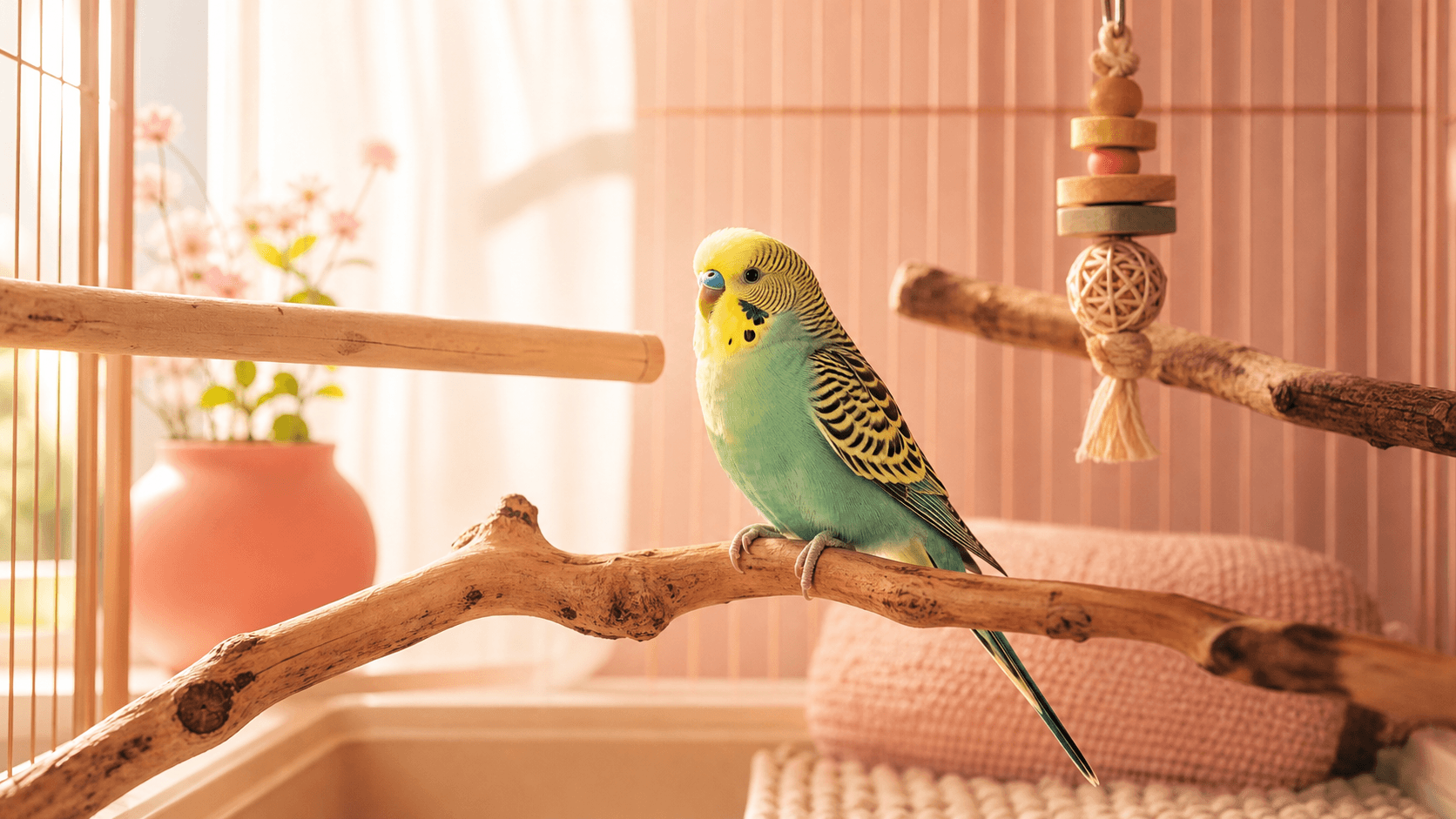
A budgie with sore feet, curling nails, or a changing beak needs a better setup first, not a brave owner with nail clippers.
Manja is editorial, so use this guide to prepare for the vet conversation, not to diagnose or trim a painful beak or nail at home. The useful home job is simple: check the grip, check the beak, check the perch, then change what is safe to change.
Healthy wear starts with varied perches
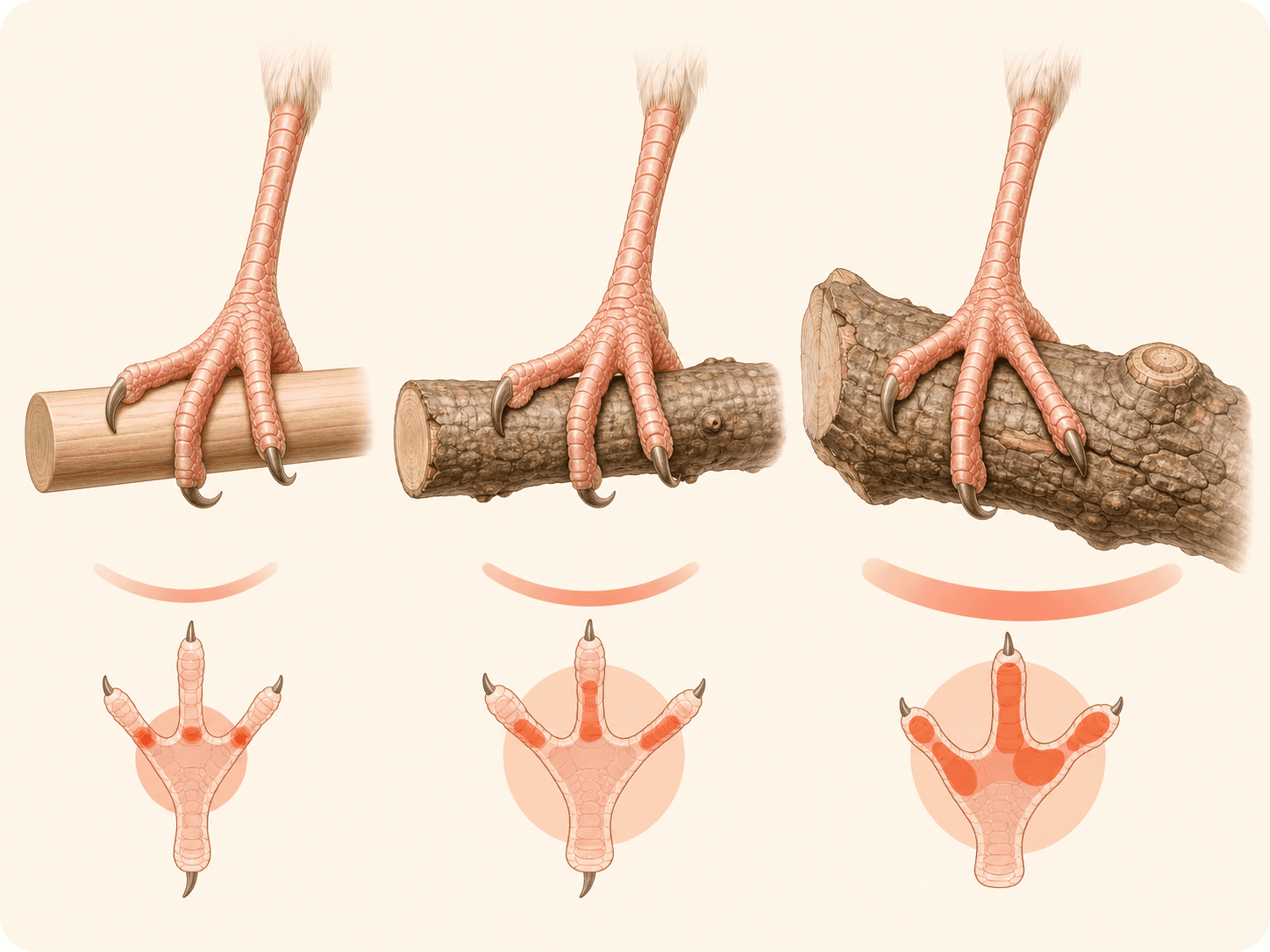
Small birds should not spend the day gripping one smooth dowel of one size. Their feet need changing pressure. That means multiple perches with different diameters, textures, and shapes, matched to the bird’s size.
Natural or irregular perches help because the foot does not close in the same position every time. Smooth identical dowels can make pressure repetitive. Sandpaper perch covers sound helpful, but they are not recommended because they can abrade the feet and do little for safe nail control, according to VCA’s perch guidance.
Use the numbers as a starting tier, then look at the bird’s grip. The toes should wrap comfortably without being forced into one fixed position all day.
| Bird size tier | Perch diameter range | Setup note |
|---|---|---|
| Finches and canaries | 0.25-0.5 in / 0.6-1.3 cm | Use variation, not one uniform size |
| Budgerigars / parakeets | 0.375-0.75 in / 1.0-1.9 cm | Offer enough variation that the foot does not always grip the same way |
| Cockatiels and lovebirds | 0.5-1.0 in / 1.3-2.5 cm | Natural branch variation is preferred over identical dowels |
Put the favourite resting perch, food perch, and play perch through the same test. If every important spot is the same diameter, the bird’s feet are still doing the same work.
Beaks need function, not home reshaping
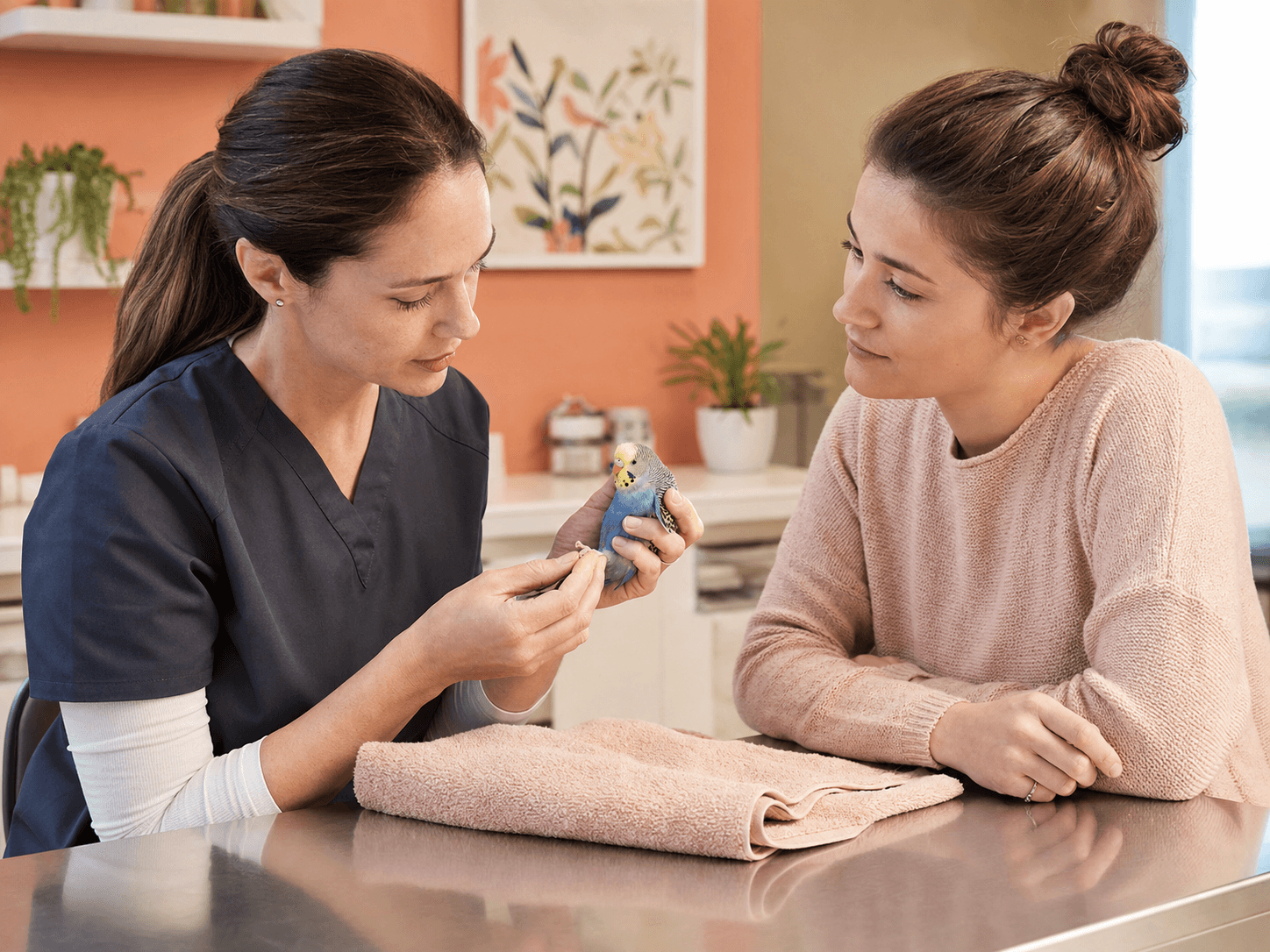
A healthy beak lets the bird eat, groom, and use its mouth normally. It should look generally symmetrical for that bird. That does not mean every beak looks identical across species, or that owners should file a beak because it looks different from an internet photo.
Overgrowth, cracks, bleeding, swelling, pain, malocclusion, or difficulty eating are reasons to seek an avian veterinarian rather than trimming at home. VCA notes that abnormal beak growth can reflect medical problems and that beak trimming should be done by trained veterinary professionals, not guessed through at home (Trimming a Bird’s Beak).
Diet texture and foraging can support normal beak use. They are not treatment for beak disease. Persistent beak overgrowth can be associated with underlying illness, trauma, congenital issues, or malnutrition, so the cause matters before anyone reaches for tools.
| What you see | What it may mean at home | Owner action |
|---|---|---|
| Beak looks symmetrical and bird eats normally | Normal function for that bird | Keep observing weekly |
| Beak is overgrown or misaligned | Needs cause checked | Book an avian-vet assessment |
| Crack, bleeding, swelling, or pain | Possible injury or disease concern | Escalate promptly |
| Difficulty eating or grooming | Function is affected | Do not trim at home |
Small thing, done daily: watch the first few bites of food. A bird that wants to eat but struggles to use the beak is giving you useful information.
Nails should grip, not catch
Nails are not “fine” just because the bird can still perch. Watch what happens when the bird moves. Nails that catch on fabric or cage parts, curl, cause slipping, change grip, bleed, or make the bird reluctant to perch need professional assessment or trimming.
The reason is anatomy. Bird nails contain a quick with blood vessel and nerve tissue. Cutting too aggressively can cause bleeding and pain, and VCA recommends trained help when owners are unsure (Wing Clipping and Nail Trimming in Birds).
Better perches may reduce repetitive pressure and support normal wear, but they do not replace nail care when nails are already too long or painful. Think of perches as the daily system. Think of trimming as a skilled procedure when needed.
| Monitor | Call for help | Go promptly |
|---|---|---|
| Nail length looks stable and grip is normal | Nails catch, curl, or change grip | Bleeding, pain, swelling, or inability to perch |
| Bird moves normally between perches | Bird slips or avoids a perch | Sudden behaviour change with reduced appetite |
| Foot skin looks comfortable | Foot skin looks irritated | Bird cannot rest normally |
What changed and why
Older small-bird advice often treated rough perches as nail-control shortcuts. The better rule is more specific: vary perch diameter and texture, and avoid surfaces that can abrade the feet.
The same shift applies to beaks. A tougher food texture or more foraging can be useful enrichment, but it should not be sold as a cure for beak overgrowth. Beak problems can come from medical causes, trauma, congenital issues, or nutrition problems, so a persistent change needs diagnosis.
Food matters too, but not as a magic file for the beak. For small parrots such as budgies and cockatiels, seed-only diets are not considered balanced. Veterinary guidance commonly recommends formulated pellets as a major diet component, with vegetables and controlled seed portions adjusted by species and individual health status (Nutrition for Birds).
That is the seam: less “buy the scratchy perch,” more “build a foot-safe setup, feed a balanced diet, and notice changes early.”
Do the weekly five-point check
Once a week, look at the bird before you clean the cage. Do it while the bird is using its normal perches, not only while sitting still.
Check beak symmetry. Check eating comfort. Check nail length. Check grip. Check foot skin and perch safety. These are reasonable home observations supported by preventive bird-care guidance from the Association of Avian Veterinarians and illness-recognition guidance from VCA.
Keep the check boring. Boring is good. A bird that eats, grips, grooms, and rests in the usual way is giving you a baseline. When that baseline changes, you can act earlier and explain the change more clearly.
Tonight, remove any sandpaper perch cover, compare your bird’s main perch against the size tier above, and write down one thing you noticed about beak, nails, grip, or feet.
— Manja