

When the 1-hour PM2.5 reading turns smoky, your dog’s walk and your cat’s window patrol need a smaller plan: less outdoor air, more indoor work. Check the air first. Spend the energy inside.
What the risk is and why now
Singapore’s haze risk is seasonal because regional hotspot and smoke-haze activity becomes more relevant during the drier southwest monsoon months. For owners in Singapore, Malaysia, and Indonesia, the routine should follow air-quality alerts, not a fixed calendar date.
For short-term pet decisions in Singapore, check the 1-hour PM2.5 reading before walks, balcony time, or opening windows. It reflects recent fine-particle conditions more directly than broad daily summaries. On smoky days, shorten outdoor time because smoke-haze particles can irritate a dog’s or cat’s eyes and airways.
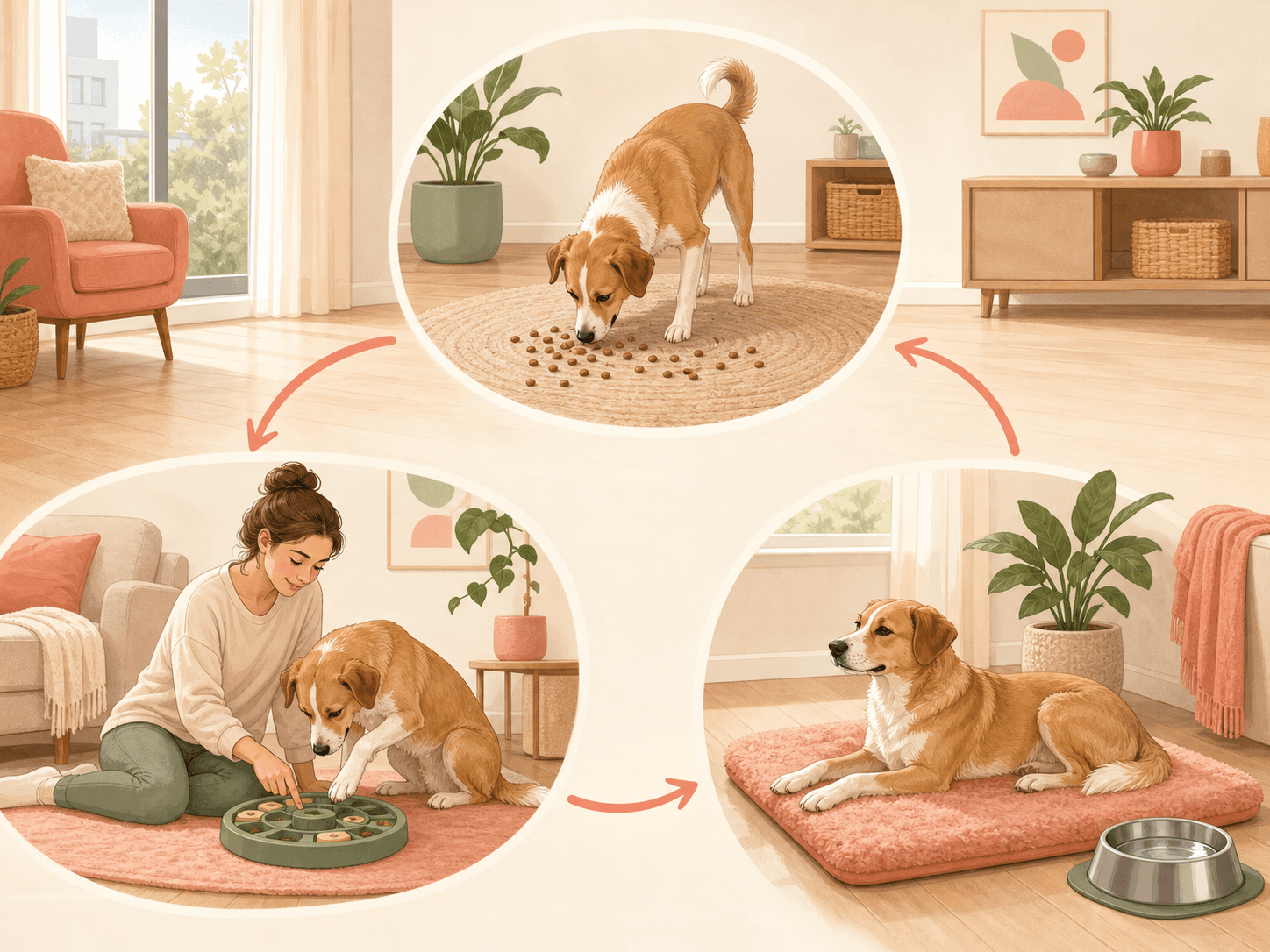
Some pets need a tighter plan: apartment pets, seniors, young animals, pets with heart or respiratory disease, and short-muzzled dogs. Close the windows, keep indoor air cleaner, take dogs out for quick toilet breaks, then move the entertainment department indoors. Food puzzles, hide-and-seek, scent games, training repetitions, cat wand play, and low-impact fetch or tug can replace part of the usual outdoor stimulation.
Manja is editorial, so use this as a daily safety routine; ask your vet for individual diagnosis if your pet has breathing signs or a known medical condition.
The warning signs to watch for

Watch the pet, not just the haze map. Early smoke-irritation signs can look ordinary: coughing, gagging, sneezing, nasal discharge, red or watery eyes, lower activity, or a dog that suddenly refuses a usual walk.
Cats need extra suspicion. A cat with open-mouth breathing, more breathing effort, wheeze, repeated cough, or reduced appetite is not just sulking about indoor life. Treat those signs as more serious.
Short-muzzled dogs also deserve a closer look. Bulldogs, French Bulldogs, Pugs, and Shih Tzus can have narrower upper-airway anatomy, so smoky air plus Singapore heat and humidity can make panting, noisy breathing, or exercise intolerance more concerning.
Make the routine boring on purpose. Before walks, balcony time, or opening windows, check the 1-hour PM2.5 reading. If the air looks smoky or the reading is worrying, keep windows closed, shorten dog toilet breaks, and move the fun indoors: food puzzles, scent games, training reps, wand play for cats, or low-impact tug.
Write down the exposure story: last walk timing, 1-hour PM2.5 reading, time outdoors, whether windows were open, coughing frequency, appetite, water intake, and any eye or nasal discharge. Manja is editorial, so ask your vet for individual diagnosis when breathing signs appear.
When to see a vet
Call your vet promptly if your dog or cat has laboured breathing, blue or pale gums, collapse, persistent coughing, severe lethargy, or eye injury signs after haze exposure. For cats, open-mouth breathing is a red flag. That is not “just haze” or “just stress from staying indoors”.
Manja is editorial, not a clinic, so we cannot diagnose your pet from a symptom list. If your pet seems unwell, talk to your vet. This matters more for pets with known heart or respiratory disease, young animals, seniors, and flat-faced dogs such as Bulldogs, French Bulldogs, Pugs, and Shih Tzus.
Bring details, not guesses. Note the symptom timeline, the last walk timing, the 1-hour PM2.5 reading, how long your pet was outdoors, whether windows were open, appetite, water intake, coughing frequency, and any eye or nasal discharge. Bring the medication list and any known heart or respiratory diagnoses too. Those details help the veterinary team triage the problem without asking the article to play doctor.
Tonight, save the haze portal beside your weather app and write one short “normal breathing” note for your pet: quiet, sleeping, eating, no cough. It gives you a baseline before the smoky day arrives.
— Manja