

Bring your dog or cat's vaccine record to the next booster visit. The main point is simple: core vaccines are the baseline every pet needs, and non-core vaccines depend on how your pet actually lives.
Your vet tailors the schedule to your individual pet — this article is to help you walk into that conversation ready, not to replace it.
Why these guidelines matter
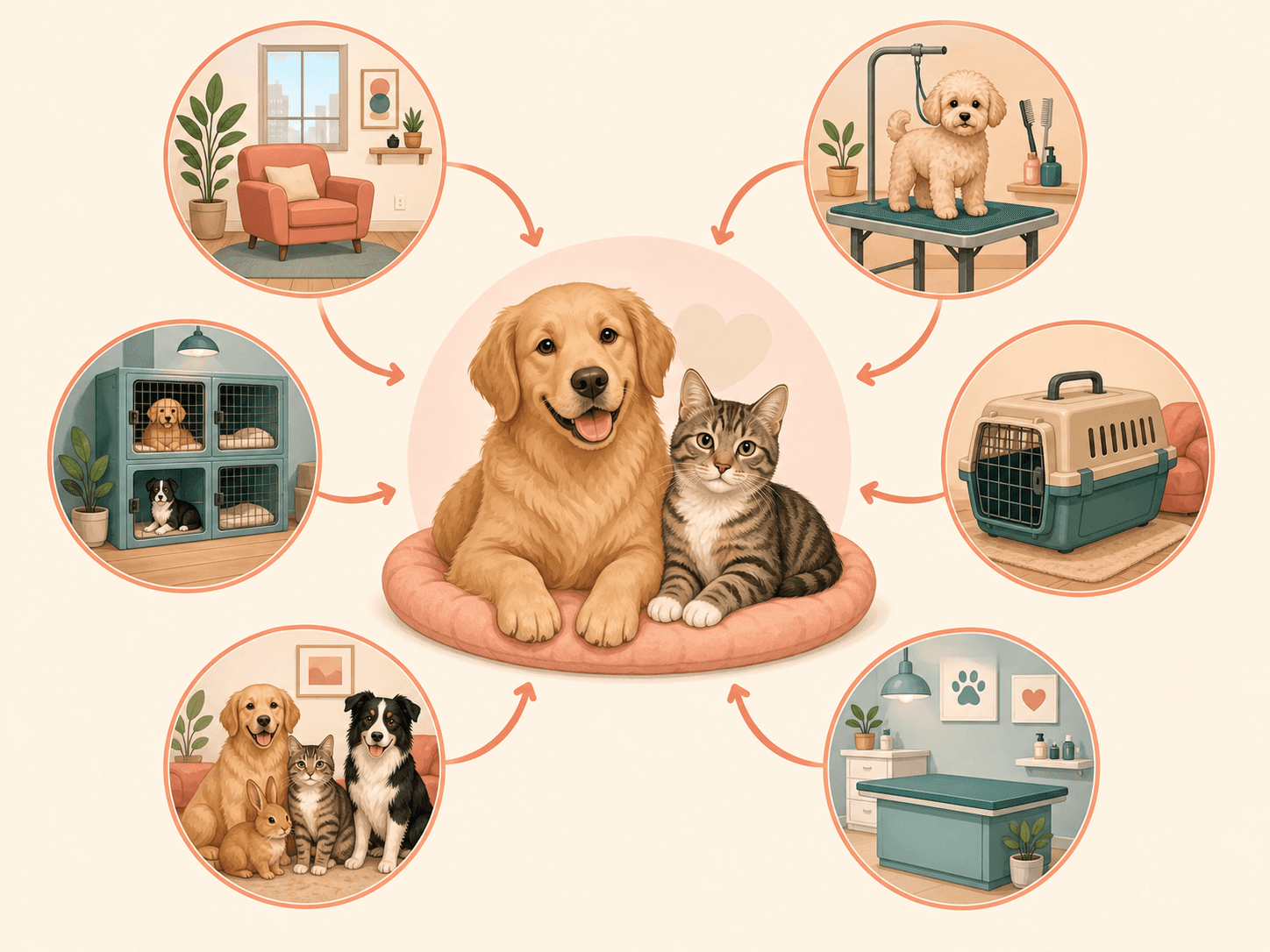
Singapore has its own national vaccination guidance for dogs and cats, developed jointly by AVS (the Animal & Veterinary Service, under NParks) and the Singapore Veterinary Association. The first edition was published in November 2020 by a working group that had been studying local conditions since 2019. That matters because routine boosters here shouldn't feel like a mystery sticker on a vet card — there's a local, evidence-based logic behind them.
Core vaccines are recommended for every dog or cat. They protect against severe, widespread, or high-consequence diseases known to circulate in Singapore. Non-core vaccines are chosen after looking at the individual pet: lifestyle, environment, exposure risk, travel plans, and local disease pressure.
So the booster chat should get specific. A homebody cat, a dog that goes to daycare, and a pet flying to Malaysia or Indonesia won't need the same plan. Singapore's context shapes the decision too: dense housing, a hot and wet climate, busy boarding and grooming habits, travel rules, and the country's rabies-free status.
Core vs non-core: the quick map

Here's how the Singapore guidelines and the international WSAVA guidelines line up the main vaccines. Examples are illustrative — your vet decides what applies to your pet.
| Dogs | Cats | |
|---|---|---|
| Core (all pets) | Canine distemper virus, canine adenovirus, canine parvovirus | Feline panleukopenia (feline parvovirus), feline herpesvirus-1, feline calicivirus |
| Non-core (by lifestyle / exposure) | Leptospirosis, kennel cough (e.g. Bordetella, parainfluenza), canine coronavirus; rabies for overseas travel | Feline leukaemia virus (FeLV), feline immunodeficiency virus (FIV); rabies for overseas travel |
A few things worth pulling out:
Rabies is non-core in Singapore because the country is rabies-free — but it's commonly required for import, export, or a destination country's entry rules. That's a legal and travel requirement, separate from local disease prevention.
Leptospirosis is non-core, but easy to under-rate here. Warm, wet conditions and contact with water or urine from infected animals can raise exposure. The Singapore guidelines note that dogs with outdoor access or possible exposure to infected urine should be vaccinated. It's still a conversation, not an automatic yes before every rainy spell — your vet should ask about walks, drainage areas, dog runs, and boarding.
FeLV and FIV stay risk-based for cats — most relevant for cats with outdoor access, shelter exposure, or contact with unknown-status cats.
Put together, here's when a vet might raise each non-core vaccine — based on the exposures named above, not a fixed rule:
| Non-core vaccine | When your vet might recommend it |
|---|---|
| Rabies | Import, export, or a destination country's entry rules for overseas travel |
| Leptospirosis | Dogs with outdoor access or possible exposure to infected urine; walks, drainage areas, dog runs, boarding |
| Kennel cough | Shared spaces — boarding, grooming, daycare |
| FeLV / FIV (cats) | Outdoor access, shelter exposure, or contact with unknown-status cats |
What this means for routine boosters
Routine boosters should be a risk conversation, not a calendar reflex. For adult dogs that finished their puppy series and the first 6- or 12-month booster, evidence-based guidelines commonly support modified-live core boosters no more often than every three years. Lower-risk adult cats may also fit a three-year core plan where the product label and clinical picture allow, while higher-risk cats can need shorter intervals for the respiratory-virus components.
The exact interval depends on the vaccine type, the product label, your pet's health, and exposure risk — which is exactly why it's a vet decision, not a chart you read off at home.
How to talk to your vet
Bring it back to your actual dog or cat. Start here: "Which vaccines are core for my pet, and which are non-core because of our routine?" Then name the real exposures — boarding, grooming, daycare, outdoor access, contact with unknown-status animals, travel.
Ask the schedule question plainly: "When was my pet's last complete primary series and first adult booster, and does the label support a 1-year or 3-year interval for each one?"
Then add the local-risk question: "Do rainy-season habits, nearby construction or drainage, dog runs, boarding, or an upcoming Malaysia or Indonesia trip change our plan?" That keeps leptospirosis, kennel cough, FeLV, and rabies in the right lane — risk-based, travel-dependent, or law-dependent.
This week: find your pet's vaccine record, circle the last booster date, and bring three notes to your vet — routine, shared spaces, and travel plans.
- Manja