
Your cat needs to be microchipped and licensed through PALS before the transition period ends on 31 August 2026. Do it now and the rule becomes a 20-minute task, not a deadline you dread.
The fastest path: confirm the microchip, log in to PALS, finish the short pet-ownership course (first-timers), enter the cat and owner details, and submit. Licences are free through the transition window, so there is no reason to wait. This guide prepares you to get the paperwork right; for anything about your individual cat's health or handling, ask your vet.
What changes by 31 August 2026
Singapore's cat licensing transition period runs from 1 September 2024 to 31 August 2026. By the end of that window, every pet cat in Singapore must be microchipped and licensed under AVS rules. After 31 August 2026, an unlicensed cat is no longer covered by the transition arrangements.
This is for ordinary pet cats. Not a pedigree problem, not just the household with six cats and a spreadsheet. If a cat lives with you as a pet here, the deadline is yours.
The key facts at a glance:
| Item | Detail |
|---|---|
| Deadline | 31 August 2026 (transition runs from 1 September 2024) |
| Cost | Free through the transition window |
| Where to apply | PALS (pals.avs.gov.sg) — the only route |
| First-timers | One-time free online pet-ownership course required |
| Microchip | Required before a licence can be issued |
Single-cat homes: check your status early and clear it in one sitting. Multi-cat homes: check each cat, because the licence attaches to the individual animal, not the household. Fosterers, rescue groups, adoption-trial carers, and adopters have an extra question to settle first — who applies or updates the record — and AVS/PALS covers those foster, rescue, trial, and transfer cases.
Your cat-licensing checklist
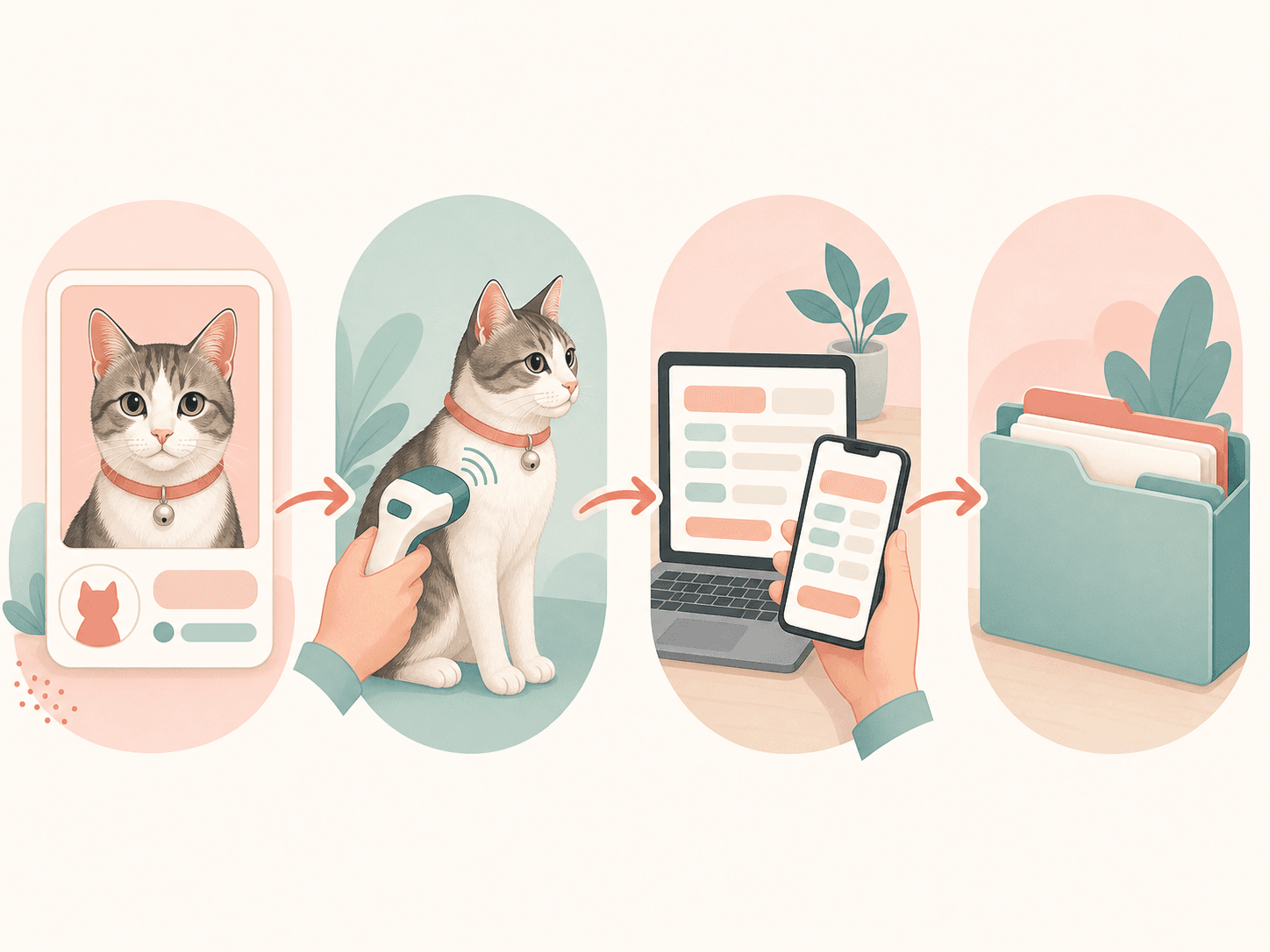
Work through this in order. It is one short session per cat, not a project.
| Step | What to do |
|---|---|
| 1. Microchip the cat | A licence needs a reliable identifier, and the microchip is it. If your cat is not chipped, do this first; if unsure, ask a vet or qualified provider to scan and confirm the number. |
| 2. Log in to PALS | Log in to (or create) your account at pals.avs.gov.sg. The cat licence can only be applied for through PALS. |
| 3. Finish the free course | First-time applicants must complete this one-time course (about 20–30 minutes on basic care, health, and legal responsibilities) before a licence can be issued. |
| 4. Enter owner details | Your name, contact number, and address as the registered licensee. |
| 5. Enter cat details | Microchip number, basic particulars, and sterilisation status. During the transition you can self-declare a sterilised cat if you cannot produce the certificate. |
| 6. Submit | Licences are free from 1 September 2024 to 31 August 2026. Sterilised cats get a one-time lifetime licence; unsterilised cats get a transition-period licence. |
| 7. Save the record | Keep the confirmation, the microchip number, and the details you entered where you can find them. |
| 8. Keep details updated | Update the record if the cat or owner information changes later. |
Two cats means running the list twice. If one cat has an old chip number scrawled on a clinic card, get the number confirmed before you start, not mid-form.
Microchipping without the stress
The microchip is the part the licence hangs on, so it is worth getting right rather than rushed. It is a permanent identification step, not a punishment or a behaviour fix.
If you are not sure your cat is chipped, ask a vet or qualified provider to scan first. That is especially sensible for kittens, senior cats, anxious cats, or cats with health concerns — the chip sits under the skin and the number has to be scanned and recorded correctly.
After the chip is in, the contact details do the real work. A microchip only helps reunite you with a lost cat if the registered number and your details are current. Move house or change your phone number, and you update the licence record and the microchip registry where it applies. The chip stays with the cat; the record is what reaches you.
Multi-cat and foster homes

Write the list before you touch the form. Name every resident cat, then check each one against the keeping limit and the licence step.
The limits depend on where you live:
| Where you live | Keeping limit |
|---|---|
| HDB flats | Up to two cats per flat under the Cat Management Framework |
| Private (non-HDB) premises | A maximum of three cats and/or dogs combined per premises — not three cats on top of any dogs (two cats and one dog already reaches the cap) |
If you keep more than the limit, you need AVS approval to do so, applied for during the transition period — so check the AVS transition provisions and license your cats now rather than rehoming anyone on a rumour.
Foster homes carry one extra column: who is the legal keeper for licensing. Before a foster cat moves in, settle whether the fosterer, rescue group, final adopter, or transferring party handles the AVS/PALS step. For adoption trials, temporary care, and transfers, check AVS/PALS instead of guessing.
Community-cat rescue homes get tangled fast — one tabby in the bathroom, one kitten on adoption trial, one senior waiting for transfer. Prepare each cat's microchip number, basic details, current carer, and next-move note before any application starts.
After the licence is approved
Approval starts the folder; it does not close the job. Save the licence confirmation, the microchip number, and the details you entered in PALS, so when a clinic, adopter, fosterer, or family member asks "what's the chip number again?" the answer is one tap away.
Update AVS or PALS when the record changes — a new phone number, a change of ownership, a change in the cat's status. AVS has processes for cancelling a licence and transferring pet ownership, so treat the record as something you maintain.
Keep the neighbouring paperwork together: vet records, sterilisation notes, adoption or transfer documents, and microchip registry details where they apply.
Tonight, open one folder per cat: licence, microchip number, vet paperwork, owner contact details. That is the boring bit that makes the whole thing work — and it spares future-you a midnight document hunt before the 31 August 2026 deadline.
— Manja