
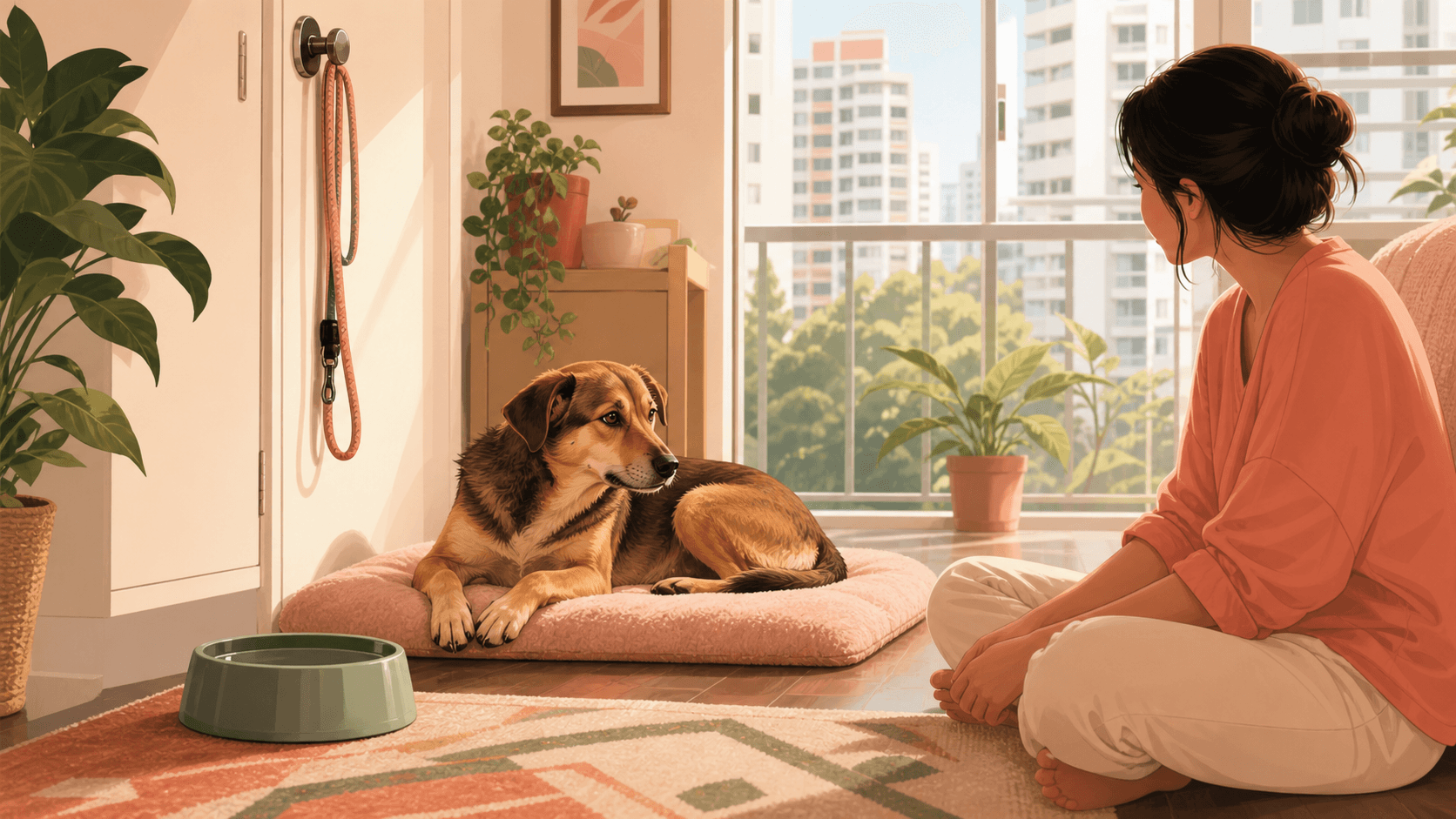
The first few days with a rescue dog can feel strangely quiet. They may sleep behind the sofa, pause at every lift chime, or stare at the corridor as if it has opinions. That does not mean you have failed the welcome home.
In an apartment, the outside world starts close: neighbours at the gate, delivery riders, lift doors, corridor echoes, traffic below, children running past after school. A newly adopted dog needs a small life before a bigger one. Space, routine, and slow introductions will do more than a packed welcome tour.
Read the trend, not one awkward moment
A new rescue dog may need days to weeks before their behaviour looks stable. Hiding, sleeping more, eating less, startling at sounds, and cautious exploring can all sit inside the normal settling range if the trend is improving.
The basic check is plain: the dog is eating, drinking, toileting, recovering after stress, and not becoming more fearful or reactive.
Shyness by itself is not the emergency. The worry is a dog who cannot come back down. Act sooner if your dog repeatedly refuses food or water, eliminates from panic, growls or snaps even when given space, hurts themselves, or shows a sudden behaviour change. Use these notes to prepare for a vet or behaviour conversation, not to diagnose your dog at home.
Heat matters too. In Singapore, Malaysia, and Indonesia, a long humid walk can turn into another stressor, especially for anxious, older, overweight, or short-nosed dogs. Keep early walks shaded, short, and boring. A successful outing may be five calm minutes near the void deck, not a full neighbourhood route.
Build a small, repeatable day
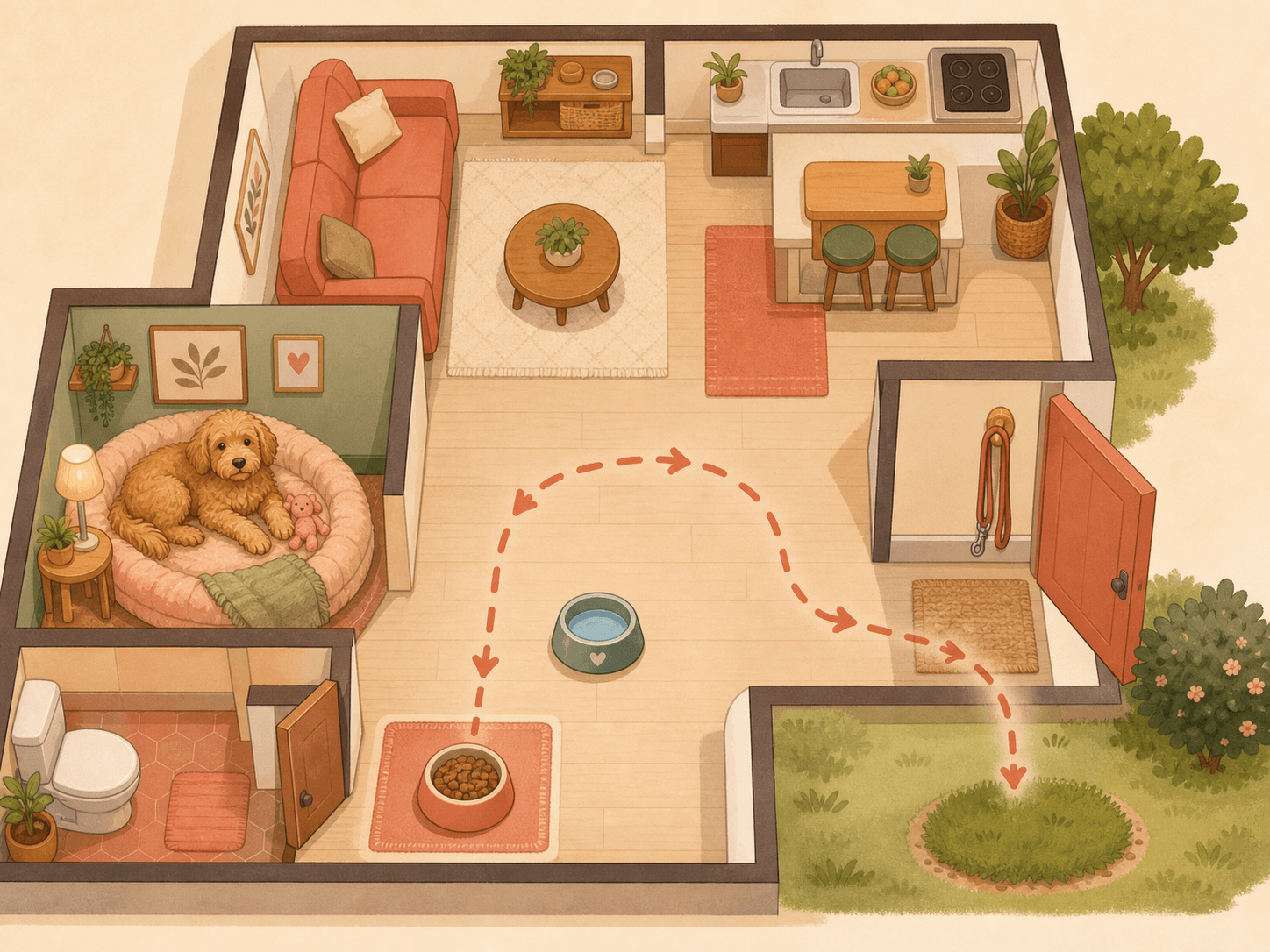
Run the first month like a loop, not a training camp. Toileting, meals, rest, quiet observation, and short reward-based games are enough. Predictability helps the dog learn what happens next without pressure or punishment.
Start with the obvious moments: after waking, after meals, after play, and before bedtime. Offer a toilet chance, then lower the excitement again. If the dog is already wound up, pause before they get frantic. Rest is part of the plan, not a lack of progress.
Set up a safe zone with water, a bed or mat, and a clear way to retreat. This could be a crate, pen, gated room, or quiet corner of the flat. If the dog chooses it, leave them there. The safe zone should mean rest and boring predictability, not isolation punishment.
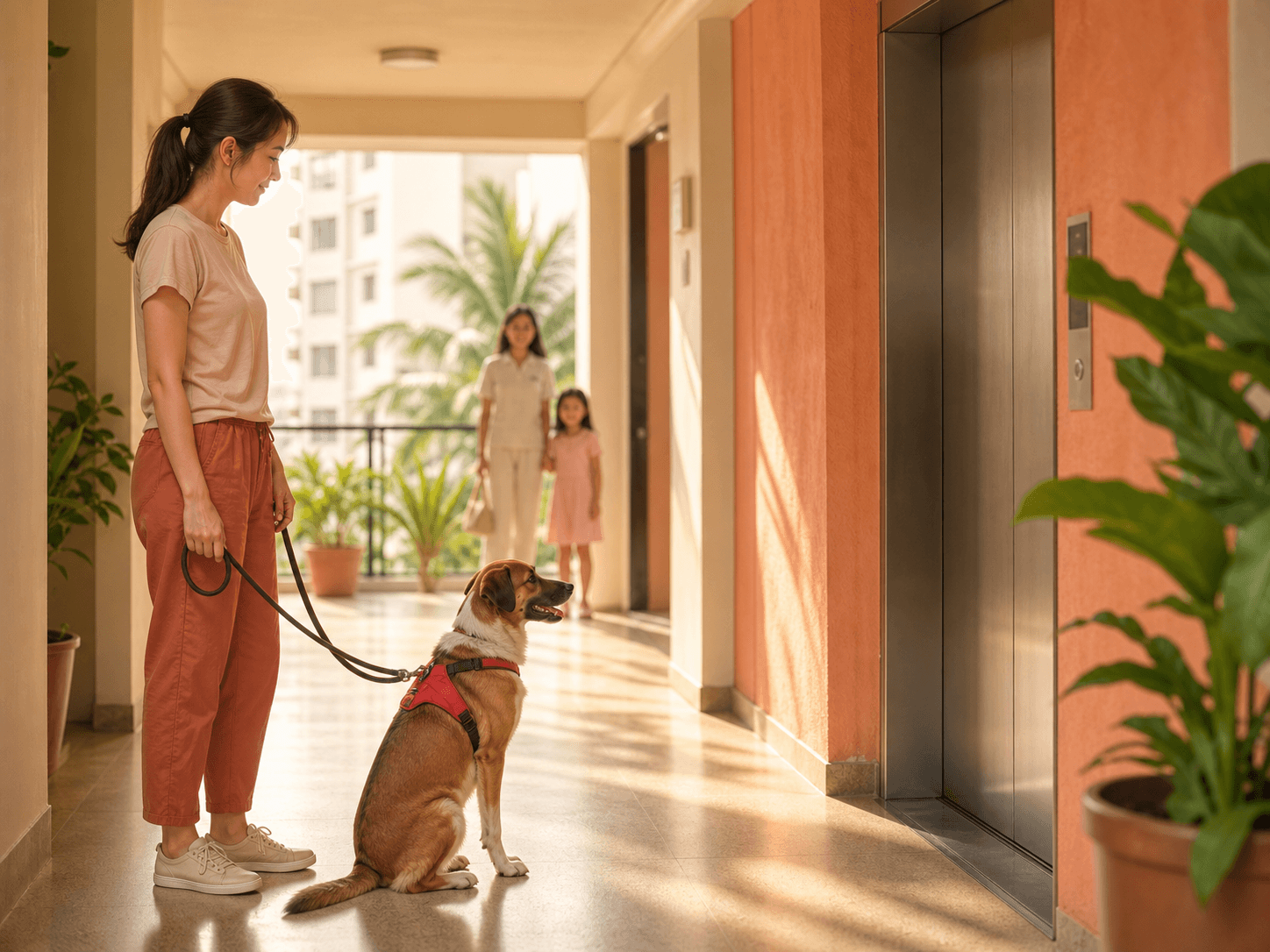
Keep the home tour small. One room can be enough on day one. Add rooms, family members, visitors, and walking routes through repeated short exposures. In HDB corridors and condo lift lobbies, step aside early, keep the lead short but loose, and let the dog watch from a distance instead of forcing greetings.
Visitors can wait. When they do come, ask them not to stare, crowd, reach over, hug, or force contact. Calm parallel presence and treat-tossing are plenty. Food puzzles and treat dispensers can help decompression, but match them to the dog’s chewing style, supervise until proven safe, and count the food within the dog’s daily allowance.
Good progress looks small: eating, drinking, toileting, recovering after ordinary household events, and exploring with a little more confidence over days to weeks.
Know when this needs more support
Some rescue dogs are not being difficult. They are hurting, frightened, or past their coping limit.
Book a veterinary check when behaviour changes suddenly. Pain can look like new aggression, reluctance to be touched, house-soiling, disrupted sleep, or withdrawal. Do that before deciding the dog is stubborn, naughty, or “just testing you.”
Bring in professional help when the behaviour creates risk. Biting, repeated lunging in shared apartment spaces, panic when left alone, self-harm, inability to sleep, or behaviour that puts people, the dog, or neighbours at risk needs more than a pep talk and a better treat pouch.
Choose a qualified, reward-based professional. Avoid anyone who relies on intimidation, pain, flooding, or dominance claims. Those methods can increase fear and risk in an already stressed rescue dog. A good professional should make the plan calmer, clearer, and safer for everyone in the flat.
Before that conversation, write down three things: what happened, what came just before it, and how long your dog took to recover. A note like “growled after lift door opened, then hid for 20 minutes” is much more useful than “bad in the lobby.”
- Manja