
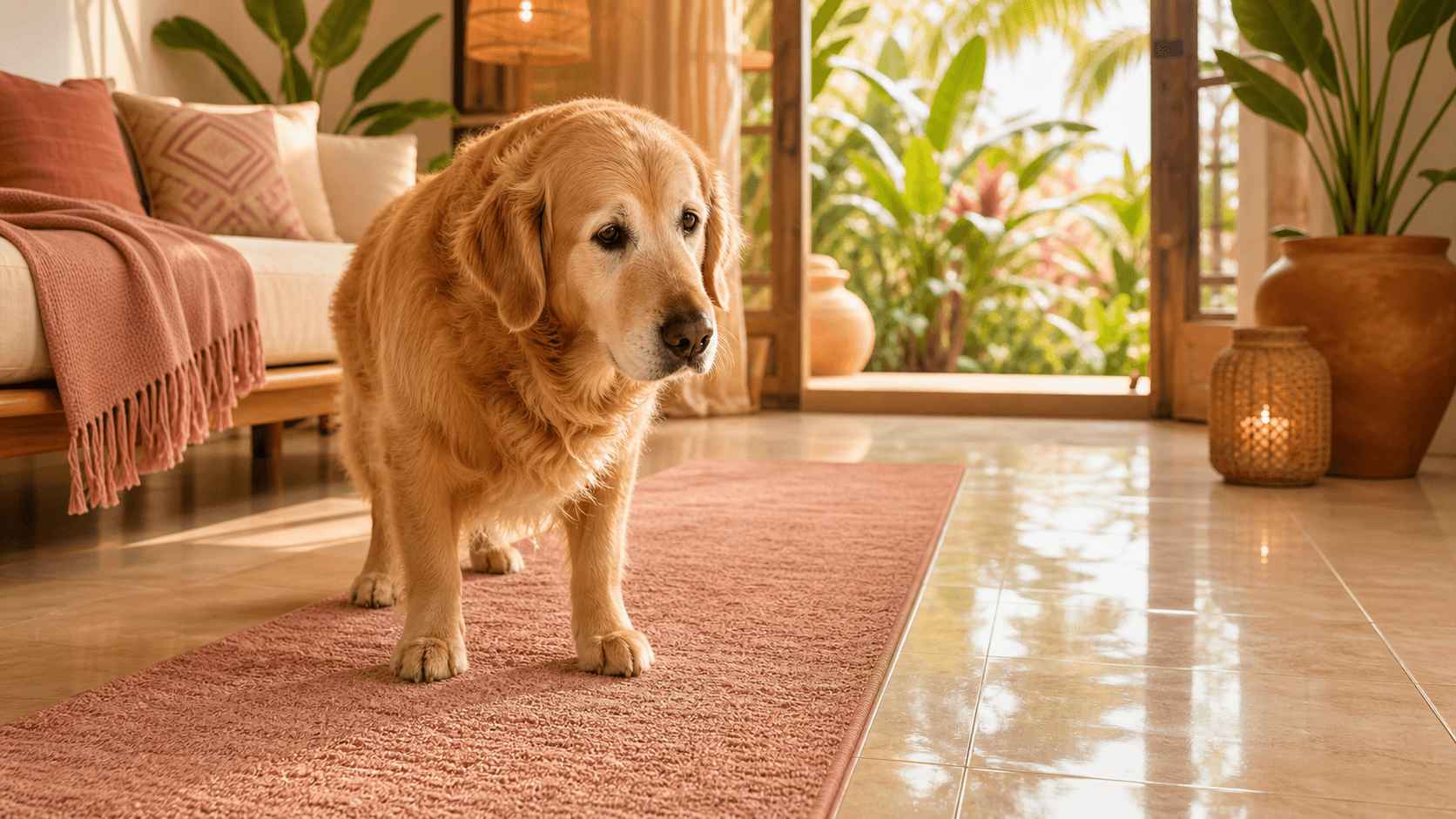
The route from bed to water bowl should not feel like crossing an ice rink. If your senior dog has started pausing at the bedroom doorway, scrambling on condo tiles, or choosing the rug-lined path through the flat, pay attention.
Slipping is not a personality flaw. In an older dog, it can be a clue: pain, weakness, osteoarthritis, injury, poor coordination, or another mobility problem may be making normal movement harder.
Use this article to prepare for the vet conversation, not to diagnose your dog at home. If the change is sudden, or you see knuckling, toe dragging, loss of coordination, marked hind-end wobbliness, or an acute inability to walk, contact a vet urgently.
Read the floor like part of the symptom
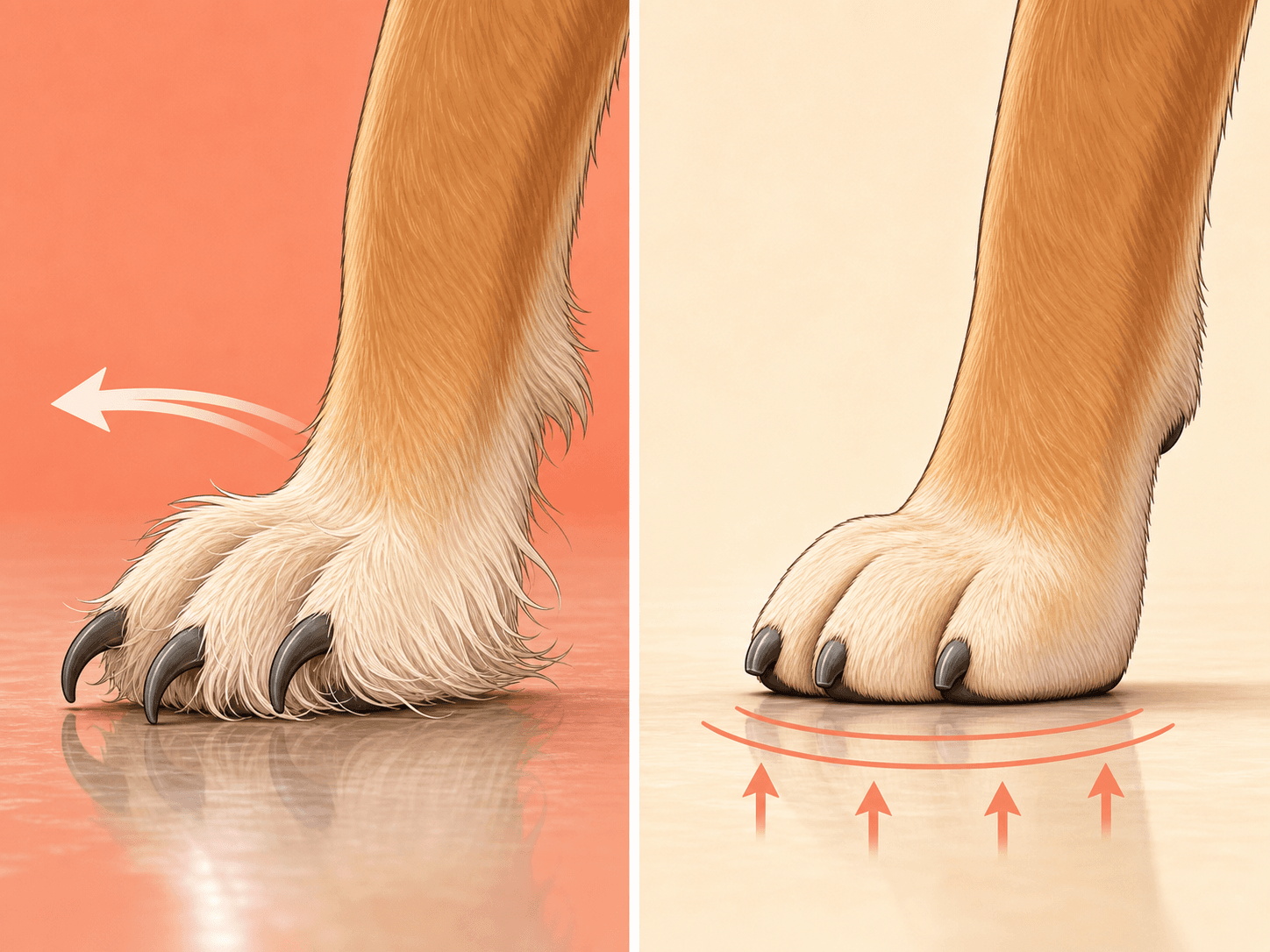
Tile, marble, and glossy laminate do not magically cause arthritis. The issue is traction. If a senior dog already has sore joints, weaker muscles, or poor coordination, a low-grip floor can turn small daily routes into stressful ones.
Look at the places your dog now avoids:
- the stretch from bed to water bowl
- the kitchen tiles after a nap
- the lift-lobby floor on the way out
- the corridor turn outside your unit
- the step into the bathroom or balcony
- stairs, ramps, or the edge of a raised bed
In Singapore, Malaysia, and Indonesia, many dogs spend most of their day on hard, cool floors. That can be comfortable in humid weather, but it also means a mobility problem may show up first as slipping, hesitation, or a sudden preference for mats.
The boring changes matter
Do not wait only for a dramatic limp. Senior dogs often show discomfort in smaller, repeatable ways.
Watch for slipping, hesitation, bunny-hopping, trembling, limping, struggling to rise, or avoiding hard floors. Those signs can point to pain, weakness, osteoarthritis, injury, or another mobility problem. Do not file it under "just old age."
Also check the paws. Long nails can stop the paw pads from making proper contact with the floor. Excess hair between the paw pads can reduce grip too. If your dog tolerates grooming, keep nails and paw hair trimmed safely. If nail trims are stressful or the nails are overgrown, ask your vet or groomer for help instead of wrestling through it at home.
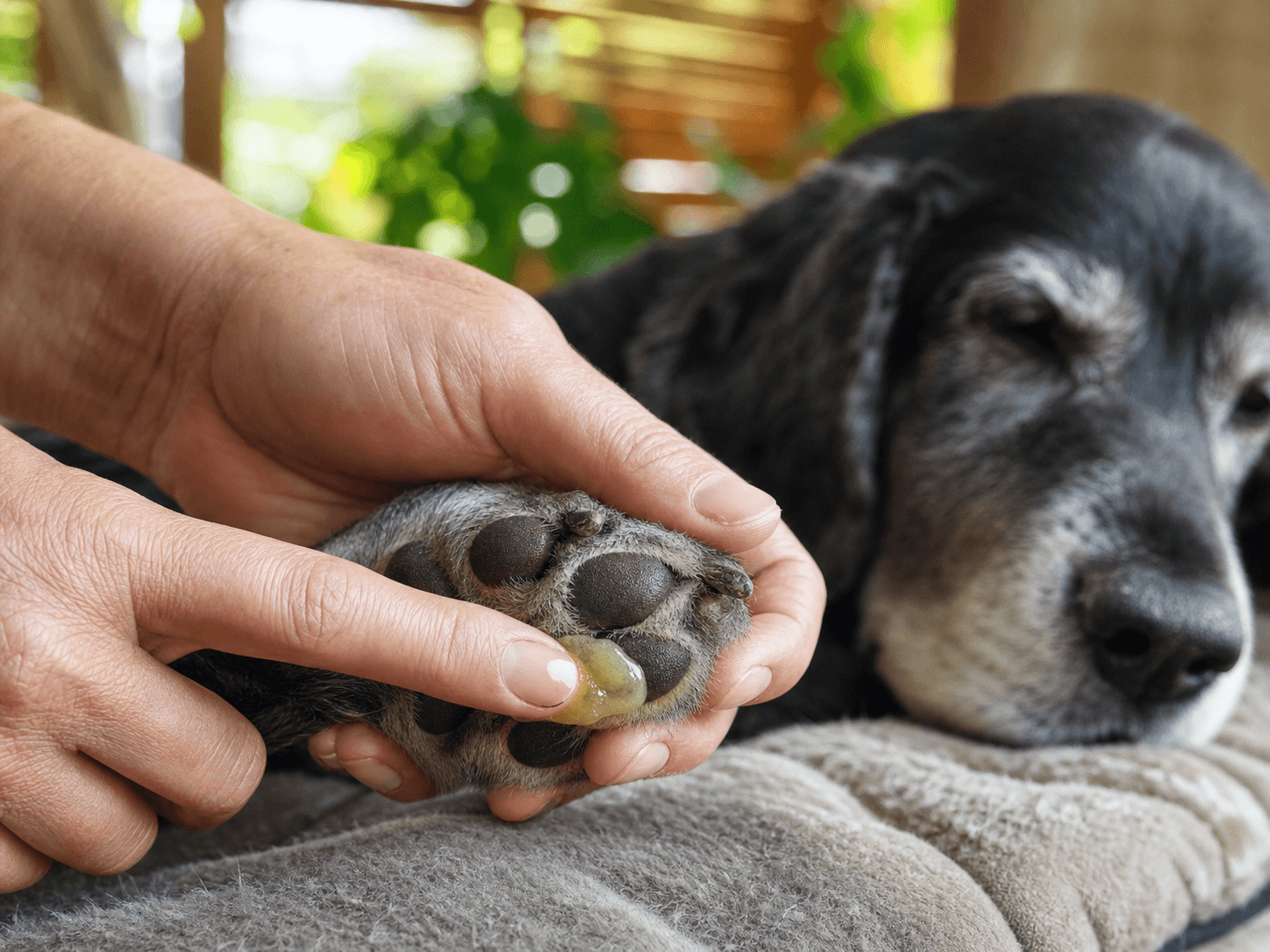
Grip socks, booties, and paw-wax products may help some dogs, but they are not automatically harmless. Remove them if you see redness, licking, odor, soreness, rubbing, or trapped moisture, and check with your vet.
Make the home easier while you book the assessment
Home changes can reduce slipping, but they should not become a way to avoid checking pain.
Start with the routes your dog actually uses. Add non-slip runners or mats from bed to water bowl, across the slickest hallway, and near food areas. Use stable rugs that do not bunch up. A sliding mat is just another problem wearing a nicer outfit.
For dogs who struggle to rise, make resting spots firmer and easier to stand from. Very soft beds can be comfortable once the dog is lying down, but difficult to push out of. If your dog uses stairs or jumps on and off furniture, consider blocking the risky route and using a ramp only if the ramp has good grip and your dog is comfortable using it.
Keep the floor dry. Post-rain walks, void-deck puddles, wet paws, and damp lift lobbies can make slipping worse. Wipe paws before your dog crosses smooth flooring, especially after evening walks in humid weather.
What to film for your vet
Bring proof, not a speech. Short clips are often more useful than a long description, because some mobility signs may disappear in the consult room.
Film your dog:
- rising from bed after rest
- crossing the problem floor
- turning around in a narrow space
- walking away from and toward the camera
- using stairs or a ramp, if that is part of daily life
- showing any on-and-off limp or bunny-hop
Keep each clip short and ordinary. Do not push your dog to repeat a painful movement for the camera.
If supplements or pain medicine come up, ask your veterinarian first. Evidence and product quality vary, and dogs with chronic disease or medication use need extra care. Do not give human pain medicine unless your vet tells you to.
When this is urgent
Contact a vet urgently if you see sudden knuckling, toe dragging, loss of coordination, marked hind-end wobbliness, or an acute inability to walk. Those can be neurologic red flags, including spinal cord or disc problems, and they need prompt assessment.
Call your vet when a senior dog slips, hesitates, bunny-hops, trembles, limps, struggles to rise, or starts avoiding hard floors. The appointment is not only about the floor. It is about finding out whether pain, weakness, osteoarthritis, injury, or another mobility problem is sitting underneath the new behavior.
Before the appointment, bring three things: two or three short videos, a note of when the slipping started, and a list of any medicines or supplements your dog already takes. That gives your vet a cleaner starting point than "old already lah" ever will.
— Manja