
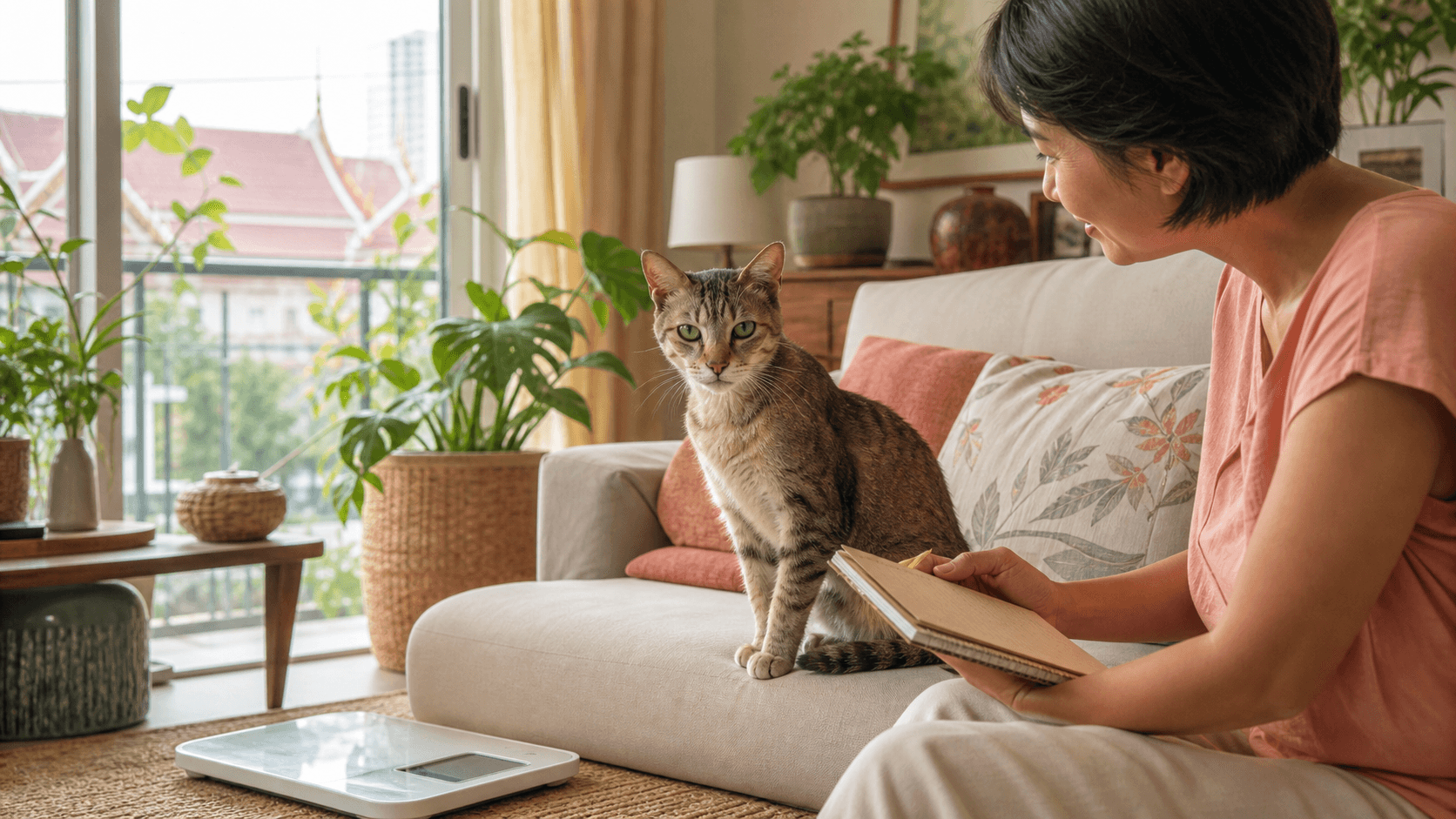
A senior cat who is getting lighter needs attention, even if she still jumps onto the sofa and complains for dinner.
Use this article to prepare for the vet conversation, not to diagnose your cat at home. Weight loss in an older cat can sit beside quieter changes: drinking more, eating differently, vomiting, softer stool, constipation, hiding, grooming less, or using the litter box in a new way.
Weight loss is not normal ageing
Older cats do change. They may sleep more, move carefully, or become very particular about routine. But steady weight loss is not something to file under "old already".
VCA senior-cat guidance and International Cat Care both treat changes in weight, appetite, thirst, toileting, mobility, grooming, and behaviour as reasons to speak with a veterinarian. Cats are talented at making illness look like a new personality trait.
A 14-year-old apartment cat who eats half her breakfast on one hot afternoon may simply be having an off meal. A 14-year-old cat who keeps getting thinner, drinks more, vomits, or leaves smaller stools is telling you something different.
| What you notice | Why it matters | What to do |
|---|---|---|
| Getting lighter over time | Persistent weight loss can reflect illness, not ageing alone | Book a vet visit |
| Eating more but losing weight | Hyperthyroidism can cause weight loss despite appetite | Track meals and tell the vet |
| Drinking or urinating more | Kidney disease and diabetes can both show this pattern | Note litter-box changes |
| Vomiting, diarrhoea, or constipation | Digestive and systemic illness can affect weight | Record frequency and timing |
| Hiding, weakness, or poor grooming | Behaviour and grooming changes may be illness signs | Do not wait for it to become dramatic |
What changed (and why)
Older advice often treated a thin senior cat as "just getting old". That is too casual.
Current feline life-stage guidance is more active. The AAHA/AAFP feline life-stage guidelines emphasise routine wellness care, weight and body condition monitoring, and earlier detection of change in mature and senior cats. WSAVA nutrition guidance also includes body weight, body condition score, muscle condition score, diet history, and monitoring over time as part of nutritional assessment.
You do not need to run a clinic from your HDB flat, condo, terrace house, or kampung home. You just need notes that help the vet see the pattern.
One small habit can change the appointment. "Milo has eaten less dinner for several nights, drinks more, and has lost weight since I started weighing him weekly" gives your vet more to work with than "he seems old".
Track weight without turning your home into a clinic
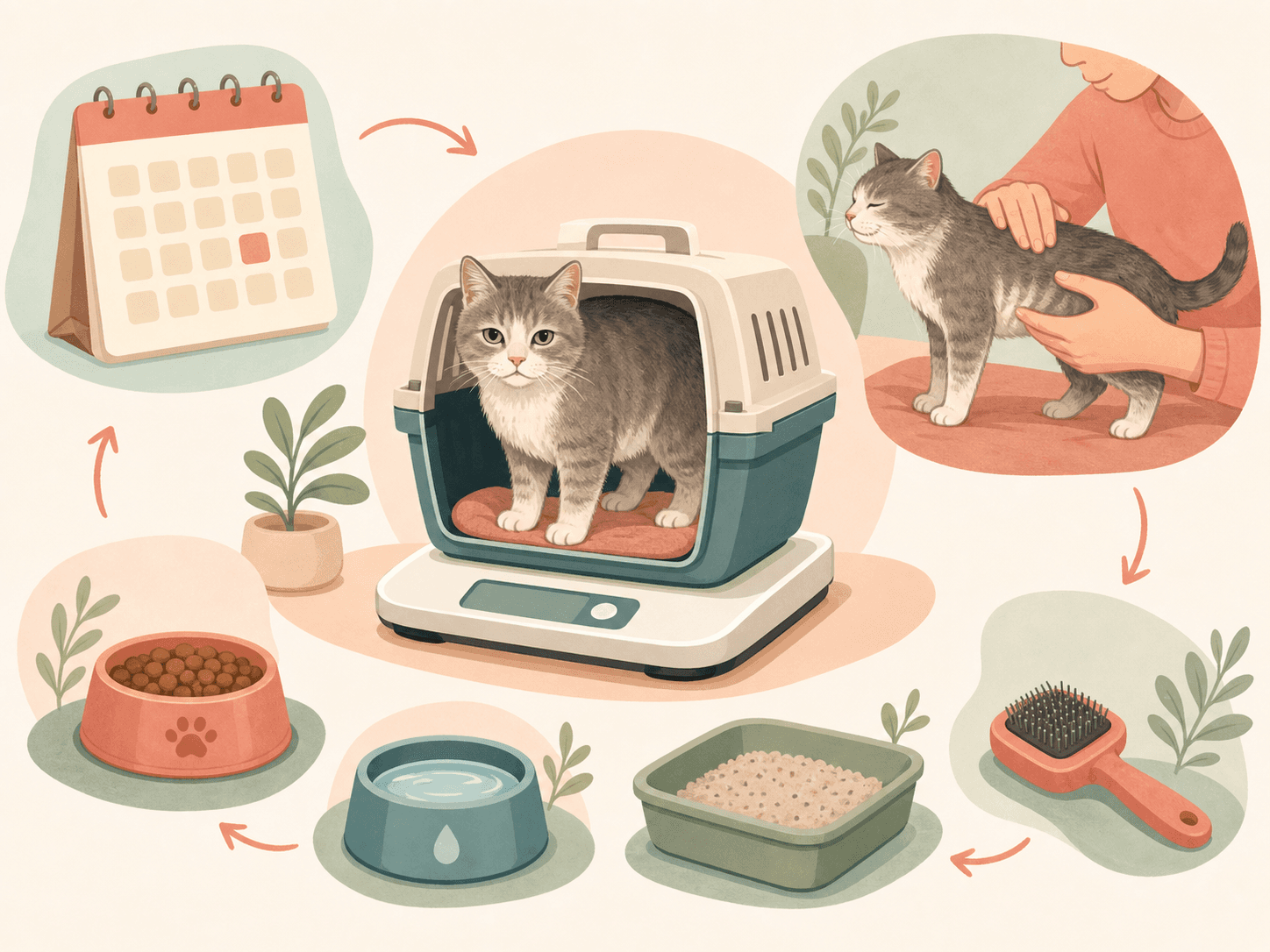
A home scale is not a diagnosis. It is a smoke alarm.
Weekly or regular at-home weighing can help you spot a trend earlier. The number matters less than the direction. Use the same scale when possible, weigh at a similar time, and write the result down. If your cat will not sit still, use a carrier or another safe routine that does not scare her.
Body condition and muscle condition matter too. A senior cat can lose muscle even when the weight change looks subtle. During grooming, use your hands. Feel the ribs, spine, waist, back, and hindquarters. You are not assigning a medical score. You are checking whether the cat under your hands feels different from last month.
| Home check | What to note | Why it helps |
|---|---|---|
| Weight | Regular scale readings over time | Shows whether the trend is continuing |
| Ribs and waist | Easier-to-feel ribs, sharper waist | Supports body condition discussion |
| Spine and hips | Bonier back or hindquarters | May suggest muscle loss |
| Coat and grooming | Matted coat, poor grooming, dull coat | Can sit alongside illness or discomfort |
| Mobility | Less jumping, stiffness, reluctance to move | Adds context for senior-cat assessment |
If your cat resists handling, stop. Stress makes the data worse and the cat less cooperative next time. Try again during a calm grooming session.
Symptoms can overlap, so patterns matter
Several common conditions in older cats can sit behind gradual weight loss. Chronic kidney disease is common in older cats and may come with increased thirst, increased urination, poor appetite, vomiting, and dehydration. Hyperthyroidism is also common in older cats and classically causes weight loss, often despite increased appetite, with possible thirst, urination, vomiting, diarrhoea, restlessness, or poor coat quality. Cornell Feline Health Center notes that feline diabetes may cause increased thirst and urination, weight loss, appetite changes, lethargy, and poor coat condition.
Dental or oral pain, gastrointestinal disease, cancer, and chronic inflammatory disease can also be involved. At home, you may only see the outside version: a bowl left unfinished, a thinner back, a cat under the bed.
| Pattern at home | Possible concern to discuss | Do not assume |
|---|---|---|
| Losing weight and drinking more | Kidney disease, diabetes, or another illness | "It is the weather" |
| Losing weight while eating well | Hyperthyroidism may be considered | "Good appetite means fine" |
| Eating less and grooming poorly | Pain, nausea, systemic illness, or oral discomfort | "She is picky" |
| Vomiting or stool changes with weight loss | Gastrointestinal or broader medical disease | "Hairball only" |
| Poor coat, lethargy, or hiding | Several senior-cat illnesses can look this way | "Old cats hide" |
Hot, humid weather in Singapore, Malaysia, and Indonesia can make some cats skip or fuss over a meal. It should not explain ongoing weight loss, repeated appetite reduction, increased thirst, vomiting, diarrhoea, constipation, hiding, weakness, or collapse. Panting, distress, weakness, collapse, vomiting, or other acute heat-related changes need urgent veterinary care.
Multi-cat homes need better notes
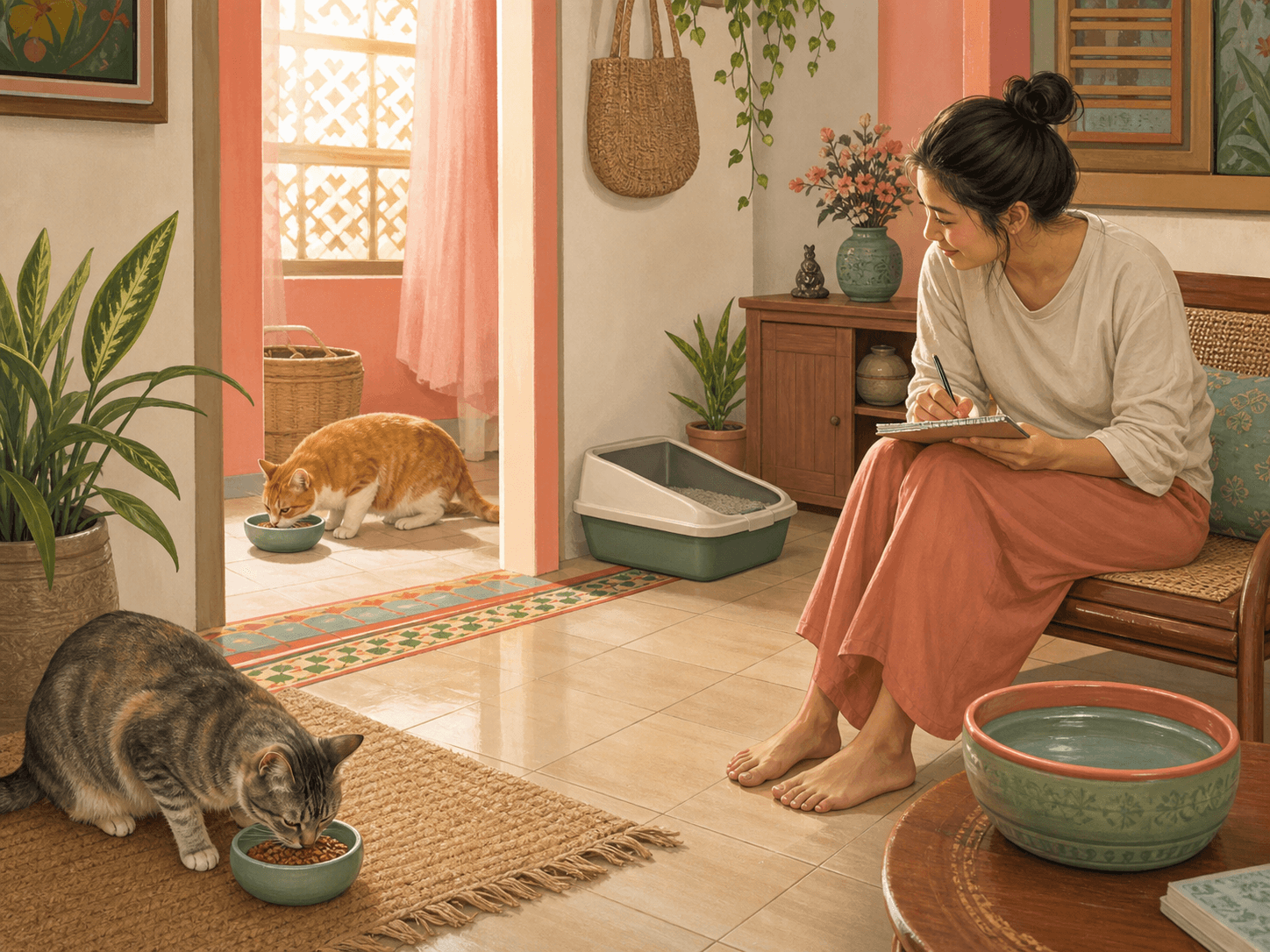
In a one-cat home, a half-empty bowl points to one suspect. In a multi-cat home, it points to everyone and no one.
Separate observation helps. You do not need to split the cats up all day. Watch one meal. Note who eats first, who walks away, and who steals leftovers. If possible, feed the senior cat in a quiet spot for a short period so you can see what she actually eats.
Litter boxes create the same problem. More urine, smaller stools, diarrhoea, constipation, or missed boxes may be hard to match to one cat. A short-term note on timing, stool quality, and which cat used which box can give your vet better clues.
Photos help when they show the real thing: the food bag, wet-food label, supplement label, vomit pattern, stool change, or the way your cat now sits. Keep it factual. No need to build a detective wall.
What your vet will ask
- When did you first notice the weight loss?
- Has appetite gone up, gone down, or changed by meal?
- Is your cat drinking or urinating more than before?
- Any vomiting, diarrhoea, constipation, or litter-box change?
- Has grooming, coat quality, hiding, mobility, or social behaviour changed?
- What food, treats, supplements, or diet changes has your cat had recently?
Do not diet a sick senior cat
Unplanned weight loss is different from intentional weight management.
If illness is possible, do not start calorie restriction, appetite stimulants, supplements, therapeutic diets, or major food changes on your own. WSAVA food-selection guidance ties diet choice to life stage, health status, manufacturer quality control, and veterinary guidance when medical issues are present. Merck notes that cats have specific nutritional requirements, and poor intake can create additional risk.
Tonight, do one useful thing: weigh your senior cat if you can do it calmly, write down appetite, water, vomiting, stool, and litter-box changes, then book the vet visit if the weight loss is persistent or paired with any other change.
- Manja