
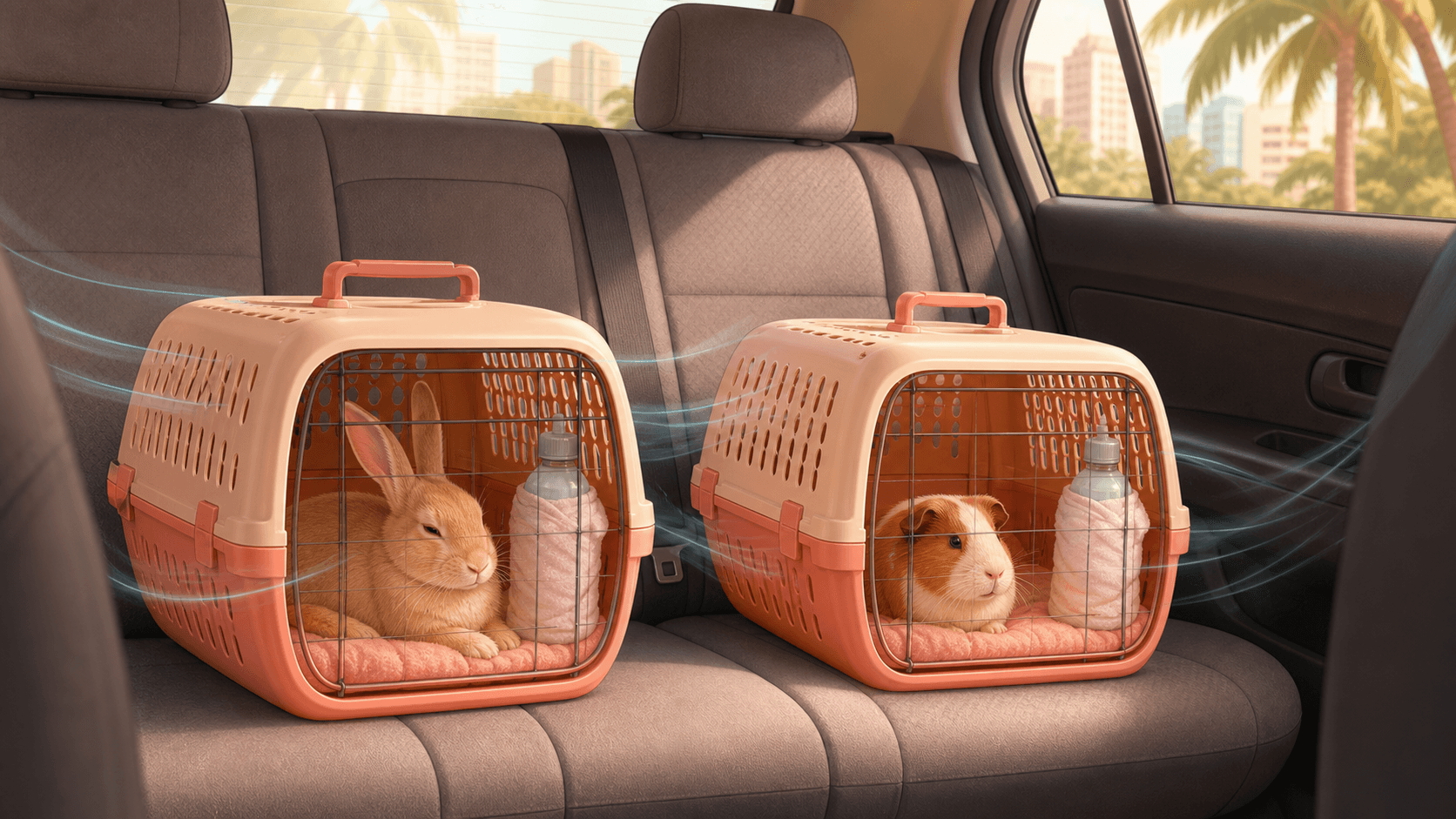
A rabbit or guinea pig vet trip in Singapore or Malaysia heat is not a normal errand. Treat the whole journey as a heat-risk window: pre-cool, pack the carrier properly, move straight to the clinic, and call ahead if your small pet already looks weak. Use this guide to prepare for the vet conversation, not to diagnose heat illness at home.
Heat risk starts before the clinic door
Rabbits are especially heat-sensitive. Temperatures around or above 85°F / 29°C can trigger heat stroke, with signs such as weakness, rapid breathing, drooling, and collapse listed by VCA. That matters in Singapore, where the climate is warm and humid year-round and typical daily temperatures sit around 23-32°C, according to the Meteorological Service Singapore.
Guinea pigs are not safe by default because they are smaller. They can also develop heat stroke in warm conditions. Watch for lethargy, panting or rapid breathing, drooling, and weakness before or during the ride, as described by VCA.
Malaysia’s climate is also hot and humid throughout the year, so a midday taxi queue, non-air-conditioned wait, or sunny car park can turn a short appointment into a bad one. MetMalaysia describes the country’s climate as hot and humid with high humidity and limited seasonal temperature variation. Plan the trip like you would plan moving a heat-sensitive patient, not like bringing a parcel across town.
| Situation | What to do |
|---|---|
| Your rabbit is weak, drooling, breathing rapidly, or collapsed | Call the clinic before leaving and ask for urgent triage on arrival, following PDSA guidance to contact a vet quickly. |
| Your guinea pig is lethargic, panting, drooling, or weak | Treat the trip as urgent and phone the clinic before transport. |
| The ride involves outdoor waiting | Shorten the wait, choose cooler hours where possible, and avoid non-air-conditioned queues. |
| The car is parked or not cooled | Do not put the carrier in until the vehicle is cooled and airflow is running. |
The carrier should protect, not trap heat
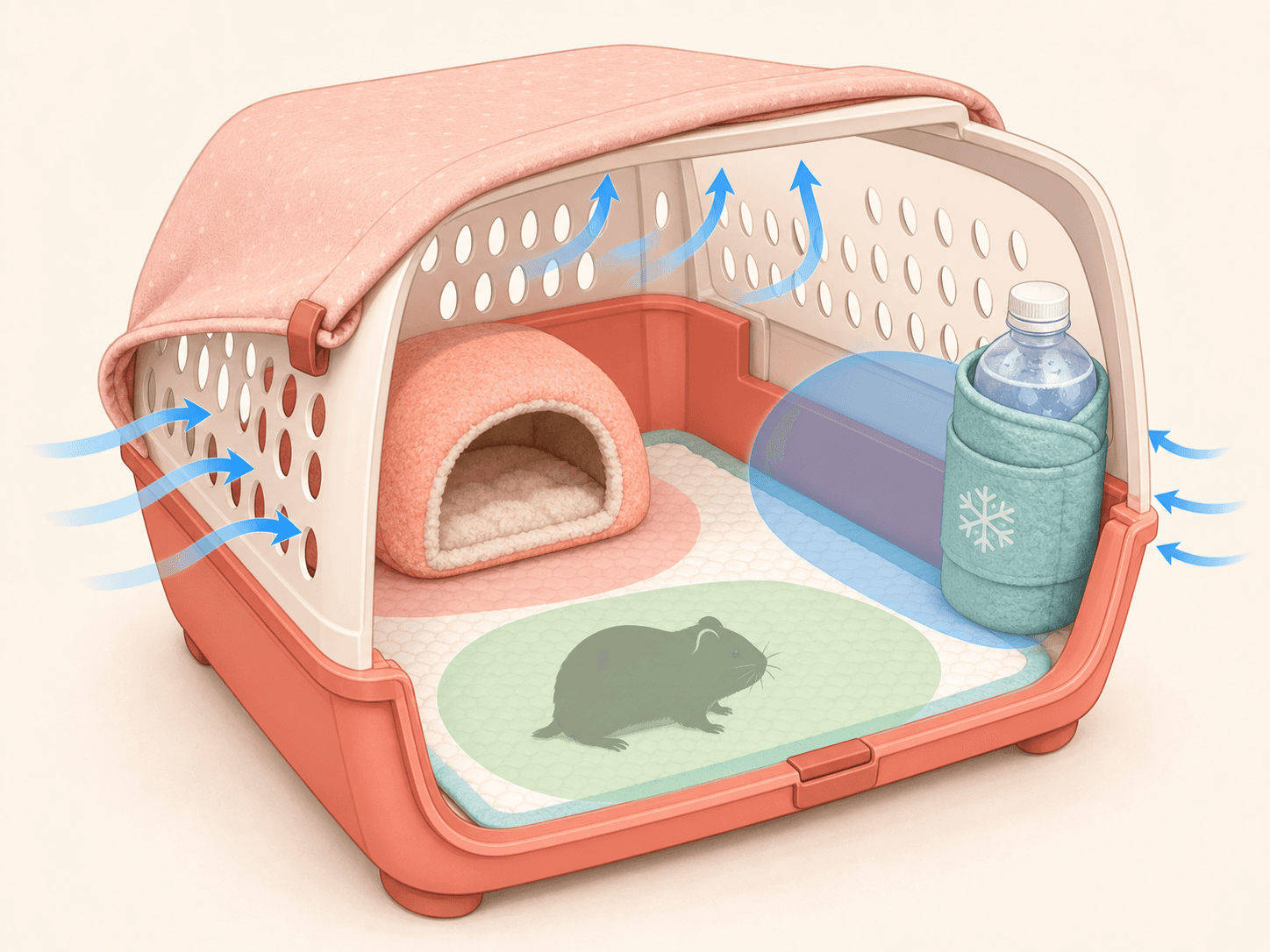
A rabbit should travel in a secure, escape-proof, well-ventilated carrier. It should be lined with non-slip absorbent material and large enough for the rabbit to sit and turn around, based on PDSA transport guidance. Loose transport in arms or on a lap is not a kindness. A frightened rabbit can scramble, overheat, or escape.
For guinea pigs, use a familiar ventilated carrier with bedding and hiding material. The point is calm containment. Guinea pigs are prey animals, so stressful handling and loose transport can compound heat risk.
A quiet covered carrier can reduce visual stress for rabbits and guinea pigs, but the cover must not block ventilation or trap heat. This is the small-pet version of a common owner mistake: we cover the carrier to make the animal feel safe, then accidentally make the air around them warmer. Shade is good. Stale warm air is not.
| Pet | Carrier setup |
|---|---|
| Rabbit | Secure, escape-proof, ventilated carrier; non-slip absorbent lining; enough room to sit and turn around. |
| Guinea pig | Familiar ventilated carrier; bedding; hiding material; calm handling. |
| Both | Optional light cover for visual calm, placed so air can still move through the carrier. |
| Neither | Loose transport in arms, on a lap, or in an open basket. |
Cooling aids need choice and distance
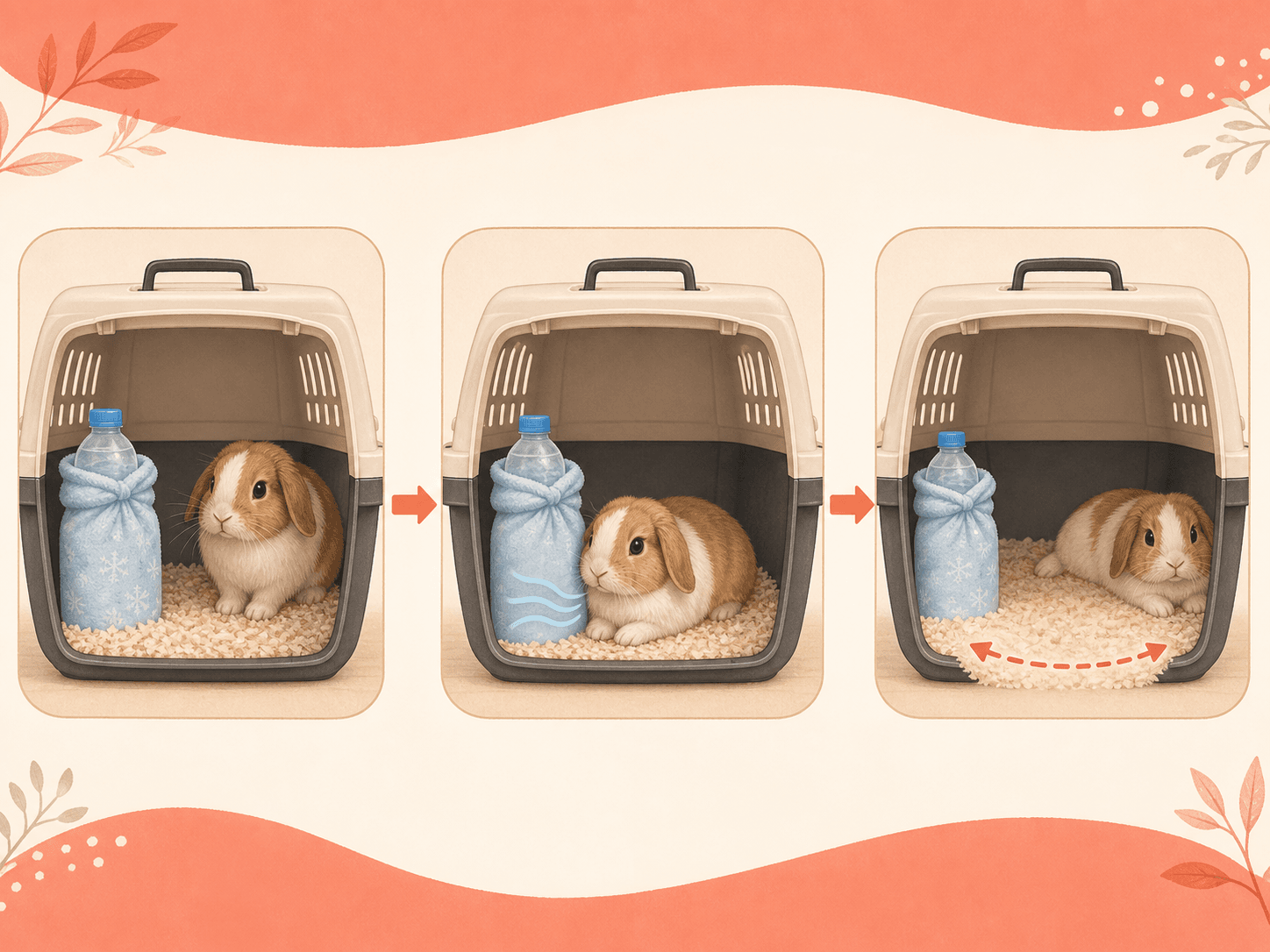
Wrapped frozen water bottles or ice packs can help, but they should be placed so the rabbit or guinea pig can choose contact or move away. Do not press an ice pack directly against the animal. RSPCA Australia gives hot-weather guidance for both rabbits and guinea pigs that supports cooling objects, shade, airflow, and escape from the cooling source.
If heat stroke is suspected, the goal is gentle first aid while contacting the clinic. Merck Veterinary Manual frames heatstroke as an emergency where cooling and veterinary treatment matter, but extreme cold can worsen shock. That means no ice bath panic. Keep the animal out of direct heat, use careful cooling, and move toward veterinary care.
| Cooling choice | Use it like this |
|---|---|
| Wrapped frozen bottle | Place near one side of the carrier so the animal can move closer or away. |
| Wrapped ice pack | Keep it wrapped and off direct skin or fur contact. |
| Carrier cover | Use only if ventilation stays open and heat is not trapped. |
| Direct sun | Avoid it. Keep the carrier shaded during handover and travel. |
The car is part of the care plan
Never leave a rabbit or guinea pig in a parked vehicle, even briefly. Vehicle interiors can heat quickly despite shade or partly opened windows, and the AVMA warns that parked cars can become dangerous even when outside conditions seem moderate.
Before leaving home, pre-cool the vehicle. Keep the carrier out of direct sun. Maintain airflow. Go straight from home to clinic instead of adding errands, food stops, or outdoor waiting time. AVMA travel guidance stresses planning, appropriate carriers, ventilation, and avoiding unsafe vehicle conditions during pet transport (AVMA travel FAQ).
This is where a five-minute delay can matter. Not because every trip becomes an emergency, but because rabbits and guinea pigs have fewer margins in tropical heat. A hot car park, taxi queue, or clinic pavement handover is still part of the journey.
Call ahead when the pet is already unwell
If your rabbit or guinea pig is already weak, drooling, breathing rapidly, panting, lethargic, or collapsed, call the clinic before leaving. The safer plan may be direct triage on arrival instead of waiting in reception. This is especially important for rabbits, where PDSA treats heatstroke signs as urgent.
For a planned appointment, set up the carrier before the animal comes out. Cool the vehicle first. Put the wrapped cooling aid in place. Move from home to vehicle to clinic without detours. Small thing, done carefully: the trip becomes shorter, calmer, and less hot.
— Manja