
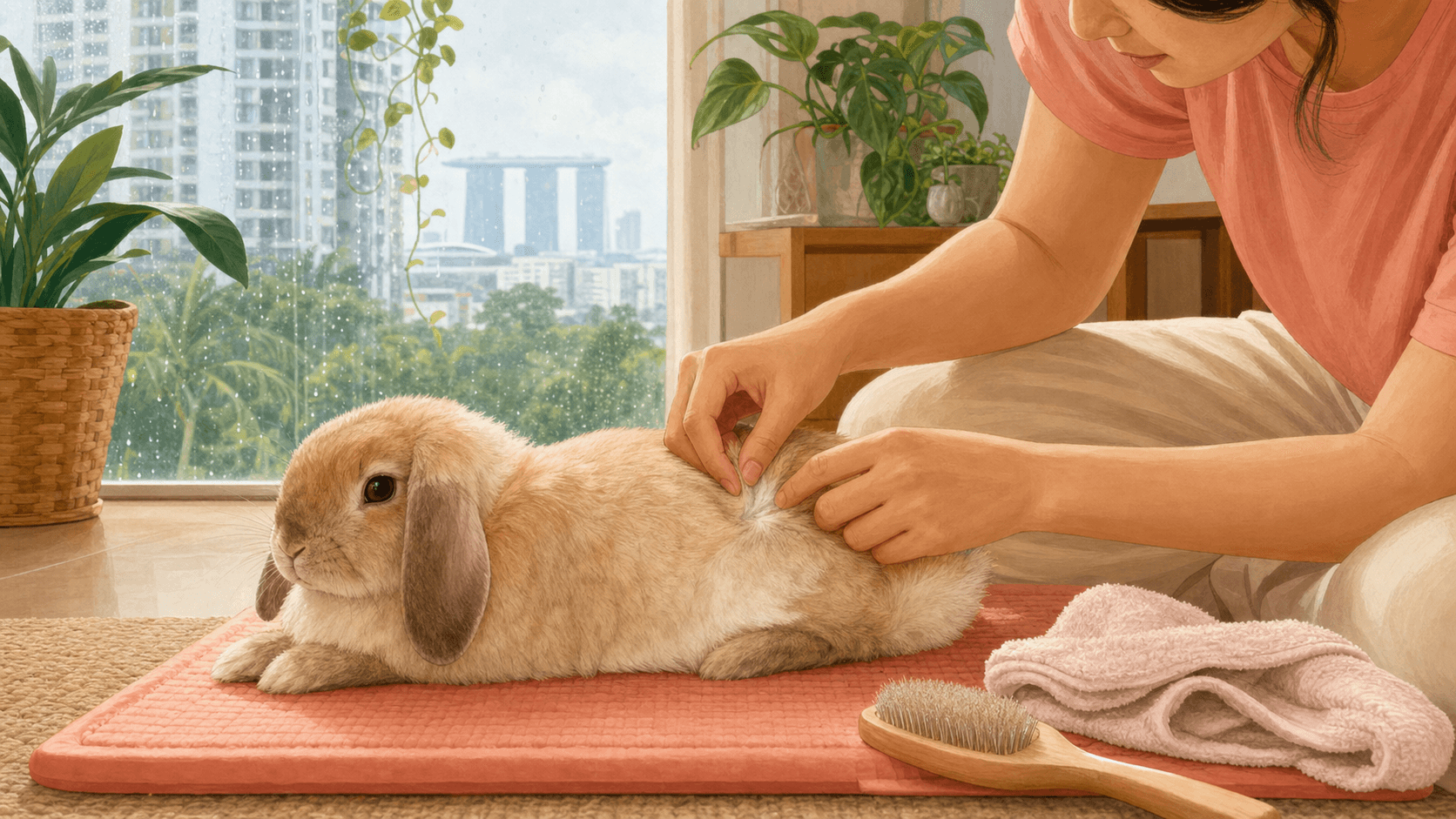
A humid-weather rabbit groom is not about making the coat look neat. It is about finding damp fur, soiling, hidden mats, wounds, and flystrike signs before they turn into a same-day problem.
Use this guide to prepare for a vet conversation, not to diagnose your rabbit at home.
Humidity makes fur checks a daily welfare job
Singapore, Malaysia, and Indonesia homes can feel clean and still stay damp. Singapore’s official climate page describes the country as warm and humid year-round, with high relative humidity common (Meteorological Service Singapore). Malaysia’s meteorological service describes hot, humid weather throughout the year (Malaysian Meteorological Department). Indonesia’s climate agency describes a tropical climate with wet and dry seasons (BMKG).
That matters for rabbits because dense fur can trap moisture. Damp skin is harder to see. Irritation can sit under the coat. A small mat near the tail base can hide urine staining, soft stool, or a wound.
The visible back coat is the easy part. The risky areas are usually lower, softer, and less glamorous.
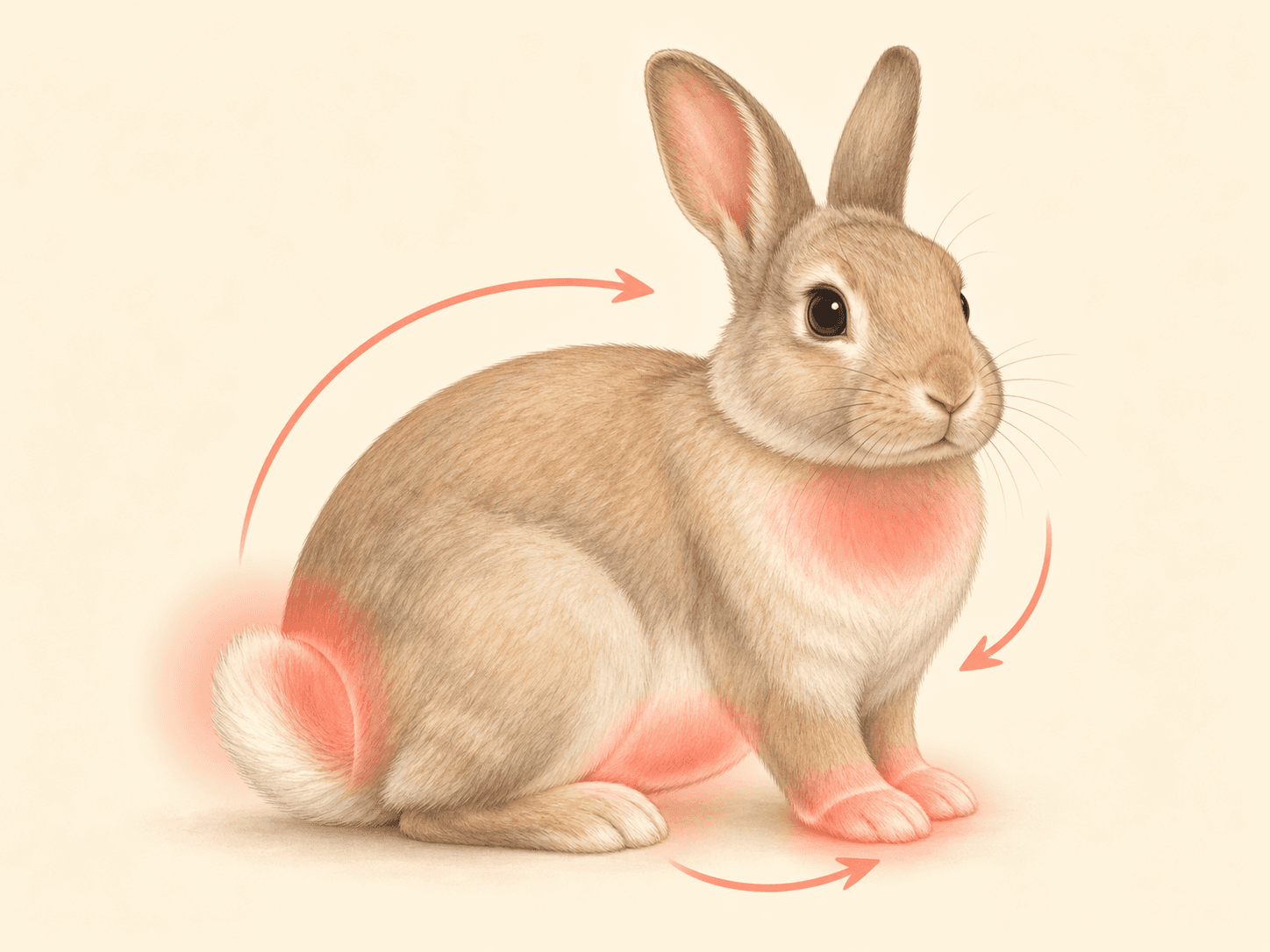
| Area to check | What you are looking for | Why it matters |
|---|---|---|
| Rear end | Damp fur, faecal soiling, larvae | Dirty or damp fur can attract flies |
| Tail base | Mats, staining, smell | Problems can hide close to the skin |
| Belly | Damp patches, redness, wounds | Dense fur can cover irritation |
| Dewlap | Moisture, trapped food, matting | Folded fur can stay damp |
| Feet | Wet fur, staining | Damp litter areas can keep feet wet |
Small thing, done daily: part the fur with your fingers, look at the skin, then let the coat fall back naturally.
What changed, and why
Older grooming advice often sounded like “brush the rabbit and keep the coat tidy.” In tropical homes, that is too shallow.
The updated routine is: check the hygiene zones first, then brush. A fluffy Lionhead with a clean-looking back can still have damp fur near the tail base. A short-coated rabbit with soft stools can still soil the rear end. A rabbit with dental disease, urinary problems, arthritis, obesity, or digestive trouble may not keep itself clean well, which can increase damp or dirty fur around the back end (MSD Veterinary Manual, Rabbit Welfare Association & Fund).
So the aim is not “more grooming” as a vague rule. The aim is better inspection.
| Old habit | Better humid-weather habit |
|---|---|
| Brush the back coat first | Check rear end, belly, dewlap, tail base, and feet first |
| Pull through a knot | Stop and inspect how close the mat is to the skin |
| Wash staining with a bath | Spot-clean only when needed, then dry the area |
| Wait to see if smell improves | Treat strong smell with other flystrike signs as urgent |
Mats need patience, not force
Rabbit skin is delicate. A mat that feels like a normal knot can sit close to thin skin, especially around the belly, dewlap, and tail base. Pulling hard can hurt the rabbit. Cutting casually at home can catch skin.
For close-to-skin mats, a rabbit-savvy vet or groomer is safer. VCA warns that rabbit skin is very delicate and that brushing, clipping, and mat removal need care (VCA Hospitals). RWAF also notes that mats need careful handling because rabbit skin is delicate (Rabbit Welfare Association & Fund).
Use tools gently. Slicker brushes, combs, and dematting tools can help when used with care, but stop if the skin reddens or the rabbit becomes distressed (PetMD, House Rabbit Society).
| If you find this | Do this |
|---|---|
| Loose surface fur | Brush gently in short passes |
| Small tangle away from skin | Work slowly with fingers or a comb |
| Dense mat near skin | Book a rabbit-savvy vet or groomer |
| Red skin under fur | Stop grooming that spot |
| Rabbit struggling or stressed | Pause and reassess handling |
Damp fur is a cleaning problem, not a bath invitation
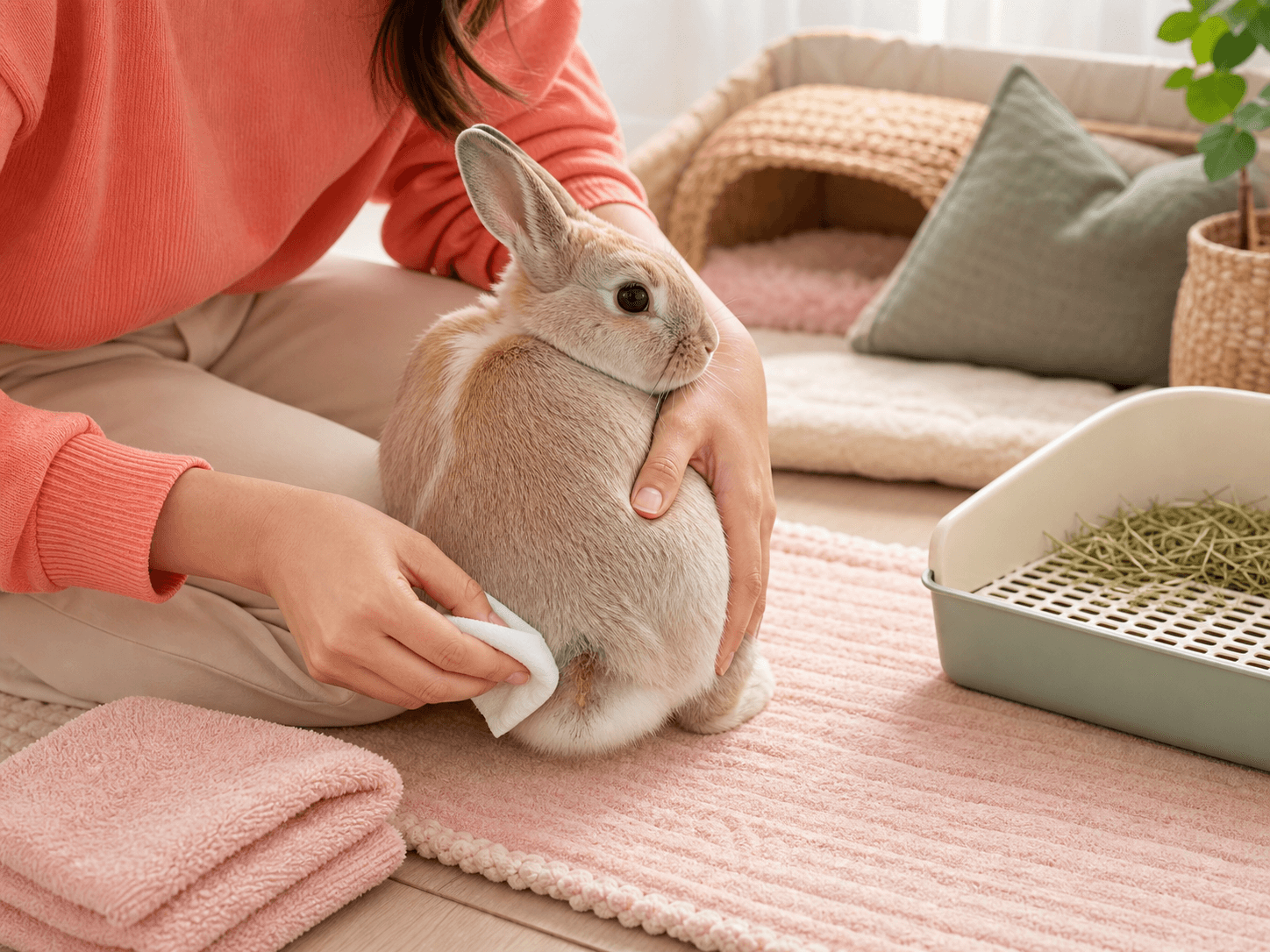
A full bath is usually the wrong fix for a damp or stained rabbit. Rabbits can become chilled or stressed, and wet fur can be difficult to dry fully. When cleaning is necessary, spot-cleaning the dirty area and drying it is preferred unless a vet directs otherwise (Rabbit Care Tips, VCA Hospitals).
Think in zones. If only the rear end is stained, clean the rear end. If the feet are damp, check the litter area. If the dewlap is wet, look for trapped moisture and matting. Do not turn one dirty patch into a whole-body soaking.
Bedding and litter corners deserve the same attention as the coat. In humid apartments, poor airflow can keep bedding, litter areas, and fur damp. Dry surfaces make grooming easier because you are not fighting the room every time you inspect the rabbit.
Flystrike signs need same-day action
Flystrike is the point where grooming stops being a home-care task. Greenbottle flies can lay eggs on a rabbit, and maggots can hatch and start damaging tissue within hours. Suspected eggs, larvae, sudden lethargy, collapse, or a strong smell should trigger urgent veterinary care the same day (RSPCA, Vets Now).
During warm periods, twice-daily rear-end checks are commonly recommended because flystrike can progress fast between handling sessions (RSPCA). That means morning and evening checks, not a vague look once in a while.
| Monitor | Call for advice | Go now |
|---|---|---|
| Slightly damp fur with no smell | Repeated soiling or hard-to-clean staining | Eggs, larvae, or maggots |
| A small surface tangle | Mat close to skin with redness | Sudden lethargy or collapse |
| Wet feet after litter use | Wound hidden under fur | Strong smell with damp or dirty fur |
Tonight, check your rabbit from the tail base down before you admire the fluffy back. Part the fur, look at the skin, dry what should not be damp, and treat any flystrike sign as a same-day vet problem.
— Manja