
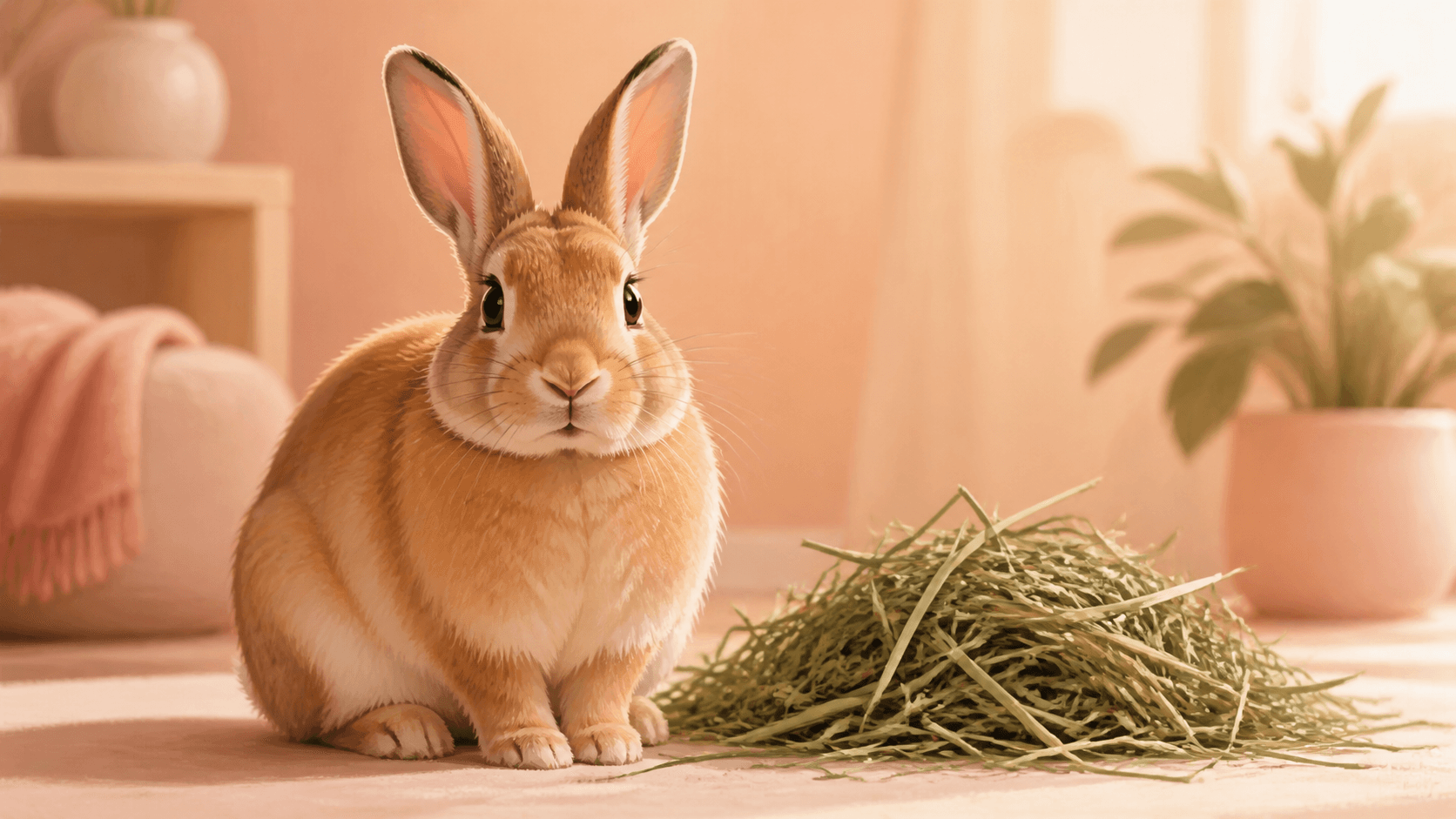
A rabbit that eats banana, pellets, or soft greens but suddenly ignores hay is not doing a food review. Hay is the hard work. When chewing coarse fibre starts to hurt, rabbits often choose the easy things first.
That is why a half-full hay rack matters. In rabbits, reduced food intake can become urgent quickly: eating less or not eating for more than 12 to 24 hours can trigger secondary gastrointestinal stasis and hepatic lipidosis. Use this guide to prepare for a rabbit-savvy vet visit, not to diagnose your rabbit at home. If your rabbit stops eating, looks bloated, or seems suddenly painful, contact a rabbit-savvy vet urgently. Do not start syringe-feeding at home unless obstruction has been ruled out.
Food clues that point to mouth pain
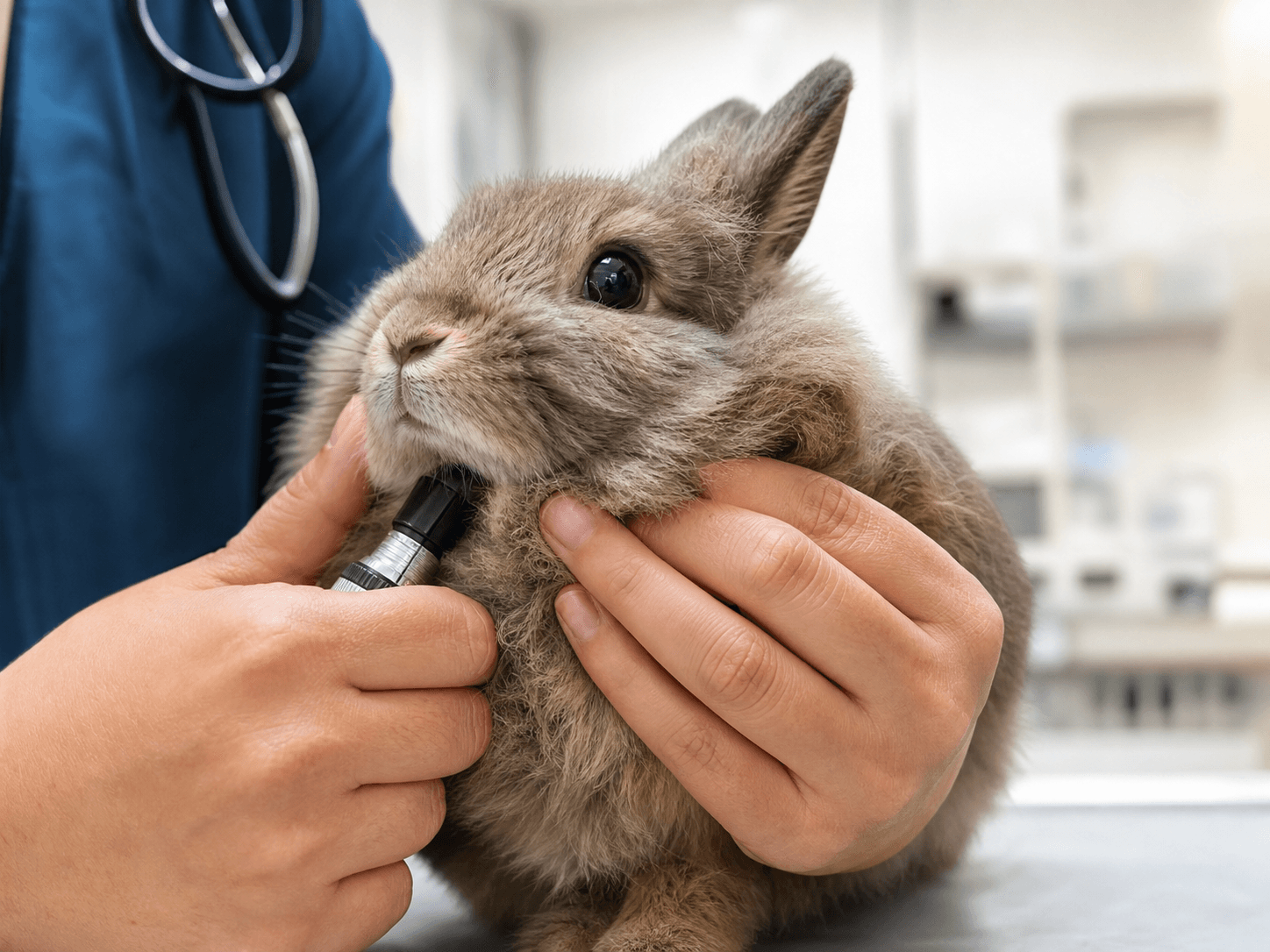
Dental trouble often appears as a change in texture preference. A rabbit may still accept pellets, leafy greens, soft treats, or soaked food, but leave long-stem hay behind. That selective eating can point to dental pain, because grinding coarse fibre from side to side hurts when cheek teeth, tooth spurs, or jaw alignment are wrong.
Watch the order of eating, not just whether the bowl eventually empties. If the hay is still sitting there at night, if the rabbit mouths food and drops it, or if favourite greens take longer than usual, write it down. Apartment routines make this easier: check the hay before the morning sweep-up, then again before lights-out, especially if several people in the home refill bowls.
Weight loss is another quiet clue. Rabbits can look rounded because of fur and posture, especially in humid homes where grooming gets a little messy. A weekly weigh-in on the same scale gives you a cleaner trend than guessing by sight.
Poo changes are part of the dental story
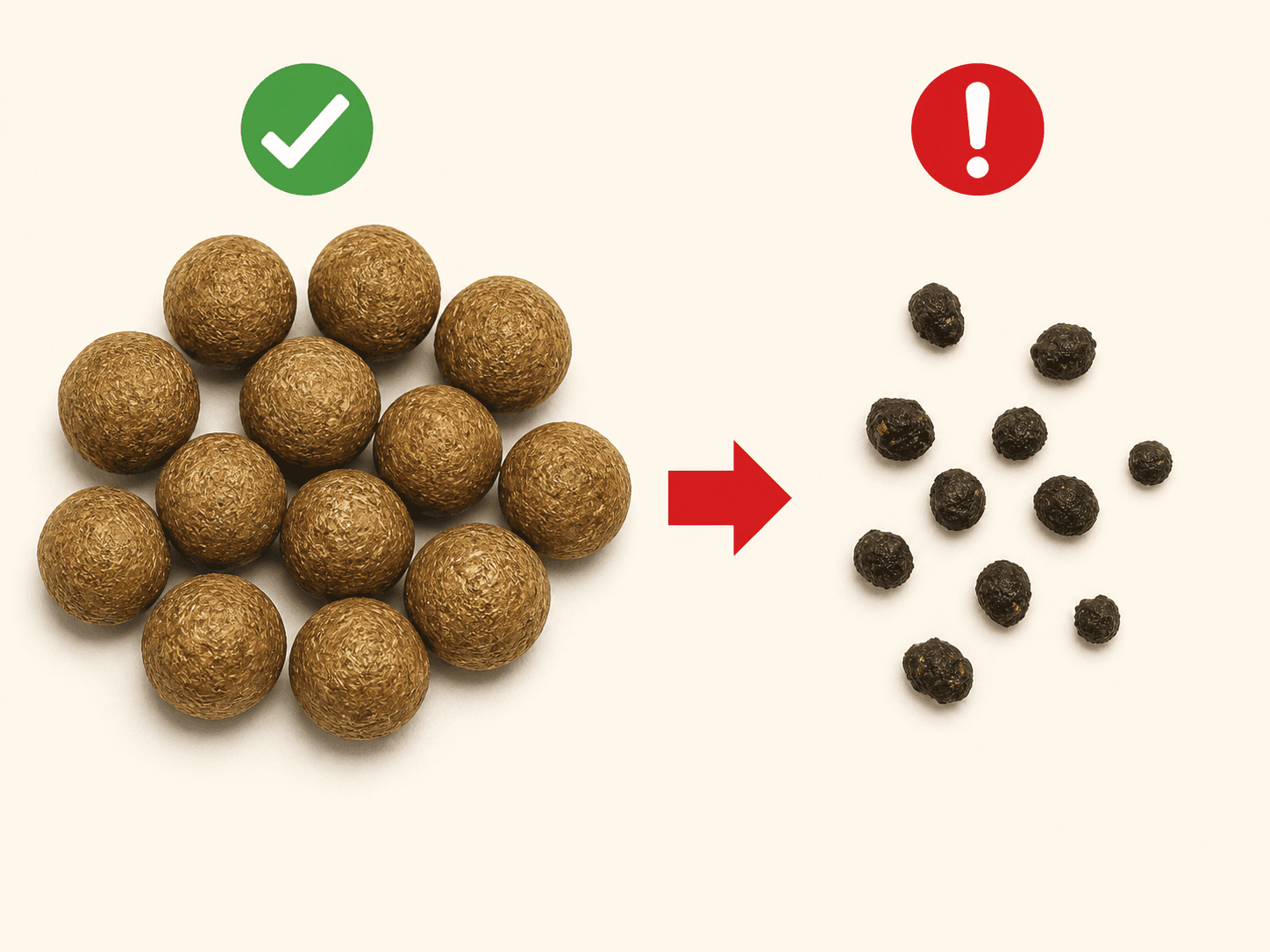
Hay intake drives gut movement. When a rabbit chews less fibre, droppings may become smaller, fewer, misshapen, or absent. That is not a separate litter-tray problem; it can be part of the same pain-and-gut slowdown.
In multi-rabbit homes, separate observation matters. If two rabbits share a tray, you may need a short supervised period in a clean pen or carrier setup so you can tell whose droppings changed. Do not wait for perfect detective work if the rabbit is eating less. A rabbit-savvy vet can work from a timeline: what was offered, what was eaten, what droppings looked like, and when the change began.
Wet chin, drool, and humid weather
Dental disease can cause hypersalivation, often called "slobbers". Check the chin, chest, and front paws. Wet fur around the mouth can turn into moist dermatitis, and in warm, humid Singapore, Malaysia, and Indonesia homes, damp fur can attract blowflies. Flystrike can become fatal within 24 hours.
Keep wet fur clean and dry while you arrange veterinary advice. Treat drooling as a health sign, not a grooming quirk. This is especially important after post-rain balcony time, near drainage areas, or in homes where windows and service yards stay humid through the evening.
Call the vet sooner than feels dramatic
Call a rabbit-savvy vet now if your rabbit stops eating, eats much less, has reduced food intake for 12 to 24 hours, passes fewer or abnormal droppings, looks bloated, seems suddenly painful, has a wet chin, drools, or is losing weight.
Also call if your rabbit rejects hay but still eats soft pellets, treats, or leafy greens. That pattern can be an early dental-pain clue because grinding fibrous food hurts.
Do not try aggressive home feeding if your rabbit may have a blockage. Syringe-feeding a rabbit with a physical GI obstruction can be dangerous and may cause fatal stomach rupture. Contact a rabbit-savvy vet urgently and only syringe-feed when obstruction has been ruled out.
Before the appointment, bring or record:
- A photo of the hay rack and food bowl before and after feeding
- Notes on hay, pellets, greens, treats, and water intake
- Photos of droppings from the last 24 hours
- Any wet chin, drool, paw staining, or weight changes
- The time you first noticed something was off
The useful question for the clinic is simple: "My rabbit is still eating soft food but not hay, and the droppings have changed. How urgently should we come in?"
— Manja