
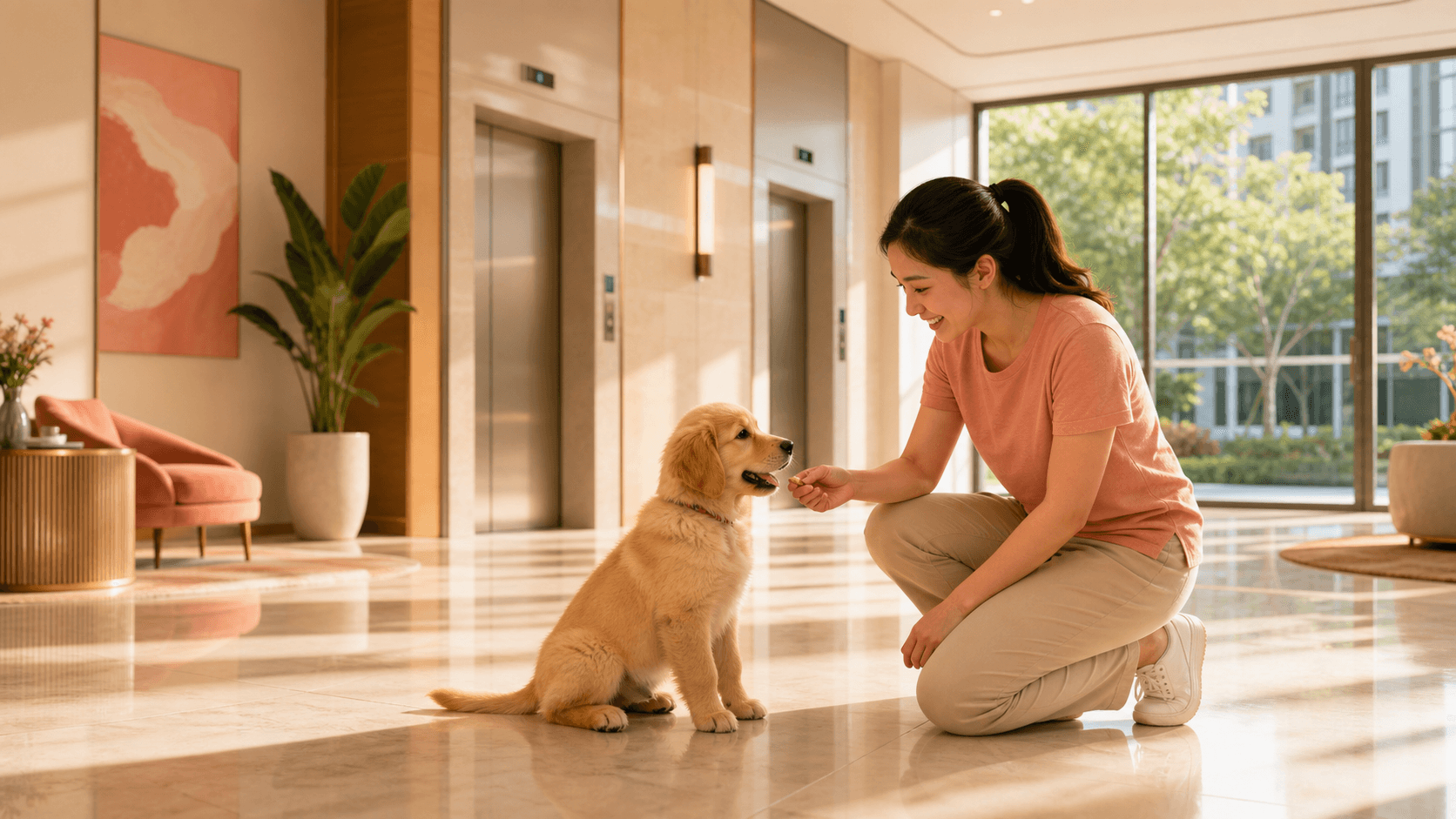
The lift opens, three neighbours step out, a delivery trolley rattles behind them, and your puppy suddenly becomes very interested in hiding behind your calves. That is not failure. That is information.
A condo puppy is learning close-range city life: lift chimes, lobby echoes, uniforms, wet umbrellas, corridor turns, children at knee height, and strangers who appear without much warning. The aim is not a puppy who greets everyone. The aim is a dog who can notice all of this, stay under threshold, and recover.
Use this as a planning guide, not a diagnosis. If your puppy’s behaviour changes suddenly, or you suspect pain or illness, speak to your vet.
Read the Moment Before You Add More
In Singapore, Malaysia, and Indonesia, dense housing is normal dog life. Shared approaches, HDB blocks, condo lobbies, basement car parks, void decks, and lift landings are part of the training environment, not a special outing.
Good socialisation means controlled, positive exposure. Your puppy can watch a cleaner’s trolley, hear a lift chime, see a delivery rider, and still choose to move away. It does not mean greeting every neighbour. It does not mean being held in place while frightened.
A pause at the lift door, one bark, or ducking behind you can be normal curiosity or uncertainty. Watch the recovery. A puppy who looks, takes a tiny treat, sniffs again, and walks away calmly is coping. A puppy who freezes repeatedly, hides, growls harder each time, lunges, snaps, frantically pulls away, or refuses high-value food is telling you the setup is too much.
The early socialisation window is time-sensitive, with puppies especially receptive roughly between 3 and 14 weeks, so safe exposure planning should not wait until adolescence. The trick is to keep the exposure small enough that your puppy can still think.
Also read the weather. In tropical heat, panting, slowing down, seeking shade, or irritability during lobby-to-outdoor routines may be heat stress, not stubbornness. A shaded walk after rain, a humid evening loop, or a warm lift lobby can change how much your puppy can handle.
Make Condo Practice Boring on Purpose

Choose one or two brief daily sessions in the common areas. Stand near the lift lobby, hear the chime, let a neighbour pass, then leave before your puppy tips into fear. The exit is part of the lesson. Brave puppies do not need to meet everyone.
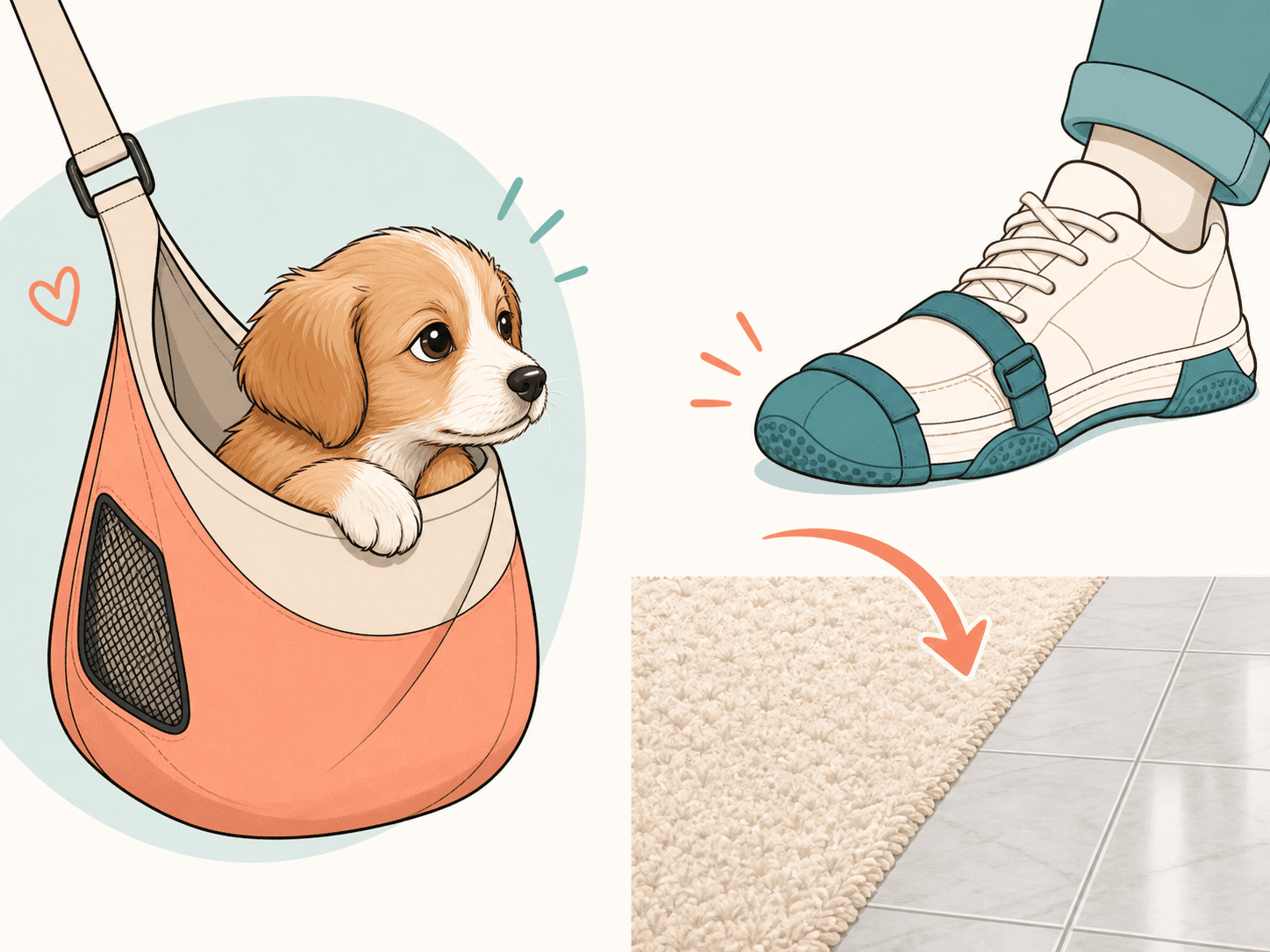
Before the vaccination series is complete, keep exposure lower-risk and vet-guided. Carry your puppy, use a clean mat or stroller, avoid unknown dog toileting areas, and follow your attending vet’s local disease-risk advice. That still lets your puppy learn the soundtrack of condo life without making the lobby floor the whole plan.
For strangers, start with parallel presence. Let your puppy watch from a comfortable distance. Feed small rewards. Skip touching unless your puppy approaches with loose body language: soft body, easy movement, relaxed mouth, and the option to leave. If someone reaches in, step aside, create distance, wait for the next lift, or say, “We’re not greeting today.”
Break lift practice into pieces small enough to feel almost silly:
- Walk toward the lift area, then leave.
- Hear the lift doors open and close from a distance.
- Step in and out without riding.
- Take one short ride at a quiet time.
- Leave before the lobby becomes crowded.
Good progress looks boring: calmer watching, easier recovery, taking food, choosing to move away, and fewer forced moments. Use food from the normal daily allowance, or keep rewards tiny, so repeated practice does not quietly become extra calories.
If the Pattern Changes, Start With Health
A sudden behaviour change is a vet problem first. Pain, ear disease, gut discomfort, skin itch, injury, or another illness can look like a “bad attitude” in a lift lobby. A puppy who was coping yesterday but is now avoiding touch, snapping, hiding, or acting irritable may not be training you badly. They may be telling you something hurts.
Bring in a vet when the change is sudden, the reaction is new, or the puppy seems uncomfortable during normal movement, handling, or shared-space routines. Use this to prepare for the vet conversation, not to diagnose your puppy at home.
Bring in a qualified trainer or veterinary behaviour professional when fear or reactivity is escalating. That includes a puppy who has bitten or nearly bitten, cannot safely pass neighbours, or cannot recover after routine lift, lobby, or corridor exposure. Choose someone who uses humane, evidence-based methods. Fear, pain, and intimidation are not “confidence building.” They are usually just louder fear.
The one rule to remember: increase distance before you increase pressure. Skip leash corrections, forced greetings, and holding your puppy in place while they are frightened. Give them space, choice, and carefully planned exposure.
For the next few sessions, record three things: the trigger, the setting, and what your puppy did after ten seconds. Bring those notes to your vet if the change is sudden or pain is possible; bring them to a qualified behaviour professional if fear is escalating or safety is becoming difficult.
— Manja