
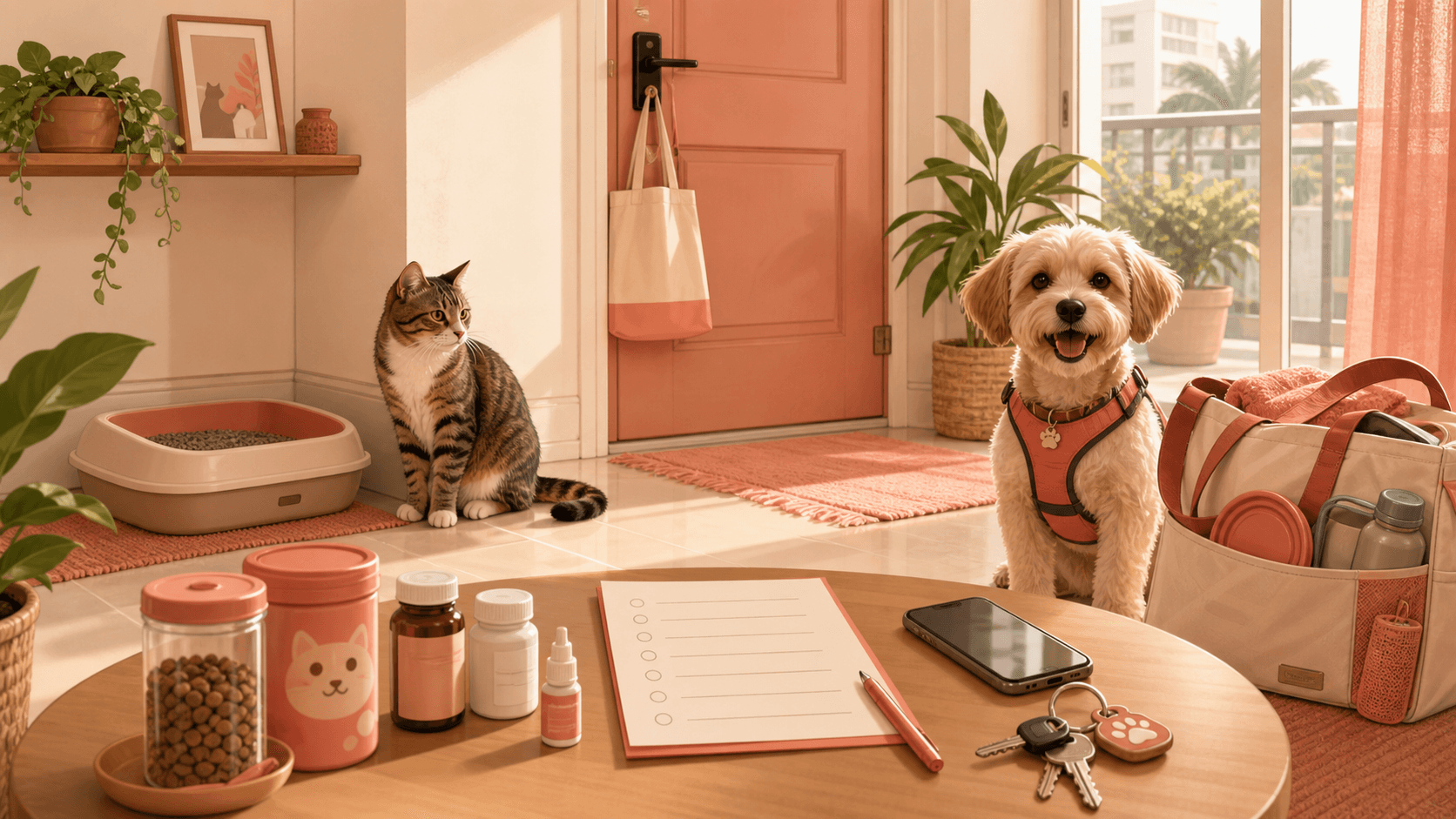
A good sitter handover lets Mei’s cat keep her litter routine, Ravi’s dog avoid his lift panic, and your sitter know who to call before a small problem becomes a scramble.
Use this to prepare for the vet conversation, not to diagnose your pet at home. The point is written clarity. A long weekend is short enough to feel casual, but long enough for missed medication, heat stress, hiding, toileting changes, or a leash incident to matter.
Put the emergency chain at the top
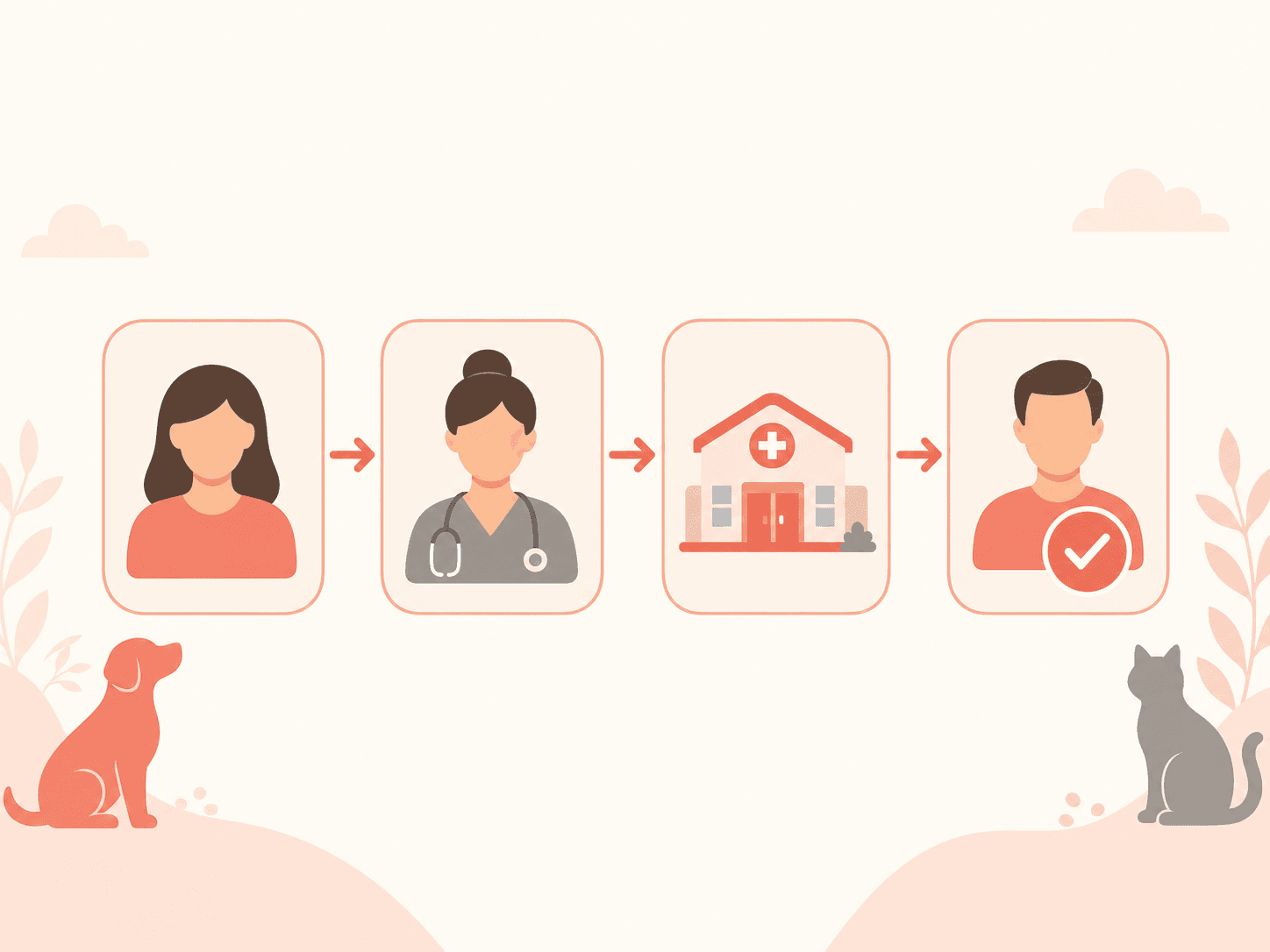
Your sitter should not have to search a WhatsApp thread during an emergency. Put the decision chain on the first page or pinned phone note.
Start with your contact details. Add your regular veterinarian, a 24-hour emergency clinic, and one backup decision-maker who can answer if you are on a flight, asleep, or out of reception. If your sitter cannot reach you, they need to know who can say yes to urgent care.
| Contact | What to write |
|---|---|
| Owner | Name, mobile number, travel dates, best way to reach you |
| Regular veterinarian | Clinic name, phone number, usual doctor if relevant |
| 24-hour emergency clinic | Clinic name, phone number, address |
| Backup decision-maker | Name, mobile number, relationship to pet |
Add a short baseline for each animal under the contacts. Not a biography. A sitter needs the normal pattern: appetite, water intake, energy level, resting places, hiding places, sociability, and noise sensitivities. If your cat always hides under the bed after thunder, say that. If your dog usually skips breakfast after a late-night treat, say that too.
The useful line is: “This is normal for her.” Then write what is not normal.
Write food like a recipe, not a vibe
Food instructions should be concrete enough that a sitter does not improvise. “Feed normally” is not a handover. It is a guess with a bowl.
Write the food brand or type, normal serving amount, meal times, treat limits, water setup, and foods the sitter must not give. Dogs and cats both need individual instructions because feeding frequency and amount vary by the animal, life stage, health, and diet type.
| Routine | Details to leave |
|---|---|
| Main food | Brand or type, normal serving amount, where it is stored |
| Meal timing | Usual meal times and whether timing is flexible |
| Treats | Maximum treat amount or “no treats” |
| Water | Bowl, fountain, refill routine, spare filters if used |
| Do-not-give list | Foods, chews, toppers, or leftovers to avoid |
Keep medication separate from food. A tablet hidden in wet food is still medication. It needs its own line.
For each medicine, write the medication name, dose as prescribed, timing, route, hiding method if used, and what to do if a dose is missed. Do not invent a missed-dose rule for the sitter. Write the instruction your vet gave you, or write “call owner or vet before giving the next dose.”
Split cat notes from dog notes
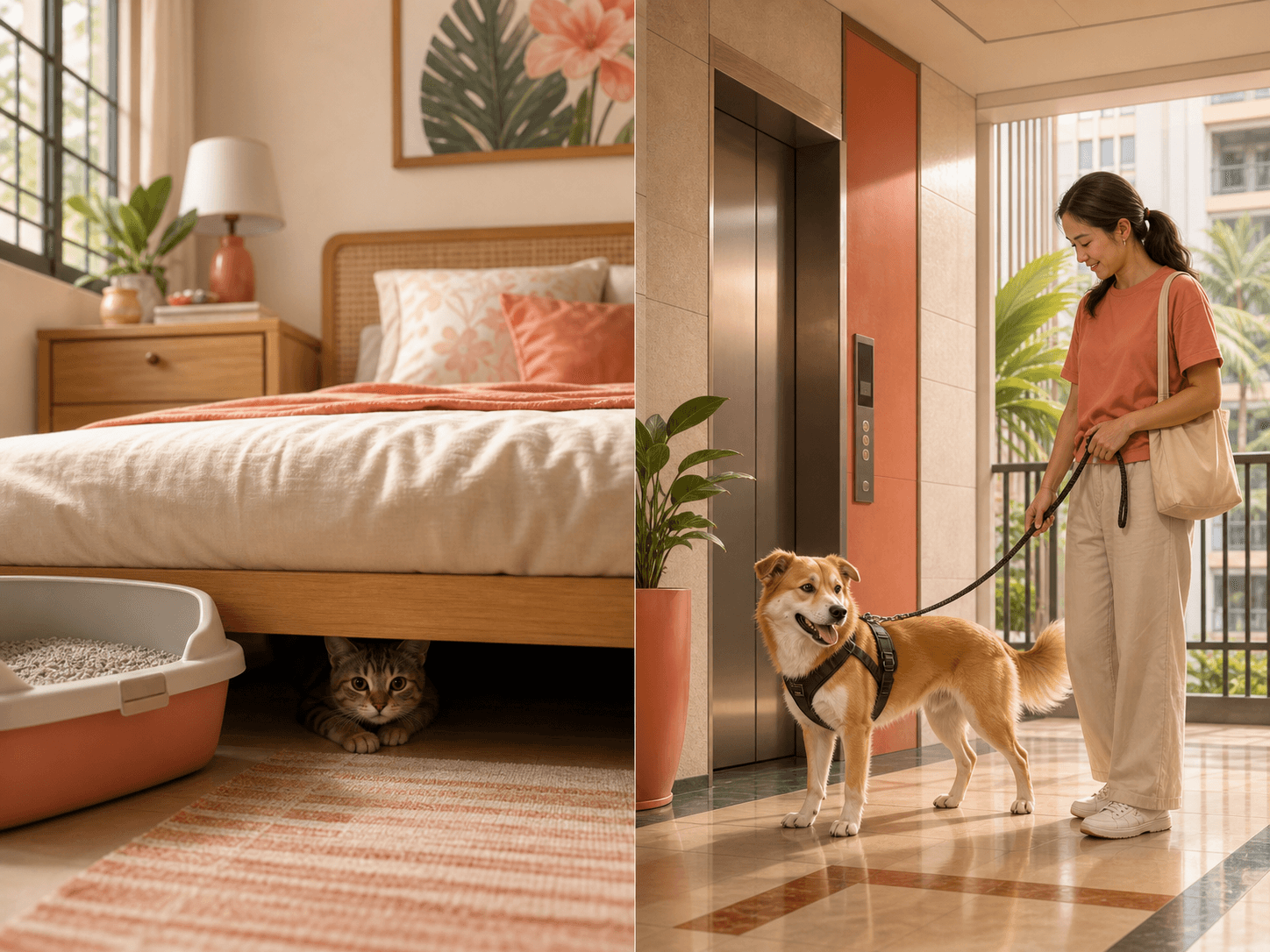
Cats and dogs fail in different ways over a long weekend. A cat may look “quiet” while hiding more than usual. A dog may look “excited” while reacting badly to another dog near the lift.
For cats, document the litter-box location, usual cleaning frequency, normal stool and urine pattern if you know it, and hiding places. Changes in toileting or withdrawal can be early signs that a cat is stressed or unwell, so the sitter needs more than “she is shy.”
For dogs, write the walk rules. Include the normal route, harness or leash setup, reactivity triggers, recall limits, lift or stair constraints, toilet schedule, and whether off-leash time is forbidden. If your dog lunges at motorcycles, children on scooters, cats, or other dogs, name the trigger. A sitter cannot manage what you politely avoid saying.
| Pet | Sitter needs to know |
|---|---|
| Cat | Litter-box location, cleaning routine, hiding spots, normal toileting pattern |
| Dog | Walk route, leash or harness setup, reactivity triggers, toilet schedule |
| Cat | Places the cat may retreat to and whether the sitter should leave her alone |
| Dog | Lift, stair, recall, and off-leash limits |
This is also where you write the boring home details. Keys or smart-lock method. Building rules. Lift or stair access. Windows and balcony restrictions. Bin location. Cleaning supplies. Carrier or crate location. Rooms the pet must not enter.
Boring is good. Boring means your sitter is not trying five cupboards while your cat has vomited on the rug.
Add a tropical-weekend plan
Singapore, Malaysia, and Indonesia handovers should assume warm, humid conditions unless you have planned otherwise. The sitter should know the pet’s cooling routine, shaded walking options, water access, and when to stop activity and call a vet.
Do not leave “walk him as usual” if your usual route depends on you reading the weather, pavement heat, traffic, and your dog’s mood. Write the shaded route. Write the indoor play option. Write whether the dog should skip a long walk if the weather is too hot or humid.
For Malaysia and Indonesia trips, add parasite and mosquito context where relevant. The sitter should know whether your cat or dog is on flea, tick, and heartworm prevention. Heartworm disease is transmitted by mosquitoes and affects dogs and cats, so the sitter should not change preventive products without owner or vet approval.
Add vaccination and bite-risk notes too. Rabies is a serious zoonotic disease, and regional risk management depends on vaccination and quick escalation after bites or suspect exposure. Keep the wording practical: “Vaccination card is in the blue folder” or “If any bite happens, call me and the vet contact immediately.”
Agree on updates before you leave
A sitter update plan should be agreed, not assumed. Some owners want one photo after dinner. Some need a message after each medication dose or walk. The right cadence depends on the pet’s routine, health, and your own preference.
Write what you want. Photos, messages, or both. After meals, after walks, after medication, or at an agreed daily time. If your sitter is caring for more than one animal, ask for each pet to be mentioned by name so the shy cat does not disappear behind the easy dog.
End the handover with a simple final check: contacts pinned, food measured, medication separated, litter or walk notes written, access tested, carrier located, balcony and windows secured, and update expectations agreed. Do that before you pack the charger. Small thing, done before leaving.
— Manja