
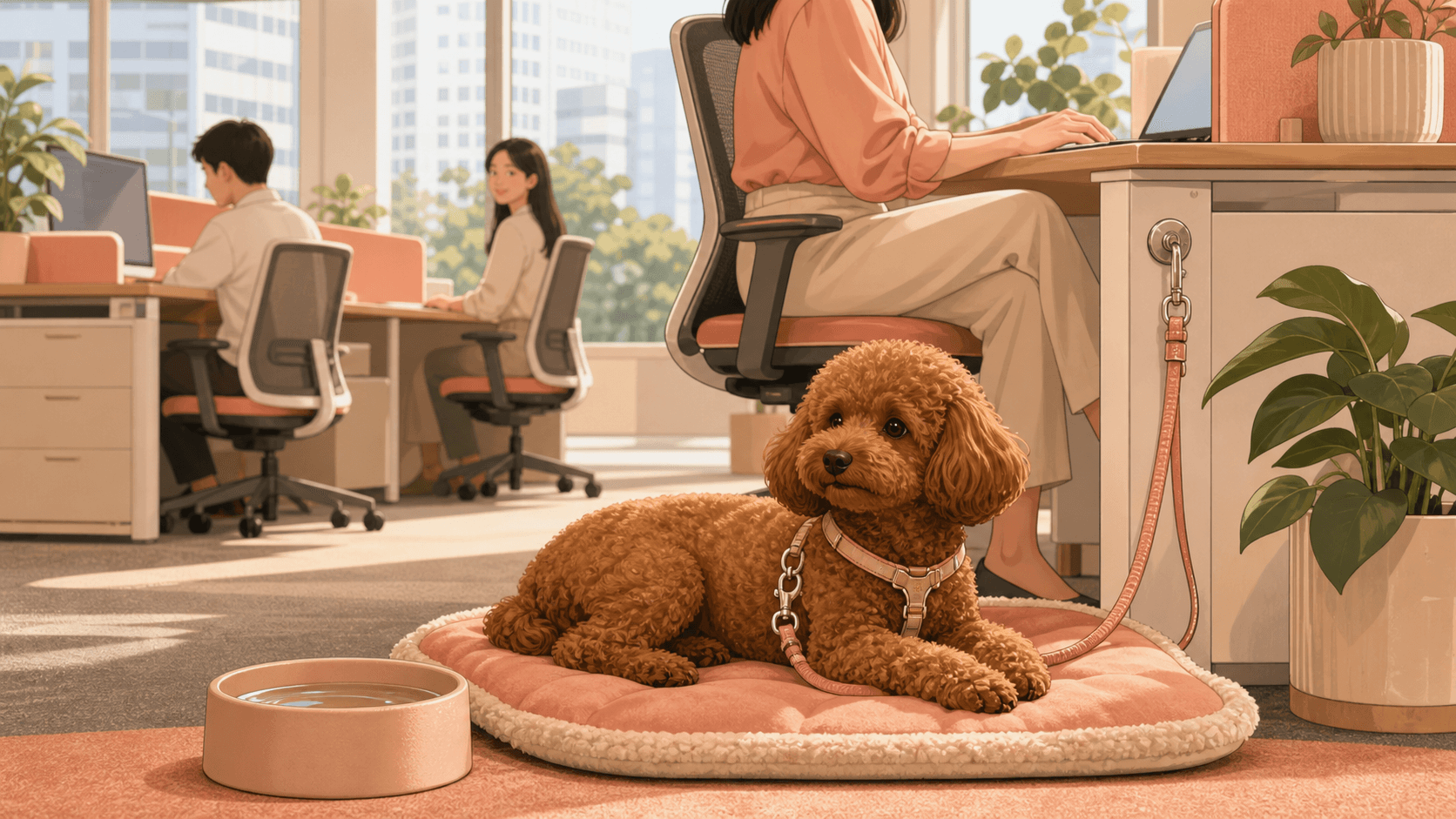
A good office-dog trial is not “bring Milo in and see how.” It is a short, consent-based test with one clear exit plan: if the dog cannot settle, the day ends.
Use this checklist to prepare for the workplace conversation, not to diagnose health or behaviour concerns at your desk; ask your vet if your dog’s fitness, stress, parasite control, or vaccination status is individual.
Start with permission, licensing, and consent
The first check is boring, which is why it matters. In Singapore, dog owners are responsible for licensing their dogs and keeping licence details current under AVS guidance on dog licensing. A pet-friendly office trial should begin with “is this dog allowed and properly licensed?” before anyone talks about cute Slack photos.
The second check is human. An office is shared space. Some colleagues may have allergies, phobias, religious concerns, or concentration needs that make a dog trial uncomfortable. Workplace pet guidance from Purina’s Pets at Work programme recommends policies that consider employees before pets come in.
Make the trial opt-in. That does not mean one loud dog lover decides for the room. It means the manager asks affected staff, records boundaries, and sets zones where the dog may and may not go.
| Before the trial | Go | Stop |
|---|---|---|
| Dog licensing | Licence is valid and details are current | Licence status is unclear |
| Staff consent | Affected employees have opted in or clear boundaries are set | Allergies, phobias, religious concerns, or work needs are unresolved |
| Dog health | Vaccination, parasite control, and healthy-dog-only rule are required | Dog is unwell or health status is unclear |
| Office role | Pet dog trial is clearly separate from guide or assistance dog access | Policy treats working guide dogs like optional office pets |
That last row matters. A pet dog visiting for office culture is not the same as a guide dog supporting a person with disability. Guide Dogs Singapore explains that working guide dogs should not be distracted. Your office policy should name that difference plainly.
Plan the route before the dog enters the lobby
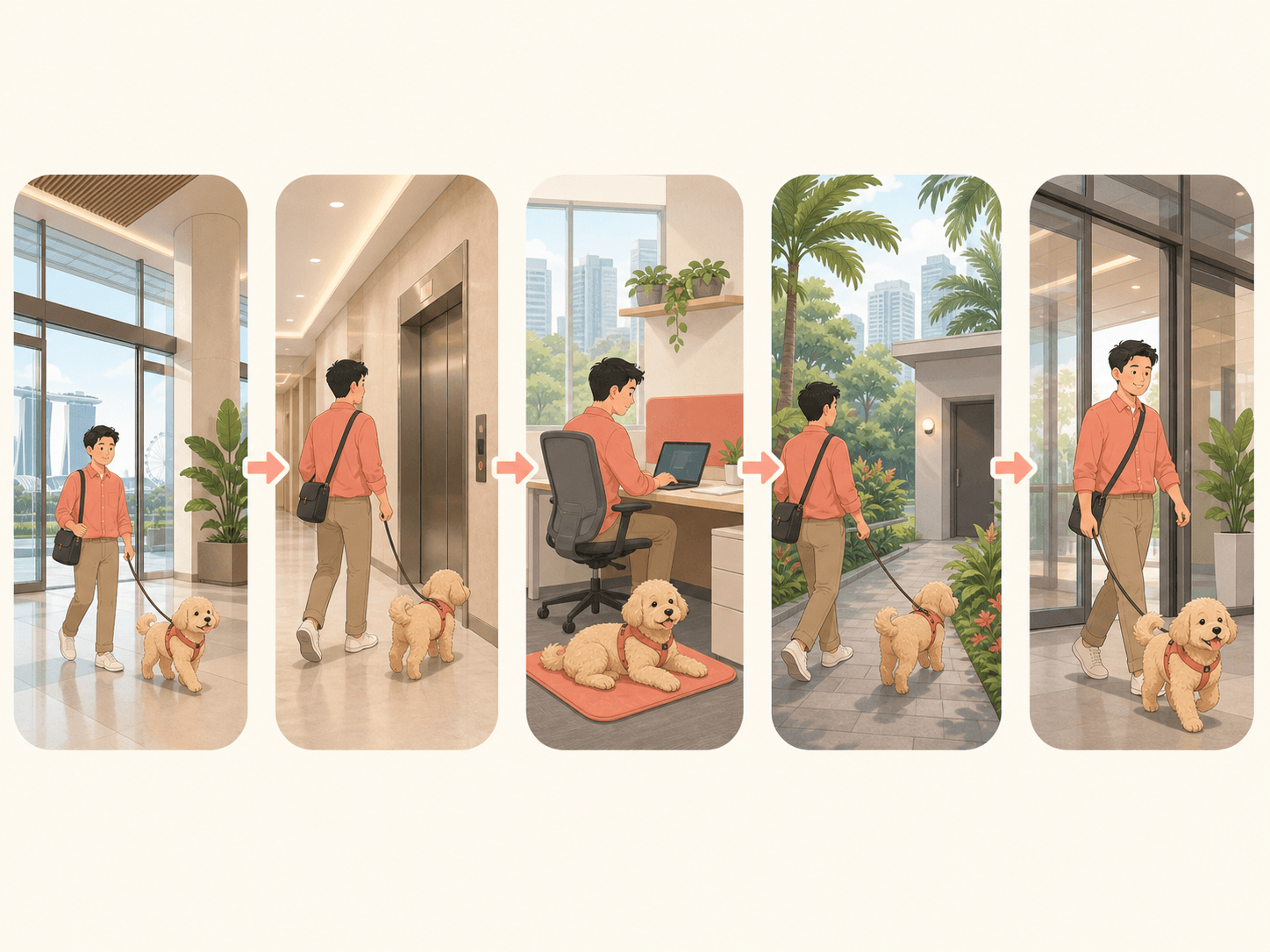
The trial starts before the desk. Singapore dog-handling expectations include keeping dogs under control in shared environments, and dog owners must comply with control-related rules where they apply. AVS frames responsible ownership around control and consideration for others in shared spaces, while Singapore’s Dog Licensing and Control Rules set legal obligations for owners.
For the office, that means leash control from building entrance to desk. Not “he is friendly.” Not “she usually listens.” Leash on, route clear, owner paying attention.
The commute also needs a heat plan. Singapore is warm and humid throughout the year, according to the Meteorological Service Singapore. Hot transport, slow arrivals, and parked cars can turn a cheerful trial into a welfare problem. Blue Cross guidance on dogs in hot weather warns against leaving dogs in cars and recommends water, shade, and overheating prevention.
| Journey point | Owner action | Why it matters |
|---|---|---|
| Home to transport | Use a low-stress route with water available | Heat and humidity raise commute risk |
| Building entrance | Keep the dog leashed and under control | Shared spaces need predictable handling |
| Lift or corridor | Move calmly and avoid crowding strangers | Not every colleague or visitor wants contact |
| Desk arrival | Go straight to the retreat spot | The dog should not greet the whole office first |
| Exit | Leave early if stress signs appear | A trial is data, not a endurance test |
Do not leave the dog in a parked car while you “run up quickly.” That is not an office trial. That is a heat-risk shortcut.
Give the dog a quiet retreat, not a roaming pass
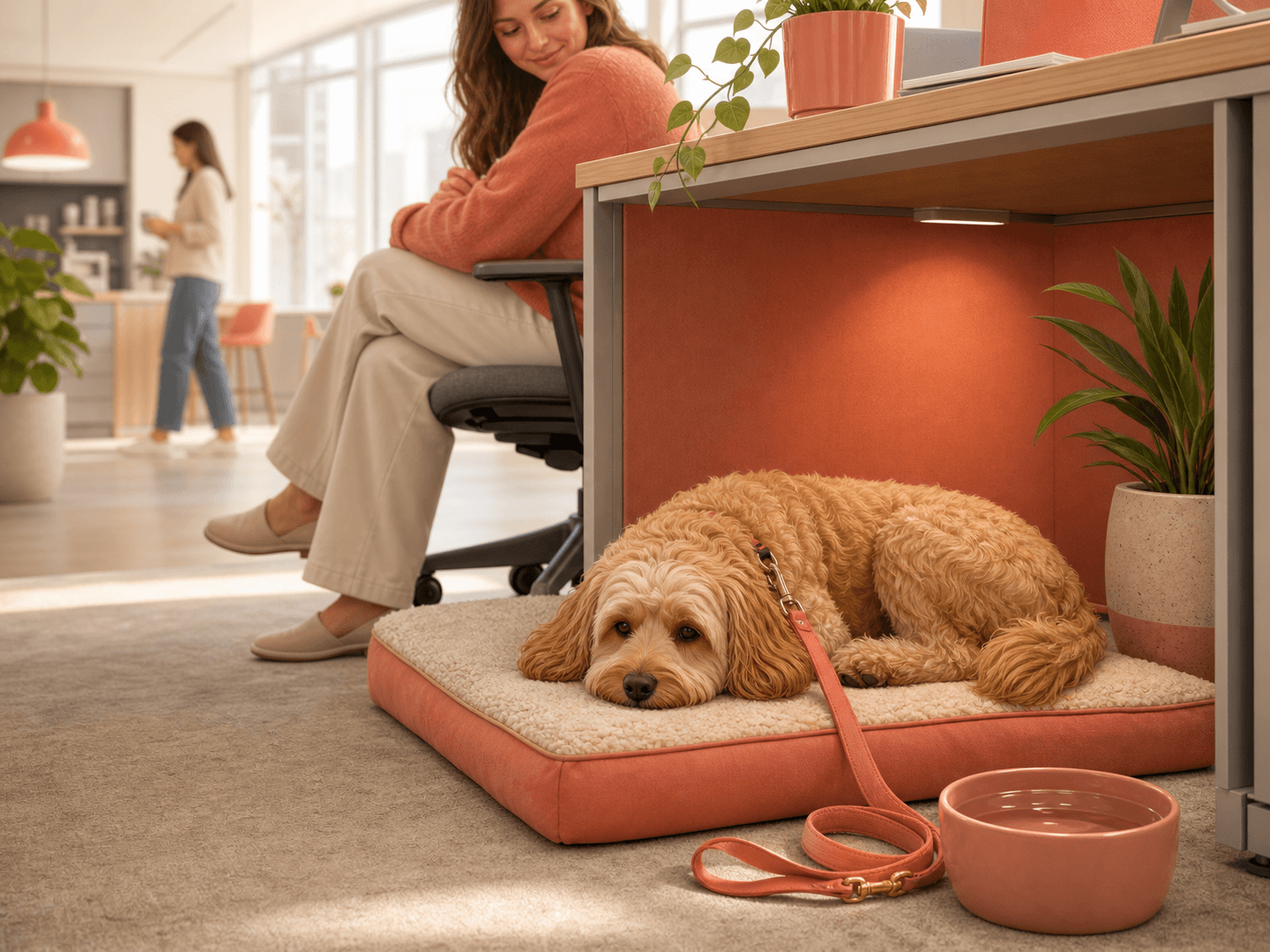
A dog-friendly desk is not the same as a dog-friendly office. The dog needs one quiet retreat away from foot traffic, lifts, pantry areas, and meeting-room movement. That retreat can be the owner’s desk zone if it is calm enough. It cannot be the walkway everyone uses to reach the printer.
RSPCA guidance on dog body language highlights stress and discomfort signals owners can watch for. In an office trial, the important question is simple: can the dog settle?
Pacing, avoidance, barking, or inability to settle should end the trial early. Do not negotiate with the calendar. A shorter trial is the right default unless the employer has a specific acclimation duration, because general workplace-dog guidance supports easing dogs into office routines rather than assuming every dog can manage a full day, as outlined by the American Kennel Club.
| Dog signal | Office meaning | Action |
|---|---|---|
| Settles near owner | Trial can continue | Keep the routine quiet |
| Pacing | Dog is not relaxing | Reduce stimulation or prepare to leave |
| Avoidance | Dog may be uncomfortable | Stop greetings and give space |
| Barking | Environment may be too much | End the trial if it continues |
| Cannot settle | Trial is not working today | Go home early |
The office is not a training arena. It is a workplace. If the dog needs constant managing, the trial has already answered the question.
Set the pantry and toilet rules before lunch
Food sharing is where nice colleagues create real risk. The rule should be boring and public: nobody feeds the dog without the owner’s permission.
Common office snacks can be unsafe for dogs. The ASPCA list of people foods to avoid feeding pets includes chocolate, xylitol-containing items, grapes, raisins, onions, and garlic. That covers many pantry surprises, from sweets to leftovers.
Put the rule in the trial note. Say it out loud if needed. “Please don’t feed Milo anything” is clearer than “be careful with snacks.”
Toileting needs the same level of planning. Before the trial, identify the nearest outdoor toilet route. Owners are expected to clean up after dogs, and PUB’s responsible pet ownership material tells owners to clean up after pets to keep public spaces and waterways clean through its responsible pet ownership guidance.
Do not wait until the dog is urgent. A rushed lift ride, a confused lobby turn, and no clean-up bag can sour the whole policy in one morning.
What changed, and why
The old office-pet idea was usually personality-based. “Is the dog friendly?” If yes, bring the dog in.
That is too thin. A better Singapore office trial asks five sharper questions.
Is the dog legally licensed and under control? Are staff genuinely comfortable? Is the dog healthy enough for close contact in a shared workspace? Can the dog rest away from traffic? Is there a fast, no-drama exit if the day goes badly?
That shift protects everyone. It protects the colleague who needs a dog-free work zone. It protects the cleaner who should not inherit a toileting mess. It protects the dog from being treated like office entertainment when the environment is too loud, hot, crowded, or unpredictable.
For managers, the smallest useful policy is this: one dog, one owner, one short trial, one retreat spot, one toilet route, one exit plan.
For owners, pack less optimism and more structure. Bring water. Bring clean-up bags. Keep the leash on. Tell colleagues not to feed your dog. Watch the dog more than you watch the group chat.
If your dog settles, ignores the pantry, toilets cleanly outdoors, and leaves calmly, you have useful evidence for the next conversation. If not, go home early and call the trial successful anyway. It told you the truth.
— Manja