
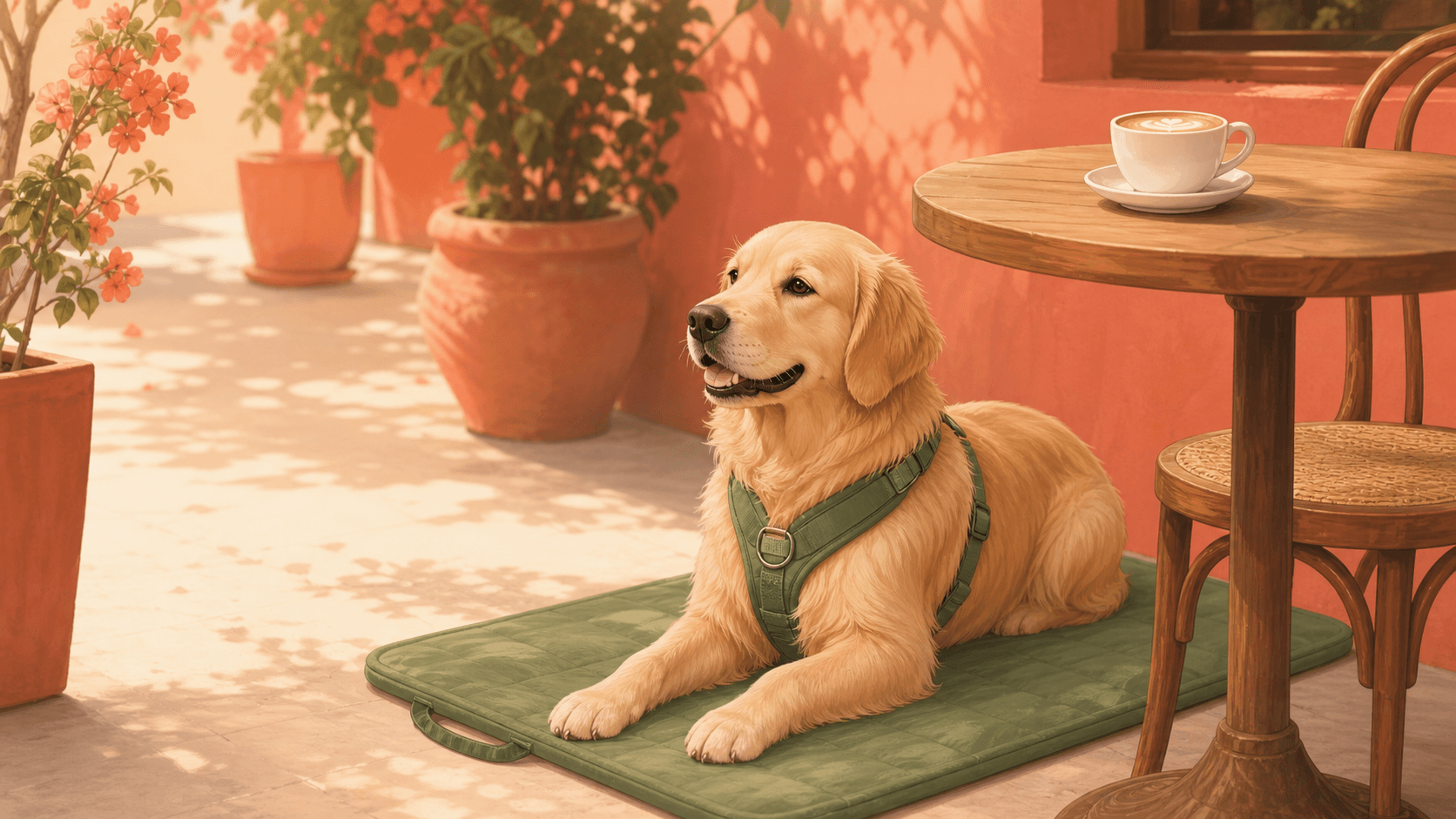
A dog-friendly cafe is still a cafe. People are eating, staff are carrying hot drinks, and your dog has no idea why a plate of eggs cannot be investigated at nose height.
The kindest cafe visit is decided before you leave home: check the venue, check the heat, then check whether your dog can settle.
Check the welcome before the walk
Pet-friendly does not mean “all dogs, all areas, all the time.” In Singapore, dogs are commonly allowed only in outdoor refreshment areas when the operator meets SFA conditions, so check the cafe’s current rules before turning up. In Malaysia and Indonesia, calling ahead is just as useful because comfort around dogs can vary by venue, neighbourhood, and nearby diners, including religious or cultural sensitivities.
That quick check avoids the awkward version of the outing: you, a hot dog, a full cafe, and a staff member trying to explain the rules during lunch service.
Also check the actual route. A shaded five-minute walk from an HDB block or condo may be fine in the morning and miserable after noon. Lift lobbies, pavement heat, crowded corridors, and post-rain humidity can all turn a “short cafe stop” into a long, sticky wait.
Manja is editorial, so use this to prepare for safer choices and better vet conversations, not to diagnose your dog at home.
Decide if your dog is cafe-ready today
Start with the boring question: can your dog relax near people, food, and other dogs without rehearsing chaos?
Skip the cafe if your dog is already scanning, whining, trembling, trying to leave, lunging, blocking walkways, jumping on staff, or approaching diners and dogs without consent. That is not a moral failure. It is information. Practise in easier places first: a quiet void-deck edge, a calm outdoor bench, or a short shaded walk where leaving is simple.
Flat-faced dogs, overweight dogs, seniors, puppies, and dogs with heart or breathing problems need a stricter stay-home rule in warm outdoor settings. Panting alone is not proof of a heat emergency, but heavy panting with drooling, weakness, collapse, vomiting, diarrhoea, confusion, or seizures is urgent heat risk, not poor manners.
If your dog cannot ignore plates, cups, dropped food, or the next table’s fries, choose takeaway or leave them at home. Do not share cafe food or let your dog lick crockery. Keep chocolate, caffeine, alcohol, grapes or raisins, onions, garlic, and xylitol away from the table.
Make the visit uneventful
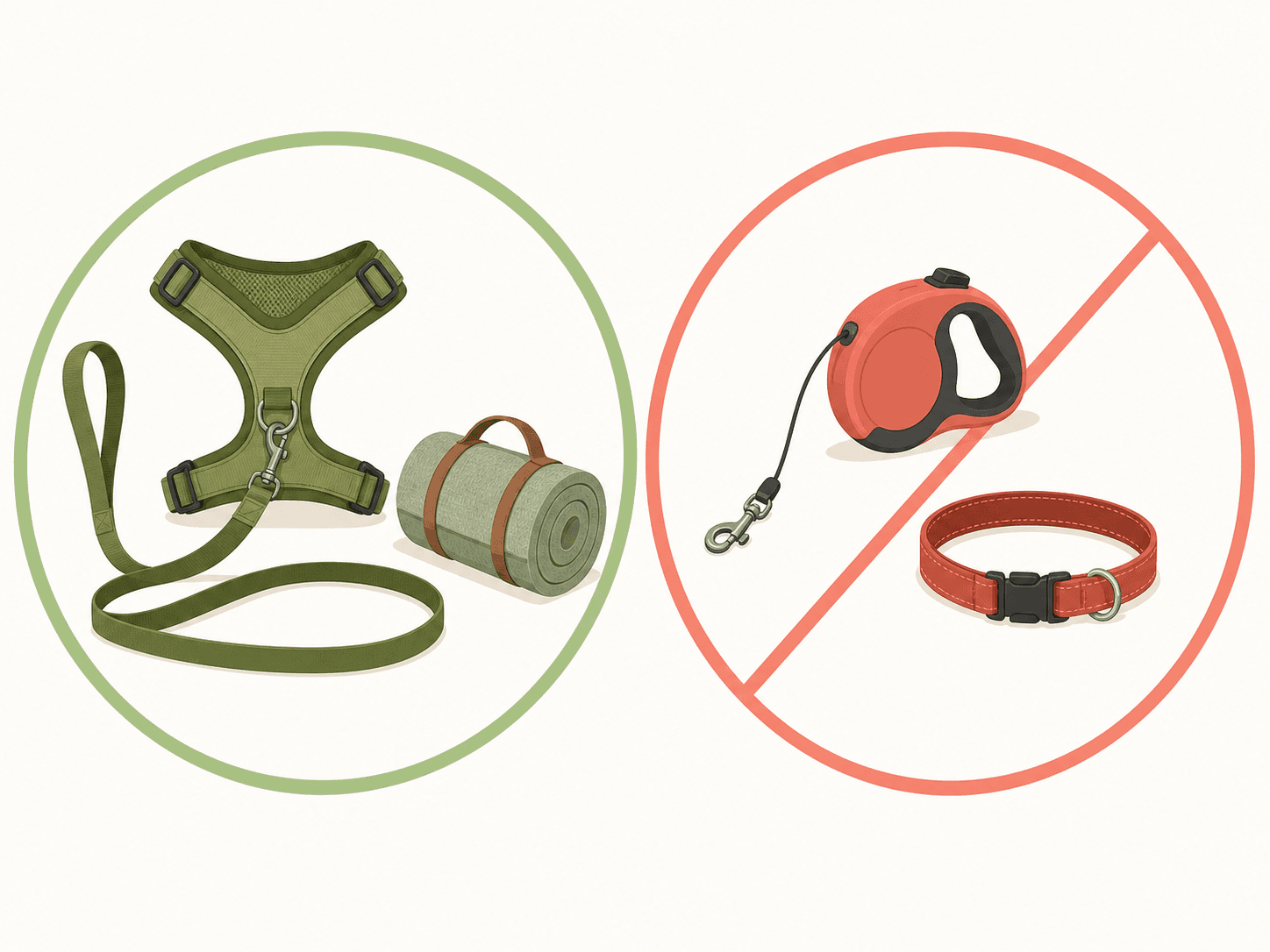
Toilet before entering. Carry waste bags. Keep your dog on a short leash close to you, not stretched across a walkway. Put them where staff can pass without stepping over a tail or negotiating with a curious nose.
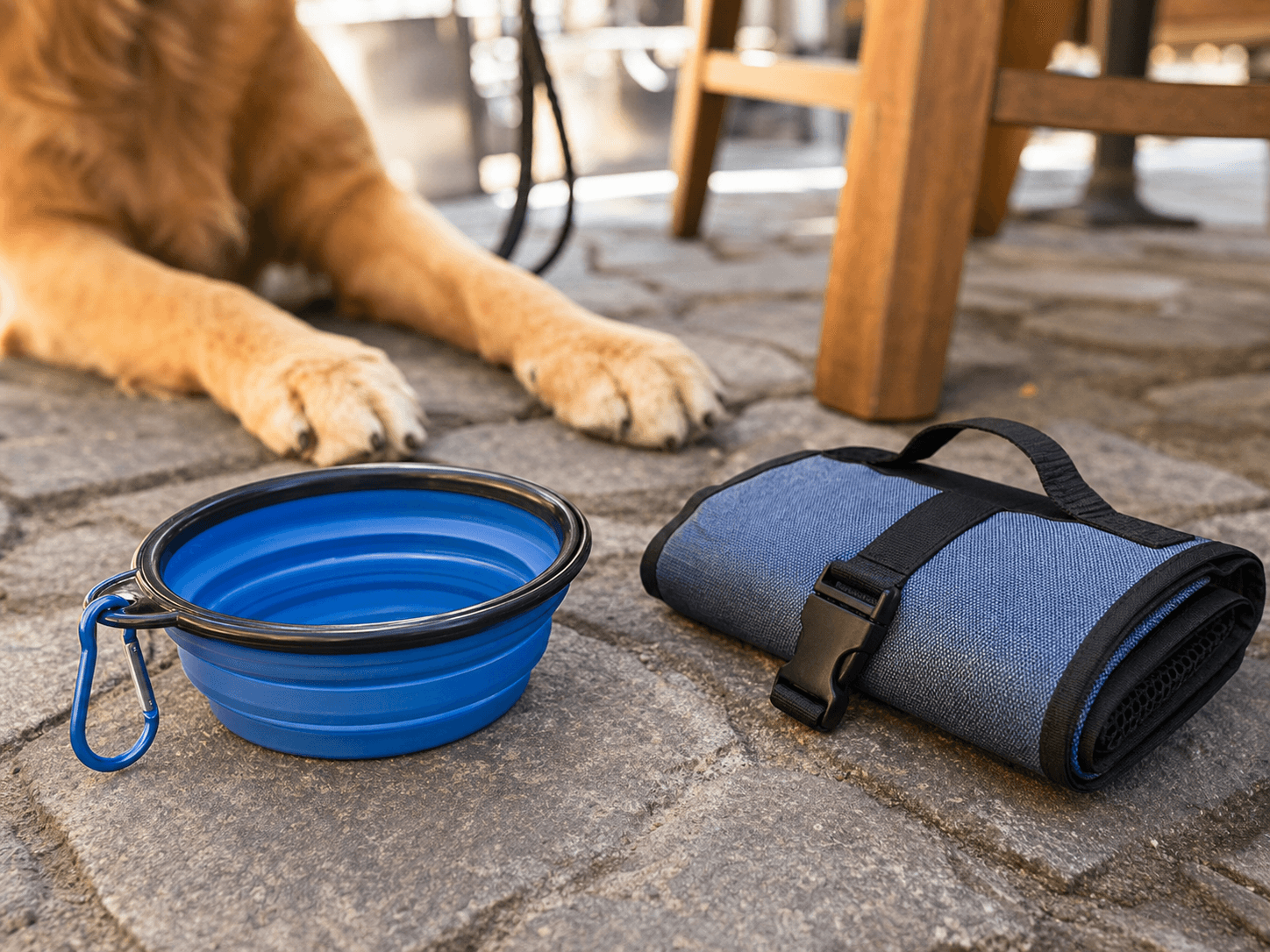
Bring clean water or confirm the cafe has it, then offer water during the visit. Shade matters too. A table that looks breezy to you may still be too hot for a dog lying near warm concrete.
Keep greetings consent-based. Your dog does not need to meet every toddler, poodle, server, or person who says “so cute.” A calm dog under the table is the goal. Boring gets invited back.
Call your vet when this stops being etiquette
Call a vet promptly if your dog collapses, seems weak, vomits, has diarrhoea, looks confused, has a seizure, or keeps panting heavily after you have left the hot cafe area. That is no longer an etiquette problem. That is a health problem.
Also call before the next cafe visit if the same pattern keeps showing up: panic, snapping, guarding food or space, being unable to settle, or reacting intensely to other dogs or people. Repeated exposure can make behaviour problems worse. A cafe should not be your dog’s weekly stress test with coffee.
When you contact the clinic, bring facts, not vibes. Note how long your dog was outdoors, whether there was shade, whether water was available, what food was eaten, and any medications or supplements your dog takes. Photos or short videos can help. So can one clear sentence on whether your dog improved after cooling down or leaving.
Before the next booking, ask one practical question: if your dog needed to leave after ten minutes, would that still be an easy outing? If the answer is no, choose a cooler, quieter plan.
— Manja