
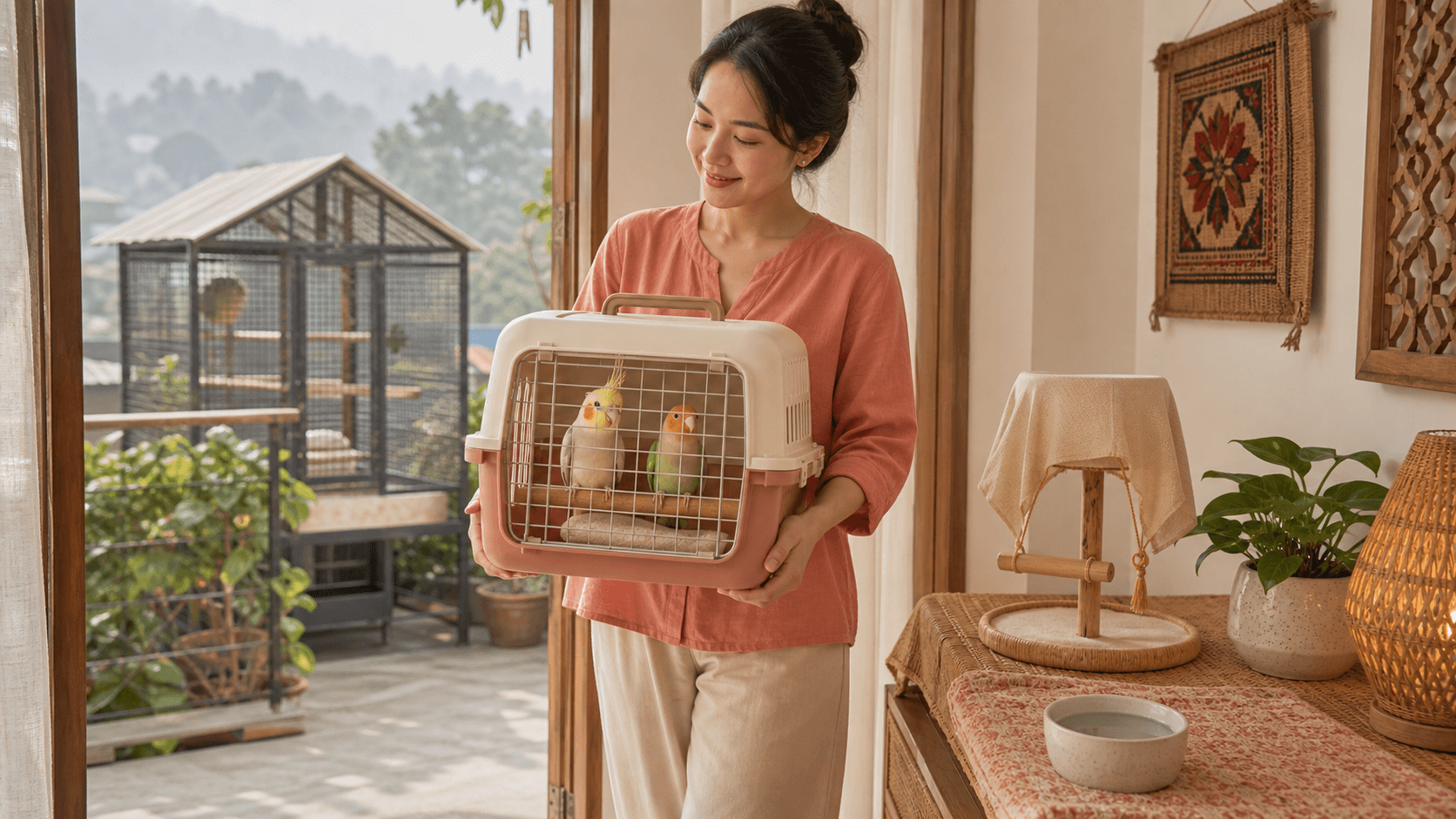
Bad-air days are indoor days for parrots in outdoor aviaries.
A cockatiel in Jakarta or a lovebird in Tangerang may still chirp, eat, and climb while the air outside is wrong for its lungs. Do not wait for dramatic distress. Use this to prepare for the vet conversation, not to diagnose your bird at home.
Move birds away from smoke early
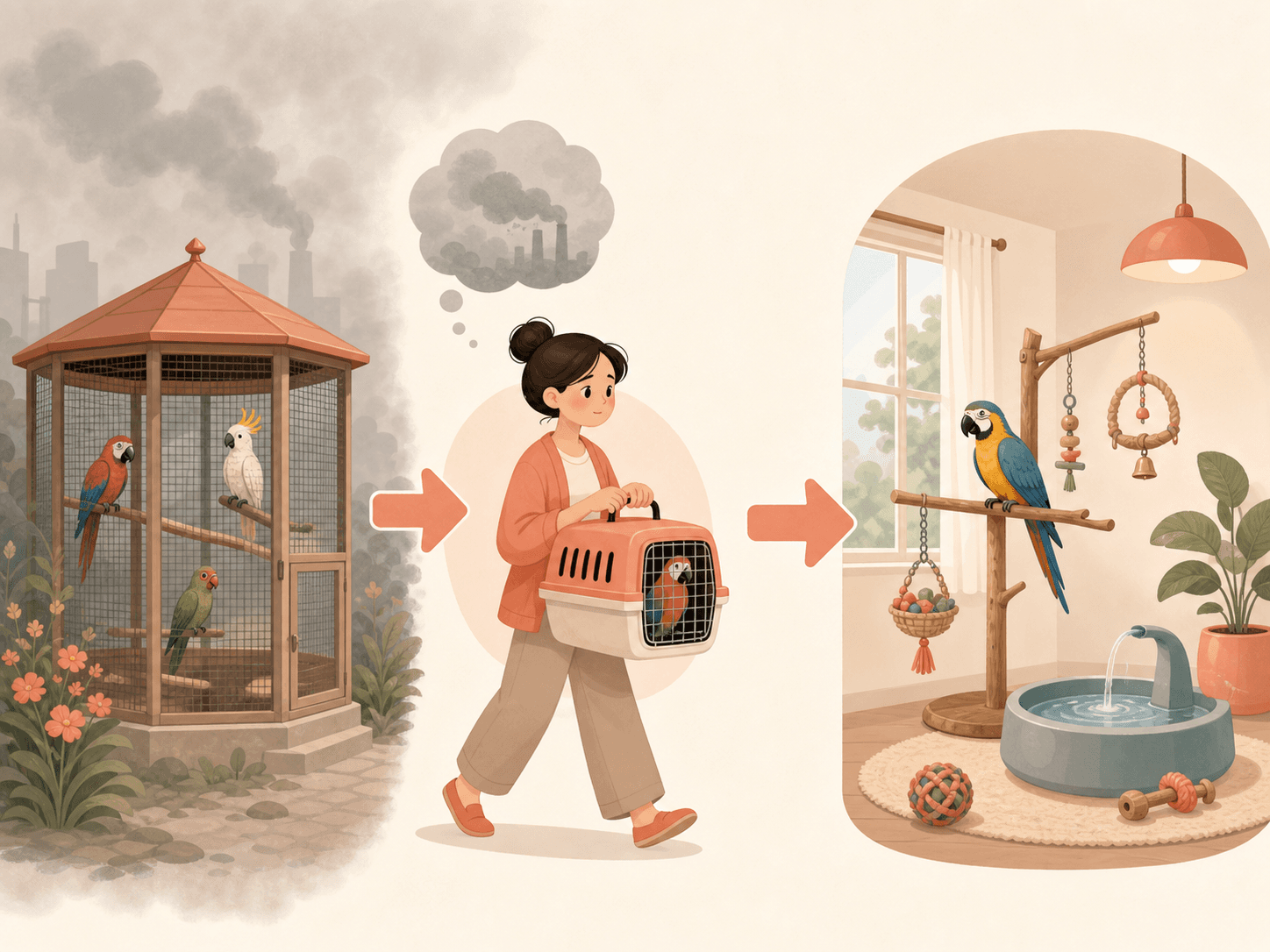
Birds should not be exposed to cigarette smoke or other aerosolised toxins because they are very sensitive to them, according to Bird Vet Singapore. Haze sits in that practical bucket for owners: bad air plus a bird’s efficient respiratory system equals a low margin for “let’s see first”.
There is no source-backed Indonesia ISPU, PM2.5, or PM10 trigger in this bundle, so do not pretend there is one here. The conservative owner rule is simpler. If the air smells smoky, looks hazy, or makes people in the home avoid outdoor activity, move outdoor birds into a cleaner indoor space before they look sick.
| Bad-air-day state | Owner action |
|---|---|
| Light haze or smoke smell | Bring birds indoors early. Keep outdoor time off the plan. |
| Obvious haze around the aviary | Keep birds away from the aviary until air improves. |
| Bird is quieter, eating less, or droppings change | Call an avian vet or a clinic that can handle birds. |
| Breathing looks abnormal | Seek veterinary care promptly. |
Skip incense, cigarette smoke, strong sprays, and other airborne irritants indoors too. Moving a parrot from a smoky aviary into a room full of fragrance mist is not an upgrade. It is the same mistake with nicer packaging.
Watch the small signs, not the dramatic ones
Birds hide illness well. A Singapore parrot-care source, Parrot Junkie, recommends daily monitoring of behaviour, weight, droppings, and eating habits because subtle changes matter.
For an outdoor-aviary bird, the useful check is boring and repeatable. Same time. Same perch area if possible. Same notebook or phone note. You are looking for drift.
| Daily check | What to notice |
|---|---|
| Behaviour | Less movement, less calling, more hiding, or less interest in people |
| Eating | Food left behind when it is usually finished |
| Droppings | A clear change from that bird’s normal pattern |
| Weight | Any change your usual weighing routine picks up |
| Breathing | More effort, tail movement with breaths, or open-mouth breathing |
Do not use one normal-looking moment as proof that all is fine. A parrot can look lively when you enter, then sit quietly again after you leave. That is why daily routine beats panic-checking.
Keep the aviary ready for the next clear day
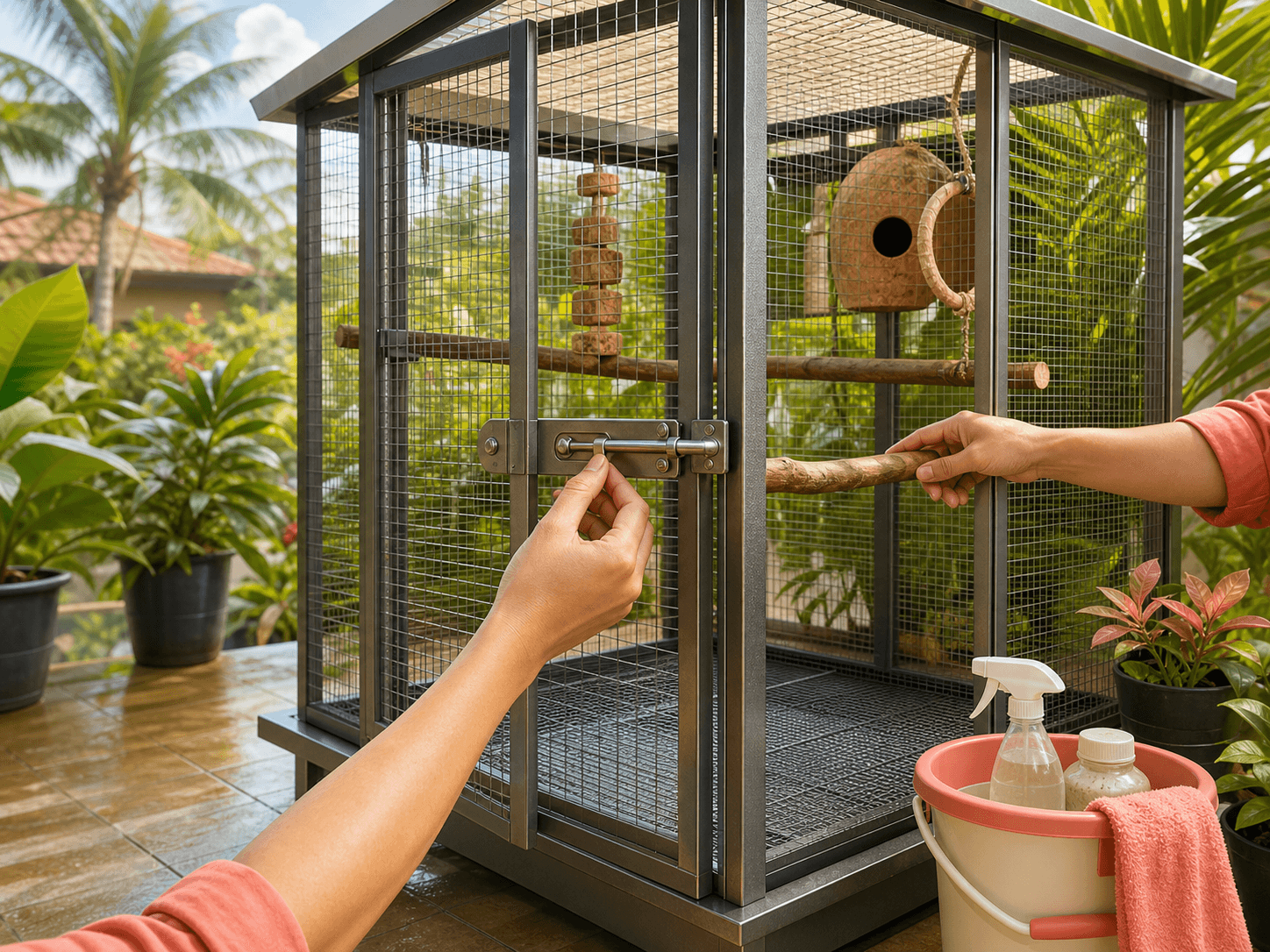
Haze care is not only about the bird room. The outdoor aviary still needs maintenance while it is unused or lightly used.
A safe outdoor aviary guide recommends weekly scrubbing with bird-safe disinfectant, replacing worn toys, checking for rust or weak joints, and a monthly inspection of the whole aviary, plants, locks, and latches. That rhythm fits tropical homes where rain, heat, plants, and metal fittings all age fast.
| Schedule | Aviary check |
|---|---|
| Weekly | Scrub surfaces with bird-safe disinfectant. |
| Weekly | Replace worn toys before loose parts become hazards. |
| Weekly | Check for rust or weak joints. |
| Monthly | Inspect the whole aviary, plants, locks, and latches. |
A latch check is not fussy. It is regional responsibility. Singapore’s AVS notes that the Javan Myna was formerly endemic to Java and Bali and entered Singapore in the 1920s through the caged bird pet trade (AVS). Private birds escaping into public spaces is not a cute side plot. It is preventable.
Sunlight helps only when the setup is controlled
Natural light can be useful, but outdoor time is not automatically safe. BirdSupplies advises that natural sunlight is best in short, supervised bursts, with shade, water, and heat-risk precautions for birds outdoors in a carrier, harness, or aviary (BirdSupplies).
That matters in Indonesia, Malaysia, and Singapore because hot outdoor conditions can change quickly. Haze adds another layer. A shaded aviary can still sit in bad air. A clean-looking sky can still be too hot for a bird without enough shade and water.
Keep enrichment going indoors on bad-air days. A regional bird-care overview recommends regular health and behaviour monitoring, routine avian-veterinary checkups, and mental enrichment through toys, puzzles, and training (The Asian Pawrent). Rotate safe toys. Do a short training session. Let the bird work for attention without being pushed into outdoor exposure.
Plan for rules and vet access before you need them
Parrots are not simple luggage. Singapore’s AVS treats parrots, parakeets, budgerigars, cockatoos, doves, finches, and similar birds as ornamental birds, and notes that endangered ornamental birds may need additional CITES permits (AVS ornamental birds). For Indonesia, a pet-relocation guide says taking birds and other animals out of Indonesia requires approval from the Ministry of Forestry when the CITES category is permitted (Expat.or.id).
If your family moves between Indonesia, Singapore, or Malaysia, start the paperwork question early. APHIS also says destination-country entry requirements and health certificates should be handled with an accredited veterinarian, who must confirm the requirements are met (APHIS).
Vet access needs the same planning. Malaysia-specific evidence says specialist bird clinics are not commonly found and advises owners to call ahead to check whether an avian vet is available (Bird Watching Asia). That is good practice across the region. Save the clinic number before haze season, not after your African grey stops eating.
One small thing tonight: choose the indoor room your bird will use on bad-air days, then check the carrier, latch, water bowl, and clinic number.
— Manja