
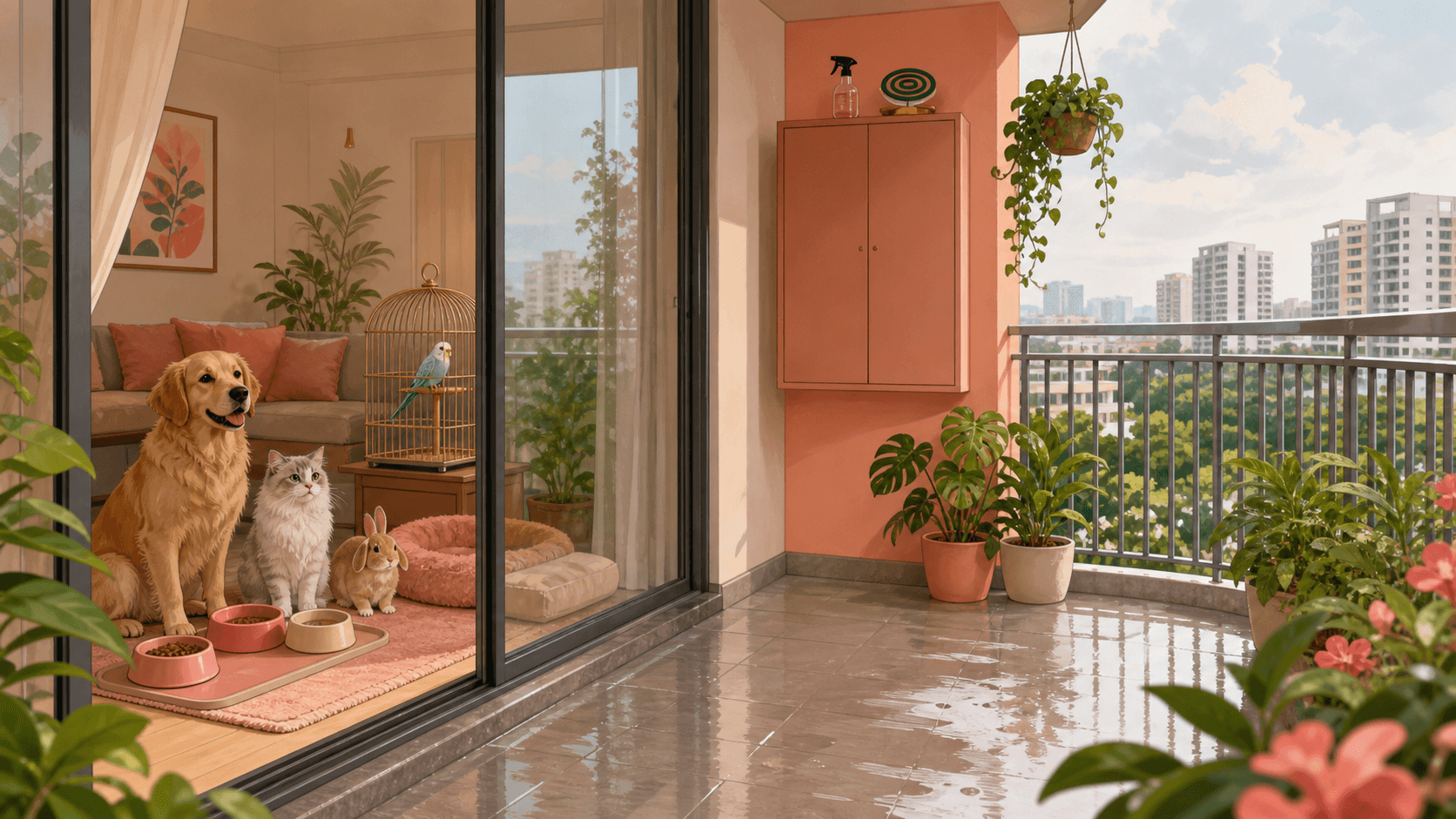
After rain, make the balcony boring first: empty water, dry surfaces, then think about coils, sprays, or cleaners. That order protects dogs, cats, rabbits, and birds better than chasing mosquitoes with fumes.
Start with water, not smoke
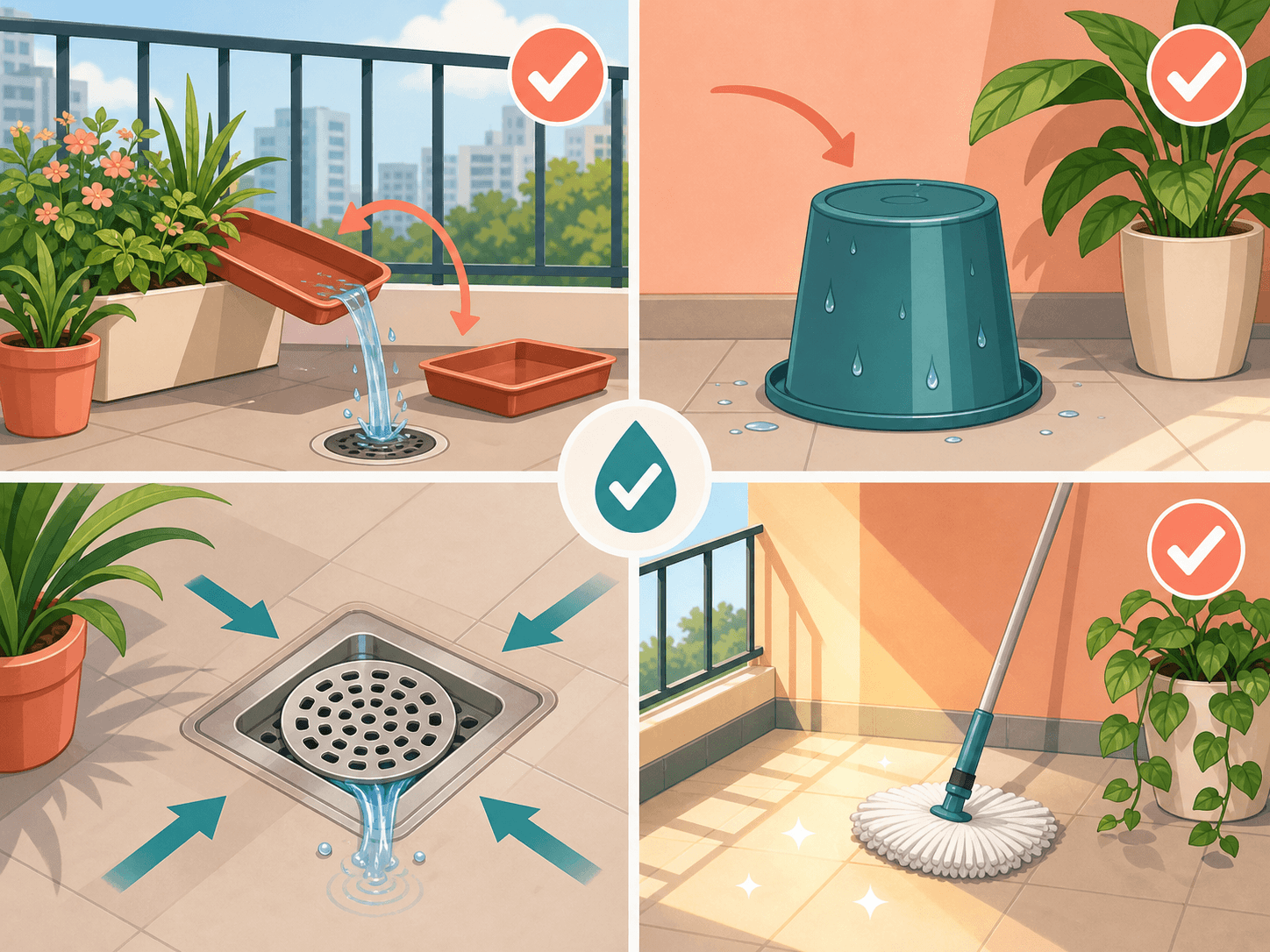
Mosquito control starts before the coil comes out. Singapore's dengue guidance tells households to remove stagnant water, scrub container sides, and stop Aedes mosquitoes from breeding around the home NEA. In high-rise homes, the small spots matter: balcony corners, plant trays, pails, corridors, and floor traps can hold enough stagnant water to become breeding points NEA.
Malaysia's public dengue advice also centres on removing breeding sites around the home Info Sihat. Indonesia's household dengue messaging uses the 3M Plus approach: drain water containers, close water storage, recycle or bury unused containers, and add other prevention steps Kementerian Kesehatan RI.
That is good news for pet homes. Source reduction means less reliance on smoke, mist, strong fragrances, and damp chemical residue.
| Balcony spot | Pet-safer first move |
|---|---|
| Plant trays | Empty water and scrub the sides |
| Pails or buckets | Turn over, dry, or store closed |
| Floor traps | Clear drainage and avoid stagnant pooling |
| Balcony corners | Mop, rinse if needed, then dry before pets return |
Use this guide to prepare safer routines, not to diagnose exposure at home; if your pet may have inhaled, licked, or touched a chemical, ask your vet for individual advice.
Keep pets out until fumes and residue are gone
Mosquito coils and many insecticide sprays are not background ambience. Use them only when pets are out of the room or balcony, and keep them away until smoke, mist, and odour have fully cleared Pet Poison Helpline.
Birds need the strictest separation. VCA notes that birds are especially vulnerable to airborne toxins, household fumes, chemicals, and smoke because their respiratory systems are highly sensitive VCA. A balcony that smells "mostly okay" to a person may still be the wrong place for a budgie or cockatiel.
The same separation rule applies to bowls, bedding, litter trays, hay, toys, and cages. The US EPA advises owners to read pesticide labels, remove pets and pet items from treated areas, and wait until treated surfaces have dried or until the label says it is safe EPA.
| Product or routine | Safer pet rule |
|---|---|
| Mosquito coil | No pets in the room or balcony while smoke is present |
| Insecticide spray | Remove pets and pet items before spraying |
| Treated floor | Let surfaces dry before paws, feathers, or fur touch them |
| Strong odour | Keep ventilating until the smell has cleared |
Do not guess clearance time. Use the product label. If the label gives no pet-specific guidance, choose full separation, ventilation, and dry surfaces.
Species change the risk
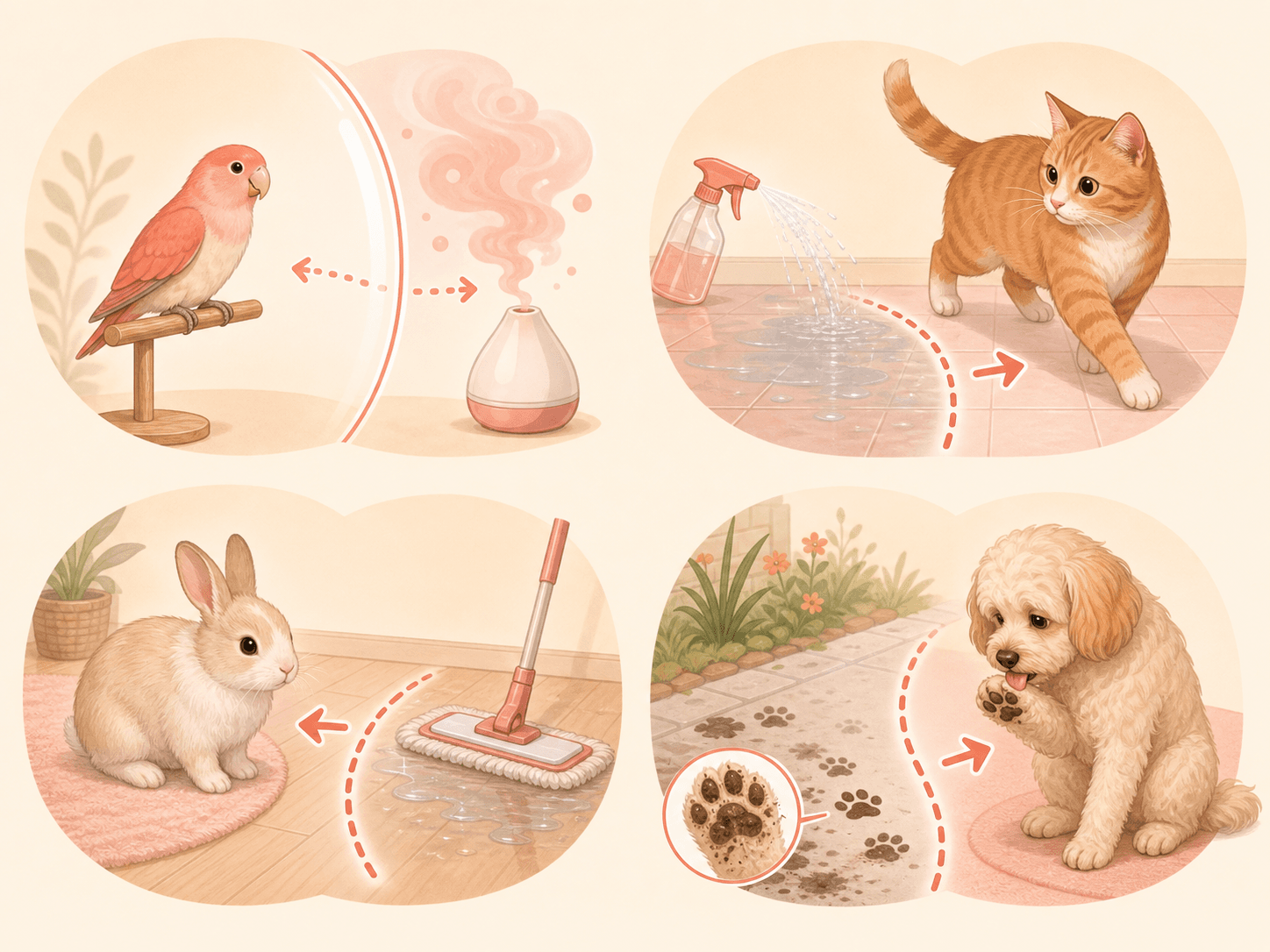
The same balcony routine does not land the same way for every animal.
Cats are a special case with some insecticides. Pyrethrin and pyrethroid products can be dangerous to cats because cats have limited ability to metabolise some compounds Merck Veterinary Manual. Dog-only flea or insecticide products should never be applied to cats. They should also not be used where cats can groom wet residue.
Rabbits have a different problem. They walk through damp areas, then groom their feet and fur. Rabbit Welfare Association & Fund recommends rabbit-safe cleaning and careful rinsing and drying so rabbits are not exposed to unsafe residues RWAF. Keep rabbits away from freshly cleaned balcony floors, detergent residue, bleach, phenol disinfectants, and aerosolised chemicals.
Essential oils are not a loophole. The RSPCA cautions that essential-oil sprays, diffusers, and cleaners should not be assumed pet-safe because cats, birds, rabbits, and dogs can react differently, and concentrated oils or strong fragrances can irritate airways or cause toxicity if ingested or absorbed RSPCA.
| Pet | Watch the exposure route |
|---|---|
| Bird | Airborne fumes, smoke, mist, strong fragrance |
| Cat | Pyrethrin or pyrethroid residue, especially wet residue groomed off fur |
| Rabbit | Damp floors, paw residue, fur grooming after cleaning |
| Dog | Licking paws, chewing treated items, inhaling spray or smoke |
Small thing, done daily: put the pet somewhere else before the chemical comes out.
What changed and why
Older household advice often treated balcony cleaning and pest control as separate chores. Mop first. Spray later. Let the dog wander back when the floor looks dry.
The better routine is more deliberate. Remove breeding water first. Move pets and pet items out. Use chemicals only if needed. Ventilate. Let surfaces dry. Then bring animals back.
That change matters because residue moves. Pets self-groom after walking on treated floors or perching near treated surfaces. AVMA lists household chemicals and pesticides among pet hazards and advises owners to prevent access to toxic substances AVMA. Rinsing, drying, and using barriers after balcony mopping or pest treatment reduce the chance that a paw, feather, or mouth becomes the exposure route.
One more hard rule: do not mix bleach and ammonia during balcony or floor cleaning. The CDC explains that this reaction can create chloramine gases that irritate the eyes, throat, and lungs of people and animals sharing the same air CDC.
Use monitor, call, go now
After a possible exposure, keep the response simple. Move the pet away from the area, stop further licking or inhaling if you can do so safely, and get advice early.
| Situation | Owner action |
|---|---|
| Pet walked on a freshly treated floor but seems normal | Prevent grooming, move them away, and seek product-specific advice |
| Drooling, vomiting, skin irritation, or paw or mouth burns | Call for urgent veterinary advice |
| Tremors, weakness, breathing difficulty, or seizures | Go for emergency veterinary help now |
For dogs and cats, ASPCA Animal Poison Control lists signs after household chemical exposure that can warrant urgent advice, including drooling, vomiting, tremors, breathing difficulty, weakness, seizures, skin irritation, and paw or mouth burns ASPCA.
Tonight's balcony routine is plain: empty water, dry the floor, separate the animals, and only use smoke, sprays, or strong cleaners when pets can stay fully away until the air and surfaces are clear.
— Manja