
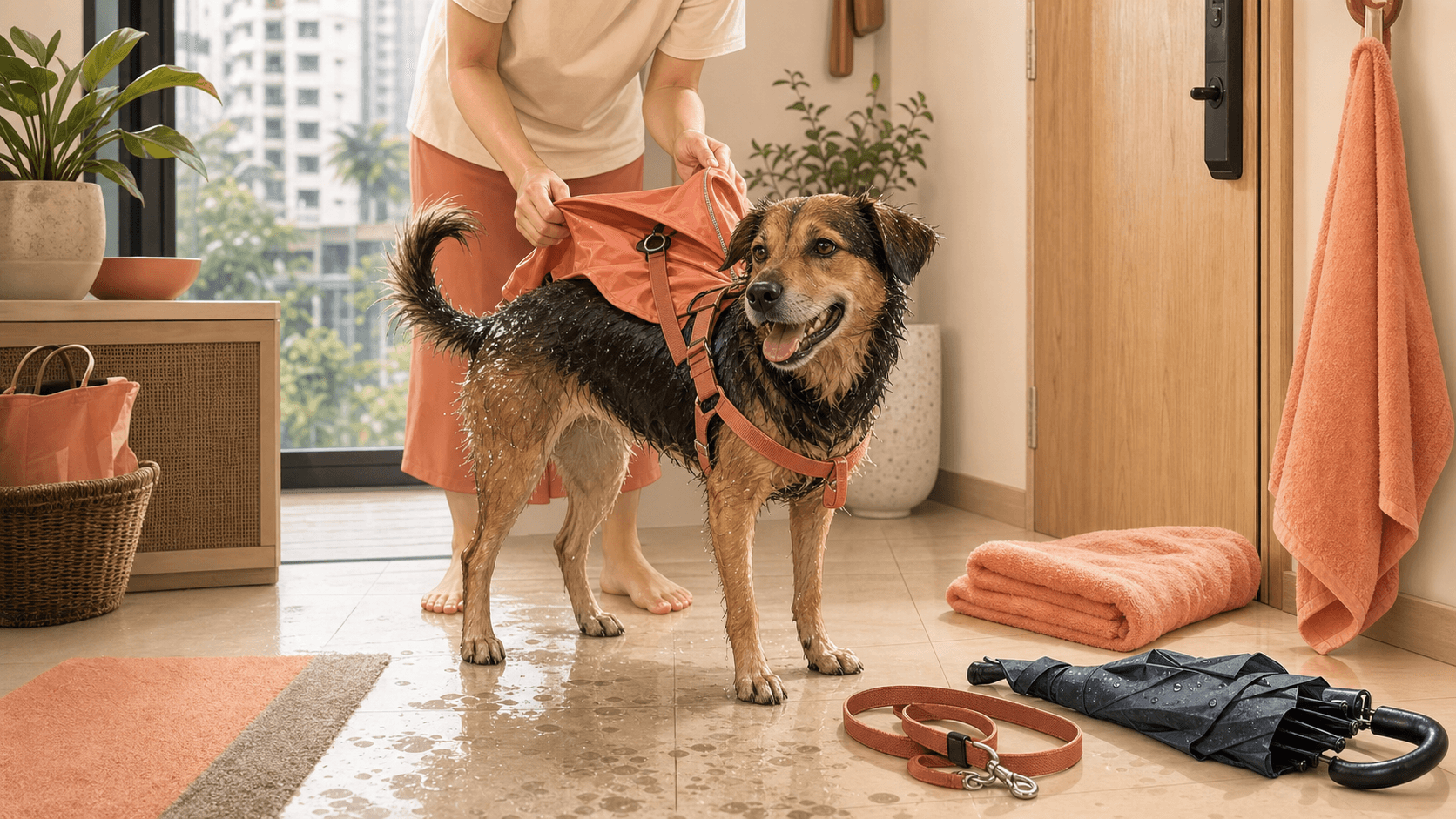
Rainy walks rarely end neatly at the front door. The dog is excited, the floor is wet, someone wants the lift, and the sofa is suddenly in danger.
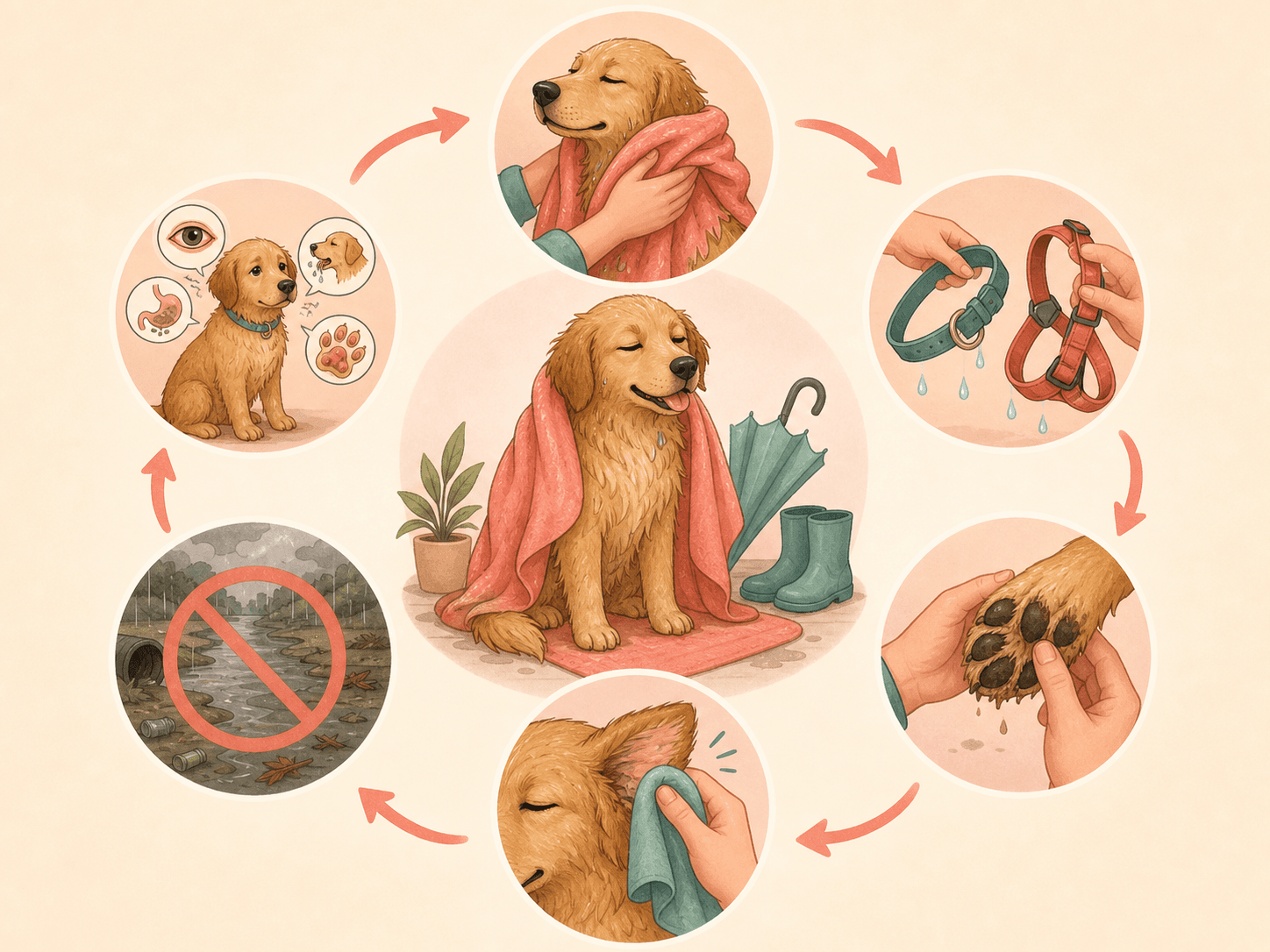
Before your dog gets that far, do three things: dry the coat where dampness hides, wipe every paw, and check the ears without poking deep inside. This is not a home diagnosis routine. It is a practical way to spot skin, paw, or ear trouble early and know when your vet needs to hear from you.
Build the doorway routine
Keep the drying kit where the wet dog actually arrives: near the gate, shoe rack, or service yard door. A towel that lives in a bedroom cupboard will not help much when your dog is already shaking rainwater across the corridor.
Malaysia is the easy example. The Malaysian Meteorological Department describes two monsoon periods, and the Northeast Monsoon commonly brings heavy rain. Some owners are not dealing with one cute drizzle. They are dealing with repeated wet walks. Indonesia fits too: BMKG treats rainy-season onset and peak as recurring public information, so damp-coat routines may need to happen daily during wet spells.
Start with the coat, but do not stop at the fluffy top layer. Long, dense, curly, double, or folded coats can stay damp close to the skin. That is where friction, trapped moisture, and poor airflow can contribute to skin irritation. Part dense areas with your fingers or a comb and check the places that stay warm and hidden: armpits, belly folds, neck folds, tail base, and between clipped-but-thick coat sections.
Then do the paws. Wipe between the toes and around the pads, especially after void-deck puddles, muddy dog runs, drainage edges, or construction-adjacent walks. You are looking for trapped grit, small cuts, redness, swelling, or a dog suddenly pulling the paw away.
For ears, keep it simple. Look at the outer ear and dry around it. Do not push cotton buds, cloth, or fingers deep into the ear canal. Excessive or forceful cleaning can irritate ears. Missed redness, odor, discharge, or head shaking can delay care.
Dry without turning it into a wrestling match
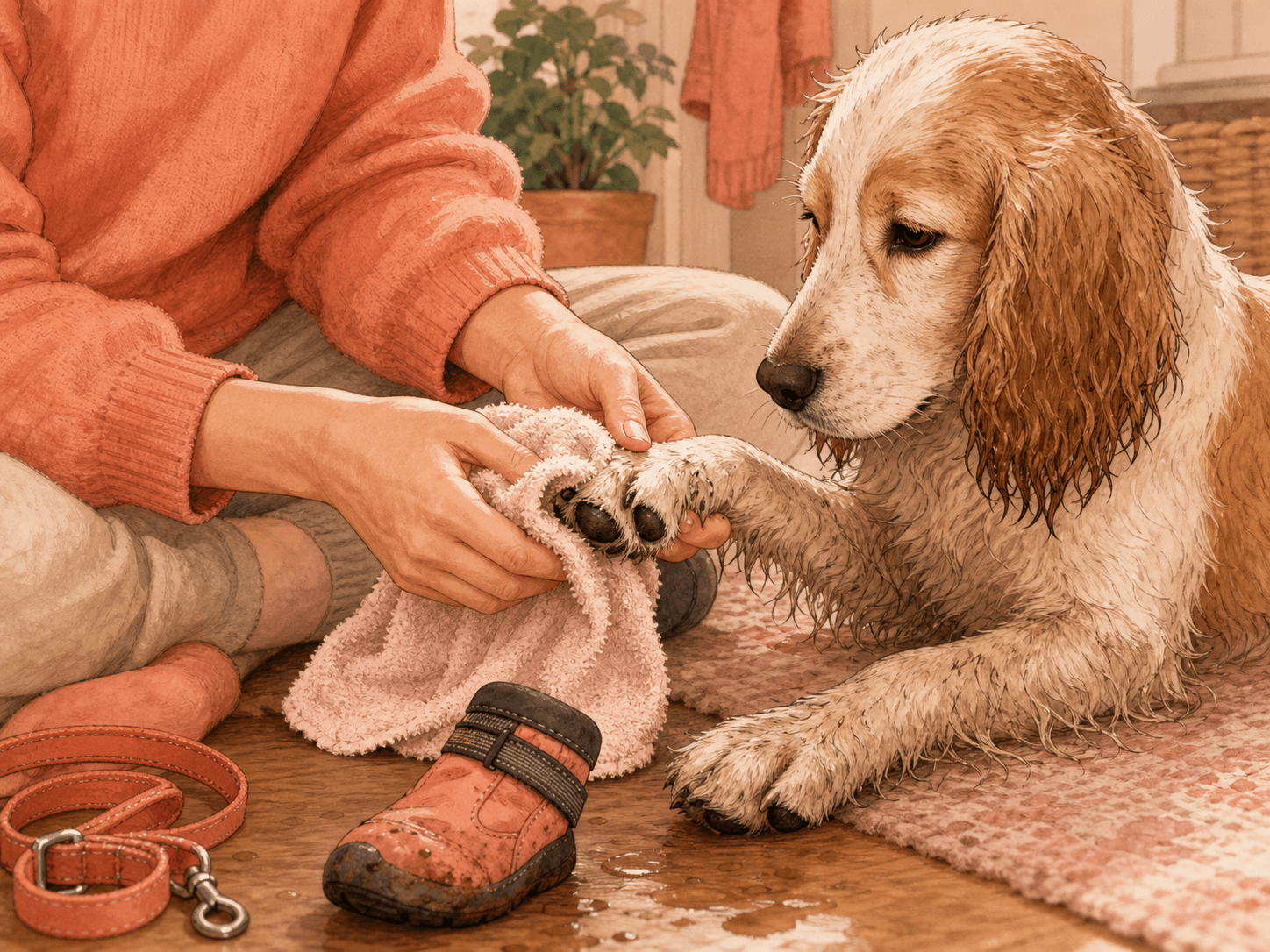
After a wet walk, make the routine boring on purpose. Towel the coat first. Squeeze and blot rather than rub hard over one spot. If your dog has a thick or folded coat, separate the fur and check closer to the skin before declaring the job done.
If you use a dryer, keep it on low heat. Keep the airflow moving. Hold it away from the skin. Stop if your dog looks distressed. The mistake is blasting one warm spot because everyone is late for dinner; the fix is slower, moving air and a dog that still trusts you tomorrow.
Do not set a universal drying timer. Coat length, coat density, body size, indoor humidity, towel absorbency, and dryer use all change the job. The useful finish line is checkable: no damp folds, no soggy paws, no repeated licking, scratching, smell, or redness.
For Singapore outdoor walks, add a deliberate coat and paw check after grass, shrubs, or park connectors. Parasite prevention still matters, and a rainy-season wipe-down is a good moment to notice what came home attached to the dog.
What should make you call the vet
Wet-walk routines are for spotting trouble early, not diagnosing your dog at home. If your dog seems unwell, use what you notice to prepare for the vet conversation.
Call your vet promptly if you see persistent head shaking, scratching, bad odor, discharge, swelling, obvious ear pain, loss of balance, or a dog that will not let the ear be touched.
Call your vet promptly if the skin has rapidly spreading redness, moist painful patches, bleeding, pus, swelling, foul smell, hair loss, intense licking, or any sore that worsens instead of improves.
Call your vet promptly if a paw has limping, a split or bleeding pad, swelling between toes, a lodged object, repeated paw licking, or pain when the paw is touched.
What to bring to the appointment
Bring concrete notes, not just "he got wet a lot." Write down when the rainy walks happened, how often your dog stayed damp, and whether licking or scratching is worse at night. Take clear photos of skin or paw changes in good light. Note any ear discharge or odor. Bring your dog’s current flea and tick prevention details, plus the grooming products used after walks.
If the problem keeps recurring after rain, also record where the walks usually happen: dog run, grass verge, corridor puddles, park connector, or the same damp route home after an evening storm. That small detail can help your vet ask better questions.