
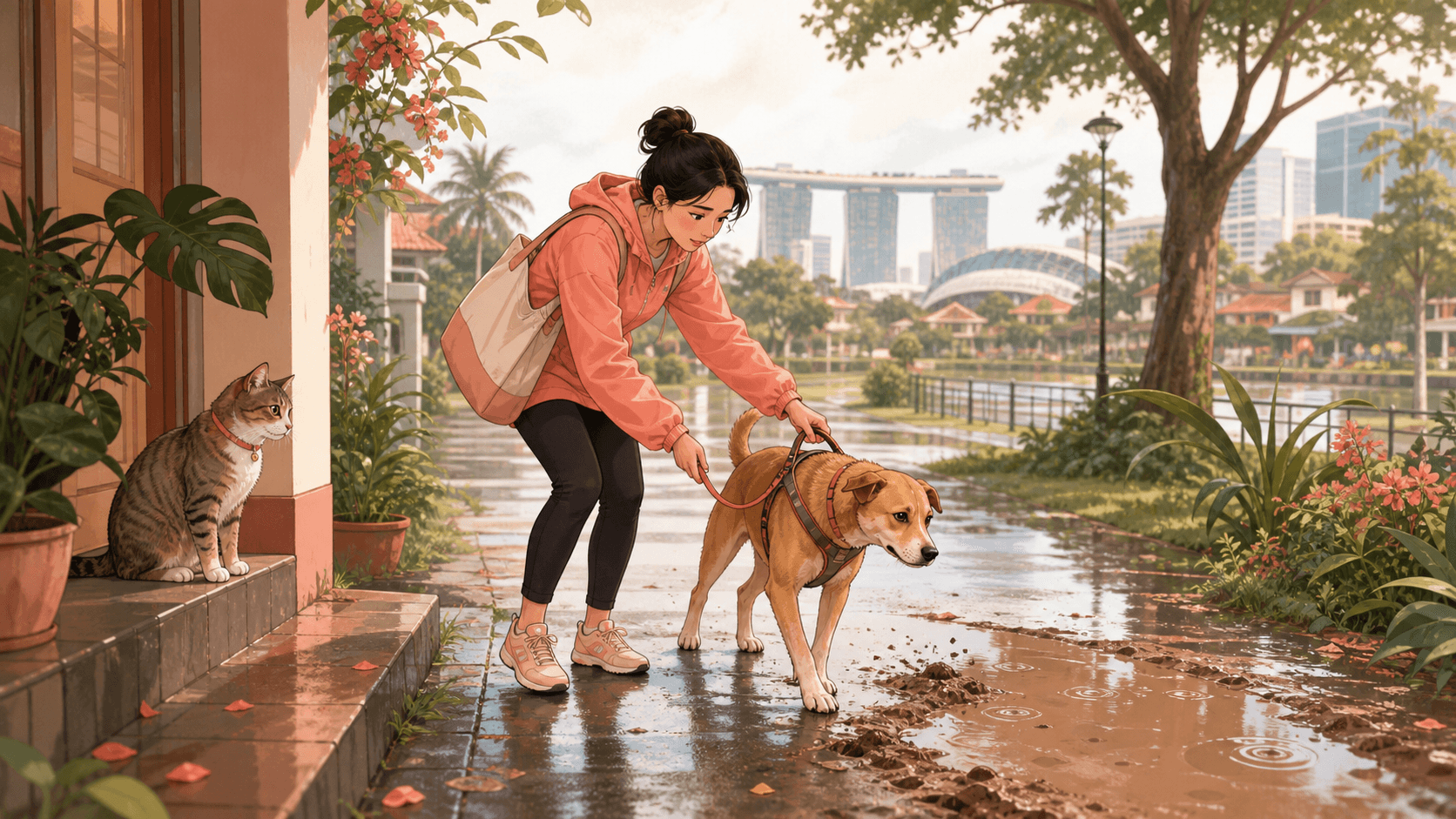
Heavy rain can turn a normal dog walk, or a cat's quick escape, into a leptospirosis risk check. Keep pets away from muddy water, stagnant water, floodwater, and rodent-contaminated areas. Wet paws are fine. Mystery water is not.
Manja is editorial, not a clinic; ask your vet for diagnosis and pet-specific prevention advice.
What the risk is and why now
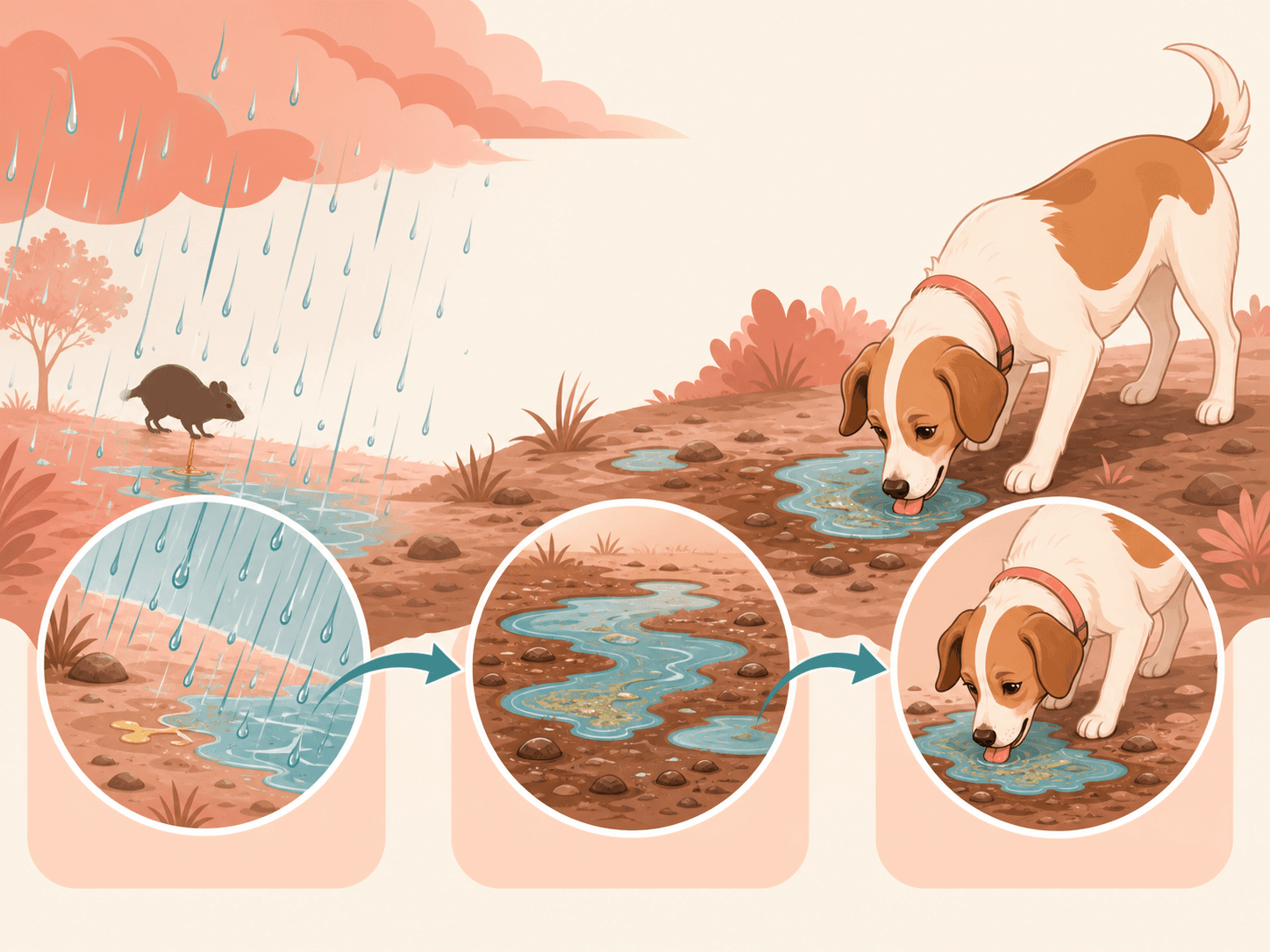
Leptospirosis is a zoonotic bacterial disease. Dogs and cats can be exposed through urine-contaminated water, soil, or mud, especially after heavy rain or flooding. The big risk moments are muddy walks, stagnant water, floodwater, and places where rodents may have been.
A quick way to read the puddle in front of you:
| Water or place | Risk |
|---|---|
| Wet paws, clean rain | Fine |
| Muddy water or muddy ground | Avoid |
| Stagnant or standing water | Avoid |
| Floodwater | Avoid — don't let pets drink it or play in it |
| Rodent-contaminated areas, possible rat urine | Avoid |
General CDC flood guidance flags leptospirosis as a post-flood risk because floodwater can be contaminated with animal urine and sewage. That is broad flood-and-leptospirosis guidance, not Singapore-specific advice. Pets should not drink from floodwater or play in it. Obvious, yes, until a dog decides a brown puddle is a deluxe soup bowl.
This guide is for dog and cat owners in Singapore, Malaysia, and Indonesia after heavy rain, local flooding, or stagnant-water exposure. Across tropical Southeast Asia, floods and heavy rainfall are recognised leptospirosis risk factors, and the bacteria can survive in soil and stagnant water for weeks to months. So the practical advice is regional: be careful when rain leaves dirty standing water where pets walk, sniff, lick, or drink.
In Singapore, leptospirosis is a notifiable animal disease, and AVS/NParks asks vets to report suspected or confirmed cases. AVS treats prevention through vaccination discussion, rodent control, and avoiding suspect water exposure. Cats should not be written off either. They can be exposed to Leptospira and may shed organisms, even though recognised clinical disease is uncommon in cats compared with dogs.
The warning signs to watch for
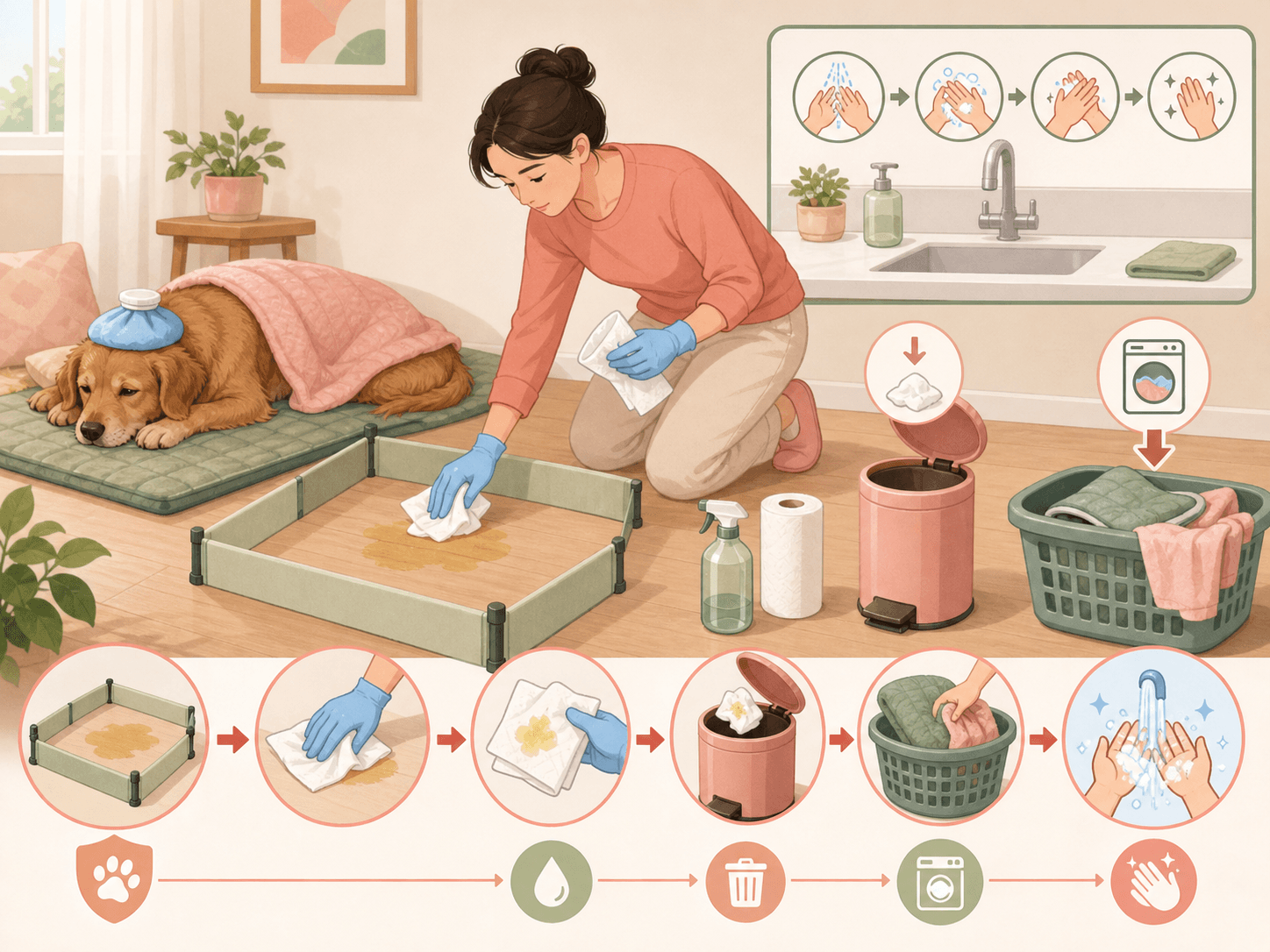
After heavy rain or flooding, write down what your pet actually touched. Puddle drinking, wading through floodwater, licking muddy ground, rat contact, possible rat urine, and kennel or multi-pet exposure all matter.
In dogs, early leptospirosis can look unremarkable at first, and some signs are urgent because acute leptospirosis can involve kidney injury, liver injury, lung bleeding, clotting problems, or shock:
| Early signs (keep watching) | Urgent signs (see vet now) |
|---|---|
| Fever | Yellow gums or eyes |
| Lethargy | Dark urine |
| Reduced appetite | Breathing trouble |
| Vomiting | Not urinating |
| Diarrhoea | Collapse |
| Abdominal pain | Severe weakness |
| Muscle pain, stiffness | |
| Increased drinking | |
| Increased urination |
Timing helps, but it is not neat. Illness commonly appears about 5-14 days after exposure, with a reported range of 2-30 days. Do not only watch the next morning. Keep checking appetite, energy, vomiting, stool, gum colour, drinking, and urination for several weeks after floodwater, stagnant water, or rodent exposure.
Cats are a quieter case. Clinical leptospirosis is uncommon in cats, and they often show milder or subclinical infection, so they may not show the dramatic signs dogs do. They can still be infected. For Singapore, Malaysia, and Indonesia owners, use this rule: after local flooding, muddy walks, or stagnant-water exposure, new lethargy, not eating, vomiting, or urine changes are worth a vet call.
When to see a vet
Call your vet now if your dog or cat becomes lethargic, stops eating, vomits repeatedly, develops fever, yellow gums or eyes, breathing difficulty, painful movement, reduced urination, or collapse after recent muddy walks, stagnant water, floodwater, or rodent exposure. This is not the "watch until Monday" list. This is the "pick up the phone" list.
Bring the boring details. They are useful. Have these ready for the clinic:
| What to bring | Why it helps |
|---|---|
| When the exposure happened | Fits the 2-30 day timing |
| Where your pet walked, and whether the area flooded | Pins down the risk |
| Whether rats were seen, and what water your pet may have drunk | Points to the source |
| Whether urination has changed | Flags possible kidney involvement |
| Vaccination history (dogs) | Informs the vet's assessment |
| Whether anyone at home has compatible illness | Leptospirosis can spread through infected animal urine |
Diagnosis may need blood chemistry, urinalysis, PCR, and paired serology. One early negative test may not end the story if the exposure and signs still fit, so your vet may recommend repeat testing.
Treatment is veterinary-led. It may include antibiotics, fluids, kidney and liver monitoring, anti-nausea medicine, oxygen, or hospitalisation. Do not try home antibiotics.
Tonight, write down the exposure timeline and any urine, appetite, vomiting, breathing, or movement changes. If one red flag is present, call your vet before waiting to see what happens next.
— Manja