
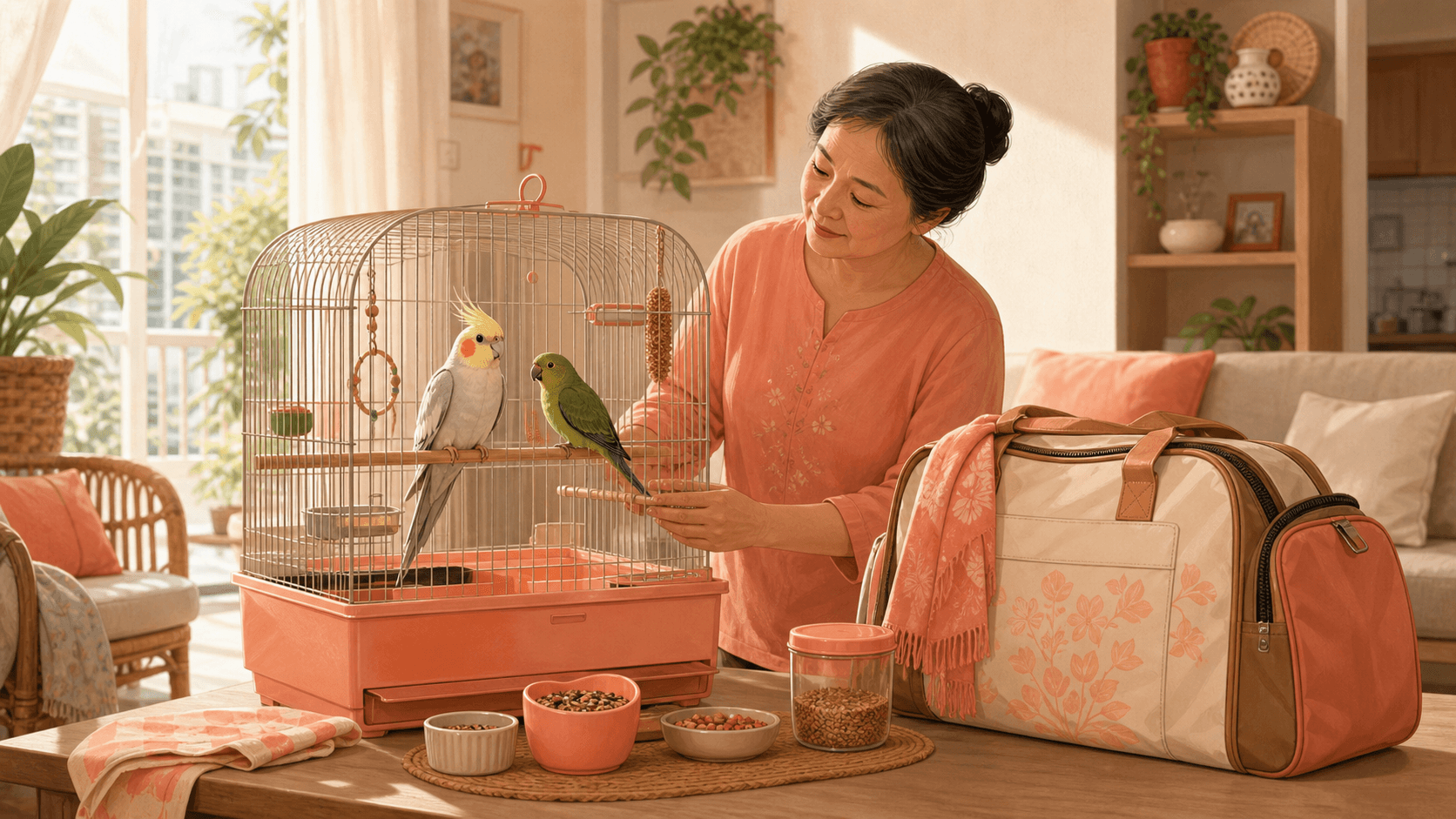
Your bird does not need a holiday experiment; it needs the same cage, same food, same sleep, and a relative who knows when to call you.
Keep the routine boring
A balik kampung handover works best when your relative can copy the normal day.
That means writing down the routine before bags are packed. Not “feed in the morning”. Write the food, the usual amount, the bowl, the time, and what not to offer. Not “keep the cage somewhere nice”. Write the room, the bedtime, the lights-off rule, and the things that scare your bird.
Birds hide stress and illness well, so the handover note should make small changes visible. Use this to prepare for the vet conversation, not to diagnose your bird at home.
| Put this in the note | What the caregiver should do |
|---|---|
| Normal foods | Serve the exact usual foods and amounts |
| Feeding times | Follow the owner’s usual schedule |
| Water | Change at least 1 full bowl per 24 hours, sooner if dirty |
| Sleep | Keep a dark, quiet sleep period of about 10-12 hours |
| Handling | Avoid new free-flight, bathing, grooming, or pet introductions |
| Vet trigger | Contact the owner and an avian vet for red flags |
The goal is not perfect bird expertise. The goal is fewer surprises.
Write the food plan so nobody improvises
Diet continuity is safer than sudden food changes during a short family handover. VCA notes that companion bird diet changes should be gradual, not abrupt, and Merck stresses that bird nutrition varies by species (Feeding Birds, Nutrition in Pet Birds).
For many adult companion parrots, formulated pellets may make up about 60-70% of the diet, vegetables about 15-30%, and fruit, seeds, or nuts only a small minority as treats. That is not a balik kampung conversion plan. If your African grey, cockatiel, or lovebird is already on a vet-approved routine, preserve that routine while you are away.
Small seed-eating birds need extra care in the wording. Budgies, finches, and canaries should not be pushed into large-parrot proportions because someone read a generic parrot guide. If your budgie is on a seed, pellet, sprouted-seed, or fresh-food plan, the note should say exactly that.
| Bird group | Handover food rule |
|---|---|
| Many adult companion parrots | Preserve the existing plan; general guidance may use pellets as the base |
| Budgies, finches, canaries | Do not assume large-parrot ratios apply |
| Any bird on a vet-approved plan | Do not change the ratio while the owner is away |
| Any bird offered treats | Keep fruit, seeds, and nuts limited to the documented routine |
Water gets its own line. Pet birds need fresh, clean drinking water available, and the bowl should be replaced sooner if food, droppings, or debris gets in (Creating a good home for pet birds, Feeding Birds). For a relative, write it plainly: one full water change every 24 hours, plus extra changes when dirty.
Place the cage where the air is safe
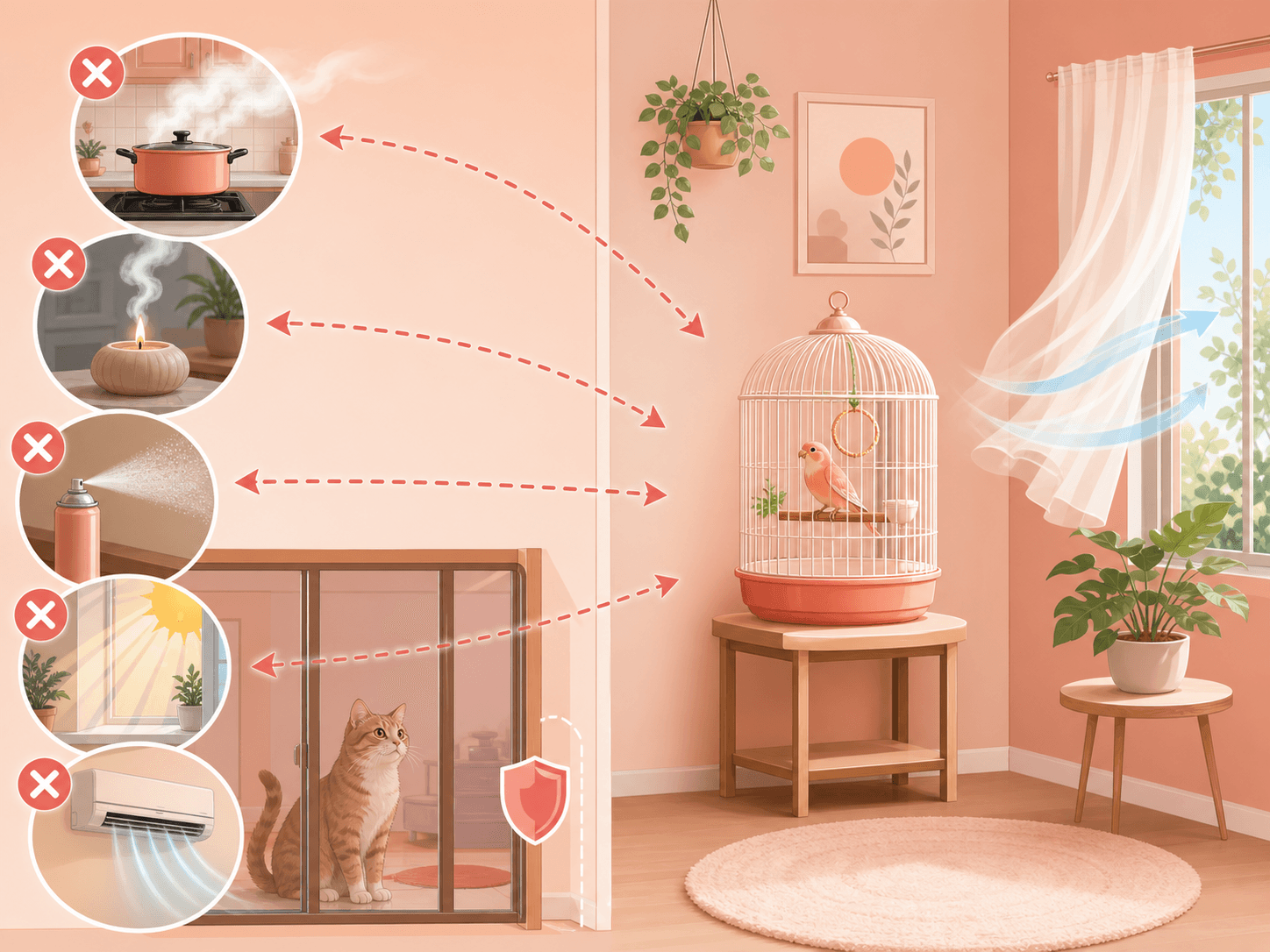
The normal cage is usually the better cage.
Familiar perches and toys reduce disruption. The temporary home should be calm, well ventilated, and away from kitchen fumes, smoke, aerosols, direct sun overheating, air-conditioner drafts, and predator access. That matters in Singapore, Malaysia, and Indonesia homes where open kitchens, incense, strong cleaning sprays, balcony sun, and visiting family pets can all appear during holiday gatherings.
Do not put the cage where the bird becomes the centrepiece of dinner. A parrot may enjoy people it knows, but a noisy living room with late-night TV is not the same as social contact. A finch or canary may cope better when the care is predictable and the room stays steady.
If the bird normally sleeps in a covered cage, write that. If it panics when the cage is moved, write that too. The relative should not discover these things at midnight.
Protect the sleep window
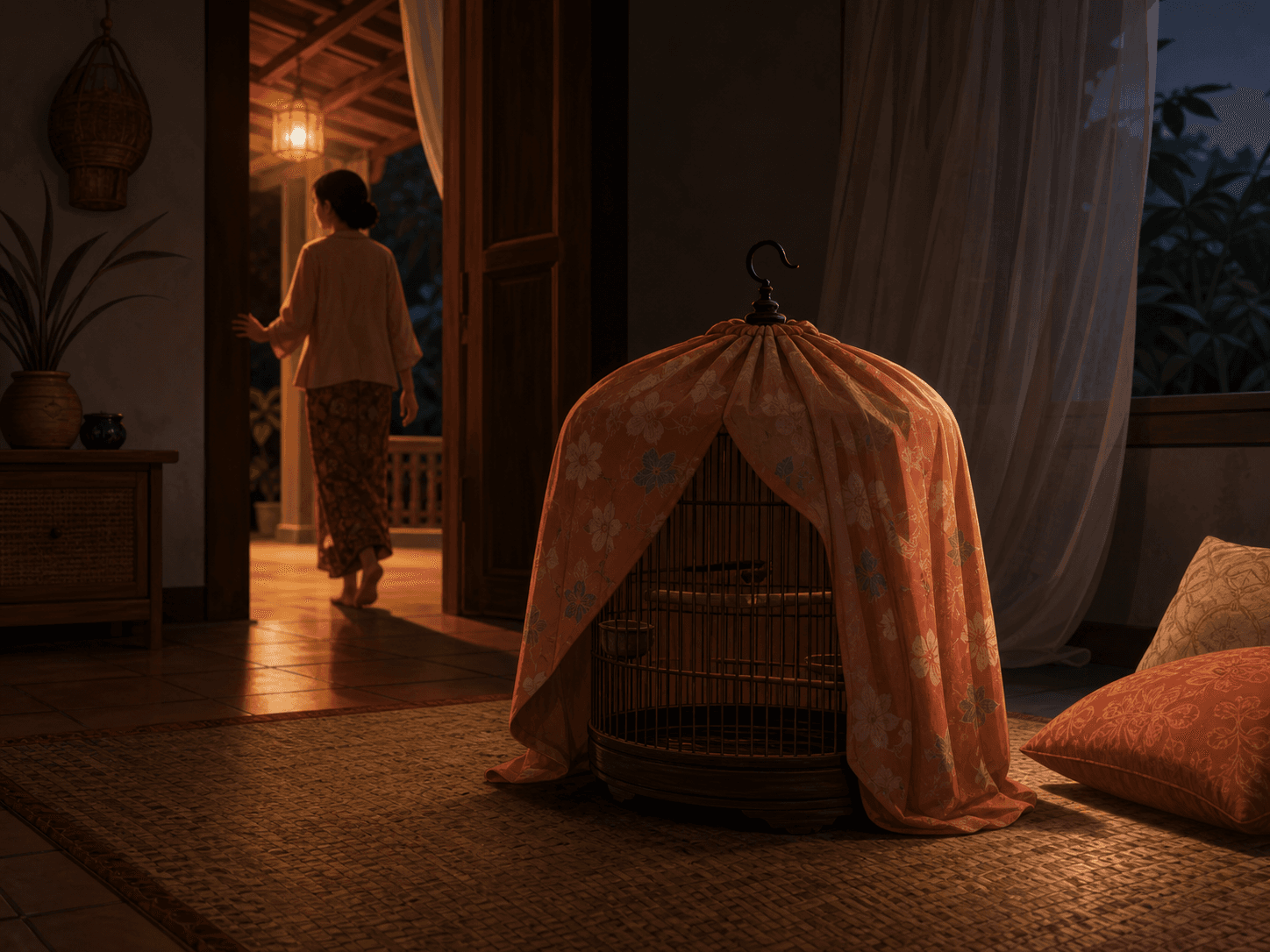
Most parrots and many companion birds do better with a predictable dark, quiet sleep period of about 10-12 hours per night. During balik kampung season, the problem is often not food. It is light, noise, visitors, and cage movement after bedtime.
The caregiver note should say when the bird sleeps and what counts as a disruption. Late-night lights, loud TV, fireworks exposure, or moving the cage after bedtime should be avoided. If a relative wants to “say goodnight” after the bird is settled, the answer is no. Small thing, done daily: leave the sleeping bird alone.
This is especially important for birds already unsettled by a new room. Sleep is the one routine that can stay almost identical even when the owner is away.
What changed (and why)
Older handovers often focused on the spare key, food tub, and a quick “don’t worry, very easy”.
That is too thin for birds. The better handover now is a written routine with boundaries. It tells the caregiver what to copy, what not to try, and when to escalate.
The change is practical. Bird care has less margin for improvisation than many relatives expect. New food can upset a diet plan. New handling can raise stress or escape risk. A smoky or fume-heavy kitchen area is not a harmless “busy family space”. A bird sitting low, fluffed, or breathing with an open mouth is not having an off day.
Use a red-flag plan
A caregiver should not wait and see when a bird shows clear illness signs. Birds may hide illness, so changes in appetite, droppings, posture, breathing, and activity need prompt attention (Recognizing the Signs of Illness in Pet Birds, Management of Pet Birds).
Keep the red-flag plan simple.
| Situation | Action |
|---|---|
| Eating less or refusing food | Contact the owner and an avian vet |
| Fewer or abnormal droppings | Contact the owner and an avian vet |
| Fluffed posture, weakness, or sitting low | Contact the owner and an avian vet |
| Tail-bobbing, open-mouth breathing, or wheezing | Contact the owner and an avian vet immediately |
| Bleeding, injury, seizures, or repeated night panic | Contact the owner and an avian vet immediately |
Put the avian vet contact in the note before travel starts. If you have a preferred clinic, write the clinic name and contact details. If your relative is in another city, agree who makes the call and who pays first if urgent care is needed.
Tonight, write the handover as if your most forgetful but kind relative will use it: same cage, same food, clean water, quiet sleep, no new experiments, and a clear red-flag plan.
— Manja