
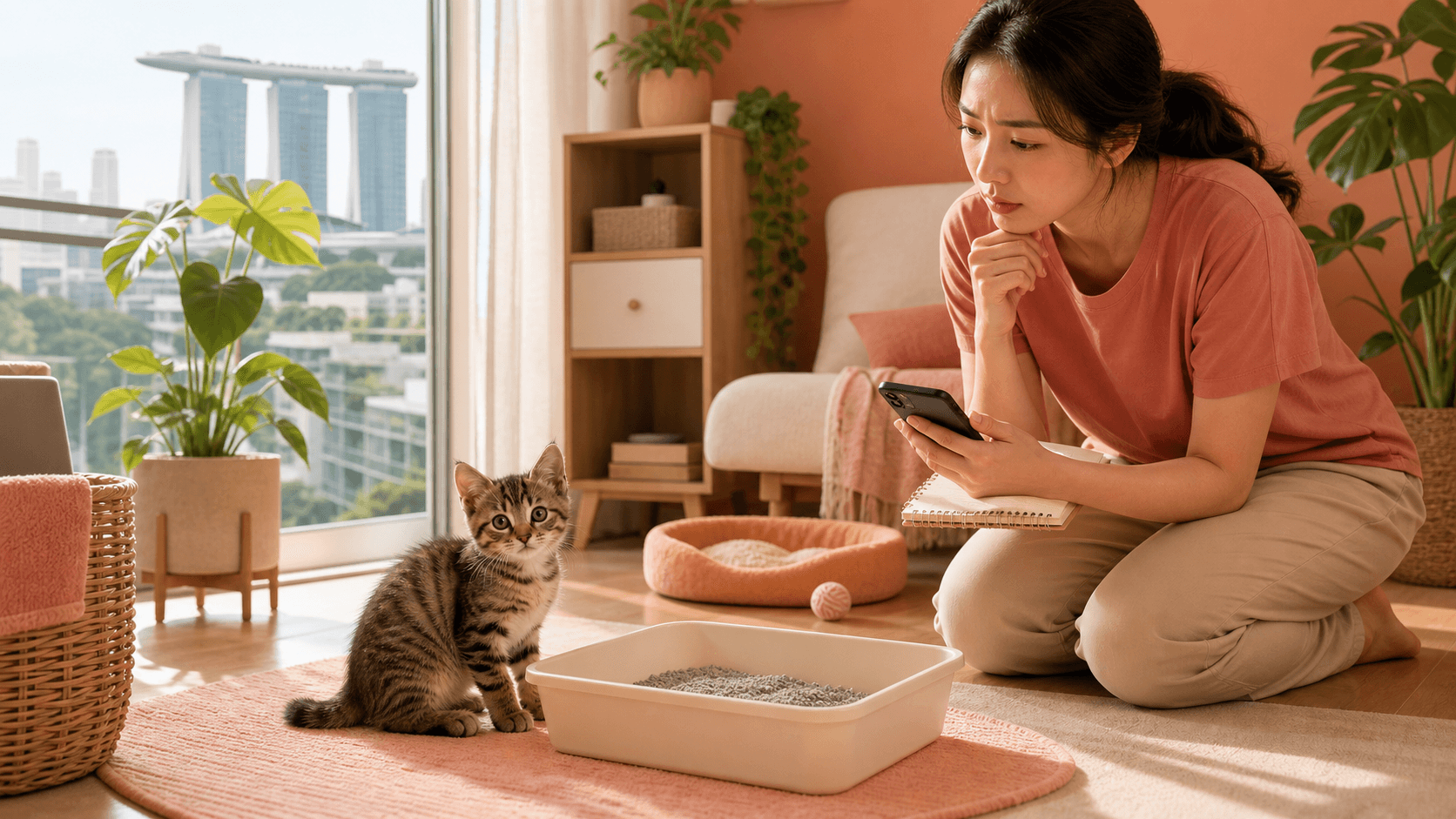
The first litter-box check after adoption can be a rude little welcome home. One soft stool may be part of the move. A kitten with diarrhoea who is flat, vomiting, refusing food, or passing blood needs a much faster plan.
Use this guide to prepare for the vet conversation, not to diagnose your kitten at home.
Start with the kitten, not the mess
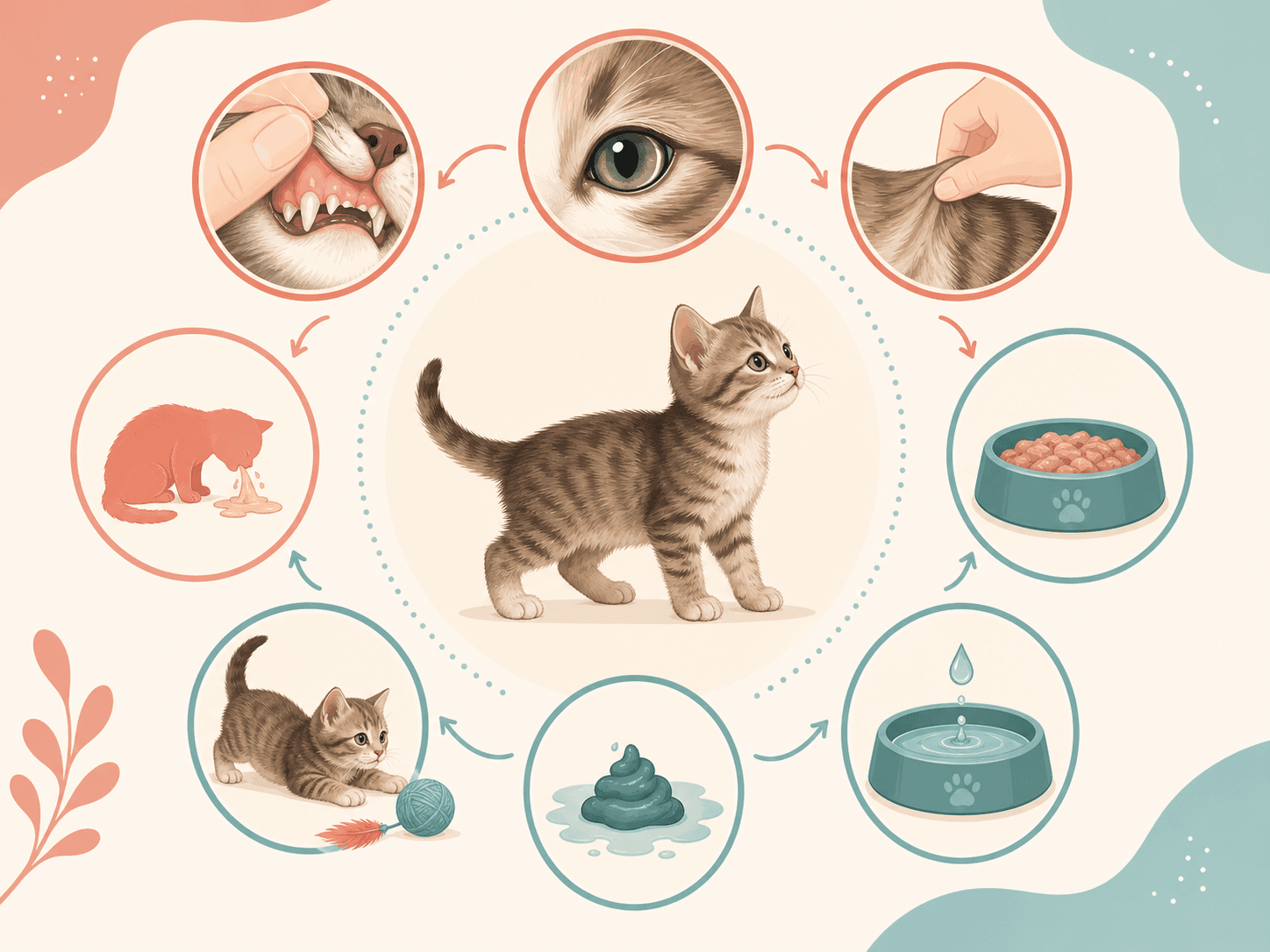
Loose stool after adoption can come from stress, a new environment, or an abrupt food change. It can also come from parasites, infection, diet intolerance, toxins, or another illness. Do not treat "new home nerves" as the answer until the serious causes are checked.
Kittens are not adult cats in tiny packaging. Very young, small kittens can dehydrate and deteriorate faster than healthy adult cats, especially if they are lethargic, vomiting, or not eating. Blood in the stool, black tarry stool, repeated vomiting, severe lethargy, fever, refusal to eat, or dehydration signs need prompt veterinary advice.
That urgency matters in real homes. A new kitten may be hiding under the sofa, using a temporary litter tray in the service yard, or sharing airspace with resident cats in an apartment. In rescue, shelter, foster, adoption-trial, and multi-cat settings, exposure to roundworms, hookworms, Giardia, coccidia, and Tritrichomonas foetus can be more likely. Warm, humid Singapore, Malaysia, and Indonesia conditions may also give some parasite stages and bacterial contamination more chances to persist in the environment. Climate does not diagnose anything, though. Stool testing, vaccination review, and parasite control need a vet-led plan.
What is worth writing down
Check more than the stool. Note whether your kitten is bright or quiet, eating or refusing food, drinking, vomiting, playful, warm, or unusually weak. If you have foster or adoption handover paperwork, keep the vaccine dates, deworming record, diet notes, and any shelter medications together.
For the litter tray, record the trend:
- Is the stool getting firmer, looser, watery, bloody, or black?
- How many times has your kitten passed diarrhoea today?
- Is there straining, mucus, or accidents outside the tray?
- Are other cats in the home showing signs too?
A bright kitten who is still eating and has one mild loose stool after a food change may simply need close monitoring and a slower diet transition. A very young or small kitten with diarrhoea should be discussed with your clinic sooner. Lethargy, repeated vomiting, refusal to eat, suspected dehydration, blood in stool, or black, tarry stool should move the problem out of the "monitor at home" category.
Severe diarrhoea with depression, vomiting, fever, or incomplete vaccination also needs a vet conversation about infectious causes, including feline panleukopenia.
Keep the new kitten contained for now
A temporary separate room is not rude; it is good household hygiene. Keep the new kitten separate from resident cats while stool testing, vaccination review, and parasite control are being arranged. In apartments, that may mean one bathroom, study, or spare room with its own litter tray, bowls, bedding, and cleaning cloths.
Wash hands after litter cleaning. Do not swap scoops between trays. If the kitten came from a rescue handover or foster home, send the clinic the paperwork instead of relying on memory. "Dewormed" is useful information, but it does not tell the vet which parasite was treated, whether doses were completed, or whether protozoal causes are covered.
Do not diagnose parasites by looking at the stool. Shelter, rescue, and multi-cat kittens can carry roundworms, hookworms, Giardia, coccidia, or Tritrichomonas foetus, and diagnosis often needs veterinary faecal testing. Routine wormers may not cover protozoal causes, so treatment choice should stay veterinarian-directed.
Call sooner for these signs
Call a vet promptly if your kitten has diarrhoea plus blood in the stool, black tarry stool, severe lethargy, repeated vomiting, fever, refusal to eat, or signs of dehydration. Do the same for a very young, small, chronically ill, medicated, or immunocompromised kitten. Kittens can deteriorate faster than healthy adult cats, so "wait and see" is a poor plan when they seem unwell.
Do not assume adoption stress is the answer. Stress, a new home, and abrupt food changes can contribute to mild diarrhoea, but parasites, infection, diet problems, toxins, and systemic illness also belong on the list. You cannot reliably sort those by looking at the litter tray.
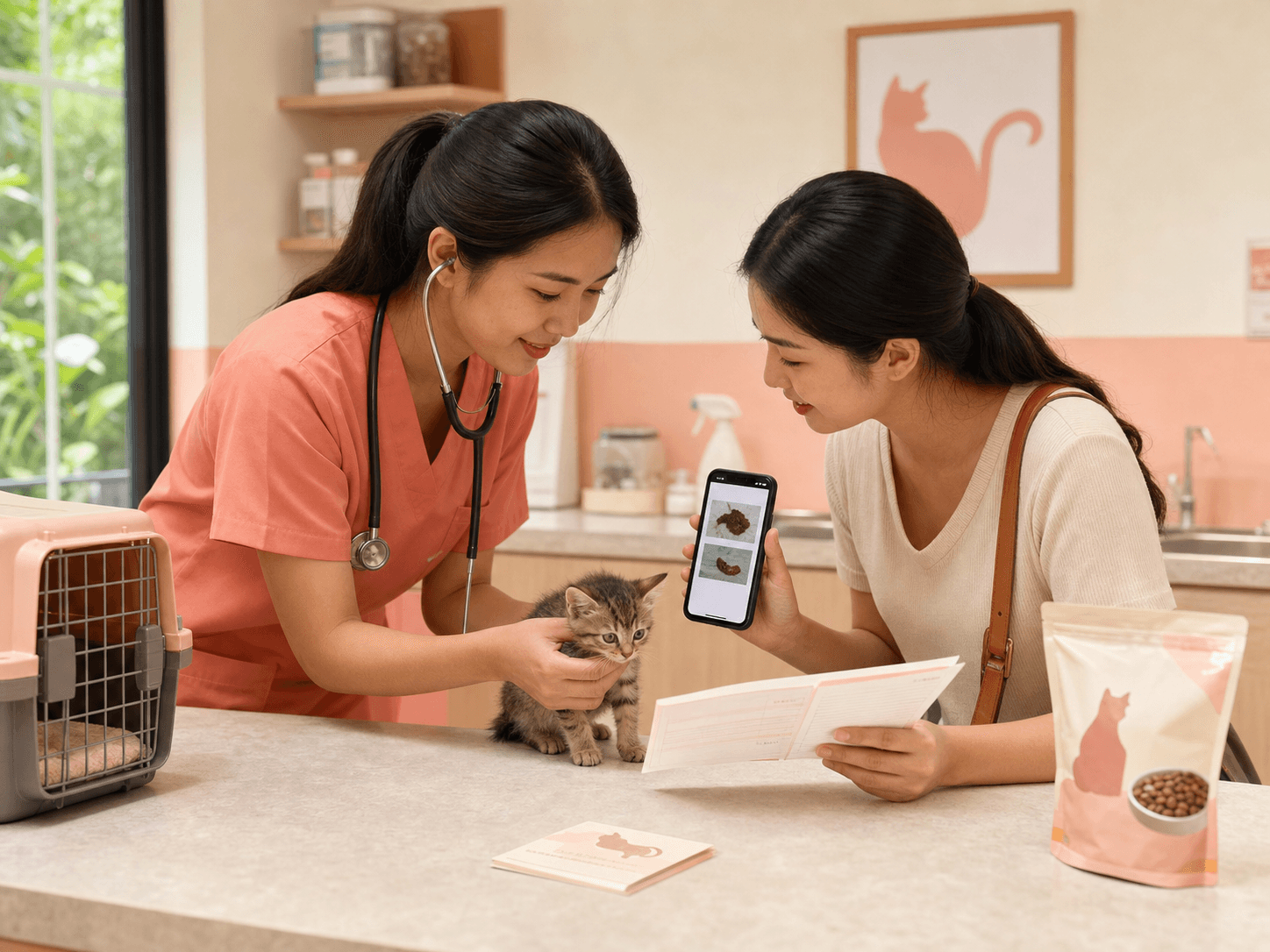
When you call, have the practical details ready: what the stool looks like, whether there is blood or black stool, whether your kitten is eating, vomiting, bright, or flat, what food changed, and what parasite control or vaccines are already documented. Ask whether the clinic wants a stool sample.
Bring this to the appointment
Pack the boring things. They are often the useful things.
- A fresh stool sample, if your clinic asks for one.
- Photos of the stool if a sample is not possible.
- Adoption, foster, shelter, or rescue handover paperwork.
- The exact food brand and amount your kitten was eating before and after adoption.
- Vaccine, deworming, flea, and tick records.
- A note of appetite, vomiting, energy, and how many diarrhoea episodes happened today.
Until your vet advises otherwise, keep the kitten separate from resident cats and do not start leftover medication from another pet.
— Manja