
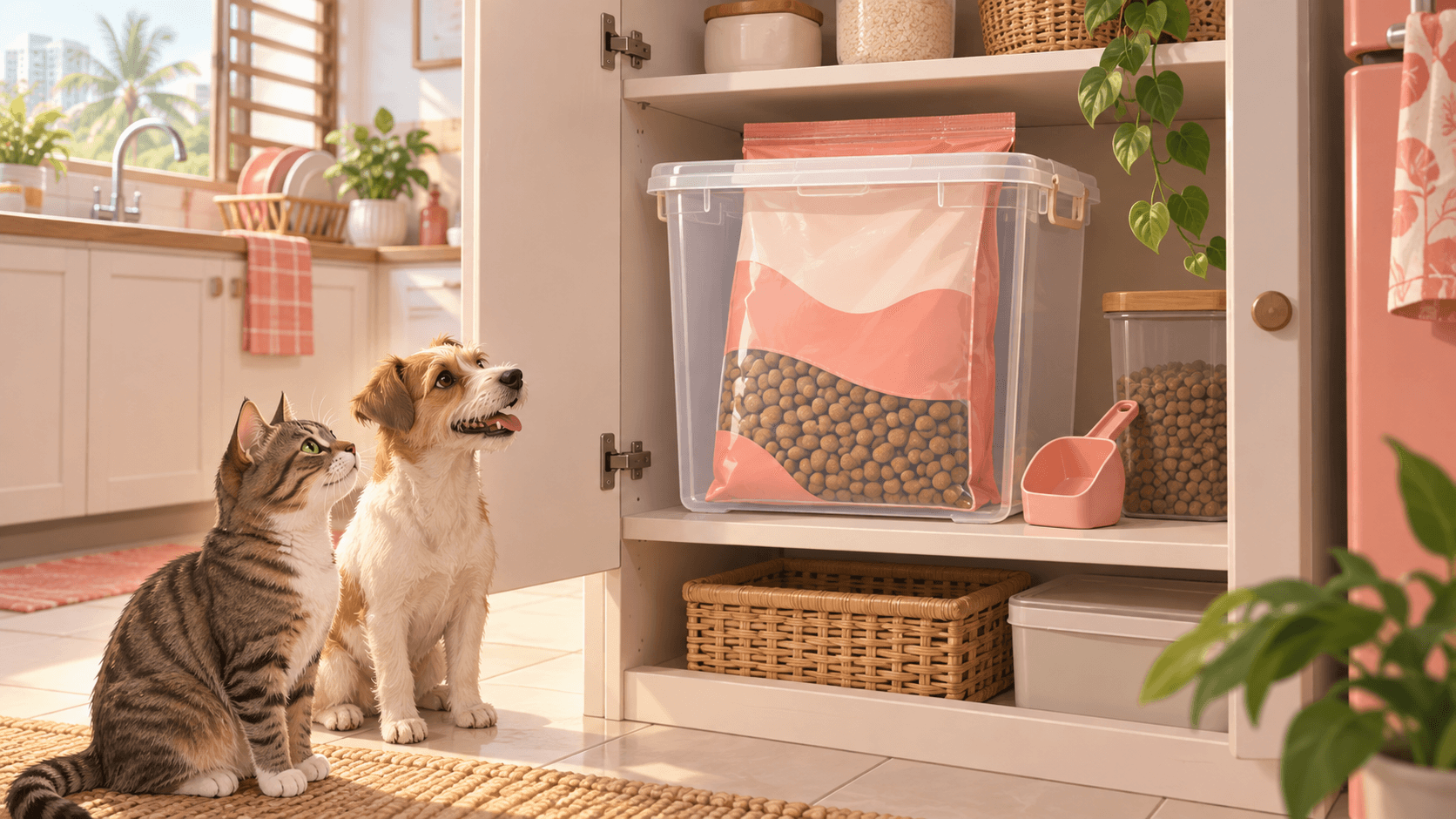
A bag of kibble can fail before the expiry date if a warm, humid kitchen gives it heat, moisture, air, and insects. For your dog or cat, safer storage is boring: keep the food in its original bag, seal that bag inside a clean container with a tight lid, and throw away food that looks mouldy or has become suspect. Use this as an editorial storage checklist; ask your vet if your dog or cat seems unwell after eating suspect food.
Store the bag, not loose crumbs
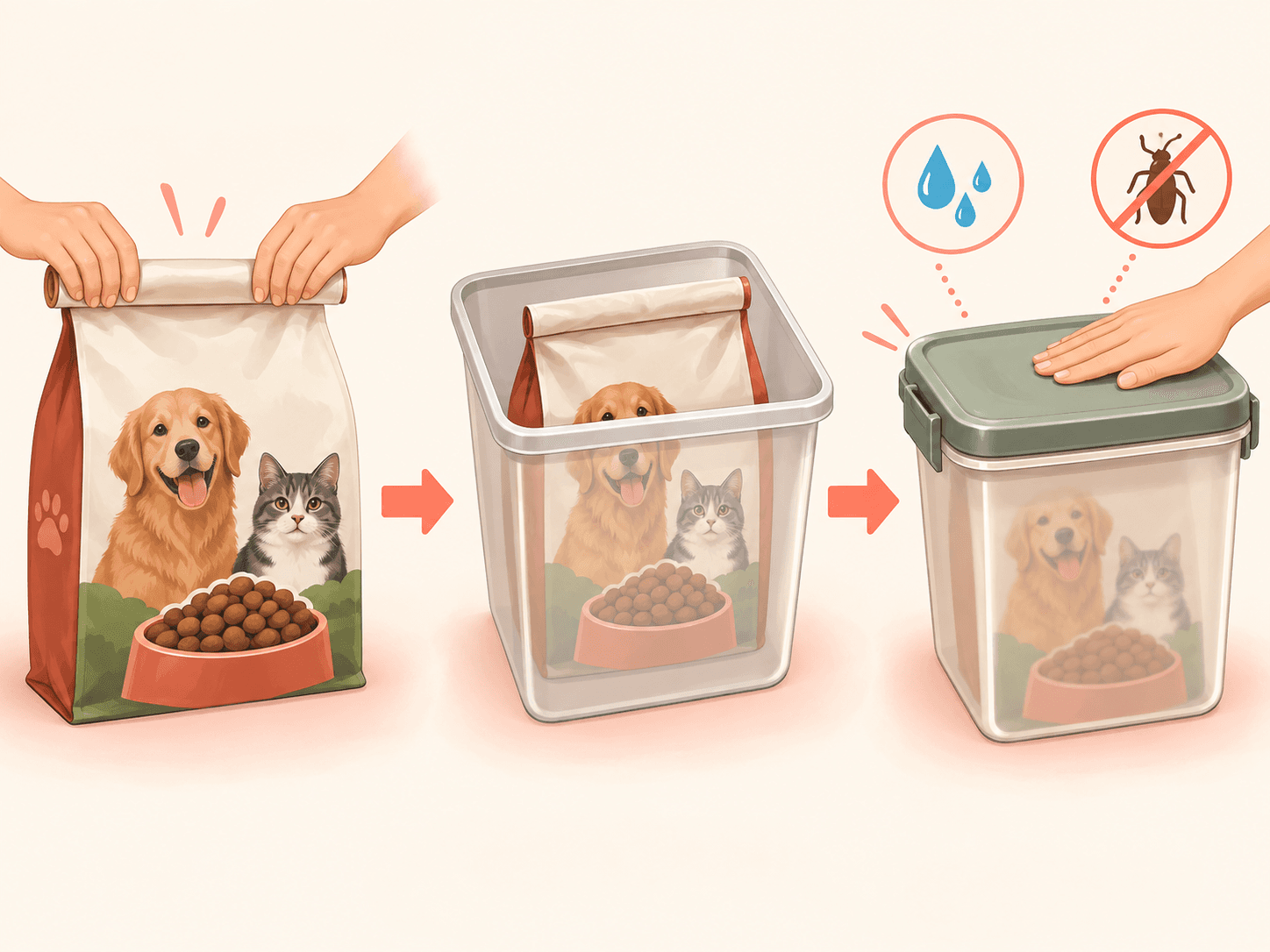
The original bag matters. The FDA advises storing dry pet food in a cool, dry place, keeping it in the original bag, and placing that bag inside a clean container with a secure lid. That is not tidy-person theatre. The bag keeps the lot code, expiry date, and fat-barrier liner with the food.
A clear plastic bin full of loose kibble looks neat. It can also become an oily archive of the last bag. If you pour kibble directly into a bin, wash and completely dry the bin between bags. Do not top up a half-empty container. Old crumbs and oxidised fat can mix into the fresh batch, which defeats the point of buying new food.
| Storage habit | Better version | Why it matters |
|---|---|---|
| Pouring kibble loose into a bin | Keep the original bag inside the bin | Keeps lot code, expiry date, and liner with the food |
| Topping up old kibble | Finish, clean, dry, then refill | Avoids mixing old residue into a new bag |
| Using any household tub | Use a clean, dedicated container with a tight lid | Reduces contamination and pest access |
| Leaving the scoop damp | Keep the scoop dry | Moisture supports mould growth |
Small thing, done daily: close the bag properly after each feed. Airtight storage does not help if the bag sits open while you cook, mop, or ventilate through a rainy window.
Heat and humidity shorten the useful life of kibble
Singapore kitchens are not neutral storage rooms. The Meteorological Service Singapore describes Singapore as warm and humid year-round, with mean annual relative humidity around 84% and daily readings often above 90% before dawn. Malaysia has similar pressure. The Malaysian Meteorological Department describes Malaysia’s climate as equatorial, hot, and humid, with small annual temperature variation.
That matters because heat, humidity, and air exposure reduce pet-food quality. Tufts veterinary nutrition guidance recommends cool, dry storage, and food-safety guidance explains that warmer storage speeds chemical changes such as rancidity in fats. In owner language: the food can start smelling stale or oily before the printed date.
Do not store kibble beside an oven, sunny window, balcony, laundry area, or car porch. Those spots make life easier for heat, moisture, and pests. A closed cupboard away from cooking heat and wet work is usually the better bet.
| Kitchen spot | Main risk | Move it to |
|---|---|---|
| Beside oven or rice cooker | Heat | Cool cupboard |
| Sunny window or balcony | Heat and light | Shaded indoor storage |
| Laundry or wet kitchen area | Moisture | Dry cupboard |
| Car porch | Heat and pests | Indoor sealed container |
| Open bag near cooking or mopping | Air and moisture | Closed bag inside lidded bin |
Bag size is part of storage. If you have one cat or a small dog, a giant bag may be false economy in a humid flat. Every opening exposes food to air and moisture. Buy a size your household can finish promptly, rather than the biggest bag your cupboard can swallow.
Throw away mouldy kibble
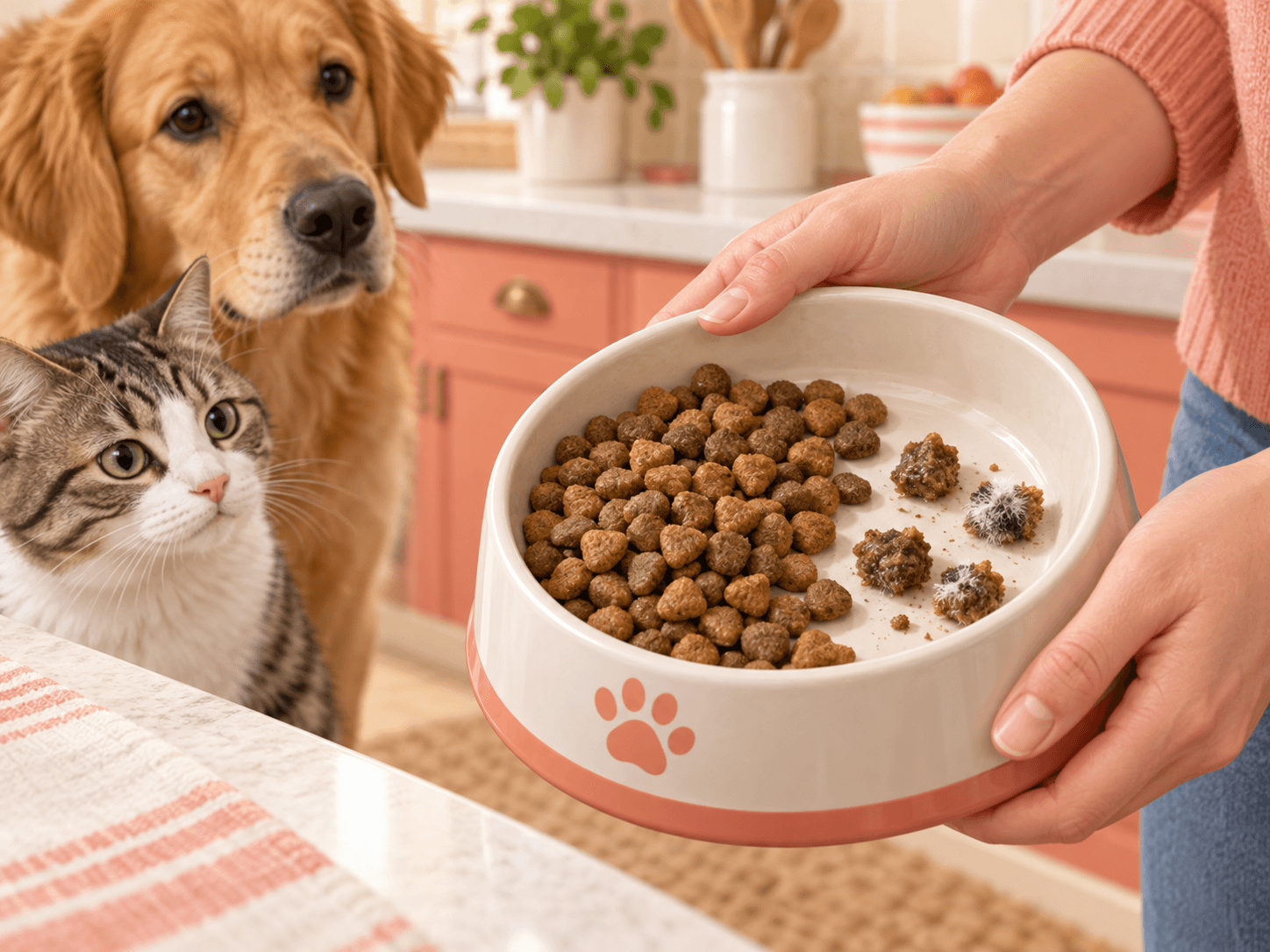
Mould is not a scrape-and-save problem. Mouldy kibble should be discarded, not aired out or picked through. The Merck Veterinary Manual describes mycotoxins as toxic compounds produced by fungi that may contaminate feeds, and the FDA explains that aflatoxins are toxins produced by moulds that can contaminate animal food ingredients.
The visible fuzzy piece is not the whole story. USDA food-safety guidance notes that moulds grow well in warm, humid conditions and can spread through food beyond visible growth. That is why the safer decision is to discard the affected food, not rescue the “good-looking” bits.
Damp clumps also deserve suspicion. If kibble has been exposed to water, wet scoops, or humid air long enough to clump, the storage system has failed. Fix the routine before opening the next bag.
| What you notice | What to do | Why |
|---|---|---|
| Visible mould | Throw away the food | Toxins may extend beyond visible growth |
| Damp clumps | Stop serving and assess storage | Moisture allows mould to grow |
| Stale or rancid smell | Do not casually keep feeding it | Heat and air can speed fat oxidation |
| Missing bag details | Avoid decanting again | Lot code and expiry details matter for traceability |
Ants and pantry insects mean the system leaked
Ants in the bowl are annoying. Insects inside the stored bag are a bigger storage warning. The first fix is boring again: seal the bag in an airtight container, clean the feeding and storage area, and remove easy food access.
The University of Minnesota Extension recommends discarding heavily infested stored foods and preventing reinfestation with sealed containers and cleaning. The EPA also advises reducing pest access to food and water, with sanitation and exclusion as first-line pest control.
So do not treat ants as a garnish. If insects are inside the stored kibble, assess the food carefully rather than casually serving it. If the feeding area is the issue, clean crumbs, wash bowls, and tighten storage before the trail returns.
Dry pet food is not sterile either. The CDC advises washing hands after handling pet food and notes that pet food and treats can carry germs such as Salmonella. Wash hands after scooping, and keep bowls and containers clean and dry.
What changed and why
We used to think about kibble storage mostly as a freshness issue. In tropical kitchens, it is also a moisture, pest, hygiene, and traceability issue.
The better routine is not fancy. Keep the kibble in its original bag. Put that bag inside a clean, dedicated container with a tight-fitting lid. Store it away from heat and wet zones. Keep the scoop dry. Buy a bag size your dog or cat can finish promptly. Throw away mouldy food.
Tonight, check one thing: is the original bag sealed inside a clean lidded container, away from heat and water? If not, fix that before the next scoop.
— Manja