
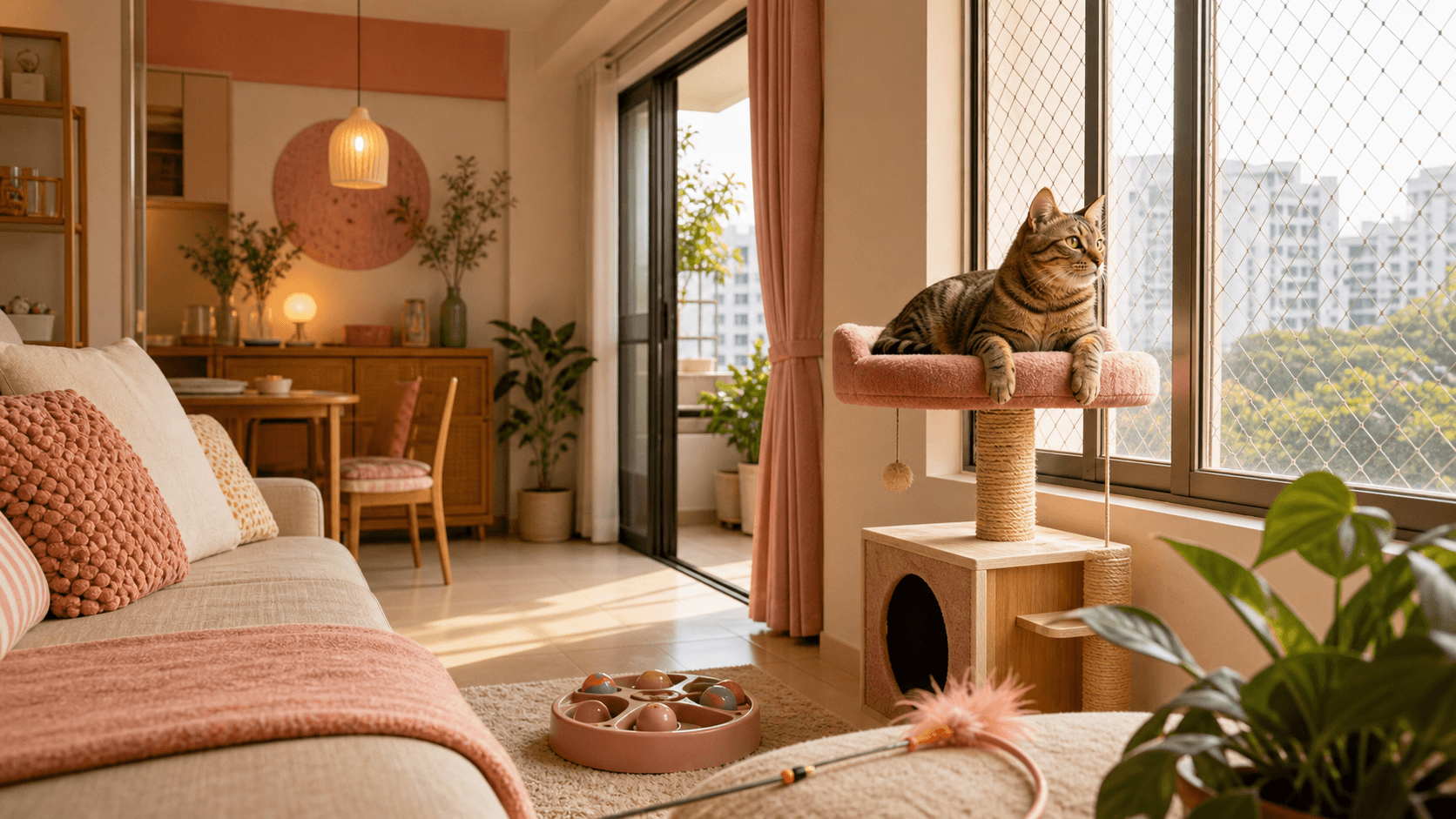
Your cat does not need a safari park in the living room. She needs a day with places to climb, things to chase, food that takes a little work, and enough control over where she rests.
In an HDB flat or condo, that is very possible. It also has to be safe. Under Singapore's Cat Management Framework, HDB cat ownership now comes with clear responsibility for containment and nuisance prevention, so enrichment is not a luxury add-on. It is part of making indoor life work.
A quiet indoor cat is not automatically bored. Cats normally spend much of the day resting, and some cats are simply excellent at looking unemployed. The concern is the pattern around the quietness: repeated pacing, overgrooming, destructive scratching, excessive vocalising, hiding, aggression, or loss of appetite. Use this article to prepare better questions and home changes, not to diagnose your cat at home.
Make the flat feel like cat territory
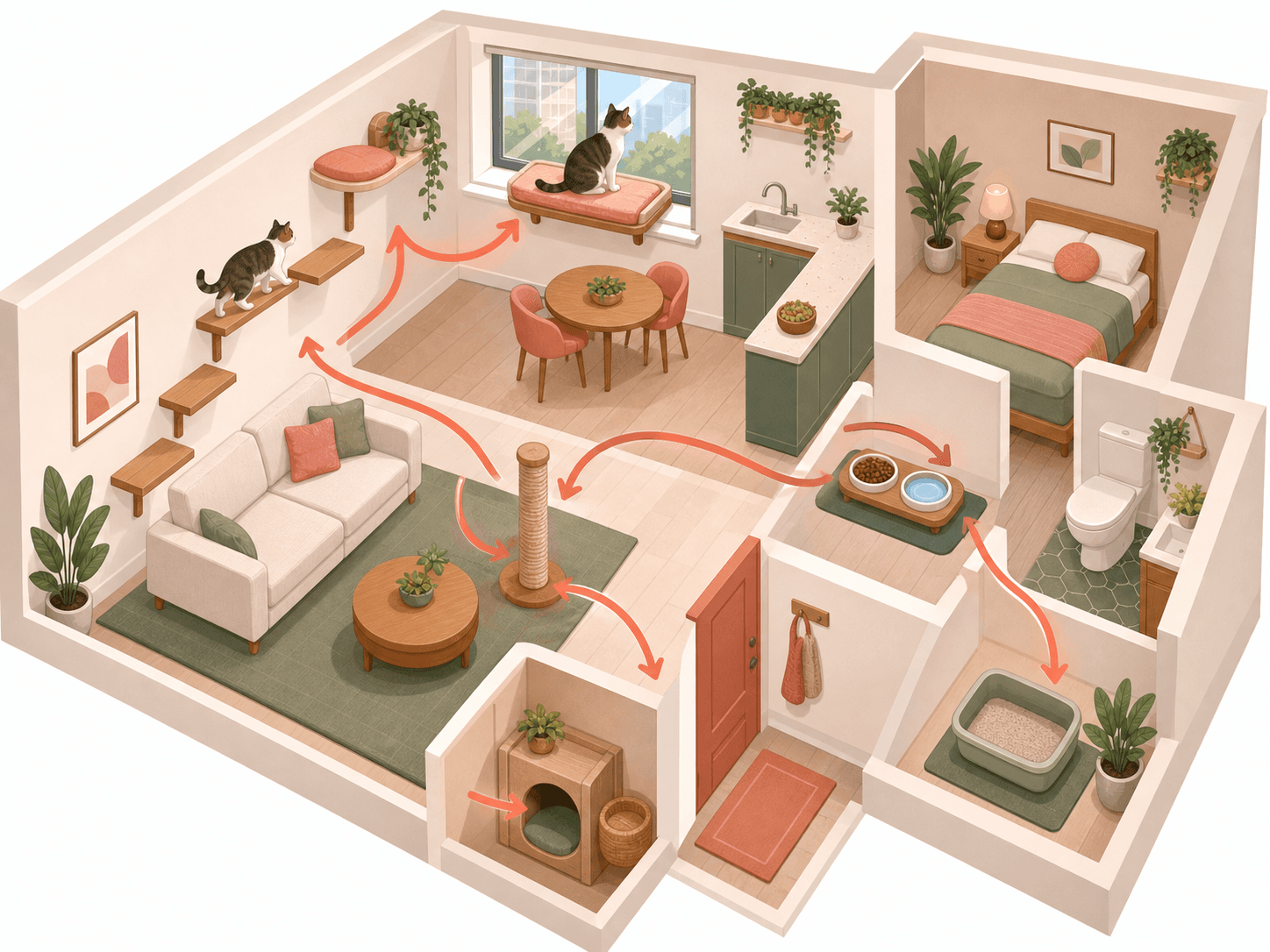
A better indoor day starts with layout. In many apartments, the cat's food, water, litter box, scratcher, bed, and toys slowly migrate into one convenient corner. Convenient for humans, maybe. Not always great for cats.
Separate the important resources where you can. Put water away from the litter area. Give the scratcher a real job by placing it near a favourite sleeping spot, sofa edge, or walking route. Offer at least one hiding place where nobody pulls the cat out for cuddles. If you have more than one cat, spread resources out so one confident cat cannot quietly control everything.
Think upwards too. A shelf, stable cat tree, window perch, or clear route across sturdy furniture can make a small home feel larger. The point is not to fill every wall. The point is to give your cat choices: up high, tucked away, near a secured window, or completely out of the action.
Singapore's heat and humidity change the rhythm. A sunny window can be lovely in the morning and too warm later. Keep shaded resting spots available, refresh water before you leave for work, and plan energetic play for cooler parts of the day, especially if the living room gets afternoon sun.
Build play into the day
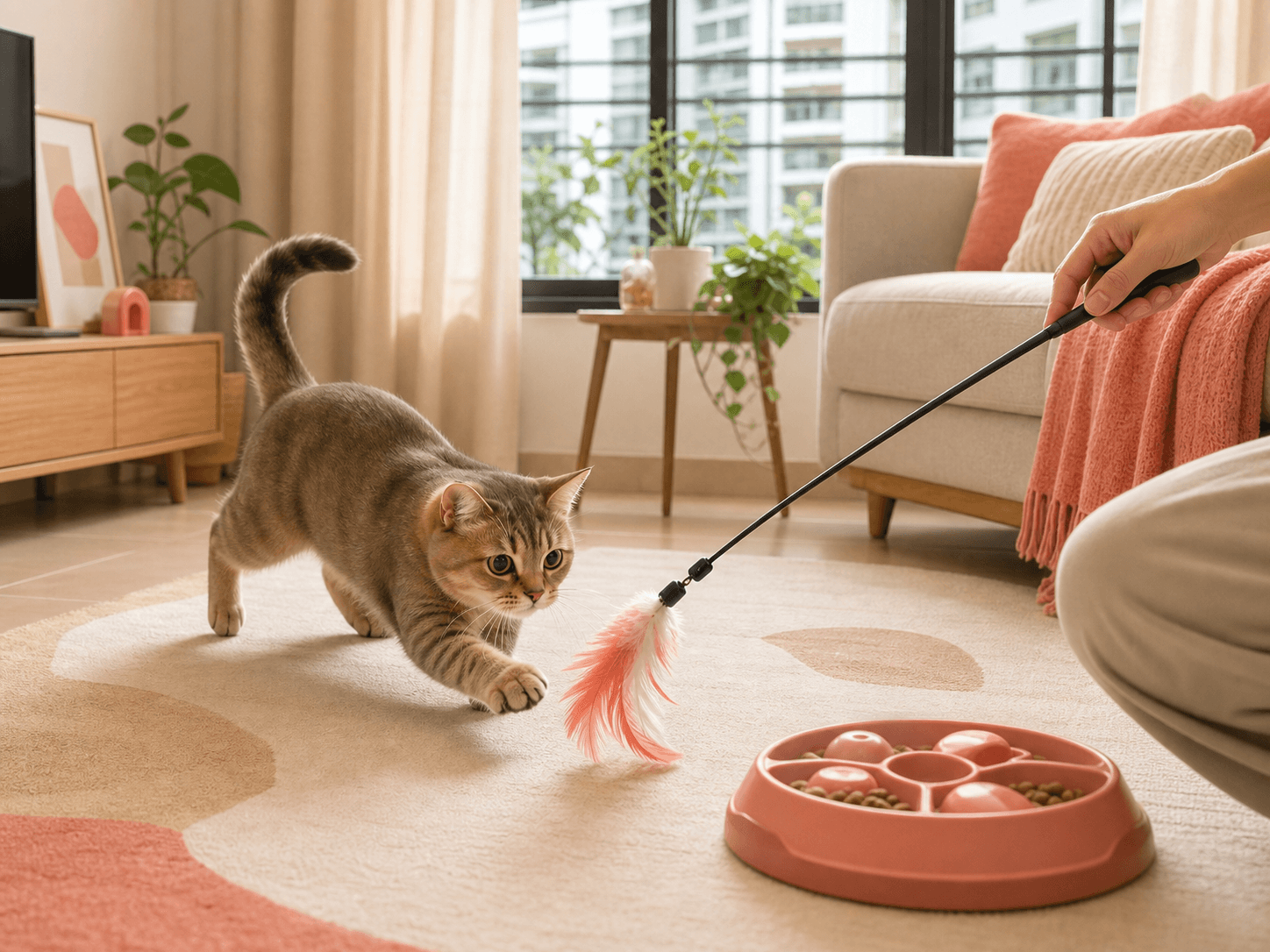
Aim for two or more short play sessions daily. Short means short: a few focused minutes can be more useful than half an hour of waving a toy while your cat watches you with pity.
Make the toy move like prey. Let it hide behind a chair leg, pause, dart, and escape. Let your cat catch it. Then end with a small food reward or the next meal. That finish matters because a hunt that never ends can become frustrating.
Hands and feet are not prey. Your fingers have filed enough complaints.
Keep only a few toys out at a time and rotate them every few days. A toy that disappears into a cupboard and returns later is often more interesting than one that has been lying under the TV console for six weeks. Put away string, ribbon, yarn, and toys with small detachable parts when you are not supervising. Those are not independent play items.
Let meals do some work
Food puzzles can help, but start easy. Scatter a few pieces of kibble on a snuffle mat, use a simple rolling feeder, or place part of a meal in a shallow puzzle tray. If your cat gets irritated, walks away, or starts missing meals, the puzzle is too hard or not the right fit.
Monitor intake, especially in cats who are fussy, underweight, elderly, or on a prescribed diet. A puzzle feeder should slow the meal and add interest. It should not quietly reduce how much your cat eats.
If you feed wet food in a humid kitchen, clear leftovers promptly and wash bowls well. Enrichment should not turn dinner into a science project.
Secure window time
Window watching is powerful enrichment in a dense estate: birds on opposite blocks, corridor sounds, lift-lobby movement, rain, renovation noise, the whole neighbourhood drama package.
Keep it boringly secure. Use only secured windows, screens, grilles, or balcony barriers. Do not rely on a cat being careful, calm, old, or 'not the jumping type'. A sudden noise, insect, bird, or open service-yard gap can change that in one second.
If your cat gets wound up by corridor traffic, other animals, or birds she cannot reach, reduce the view rather than removing it entirely. A partly covered window, a perch set back from the glass, or a quieter room may be enough.
Know when enrichment is not the whole answer
Treat a sudden behaviour change as a health question first. A cat who starts hiding, swatting, house-soiling, calling more, eating less, or playing less may be showing pain, urinary disease, dental disease, arthritis, gastrointestinal illness, or stress. That is not 'naughty cat' behaviour.
Start your notes with the change: what is new, when it began, and what else shifted around food, litter box use, grooming, sleep, play, and social contact. Multi-cat homes need extra care here because one cat's litter-box change can be easy to misread.
Bring in a vet or qualified behaviour professional when the risk rises. That means aggression is escalating, the cat has injured a person or another animal, overgrooming has created bald or sore areas, the cat stops eating, or the behaviour keeps going despite basic enrichment. At that point, a taller cat tree is not the plan. It may still help the home feel safer, but the cat needs a proper assessment.
The useful question is not 'Is my cat bored?' It is 'What has changed, and what does my cat have too little of: movement, safety, height, quiet, food challenge, or medical attention?'
Before you change everything, record three things for one week: play times, appetite, and litter-box habits. If the worrying pattern continues or escalates, bring those notes to your vet.
-- Manja