

A Jakarta-to-Bali pet move is not just a crate, a ticket, and a brave little cat named Mochi. Treat it as a paperwork and disease-control workflow first. The airline booking comes after that.
Use this to prepare your route and documents, not to diagnose whether your dog or cat is fit to fly at home.
Separate domestic movement from international import rules
The supplied evidence supports Indonesia import and export requirements for dogs and cats. It does not include an official 2026 Indonesian Quarantine Agency page for domestic inter-island moves between Java, Bali, Sumatra, Kalimantan, Sulawesi, Lombok, or Papua.
That matters. Owners often search “Indonesia pet quarantine” and find import rules. Those rules may be useful background, but they are not automatically the domestic rule for every island pair.
For example, one import source says dogs and cats entering Indonesia from non-rabies-free countries face 7-14 days of quarantine if the listed import regulations are met (PetTravel Indonesia import requirements). Other relocation sources describe Indonesia quarantine as 14 days or “typically 7-14 days” (Jarnia Scyril relocation guide, Bali.live import guide).
Do not turn that into “my domestic Bali flight needs 7-14 days” unless the domestic authority for your exact route confirms it.
| Rule type | What the evidence supports | What not to assume |
|---|---|---|
| International import into Indonesia | Permits, health certificates, rabies vaccination, microchip, and quarantine are described for dogs and cats entering Indonesia | That the same quarantine duration applies to every domestic island move |
| Export out of Indonesia | Export paperwork is described for resident dogs and cats leaving Indonesia | That export steps replace domestic movement permits |
| Domestic inter-island movement | The bundle does not include an official domestic inter-island quarantine page | That a domestic flight is handled like ordinary baggage |
The practical move is simple. Before you book, ask the departure and arrival animal quarantine offices, your airline, and any relocation agent to name the exact permit, inspection, and quarantine steps for that island pair.
Bali is the caution route
Bali deserves extra caution because the evidence describes it as a rabies “Red Zone” (Bali Visa relocation guide). That does not mean every dog or cat cannot move. It does mean owners should not treat Bali like a routine domestic hop.
If your Labrador is flying from Surabaya to Denpasar, or your cat is leaving Bali for another Indonesian city, build more time into the plan. The risk is not only the flight. It is the permit path, the quarantine reporting, and the health documentation around a rabies-control area.
The sources also frame Bali pet relocation as legally complex, with permits, quarantine, and domestic transfer coordination involved (Bali Visa relocation guide). That is enough reason to avoid same-week planning.
| Owner assumption | Safer 2026 framing |
|---|---|
| “It is domestic, so it should be simple.” | Domestic does not mean paperwork-free, especially around Bali. |
| “The airline will tell me everything.” | Airlines handle carriage rules; quarantine and permit steps can sit outside the ticket. |
| “Old vaccine records should be enough.” | Carry current vaccination records, microchip details, and any test results required for your route. |
| “Quarantine is always the same length.” | Evidence varies between 14 days and 7-14 days for import contexts, not confirmed domestic island moves. |
This is the part to slow down on. A missed permit can be more serious than buying the wrong crate size.
Build the document pack before you buy the ticket
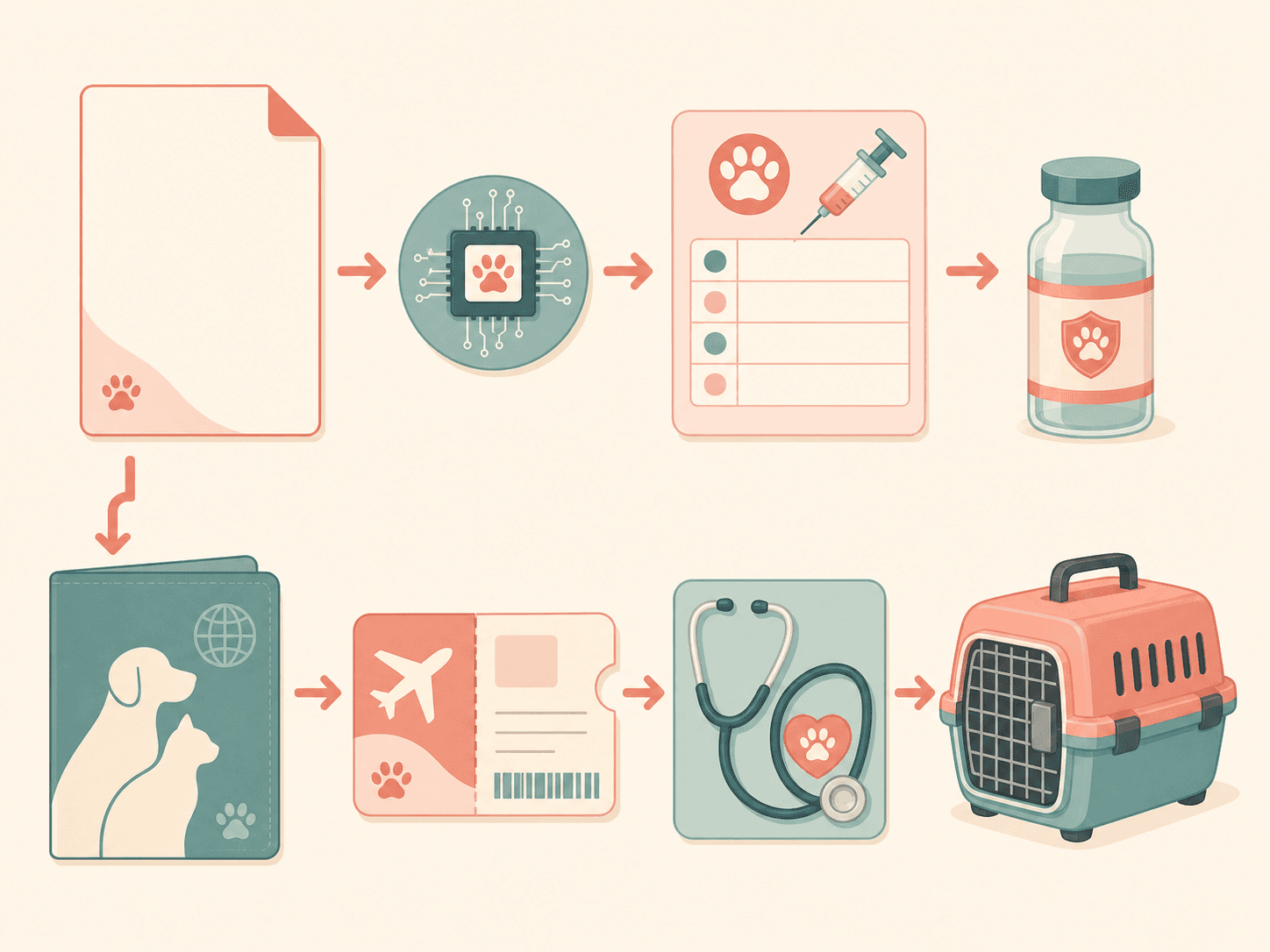
The document pack is where many owners get caught. The evidence repeatedly points to paperwork that must be ready before travel, not discovered at the airport.
For Indonesia import, CatAbroad says the IAQA import permit must be obtained before travel, with the application using the cat’s microchip number, vaccination records, and titer test results where required (CatAbroad Indonesia cat import guide). Another relocation guide lists a valid health certificate, ISO microchip registration card, owner passport copy, flight information, and other travel details among required documents (Jarnia Scyril relocation guide).
For export out of Indonesia, resident dogs and cats need a recommendation letter from the Department of Livestock, an export permit from the Ministry of Agriculture, proof of rabies vaccination at least 30 days before export, a microchip, and a fit-to-fly health certificate (PetTravel Indonesia import requirements).
| Document or detail | Why owners should prepare it early |
|---|---|
| Import permit before travel | Some import processes require the permit before the pet moves. |
| Microchip details | Microchip number or registration details may be part of the permit pack. |
| Vaccination records | Rabies vaccination records are repeatedly named in relocation evidence. |
| Titer test results, where required | Some applications may ask for titer results. |
| Owner passport details | Relocation paperwork may ask for the owner’s passport copy. |
| Flight information | Travel details may be part of the document set. |
| Fit-to-fly health certificate | Export evidence names a health certificate for leaving Indonesia. |
Keep the pack boring. One folder. One file name format. Pet name, microchip number, vaccine record, permit, health certificate, flight details. Boring is good when someone at a counter asks for page three.
Singapore or Malaysia routing adds another workflow
Some Indonesia moves become regional moves because the route passes through Singapore or Malaysia. That adds another authority to satisfy.
Singapore AVS says dogs and cats may need vaccinations, blood tests, parasite treatments, post-arrival quarantine, and crates that meet stated handling requirements when imported into Singapore (AVS importing dogs and cats).
There is also a 2026 change to plan around. AVS states that from 1 April 2026, pet owners must appoint an AVS-recognised pet agent for import-clearance procedures at CAPQ (AVS Changi Animal & Plant Quarantine Station).
If a dog or cat transits or tranships through Singapore from Malaysia by land and then leaves Singapore by air, AVS says the pet must be inspected at Tuas Checkpoint and moved by an AVS-designated pet transporter to CAPQ (AVS transhipping dogs and cats).
Two small numbers can also affect your day. Bringing a dog or cat for inspection without an appointment can incur S$133 per hour or part thereof (AVS importing assistance dogs). At Singapore’s Animal Quarantine Centre, dog exercise-field use during visiting hours is limited to 15 minutes, first-come, first-served (AVS Animal Quarantine Centre).
Plan the handoff. “My cousin can drive the crate across” is not a plan if AVS requires a designated transporter for that specific transit path.
What changed, and why
The old owner habit was to start with the airline. Carrier size, cargo or cabin, flight timing, then paperwork.
For 2026 Indonesian moves, reverse that order. Start with the disease-control path. Confirm whether the move is domestic inter-island, international import, export, transit, or transhipment. Then confirm the authority, permit, inspection point, quarantine expectation, and agent handoff before you book.
This is especially important for Bali because the evidence names rabies-zone scrutiny, and for Singapore routing because AVS has specific CAPQ and transporter procedures.
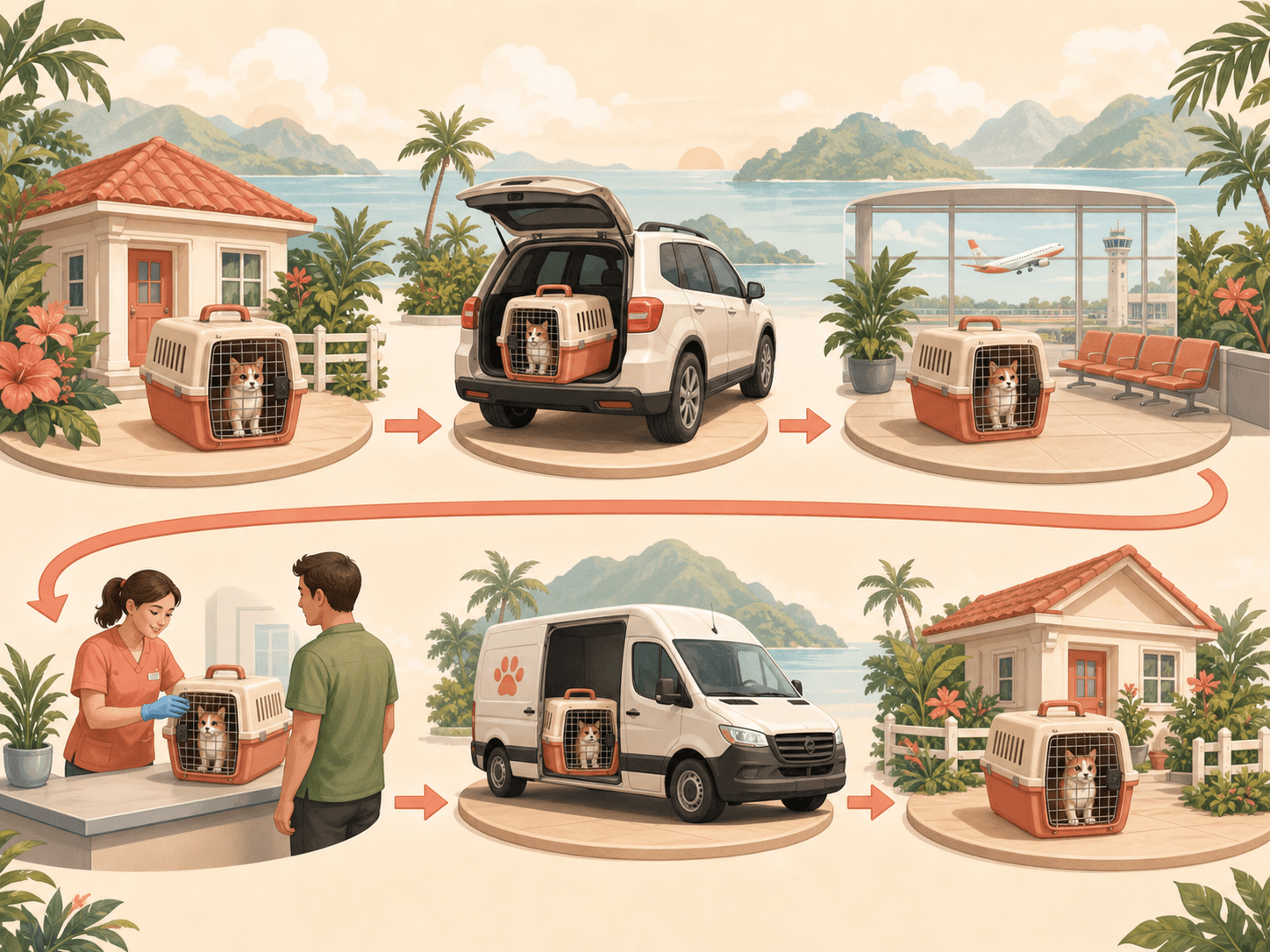
Tonight’s small thing: write your route as a chain, not a destination. “Bandung → Jakarta airport → Denpasar → home” is better than “Bali move.” Then ask each handoff point what document they need before your dog or cat arrives.
— Manja