

A five-minute wait at a sunny lift lobby can be enough to turn a hot pet into an emergency. Heatstroke is not only a dog-at-the-park problem. Cats in carriers, rabbits on balconies, guinea pigs in warm rooms, and ferrets in stuffy transport can all deteriorate quickly in tropical heat.
Call a vet now for any suspected heatstroke. This guide is for recognising danger and starting first aid while you get veterinary help, not for diagnosing your pet at home.
Heat plus humidity changes the rules
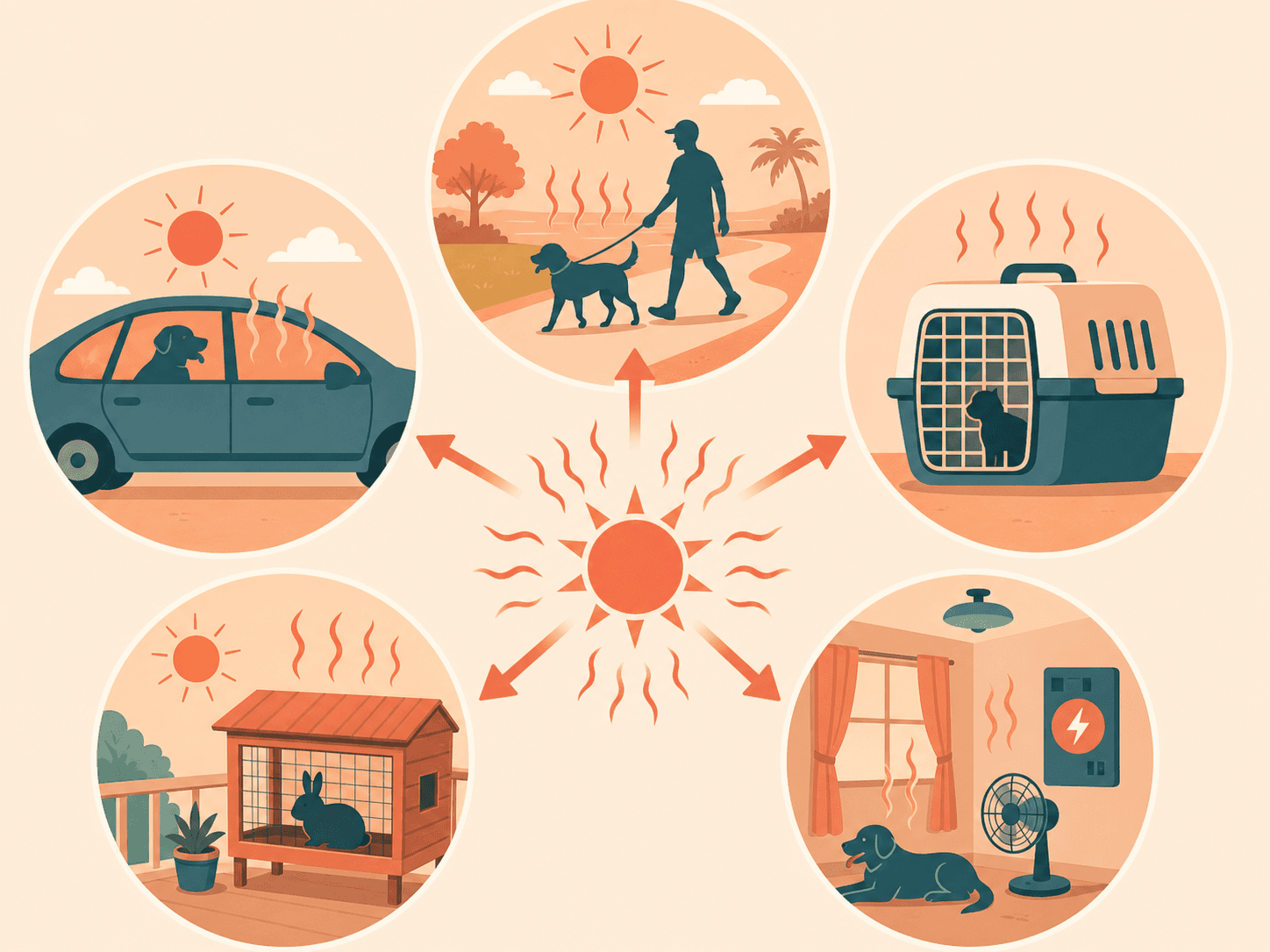
Heatstroke is not just “too hot.” In pets, rising core temperature can trigger systemic inflammation, shock, clotting problems, kidney injury, neurologic injury, and death. Treat suspected heatstroke as urgent even before your pet collapses.
In Singapore, Malaysia, and Indonesia, humidity makes the risk less obvious. Shade helps, but it does not guarantee safety because humid air makes evaporative cooling less efficient. Pets can overheat during shaded transport, poor ventilation, power interruptions, grooming or drying, and crowded outdoor events.
Think about ordinary local routines: a dog waiting near a void-deck puddle after a humid evening walk, a cat carrier parked in a warm corridor, a rabbit enclosure beside balcony glass, a guinea pig cage in a room where the fan has been off all afternoon. None of these looks dramatic at first. That is the point.
Dogs are a major risk group, especially with exertion, confinement, obesity, poor acclimatisation, or flat-faced anatomy. Pugs, French Bulldogs, and other brachycephalic dogs need conservative heat limits.
Cats can get heatstroke too, though early signs may be subtler. Risk rises when a cat is stuck in a poorly ventilated space, travelling in a carrier, or unable to move away from heat.
Rabbits, guinea pigs, and ferrets deserve the same caution. Warm hutches, balconies, carriers, hot rooms, and weak airflow can turn dangerous quickly.
What looks wrong
Check the pet in front of you, not the weather app, and not the temperature you hope to see.
In dogs, early warning signs include excessive panting, drooling, restlessness, red or pale gums, vomiting or diarrhoea, weakness, wobbliness, mental dullness, collapse, seizures, and bleeding or bruising in severe cases.
For cats, rabbits, guinea pigs, and ferrets, watch for rapid or open-mouth breathing, drooling, lethargy, weakness, wobbliness, lying stretched out, very hot ears or body, collapse, seizures, or failure to respond normally.
A rectal temperature can help triage if you can take it safely. Do not let it delay cooling or calling a vet. Canine heatstroke is often linked with core temperatures around or above 41 C, but severe illness can continue after the temperature starts falling.
On hot, humid days, use a fast visual check: breathing, drool, gums for dogs, movement, alertness, vomiting or diarrhoea, then response to your voice. If anything looks wrong, act early.
First steps while help is on the way
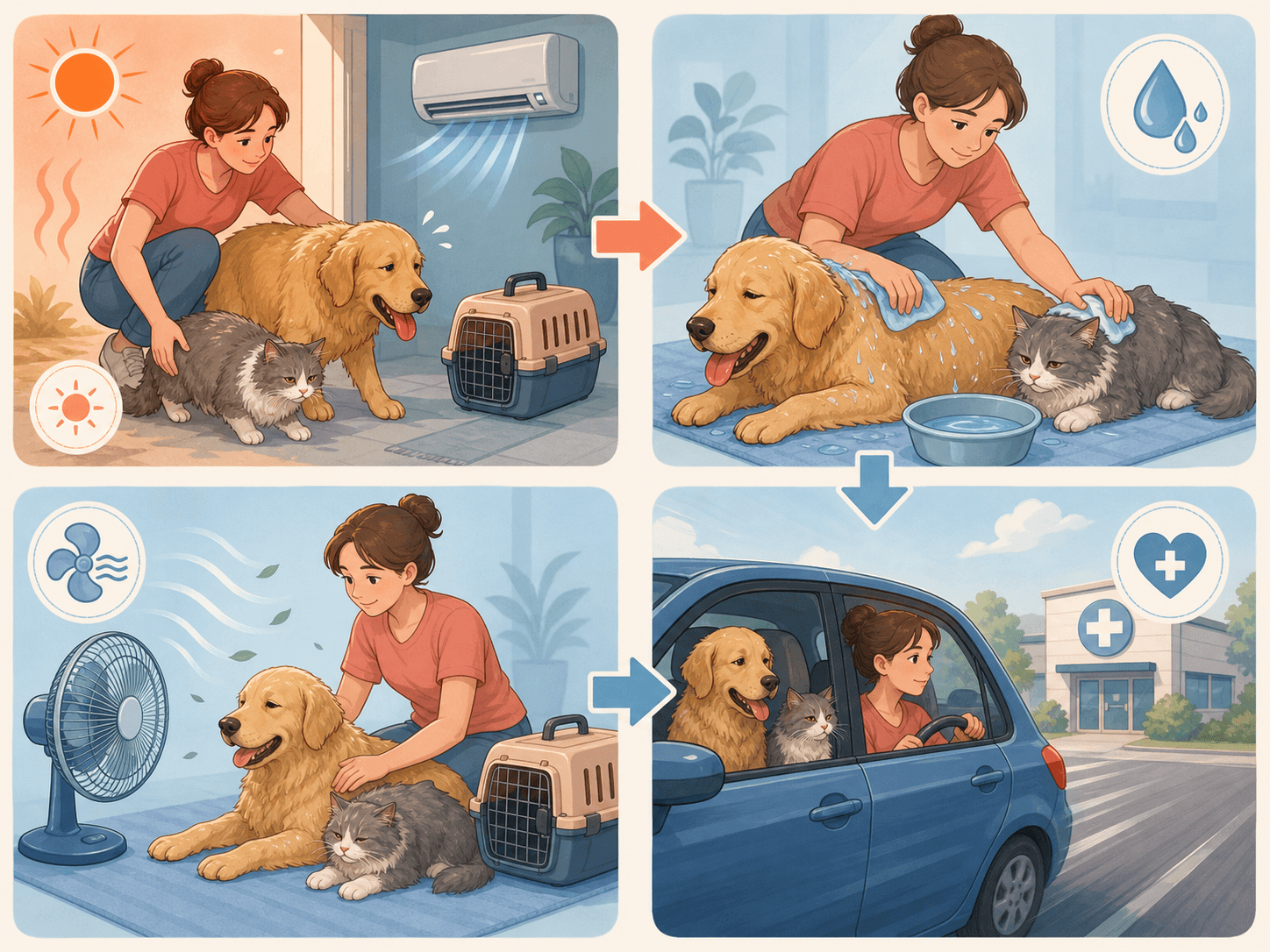
Move the pet to shade or air conditioning. Use cool or tepid water for active cooling, and improve airflow with a fan or moving air if you can. Avoid ice-cold immersion, because it may work against cooling by triggering shivering or reducing blood flow at the skin.
Call a vet now for any suspected heatstroke. Do it while cooling starts, not after you “see how lah.” This is especially important if your dog, cat, rabbit, guinea pig, or ferret is collapsed, weak, confused, breathing abnormally, vomiting, having diarrhoea, seizuring, bleeding, or not improving quickly after cooling begins.
The one job is simple: cool first, call now, travel safely.
What to tell the clinic
Bring a simple timeline, even if it is messy. Where did the heat exposure happen? How long did it last? Was the pet walking, waiting, caged, groomed, transported, or trapped somewhere warm? What cooling steps did you use? Did you measure a temperature safely? Tell the clinic about current medications, known diseases, vomiting, diarrhoea, seizures, collapse, or any change in breathing.
If you are heading out from an HDB block, condo carpark, boarding facility, groomer, or rescue handover, send one person ahead to call the clinic while another keeps cooling and prepares transport. Do not lose time making the notes perfect.
Before the next hot day, save your regular vet and nearest after-hours emergency clinic in your phone. Keep a towel and travel water bottle near the carrier or leash. That tiny bit of boring preparation is useful when everyone is sweaty and panicking.
— Manja