
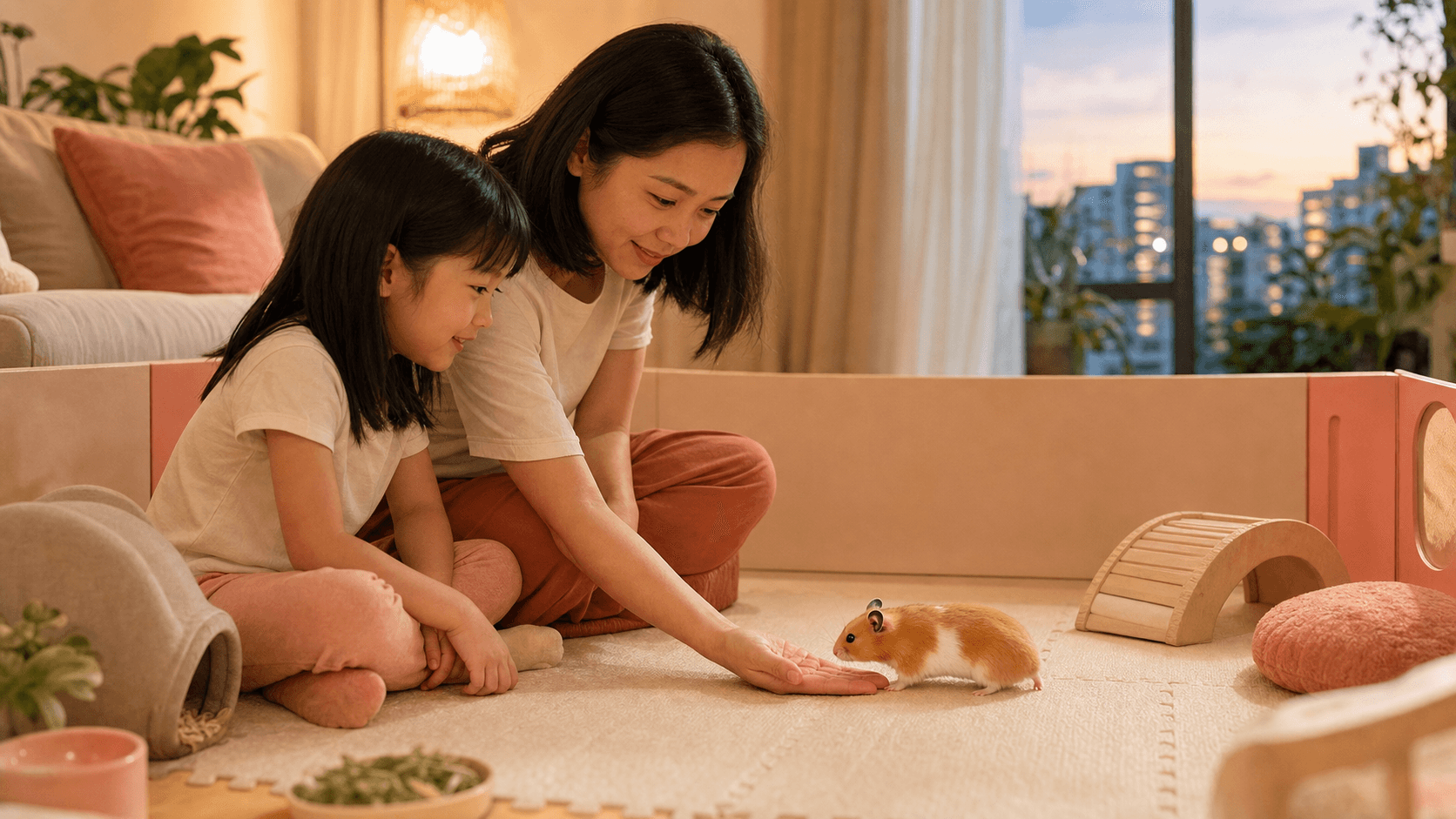
A hamster bite is usually a message, not bad manners: slow down, stop grabbing, and let the hamster choose more of the contact.
Start with the household rule
The safest child-hamster rule is simple: an adult supervises, the child observes first, and the hamster is never forced into a cuddle. Hamsters can be family pets, but VCA warns that they should not be left unsupervised with small children because they startle easily and may bite when frightened or forcefully restrained (VCA Animal Hospitals).
This matters in Singapore homes too. Hamsters are recognised locally as pet small mammals that can be kept in Singapore (AVS). The issue is not whether a hamster is a “proper pet”. The issue is whether the household gives a small, nervous animal enough control.
A child can help with calm talking, supervised feeding, and watching normal behaviour. Frequent picking up is a different job. Some hamsters may accept sitting on a hand, but being lifted can still feel stressful to them (DrD Knaagdierwinkel).
| Child action | Safer adult rule |
|---|---|
| Watching the hamster | Good first step, especially before handling |
| Calm talking | Speak softly before any hand enters the space |
| Feeding with supervision | Wash hands first so fingers do not smell like food |
| Picking up | Adult or older child only, and only if the hamster is calm |
| Holding a struggling hamster | Put the hamster down promptly |
Respect the hamster’s clock
Hamsters are nocturnal. That one fact changes the handling plan.
A hamster woken in the day may nip because it has been startled out of sleep. Animal Humane Society links hamster biting to being awakened during the day, and says their nocturnal habits and nipping make them a poor match for young children without adult supervision (Animal Humane Society).
So the family rule should not be “my child wants to hold the hamster now”. It should be “the hamster is awake, calm, and choosing contact”. That shift prevents many bites before the first hand reaches in.
Move slowly around a waking hamster. UC Davis describes hamsters as high-stress pets that should be handled slowly, especially when awakened, and notes that they often bite when startled (UC Davis School of Veterinary Medicine).
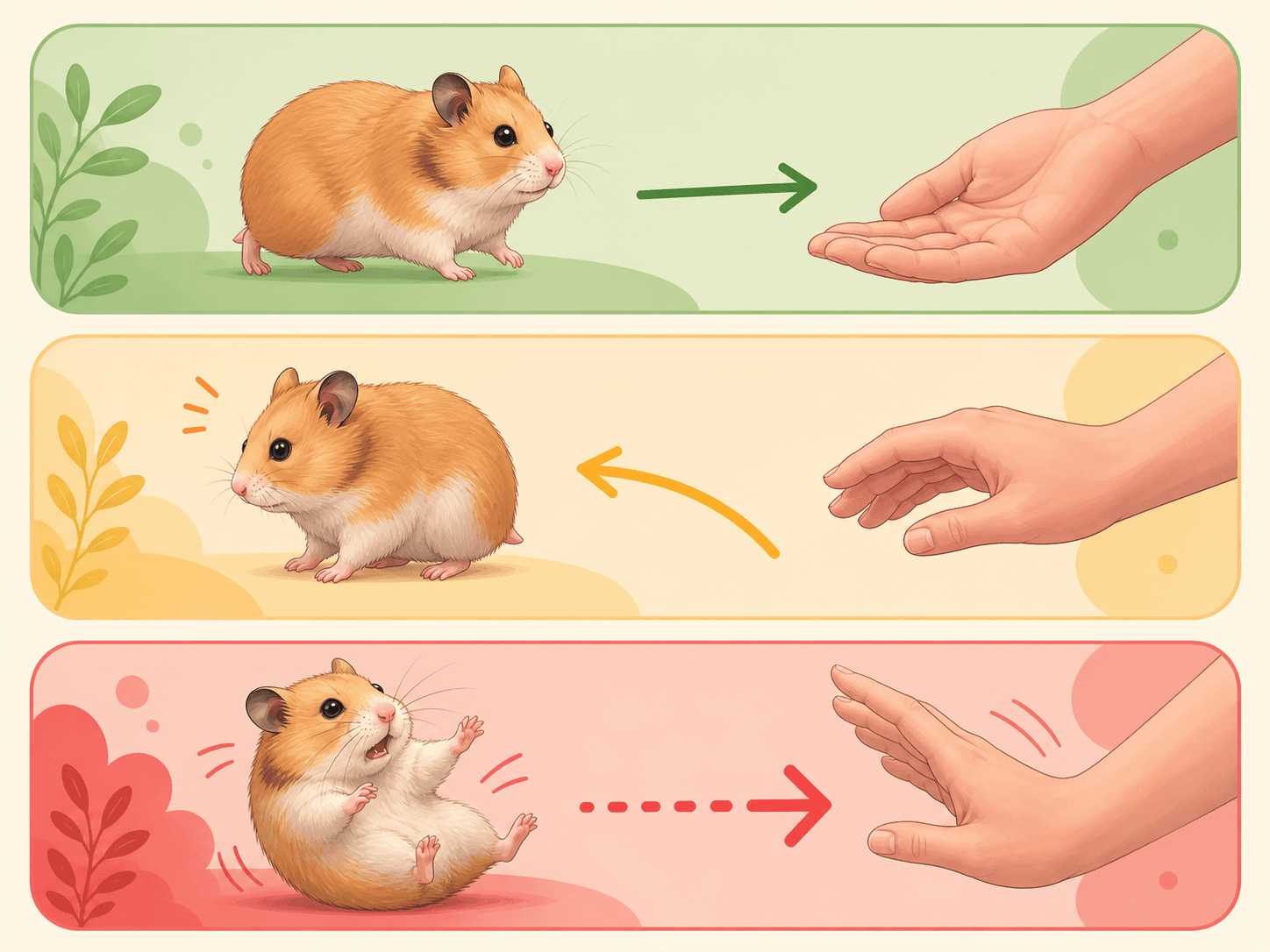
| Traffic light | Hamster sign | Owner action |
|---|---|---|
| Green | Awake, calm, approaching the hand | Offer calm talking or supervised contact |
| Amber | Moving away, tense, newly woken | Pause and give space |
| Red | Struggling, trying to escape, biting | Hands off and return the hamster safely |
Speak before touching
Hamsters do not see the world the way a child expects. PetMD notes that hamsters have poor eyesight and recommends speaking before picking them up because nipping can happen when a hamster is frightened, poorly socialised, startled, roughly handled, or unwell (PetMD).
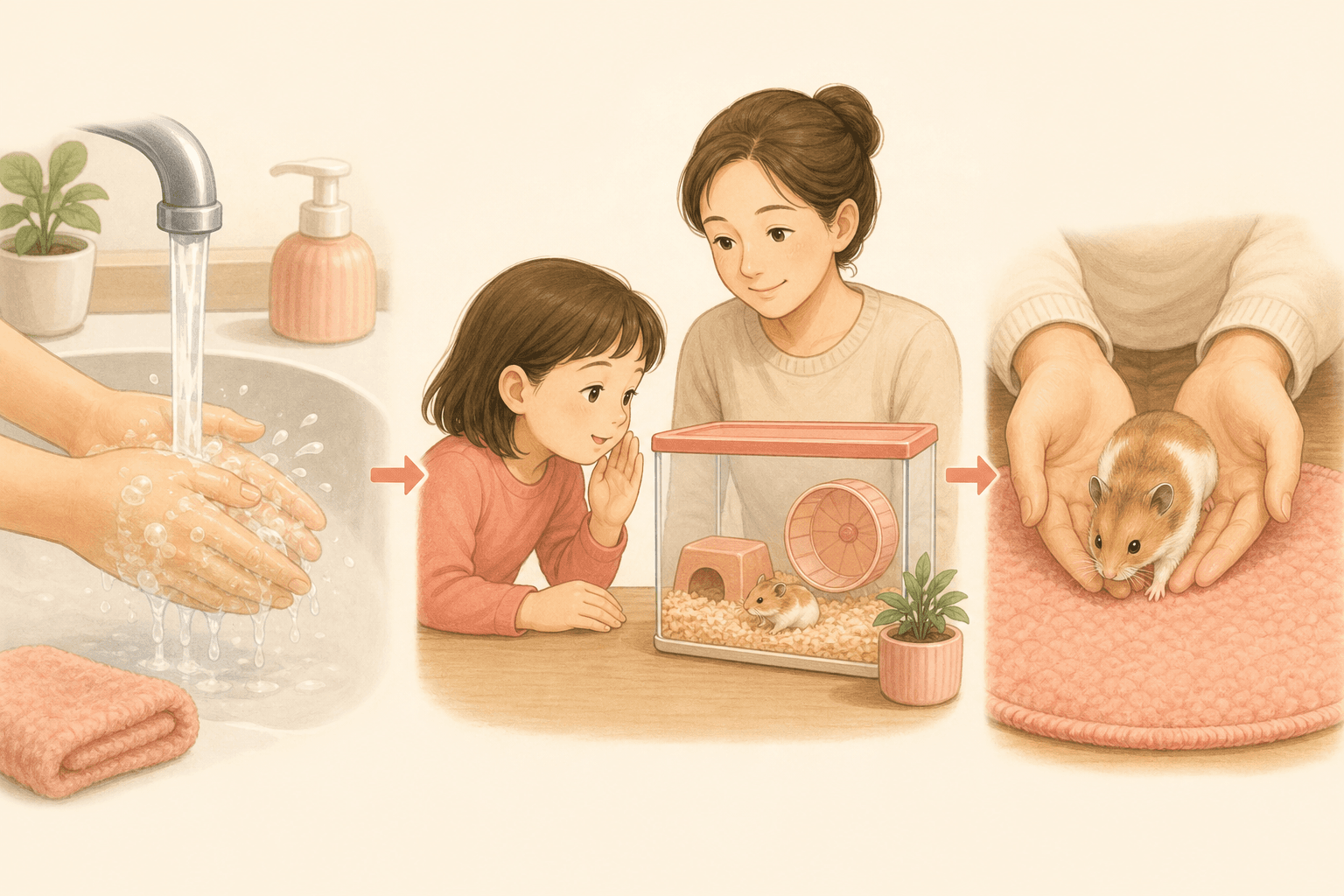
Make “hello first, hands second” the family routine. Say the hamster’s name. Let it notice the hand. Avoid reaching from nowhere. Avoid scooping during a child’s excited moment.
Handwashing matters too. If fingers smell like food, a hamster may mistake them for food, so washing hands before handling is a practical bite-prevention step (The Spruce Pets).
Keep the handling area low and controlled. Newhay advises that hamsters are better handled by adults and older children because they can be easily spooked or injured, and may bite or jump away when scared (Newhay). A scared jump is not a dramatic choice. It is a small animal trying to escape.
| Before contact | Why it helps |
|---|---|
| Wash hands | Removes food smells from fingers |
| Speak first | Warns a hamster with poor eyesight |
| Move slowly | Reduces startle bites |
| Let the hamster approach | Gives the animal choice |
| Stop when it struggles | Prevents discomfort from escalating |
Build the home around normal hamster behaviour
A good handling plan starts outside the child’s hands. A stressed hamster in a poor setup is harder to handle kindly.
AVS says hamsters are solitary animals and should be housed by themselves. It also says they need opportunities to burrow, forage, bathe, and chew or gnaw (AVS). That is the boring but important part of bite prevention. A hamster with a single-hamster home and proper outlets for normal behaviour has fewer reasons to treat every hand as a threat.
Do not sell the hamster to a child as an easy starter pet. Local Singapore parenting content makes the same point: hamsters should not be treated as simple beginner pets, and frightened hamsters may bite instinctively when threatened or scared (Little Day Out).
The kinder message to a child is: “This pet is small, fast, and easily frightened. We earn trust slowly.” That is more honest than “Don’t worry, it’s tiny.”
What changed and why
The old advice made hamsters sound like low-effort pets for children. The better advice is more specific: hamsters can fit a family, but they are not toys, and they are not built for frequent daytime handling.
What changed is the focus. Instead of asking whether the child is excited enough, ask whether the hamster is awake, calm, and able to leave. Instead of treating a bite as naughty behaviour, treat it as information.
If a hamster struggles or tries to get away while held, put it down promptly. Ignoring that escape cue can turn discomfort into biting (wikiHow). If a usually gentle hamster suddenly starts biting, especially when touched in one area, consider pain or illness rather than disobedience (Calistoga Pet Clinic).
Use this guide to prepare your household routine, not to diagnose pain or illness at home; if biting changes suddenly, ask your vet.
Tonight, choose one rule and make it visible: wash hands, speak first, move slowly, and put the hamster down when it asks to leave.
— Manja