
A wet tail on a hamster is not a cleaning problem if it comes with watery diarrhoea, low energy, and no appetite.
“Wet tail” is often used by owners to mean any dirty back end. In veterinary use, it most often points to proliferative ileitis, a severe gut disease classically seen in recently weaned young Syrian hamsters. It can move fast. The pattern matters more than the mess.
Manja is editorial, so use this guide to prepare for the vet conversation, not to diagnose your hamster at home.
Wet tail is not every loose stool

The red flag is watery diarrhoea with a sick hamster.
A hamster with true wet-tail-like illness may have diarrhoea, wetness around the tail, depression, anorexia, dehydration, and high risk of death within a short time if untreated. Merck Veterinary Manual describes proliferative ileitis, or wet tail, as a serious disease of young hamsters with diarrhoea, wetness around the tail, depression, and high mortality.
Lawsonia intracellularis is a recognised cause of proliferative ileitis in hamsters. That does not mean every hamster with diarrhoea has Lawsonia. Other bacterial, parasitic, dietary, medicine-related, and husbandry causes can look similar.
| What you see | What it may mean | Action |
|---|---|---|
| Slightly soiled fur, still bright, still eating | Possible mild gut upset or cage hygiene issue | Clean the cage area and monitor closely while checking recent diet and bedding changes |
| Watery diarrhoea and wet tail area | Wet-tail-like enteric disease is possible | Arrange veterinary assessment |
| Watery diarrhoea plus lethargy or no appetite | Systemic illness risk | Treat as urgent |
| Blood, swollen abdomen, pain signs, or rectal prolapse | Severe disease signs | Seek urgent veterinary care |
Do not wait for a small mammal to “sleep it off” if the hamster looks weak. VCA and Washington State University both warn that small pets can become seriously ill rapidly.
The last 1-2 weeks tell the story
Recent stress is clinically useful information, not background noise.
Hamsters can develop diarrhoea after transport, overcrowding, abrupt weaning, diet change, poor sanitation, or a move into a new home. That is why the history from the last 1-2 weeks matters. Royal Veterinary College and Cornell hamster-care guidance both emphasise stable housing, hygiene, appropriate diet, and stress reduction.
For a Singapore, Malaysia, or Indonesia owner, the common scenario is familiar: a young hamster comes home from a shop or previous owner, gets new bedding, new pellets, new treats, a new water bottle, new smells, and more handling. Some hamsters cope. A sick one may not.
| Recent change | Why your veterinarian will care |
|---|---|
| New purchase or adoption date | Helps connect illness to transport, weaning, crowding, or exposure to other rodents |
| New food or treats | Helps separate wet tail from diet-related diarrhoea |
| Bedding brand or cage-cleaning change | Helps assess sanitation and possible irritants |
| Water source or bottle change | Helps assess hydration and husbandry |
| Any medicine already given | Helps identify unsafe antibiotics or antibiotic-associated disease |
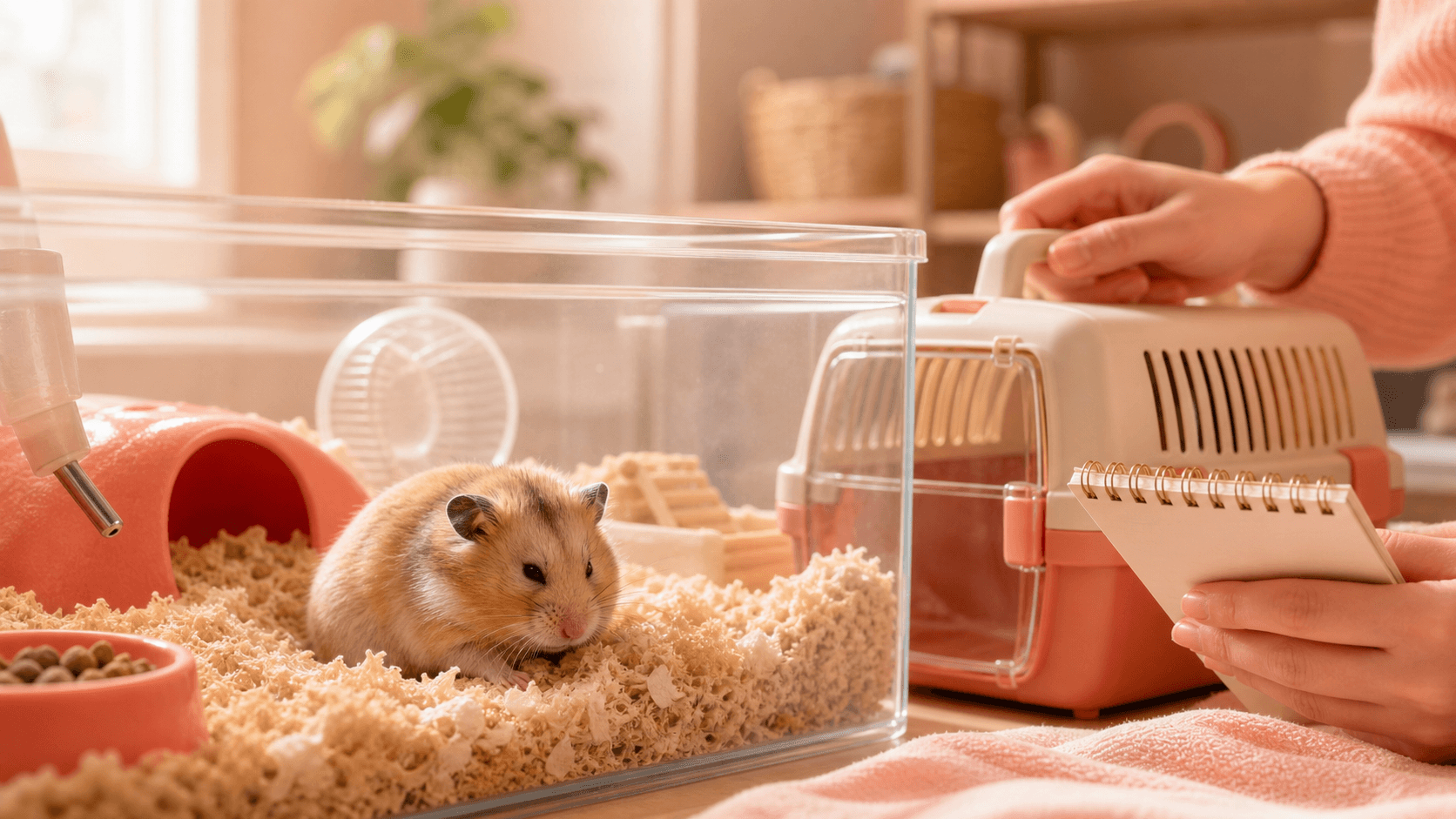
Write these details down before you leave home. A short note is better than trying to remember it while holding a cold, frightened hamster in a carrier.
Do not give leftover antibiotics
The wrong antibiotic can make a hamster worse.
Owners sometimes reach for leftover human medicine, dog antibiotics, or cat antibiotics because diarrhoea looks like an infection. With hamsters, that is risky. Merck Veterinary Manual warns that some antimicrobials can disrupt rodent gut flora and cause severe enterotoxaemia. Published work on antibiotic-associated enterocolitis in hamsters supports the same warning.
Penicillins, cephalosporins, macrolides, and lincosamides are examples of drug groups that can be dangerous without species-specific veterinary prescribing. The issue is not whether the owner means well. The issue is that hamster gut bacteria can respond badly to the wrong medicine.
| Do | Do not |
|---|---|
| Keep the hamster warm enough, dry, and quiet while arranging care | Give leftover human, dog, or cat antibiotics |
| Bring a fresh stool sample if you can collect one cleanly | Force new treats or rich foods |
| Note diet, bedding, water source, and recent changes | Take casual treatment advice from a pet shop as medical diagnosis |
| Use a veterinarian experienced with small mammals | Assume all diarrhoea is Lawsonia or wet tail |
Supportive care may include warmth, fluid correction, nutritional support, faecal testing, and carefully selected antimicrobials or antiparasitic therapy. The treatment depends on the diagnosis.
Tropical homes add heat and hygiene pressure

A sick hamster needs a cool, dry, well-ventilated enclosure while you arrange care.
In Singapore, Malaysia, and Indonesia, heat and indoor humidity can worsen stress and dehydration risk in a hamster with diarrhoea. Singapore AVS hamster-care guidance covers suitable housing and environmental care. Malaysia’s meteorological service describes a hot and humid equatorial climate, which matches what many owners manage at home.
Keep the enclosure away from direct sun. Keep bedding dry. Remove soiled bedding carefully. Do not blast the cage with cold air, but do not leave a sick hamster in a hot, stuffy corner either.
Diarrhoea also becomes a household hygiene issue. Pocket pets can carry germs that make people sick, including Salmonella. Wash hands after handling the hamster or cage items. Disinfect contaminated surfaces. Keep children, pregnant people, elderly people, and immunocompromised family members away from soiled bedding.
What your vet will ask
- When did the diarrhoea start?
- Was the hamster bought, adopted, transported, or weaned recently?
- What food, treats, bedding, and water source are being used?
- Has the hamster been exposed to other rodents?
- Has any medicine, especially antibiotics, already been given?
- Can you bring a fresh stool sample?
A wet tail is small on the cage floor and big in consequence. Tonight, clean only what you must, keep the enclosure cool, dry, and ventilated, write down the last 1-2 weeks of changes, and get the hamster assessed by someone who treats small mammals.
— Manja