
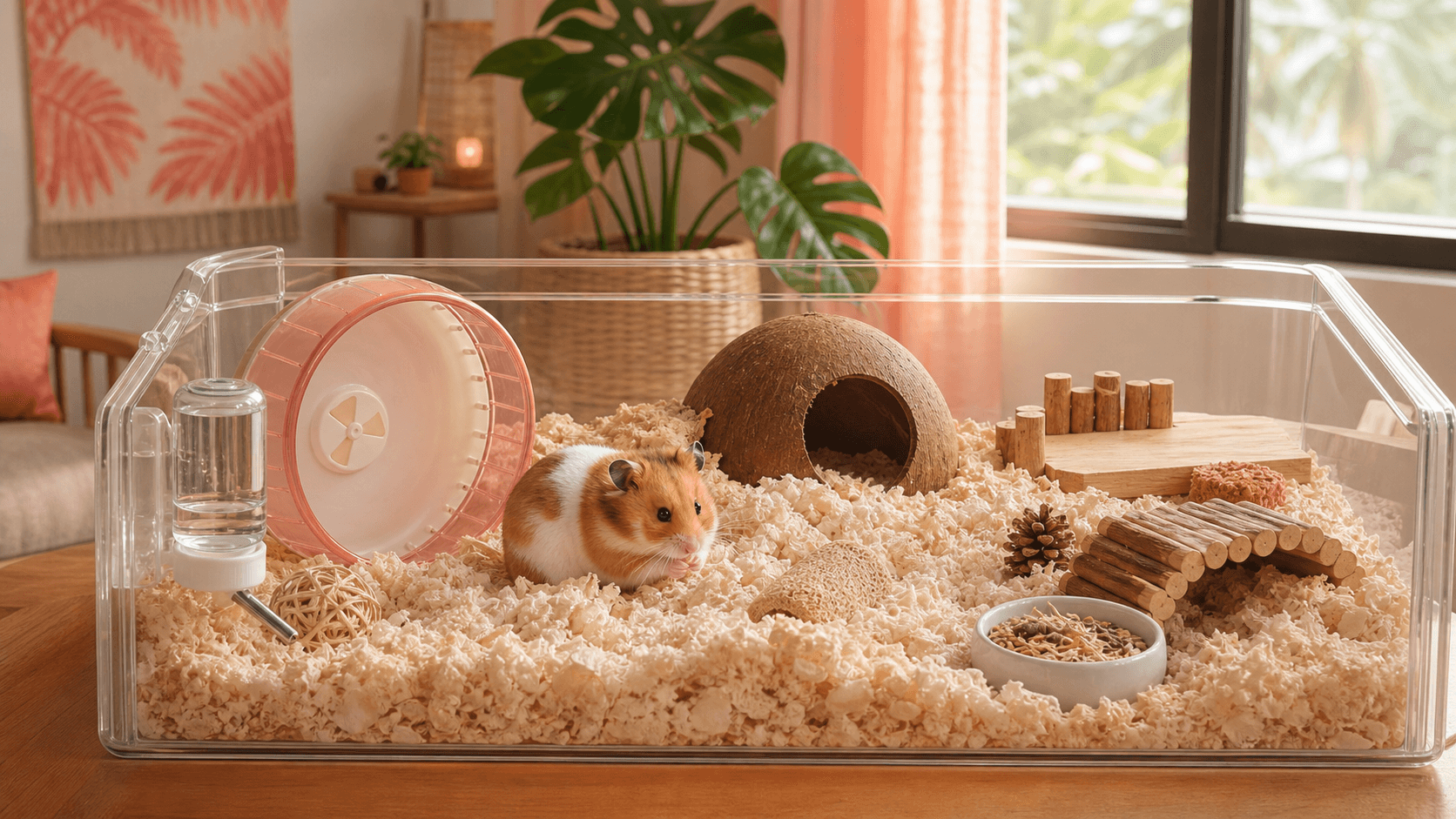
That pastel cage with the tiny tunnel may look like a complete hamster home. In a warm flat, it is usually just an expensive compromise: too little floor space, not enough bedding depth, and too many plastic corners where heat and damp smells hang around.
A better hamster setup starts with the unglamorous checks: space to move, air that does not feel trapped, and bedding deep enough for proper digging.
Start with the enclosure, not the accessories
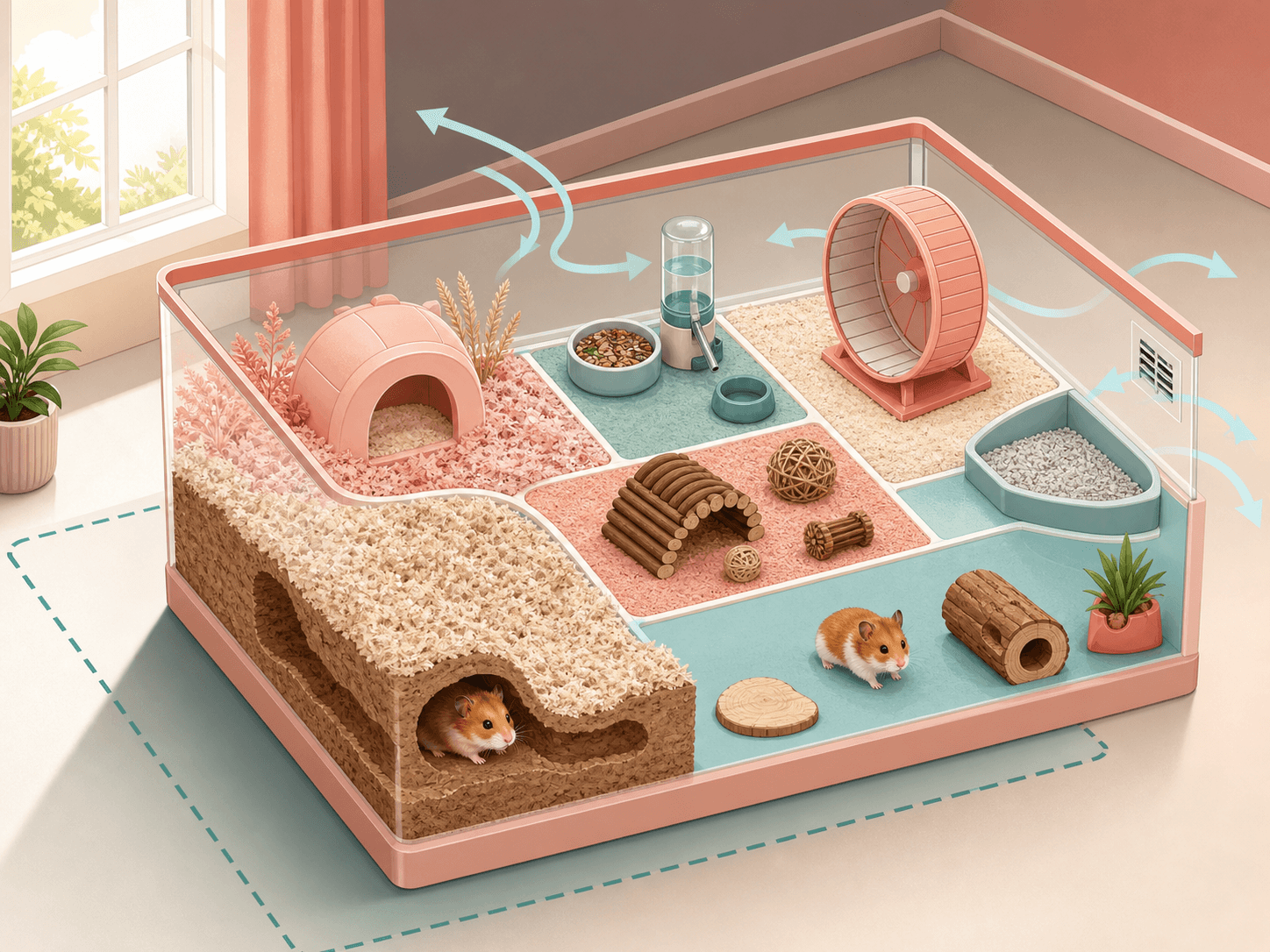
Choose one large, secure, well-ventilated enclosure, then check it against recognised welfare minimums rather than how cute it looks. The figures below are the standards UK welfare bodies actually publish — use them as a floor, not a target.
| Standard | Dwarf | Syrian | Source |
|---|---|---|---|
| Minimum continuous floor area | 100 × 50 cm (5,000 cm²) | 100 × 50 cm (5,000 cm²) | PDSA |
| Minimum bedding depth | 25 cm | 25 cm | PDSA |
| Minimum wheel diameter | 20 cm (8 in) | 30 cm (12 in) | PDSA |
Two of those numbers surprise people. First, floor area does not shrink for a dwarf: veterinary welfare research cited by the TVT finds dwarf hamsters need the same enclosure size as a Syrian, so the 100 × 50 cm minimum applies to both. Second, the wheel does scale up: a dwarf wheel should be at least 20 cm and a Syrian at least 30 cm across, because a too-small wheel forces a curved back (PDSA).
That continuous floor matters more than a stack of tiny levels. Hamsters are burrowing animals, not display ornaments. If the enclosure cannot hold a deep, stable bedding layer, it is missing one of the main things a hamster needs to behave normally.
For SG/MY/ID homes, assume heat and humidity are part of the baseline. A shaded HDB bedroom, condo utility room, or apartment corner can still sit warm through the afternoon. Singapore homes sit in a warm, humid climate, with mean daily temperatures commonly in the high 20s Celsius and high relative humidity. Malaysia and Indonesia owners should treat heat and humidity as normal conditions too, not rare heatwave problems.
Good defaults are simple: a large ventilated enclosure, at least 25 cm of paper-based bedding or aspen for burrowing (PDSA), hay mixed in for structure, and unscented nesting material. Skip cedar, untreated pine, wire floors, very small tubes, and enclosed plastic cages. They can restrict movement, trap heat and humidity, make cleaning harder, and raise foot or ventilation risks.
Use this guide to prepare a better home, not to diagnose your hamster at home.
Make the cage comfortable in the actual room
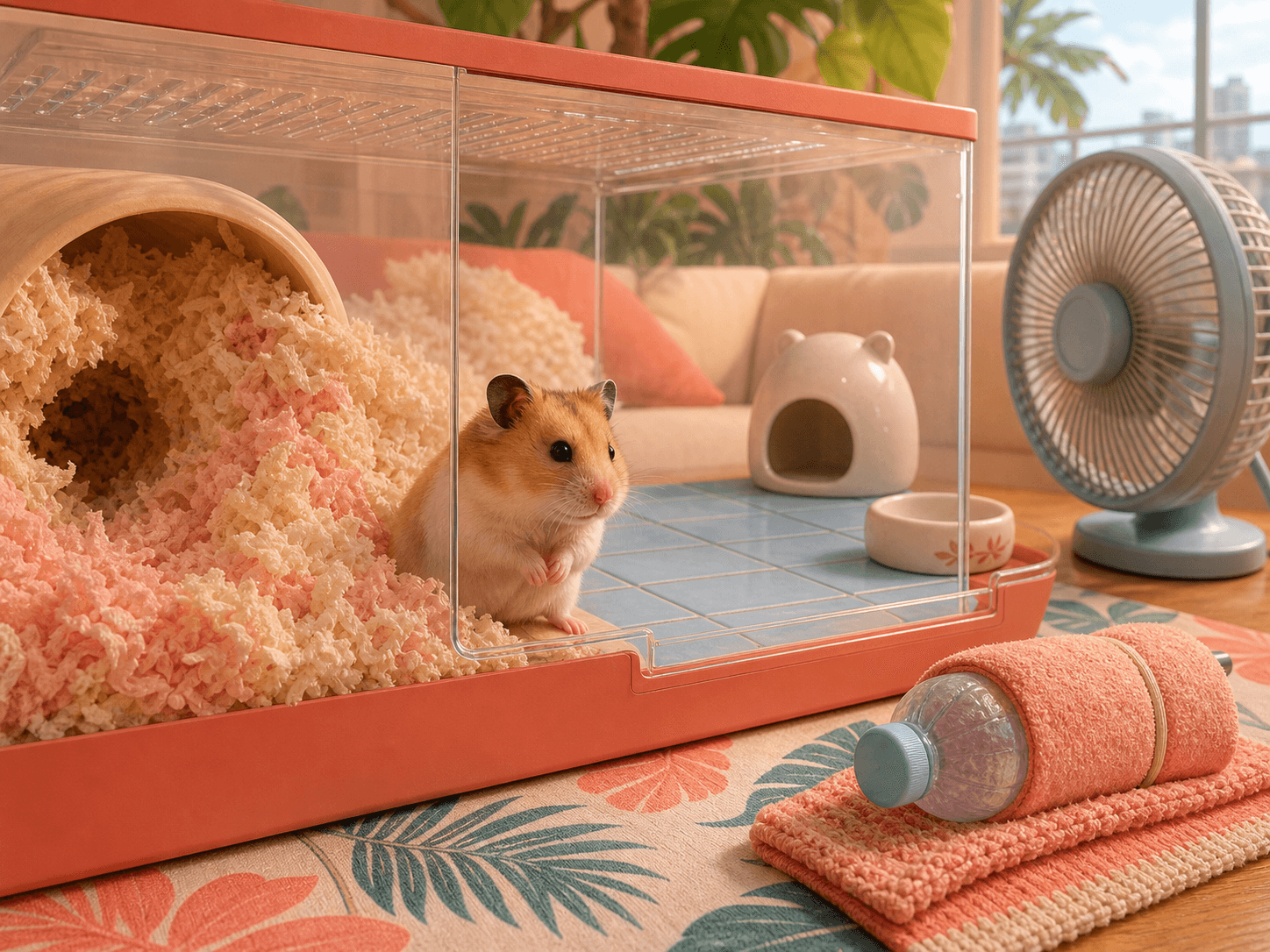
Put a room thermometer near the cage and check the actual enclosure area, not just the air-con display across the room. Pet-hamster comfort guidance generally sits around 18-24 C / 65-75 F. That is the number to watch in a hot flat.
Use airflow gently. A fan can move room air, but it should not blow straight into the cage as the main cooling plan. Aim for a stable, shaded, well-ventilated room, without drafts or direct sun. A cage beside a bright window, balcony door, warm kitchen wall, or stuffy service yard can heat up faster than the rest of the home.
Cooling should give the hamster choices. A ceramic tile, granite slab, or chilled-but-wrapped bottle can work as an optional cooler zone the hamster can leave. Do not turn the whole enclosure into one cold corner.
Check the water bottle or bowl at least daily. In humid kitchens and small flats, fresh food also spoils quickly, so remove fresh pieces before they turn soft or sour. Spot-clean wet bedding. Keep deep cleans regular, but do not strip every familiar scent at once; a completely scentless cage can be stressful.
A correctly sized, solid-surfaced wheel is still needed — at least 20 cm across for a dwarf and 30 cm for a Syrian (PDSA) — but it is not a substitute for floor space. Think of the wheel as one part of the room, not the whole apartment.
Materials worth being fussy about
Hamster-safe does not mean "small-pet themed" on the label. Choose plain, unscented bedding and nesting material. Rotate untreated, hamster-safe chew items without crowding the enclosure. Painted, scented, sharp, or unknown wood products are not worth the risk.
If you buy supplies from a pet shop, online marketplace, or rescue handover list, keep the packaging or a photo of the label. It is much easier to answer a vet's question later with a clear label than with "the brown bedding from the big bag".
Signs that need a vet, not more cage tweaks
If your hamster seems unwell, the practical answer is simple: talk to your vet now.
Contact a vet immediately if you see collapse, severe lethargy, rapid breathing, weakness, drooling, tremors, or unresponsiveness after heat exposure. Do not wait and monitor at home.
Call a vet now for wheezing, noisy breathing, persistent sneezing, or nasal discharge, especially if the cage area is humid, poorly ventilated, or the bedding may be damp.
Treat hunched posture or not eating as a vet call, not a "see how tomorrow goes" moment.
Bring the hamster in a secure, ventilated carrier. Also bring useful clues: photos of the enclosure, the bedding label, food and treat labels, temperature readings near the cage, your cleaning routine, and a short timeline of signs. That gives the vet a clearer view of possible housing, bedding, food, heat, or ventilation contributors without making them guess from a worried owner's memory.
Keep these details ready
Before the next bedding change, take three photos: the whole enclosure, the bedding depth from the side, and the thermometer reading near the cage. Save bedding and food labels in the same album. If a vet visit ever happens, those boring details will be more useful than a panicked attempt to describe the setup from memory.
— Manja