
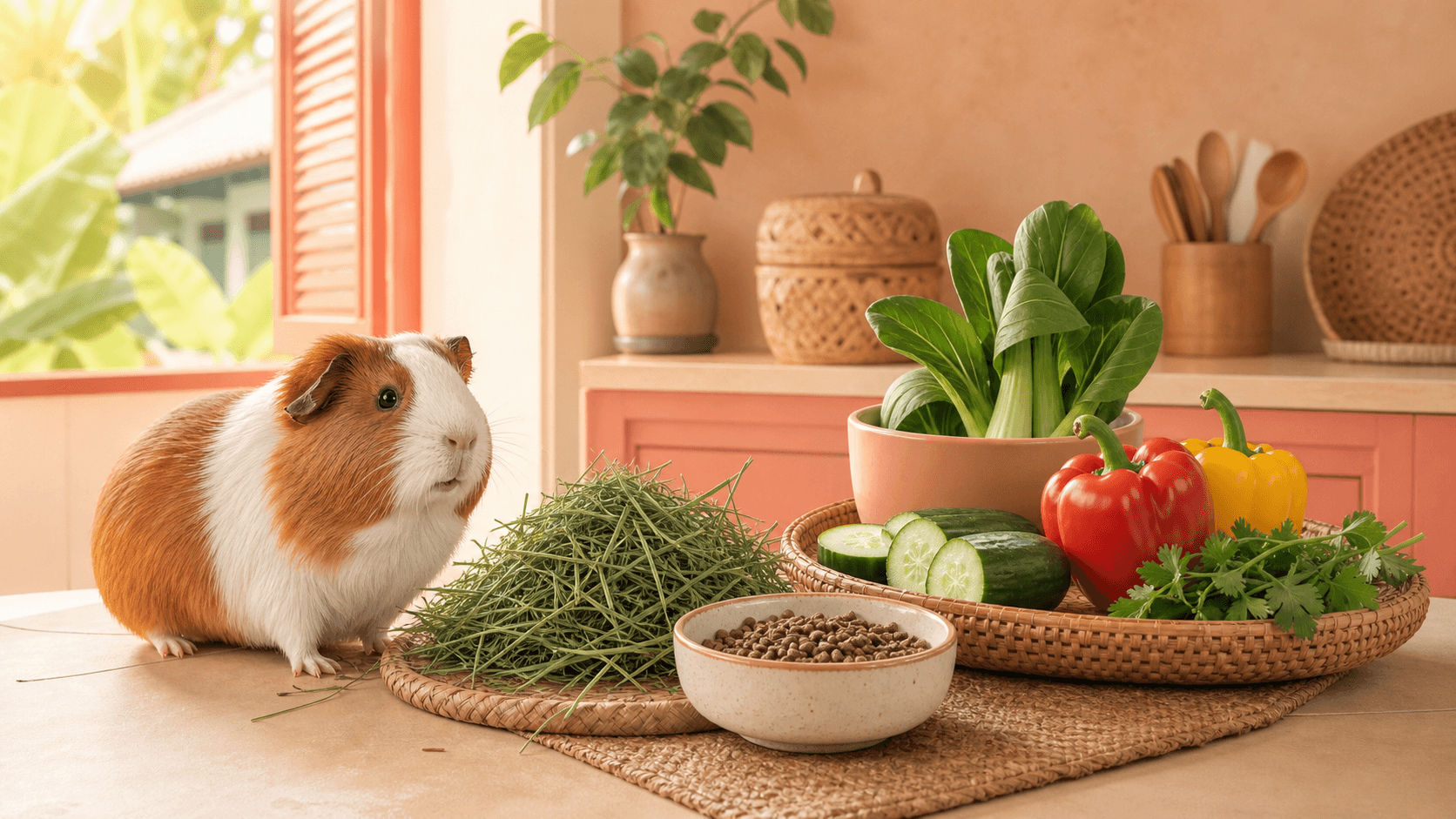
Guinea pig vitamin C is not a garnish topic. For SG, MY, and ID owners using wet-market greens, fridge leftovers, and familiar herbs, the job is simple: rotate fresh food carefully, keep hay central, and know when food planning stops being enough.
Why vitamin C needs a plan
Guinea pigs need vitamin C from their diet because they cannot make enough of it themselves. If intake falls short, deficiency can lead to scurvy. This is a guinea pig guide, not a rabbit, dog, or cat feeding shortcut.
How much do they actually need? The recognized baseline scales with body weight and life stage, so a healthy adult and a pregnant sow are not on the same number. These are reference standards to plan around — your exotics-aware vet sets the exact amount for your individual guinea pig.
| Life stage | Recognized vitamin C baseline | Source |
|---|---|---|
| Healthy adult (maintenance) | ~10–25 mg/kg per day (about 20–25 mg/day for a typical 1 kg pig) | MSD Vet Manual, PetMD |
| Growing, pregnant, nursing, or ill | 30 mg/kg or more per day (about 30–40 mg/day for a typical pig) | MSD Vet Manual, PetMD |
The MSD Veterinary Manual puts the adult requirement at "at least 10 milligrams (mg) of vitamin C per kilogram (kg) of body weight per day (pregnant females need 30 mg per kg per day)" (MSD Vet Manual).
In tropical homes, vitamin C planning takes more attention than many new owners expect. Vitamin C in pellets and produce can degrade with time, air, heat, light, moisture, and storage. A bag left open in a humid kitchen, or vegetables sitting too long in the fridge, may not be doing as much as you think. Guinea-pig pellets are usually fortified with vitamin C, but that vitamin C is unstable: a common recommendation is to use the bag within 90 days of its manufacture date, and pellets older than about 6 months may no longer meet the daily requirement (PetMD).
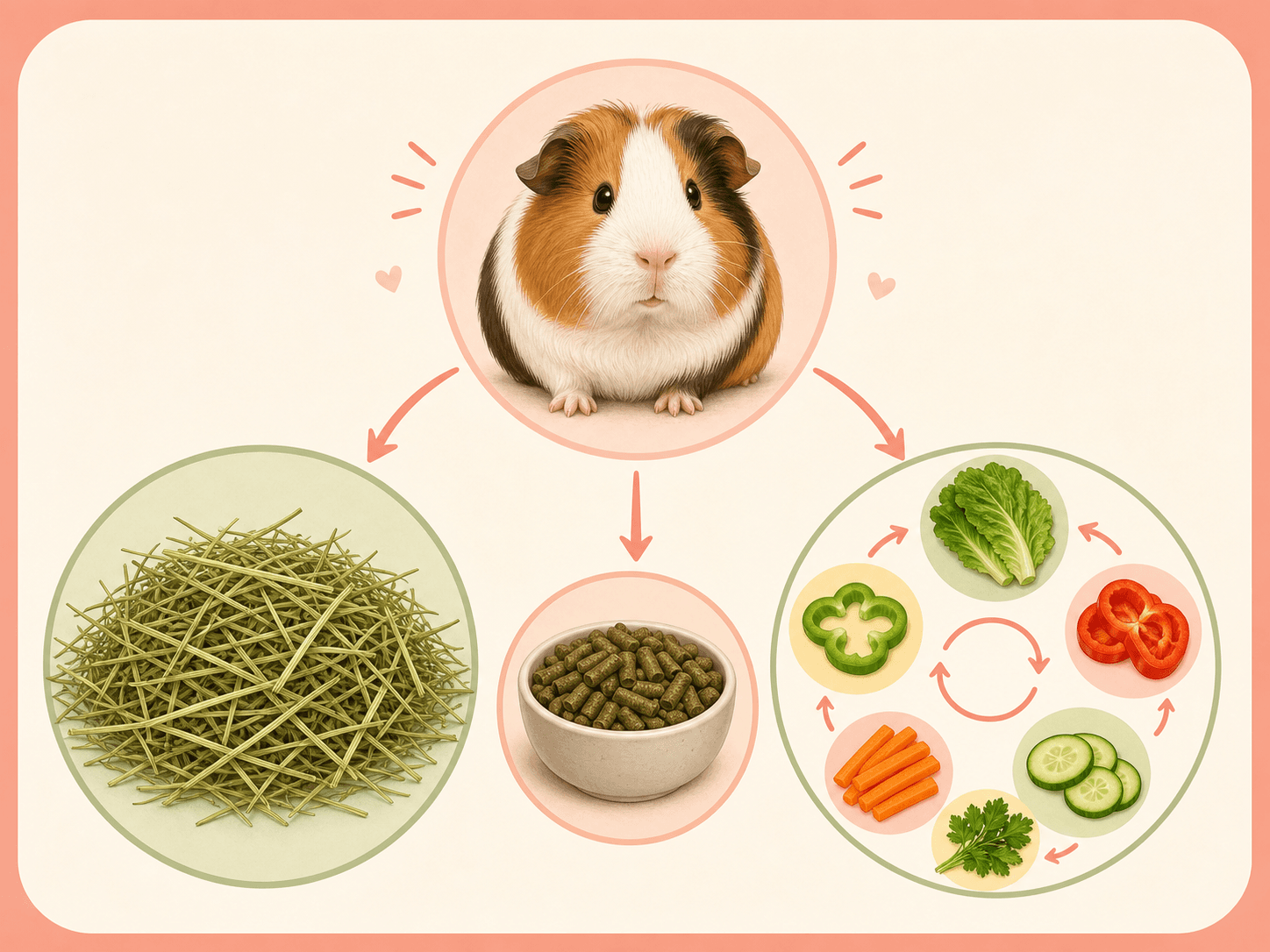
Keep the base conservative: unlimited grass hay, a measured guinea-pig-specific fortified pellet ration of roughly 1–2 teaspoons per day (commercial pellets should make up only about 5–10% of the diet), and daily fresh vegetables (MSD Vet Manual, RVC feeding factsheet). Vegetables support the diet. They do not replace hay. Bell pepper is a genuinely useful vitamin C contributor — raw red sweet pepper carries about 127.7 mg of vitamin C per 100 g and green sweet pepper about 80.4 mg per 100 g, so even a small slice meaningfully helps (USDA FoodData Central: red pepper, FDC 170108, USDA FoodData Central: green pepper, FDC 170427). Fresh parsley is higher still at about 133.0 mg per 100 g, but it is also high in calcium, so offer it sparingly rather than daily (USDA FoodData Central: parsley, FDC 170416, RVC feeding factsheet). One "good" vegetable should not become the whole plan.
Use this guide to prepare for an exotics-aware vet conversation, not to diagnose your guinea pig at home. Young, pregnant or nursing, elderly, unwell, recovering, not-eating, or suspected-deficient guinea pigs need more than a generic food rotation.
Signs that need attention
Vitamin C deficiency is not something to diagnose by staring into the food bowl. The warning signs are non-specific. They can point to vitamin C deficiency, or to other guinea pig illnesses that need veterinary diagnosis.
| What you notice | What to do |
|---|---|
| Poor appetite or refusal to eat | Treat it as a veterinary concern. Do not try to fix it with a new vegetable mix alone. |
| Lameness, weakness, or swollen, painful joints | Book an exotics-aware vet check. These signs can overlap with scurvy and other conditions. |
| Diarrhea or dental difficulty | Pause the guesswork. Diet changes alone are not a safe plan. |
| Poor wound healing or a poor coat | Ask the vet to assess the whole guinea pig, not just the food bowl. |
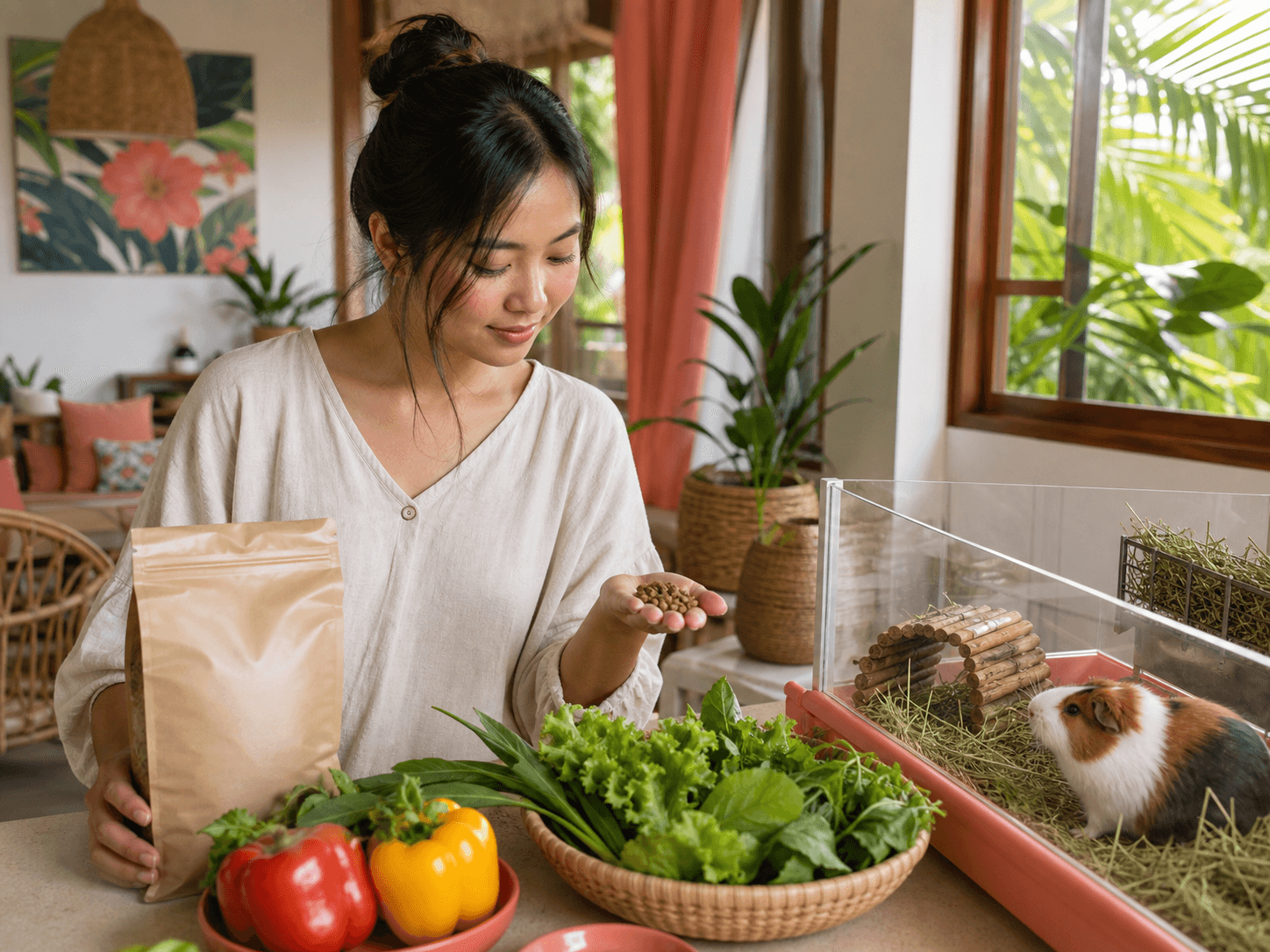
Build the home check into feeding. Refill the hay before the morning rush, offer the measured guinea-pig-specific pellets, add fresh vegetables, then watch the actual guinea pig: eating, moving normally, and handling food without obvious difficulty.
Be extra cautious with young, pregnant or nursing, elderly, unwell, recovering, not-eating, or suspected-deficient guinea pigs. They need exotics-aware veterinary guidance, especially before any vitamin C rescue plan or supplement decision.
When to see a vet
Poor appetite, refusal to eat, lameness, swollen or painful joints, weakness, diarrhea, dental difficulty, or poor wound healing are not "try a new vegetable" problems. They are vet problems. These signs can happen with vitamin C deficiency, but they can also reflect other guinea pig illnesses that need veterinary diagnosis.
Call your vet now if your guinea pig is not eating, looks weak, has diarrhea, seems painful when moving, struggles to chew, or has a wound that is not healing well. Do not wait for a food rotation to fix it. Guinea pigs need a continuous dietary source of vitamin C, but suspected deficiency or scurvy is not a home project.
Do not build a rescue plan from a generic vegetable list, supplement label, or online thread. Ask for an exotics-aware vet. Bring the pellet bag, a list of fresh foods, storage habits, any vitamin C product used, and a simple note of what changed: appetite, droppings, movement, chewing, and wound healing.
Tonight, check whether your guinea pig is eating hay normally and moving comfortably. If either answer is no, call your vet instead of changing the menu again.
— Manja