
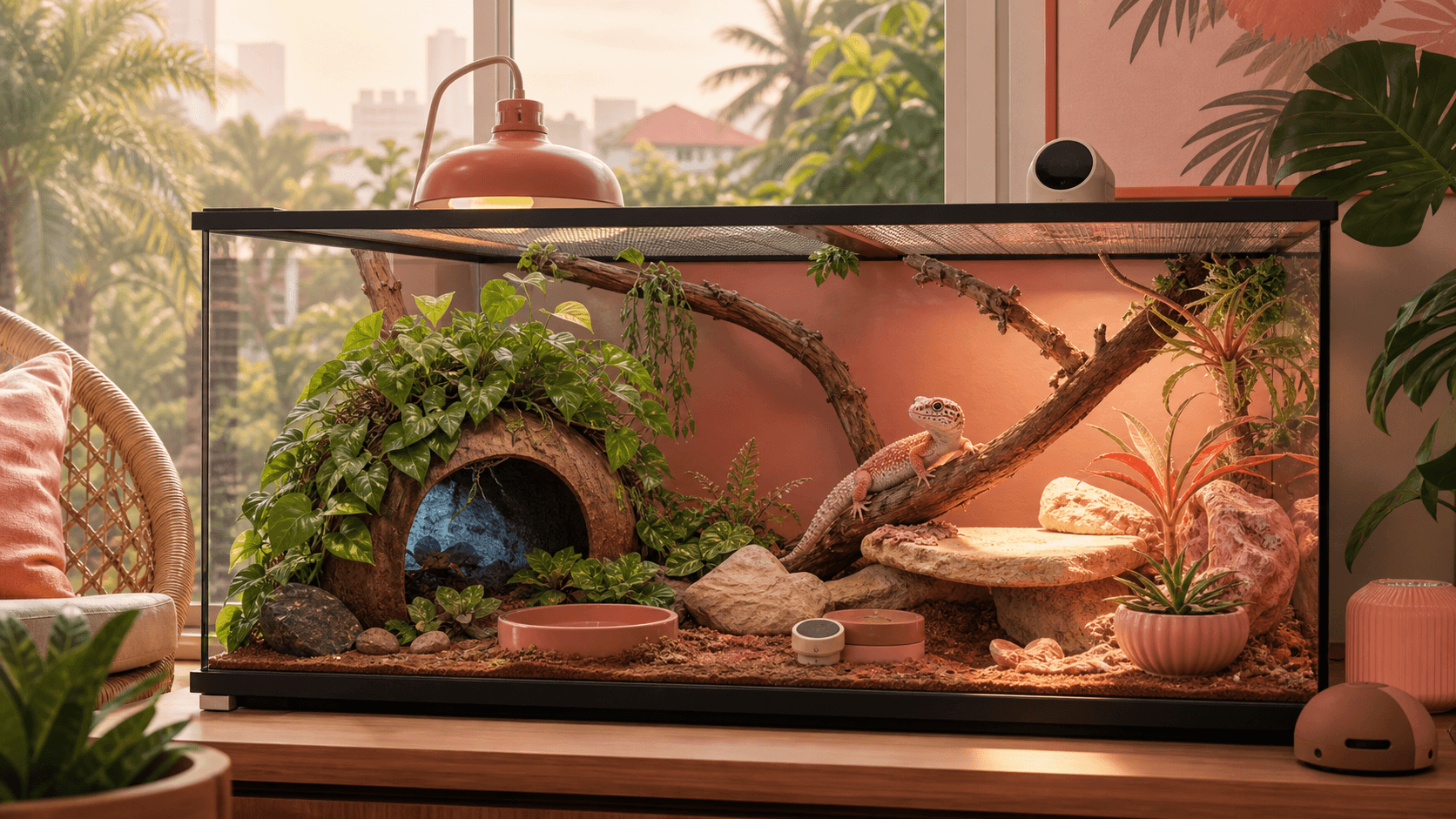
A gecko tank beside an air-con wall, a sunny window, or a humid kitchen shelf can all look "tropical" from the outside and still be wrong inside. Your gecko does not live in Singapore weather. It lives in the small climate you build around it.
That means measured heat, species-appropriate humidity, proper hides, feeding that matches the species, and supplement questions handled carefully before small husbandry gaps become illness.
Start With The Species, Then The Tank
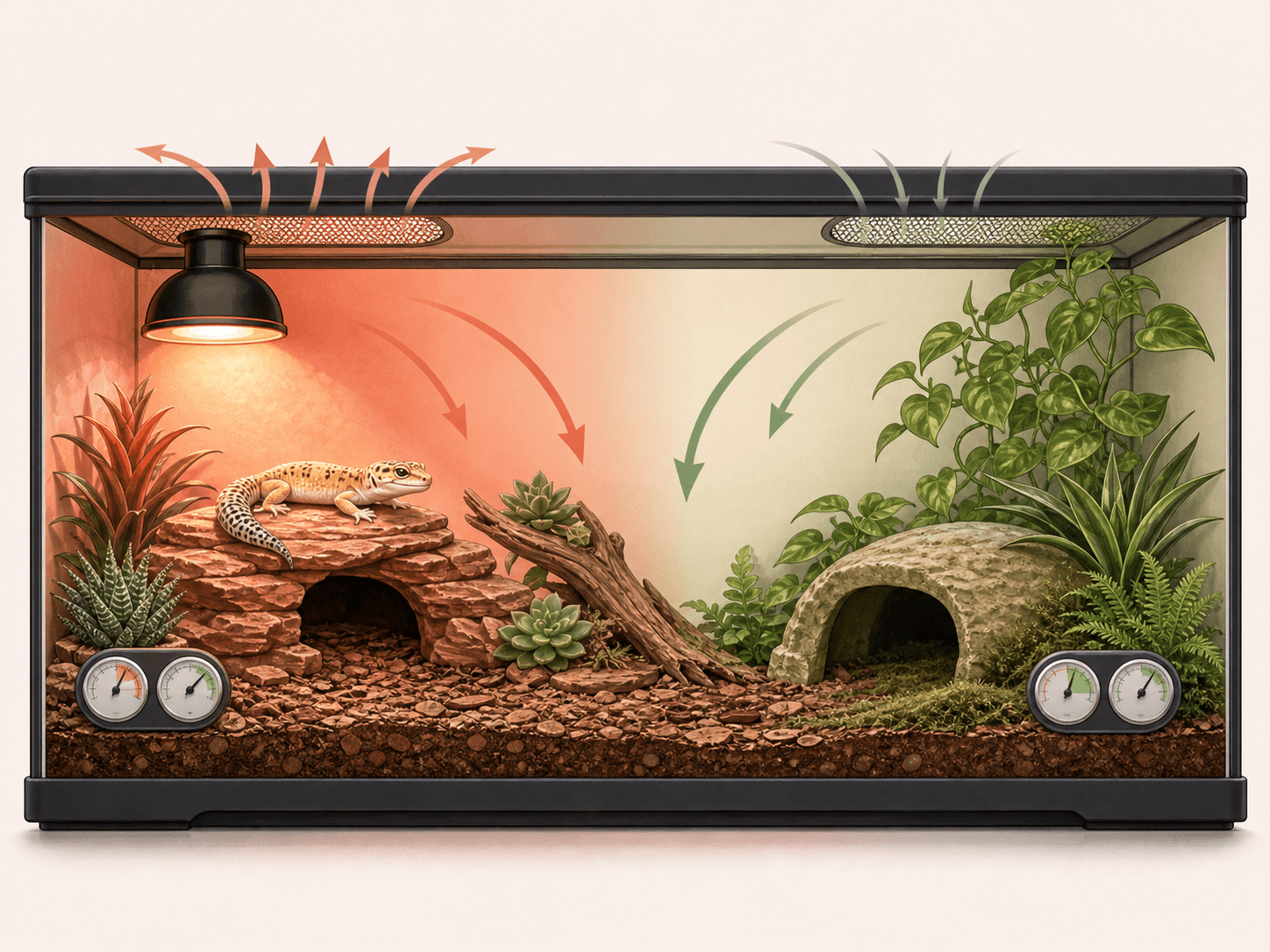
A leopard gecko, crested gecko, and common house gecko should not be managed as interchangeable small lizards. They want different temperatures, different humidity, and different food — so the first job is to confirm which species you actually have, then build to that species' numbers.
Leopard geckos generally need a clear warm-to-cool gradient, suitable hides, insect-based feeding, and shedding support such as a humid hide. Crested geckos are different: cooler, more humid, and easily overheated, so the answer is rarely "make it hotter." Common house geckos need species confirmation first; they are insectivorous and should not be treated as fruit-eating or crested-gecko-diet geckos by default.
"It is warm in Singapore" is not a care plan. Air-conditioning, closed bedrooms, afternoon sun through glass, poor ventilation, and tank placement can still push the enclosure into unsafe temperature or humidity conditions.
Manja can help you prepare better questions, but individual diagnosis belongs with your vet.
Measure The Mini-Climate
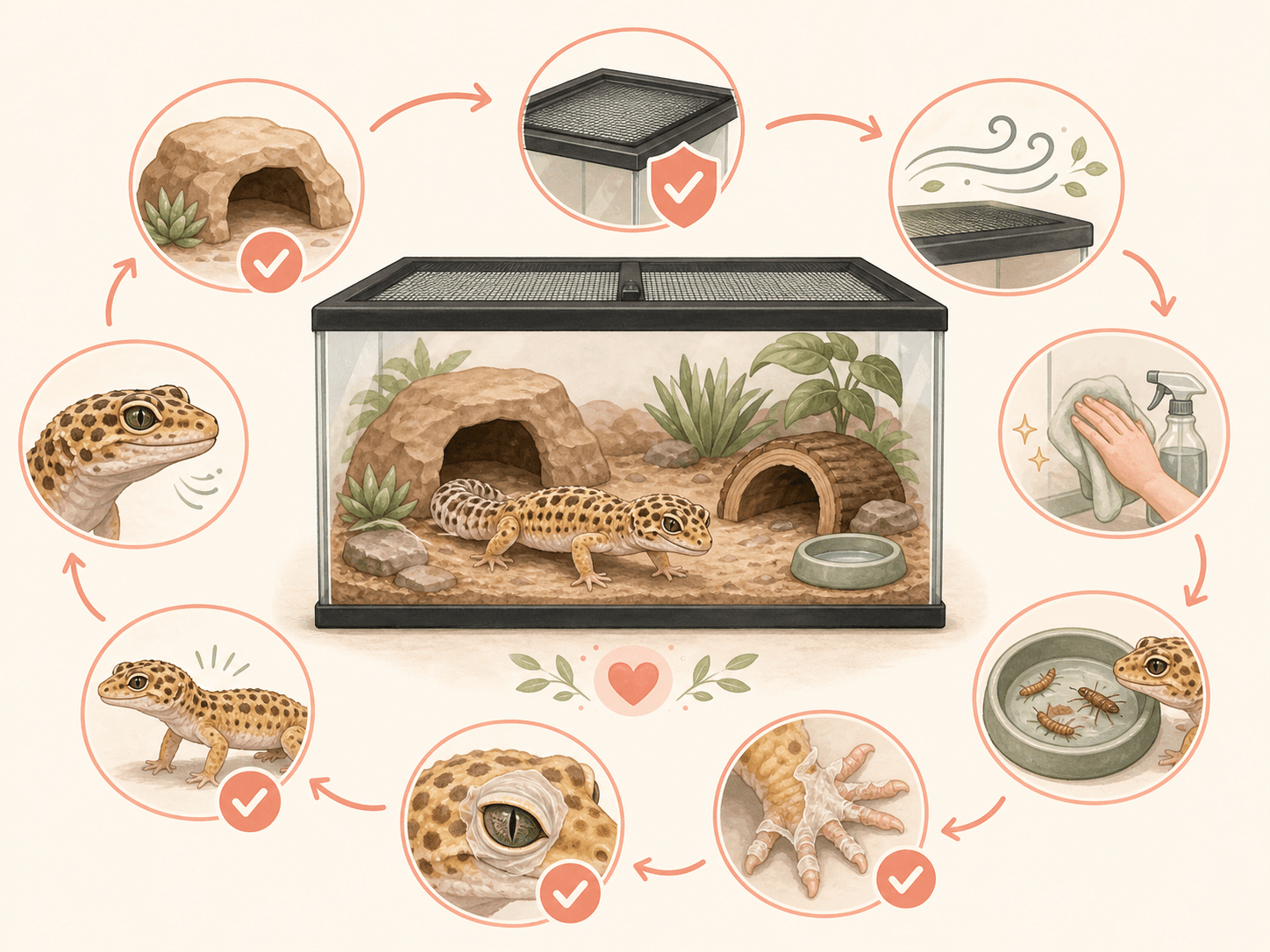
Treat the enclosure like a small weather system. Measure the enclosure itself, including warmer and cooler areas, rather than trusting the room temperature. In tropical homes, the same tank can behave differently after a night of air-con, a closed afternoon, or a move from the living room to a bedroom shelf.
These are the recognized baselines by species. They are targets to measure against with a thermometer and hygrometer, not numbers to assume — and your vet adjusts for the individual animal.
| Species | Warm/basking zone | Cool side (ambient) | Night minimum | Ambient humidity | Humid-hide / dry-down |
|---|---|---|---|---|---|
| Leopard gecko | Basking zone 28–30°C, warm basking surface 34–36°C (RSPCA; ReptiFiles/Zen) | 24–26°C (RSPCA) / 21–25°C (ReptiFiles/Zen) | Add heat if the room drops below 18°C (RSPCA) | 30–40% (RSPCA) | Humid hide 70–80% (ReptiFiles/Zen) |
| Crested gecko | Top/basking 28–29°C (ReptiFiles/Zen) | 21–24°C (ReptiFiles/Zen) | 18–22°C; avoid sustained heat over ~29–30°C (ReptiFiles/Zen) | 60–80% (ReptiFiles/Zen; PetMD) | Let it dry to ~40–50% before misting again (ReptiFiles/Zen) |
| Common house gecko | Warm side ~29–32°C / 85–90°F (Dial a Vet) | ~24–27°C / 75–80°F (Dial a Vet) | — | 50–70% (Dial a Vet) | Mist regularly, especially in the evening (Dial a Vet) |
Two reading notes. First, "basking zone" is the air temperature where the gecko sits; the basking surface under the lamp reads warmer — that is why the leopard gecko shows two numbers. Second, humidity is not "mist more." It is species-appropriate humidity, ventilation, sanitation, and microhabitats working together. If shed problems keep returning, more spray is not automatically safer — a damp, poorly ventilated enclosure can create a different problem.
Lighting and space, by recognized baseline:
- UVB. Where UVB is used, vet guidance is to keep the tube close to the animal — under 30 cm (12 inches) — and to replace fluorescent tubes every 9–12 months even while they still glow, because UVB output fades (MSD Veterinary Manual). For leopard geckos the RSPCA gives a basking-zone target of about UVI 0.7 from a 2–5% UVB tube covering one-half to one-third of the enclosure, on a 12-hours-on / 12-hours-off cycle (RSPCA). ReptiFiles/Zen's leopard setup uses an 18–22" T5 HO 6% UVB tube with the gecko getting no closer than 10" to it (ReptiFiles/Zen).
- Minimum footprint. Leopard geckos are ground-dwellers, so floor space matters most: a recommended minimum of about 120 × 60 × 40 cm (48 × 24 × 16") (ReptiFiles/Zen). Crested geckos climb, so height matters: a minimum of roughly 60 × 60 × 60 cm (24 × 24 × 24") for an adult (ReptiFiles/Zen).
Check these basics before changing products:
- Is the species confirmed?
- Are warmer and cooler areas measured inside the enclosure?
- Is humidity being measured, not guessed?
- Does the gecko have appropriate hides, including shedding support such as a humid hide where relevant?
- Is the tank away from harsh sun, direct air-con blast, and damp storage areas?
- Is waste removed promptly in a humid home where mould and insects can move fast?
Feed The Gecko You Actually Have
Feeding should follow the species, not whatever worked for another owner online. Leopard geckos and common house geckos eat insects; crested geckos eat mostly a formulated diet plus some insects.
| Species | Diet | Adult feeding frequency | Juvenile feeding | Portion / prey size |
|---|---|---|---|---|
| Leopard gecko | Gut-loaded insects, dusted with calcium (ReptiFiles/Zen) | About every 5 days for adults (ReptiFiles/Zen) | Daily (ReptiFiles/Zen) | 2 appropriately-sized bugs per 1" (2.5 cm) of the gecko's length (ReptiFiles/Zen) |
| Crested gecko | Complete powdered crested-gecko diet, plus gut-loaded insects (PetMD) | Powdered diet daily; insects 1–2× per week (PetMD) | Powdered diet daily; insects 1–2× per week (PetMD) | About 5–10 crickets or 3–4 worms per insect feeding (PetMD) |
| Common house gecko | Small live insects (insectivore) (Dial a Vet) | 3–5 small insects every other day (Dial a Vet) | Generally fed more often than adults; confirm with your vet (Dial a Vet) | Small prey such as pinhead crickets and small roaches (Dial a Vet) |
The "crested-gecko diet" in that table means a nutritionally complete powdered food formulated for the species — for example, a commercial crested gecko diet such as Repashy or Pangea (PetMD). It is mixed with water into a paste; it is not the same as the insect-only feeding a leopard or house gecko needs, which is exactly why species confirmation comes first.
For vet prep, write down what the gecko eats, what insects or formulated diet are used, whether feeders are gut-loaded, and whether calcium or vitamin products are being dusted. Include the brand or product name if you use one.
Calcium, vitamin D3, UVB exposure, calcium-phosphorus balance, diet, and broader husbandry all interact in metabolic bone disease risk. Use this to prepare for the vet conversation, not to diagnose your gecko at home. Juvenile, senior, gravid, chronically ill, medicated, debilitated, or already unwell geckos need reptile-vet guidance before supplement or feeding changes.
Stop Tweaking When The Gecko Looks Unwell
Some signs should move the plan from "adjust the setup" to "call a reptile vet." Call a reptile vet when a gecko stops eating persistently, loses weight, becomes unusually lethargic, has abnormal droppings, struggles to breathe, trembles, seems weak, develops swelling, shows mouth changes, or keeps getting stuck shed.
Stuck shed around toes or eyes is not a cute sock problem. It can become a health concern.
If your gecko might be unwell, the answer is not more powder, more misting, or one more enclosure experiment. Bring your setup notes to the vet conversation instead.
What To Bring To The Vet Conversation
Have the practical details ready: the species, if you know it; temperature and humidity notes; enclosure layout; hide setup; feeding routine; feeder insect details; supplements; UVB setup; and recent changes.
A short log helps more than a polished story. Record what your gecko ate, whether it shed, what the droppings looked like, and where it spent most of the evening in the enclosure. If you are in a multi-pet home, note whether anyone else could have stressed the enclosure area, knocked equipment, or changed the room routine.
One useful question to ask: "Could any part of the heat, UVB, supplement, or feeding setup be contributing to this?"
— Manja