
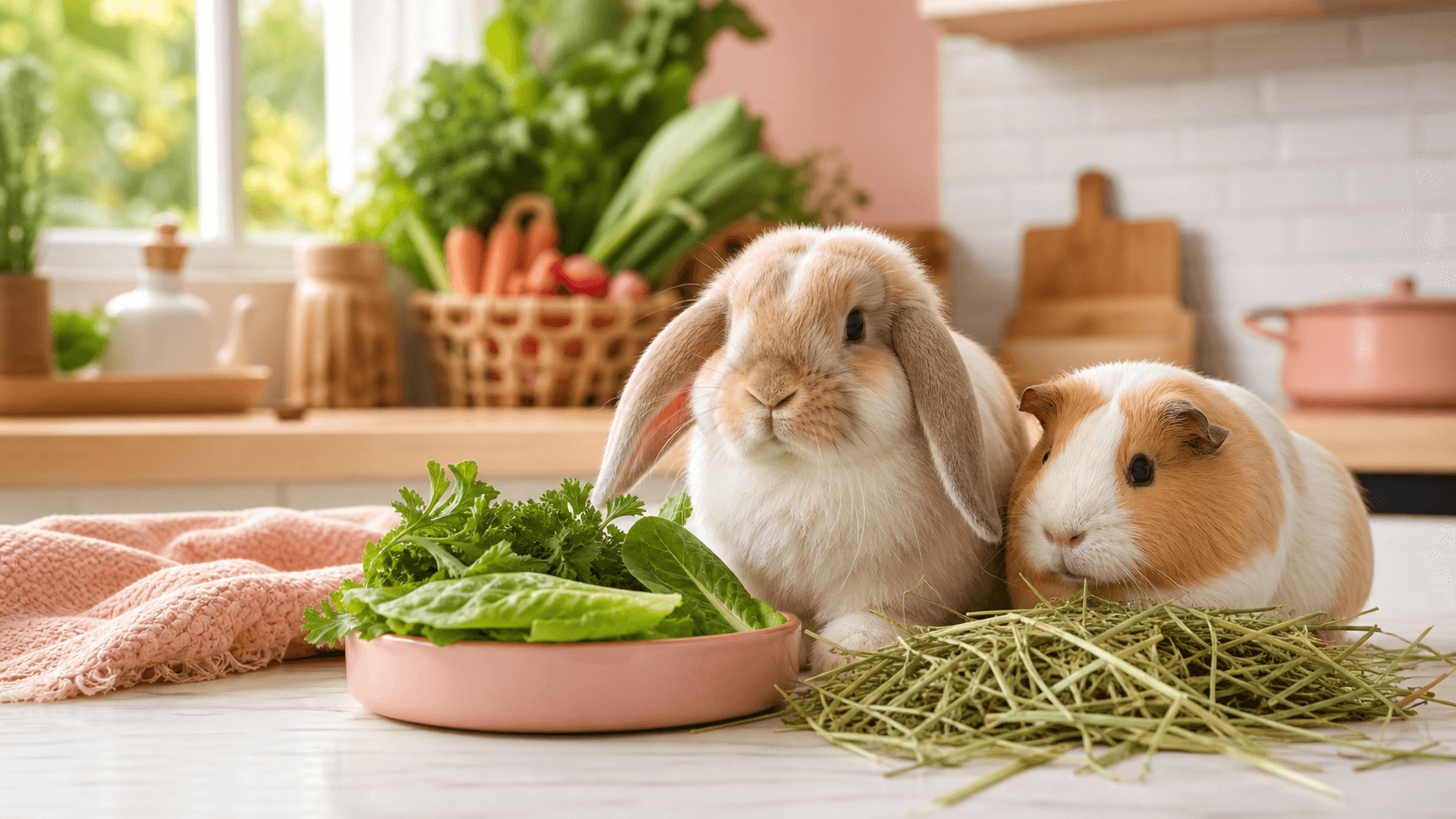
Fresh greens are a side dish, not the main meal: keep hay unlimited, portion the greens, and throw away anything slimy, mouldy, or off-smelling before it reaches the bowl.
Use this guide for safer daily feeding habits, and ask your vet for individual advice if your rabbit or guinea pig has appetite, stool, weight, or illness concerns.
Hay stays first, greens come after
Adult rabbits and guinea pigs both need unlimited grass hay as the daily base. Greens sit beside that hay. They do not replace it.
For adult rabbits, fresh leafy greens are commonly portioned at about 1 packed cup per 2 lb / 0.9 kg body weight per day, introduced gradually (Suggested Vegetables and Fruits for a Rabbit Diet, Feeding Your Rabbit). For adult guinea pigs, the common daily target is about 1 cup / 240 ml fresh vegetables per guinea pig per day, with unlimited grass hay and a measured fortified pellet portion (Feeding Guinea Pigs, What Should I Feed My Guinea Pigs?).
Guinea pigs have one extra rule. They need a reliable daily source of vitamin C because they cannot make enough themselves. Maintenance needs are commonly cited around 10 mg/kg/day, with higher needs during pregnancy, growth, illness, or deficiency risk needing veterinary direction (Nutrition in Guinea Pigs, Feeding Guinea Pigs).
| Animal | Daily base | Fresh greens / vegetables |
|---|---|---|
| Adult rabbit | Unlimited grass hay | About 1 packed cup greens per 2 lb / 0.9 kg body weight per day |
| Adult guinea pig | Unlimited grass hay, plus measured fortified pellets | About 1 cup / 240 ml fresh vegetables per guinea pig per day |
| Guinea pig vitamin C | Daily dietary source needed | Maintenance commonly cited around 10 mg/kg/day |
Buy crisp leaves and reject spoilage early
Pick greens that look fresh at the start. Crisp leaves are the goal. Avoid produce with visible mould, slime, rot, off smell, or extensive bruising.
Do not trim a mouldy or slimy patch and feed the rest. Discard the spoiled produce. General produce safety guidance also advises choosing produce that is not bruised or damaged, and discarding perishable food exposed to unsafe conditions (Selecting and Serving Produce Safely, Food Safety During Power Outage).
This is where a small daily check helps. Open the bag or bundle. Look at the stem ends. Smell the leaves. Feel for slime. If the greens fail that check, they do not go into the bowl.
| Check | Feed? | Owner action |
|---|---|---|
| Crisp leaves, no off smell | Yes | Wash, dry, portion, then feed |
| Visibly dirty outer leaves | Maybe | Remove outer leaves, then rinse under clean running water |
| Mould, slime, rot, off smell | No | Discard the produce |
| Extensive bruising or damage | No | Choose a fresher bundle next time |
Wash, dry, and keep moisture under control
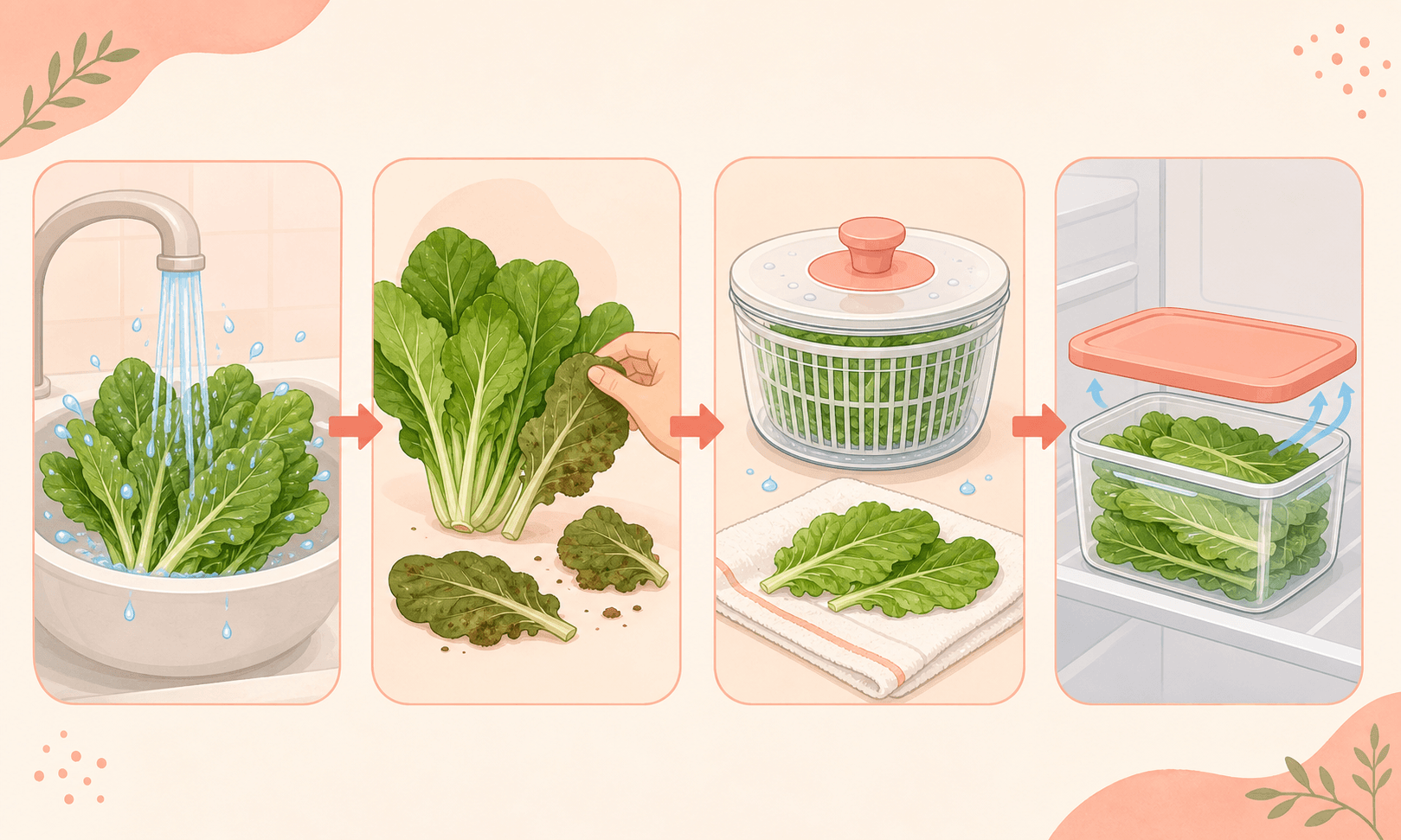
Rinse leafy greens under clean running water before feeding. Remove visibly dirty outer leaves. After washing, dry the greens with clean towels or a salad spinner before refrigerated storage (Safer Food Choices: Fruits and Vegetables, Selecting and Serving Produce Safely).
The drying step matters. Wet leaves stored in a closed container can stay too damp. The source bundle does not give a local cold-storage lifespan for washed greens in tropical homes, so do not stretch the batch by guesswork. Prepare a modest amount, keep it cold, and check it again before feeding.
Hot kitchens need tighter timing. General produce safety guidance uses a 2-hour room-temperature limit for cut, peeled, or cooked produce, or 1 hour when ambient temperature is above 90°F / 32°C (Selecting and Serving Produce Safely, Safer Food Choices: Fruits and Vegetables). For small pets, that means the washed portion should not sit beside the sink all afternoon.
| Step | Do this |
|---|---|
| Before feeding | Rinse under clean running water |
| If leaves look dirty | Remove visibly dirty outer leaves |
| Before storage | Dry with clean towels or a salad spinner |
| After cutting or washing for later | Refrigerate promptly |
| If the room is above 90°F / 32°C | Keep room-temperature time within 1 hour |
Rotate slowly, one green at a time
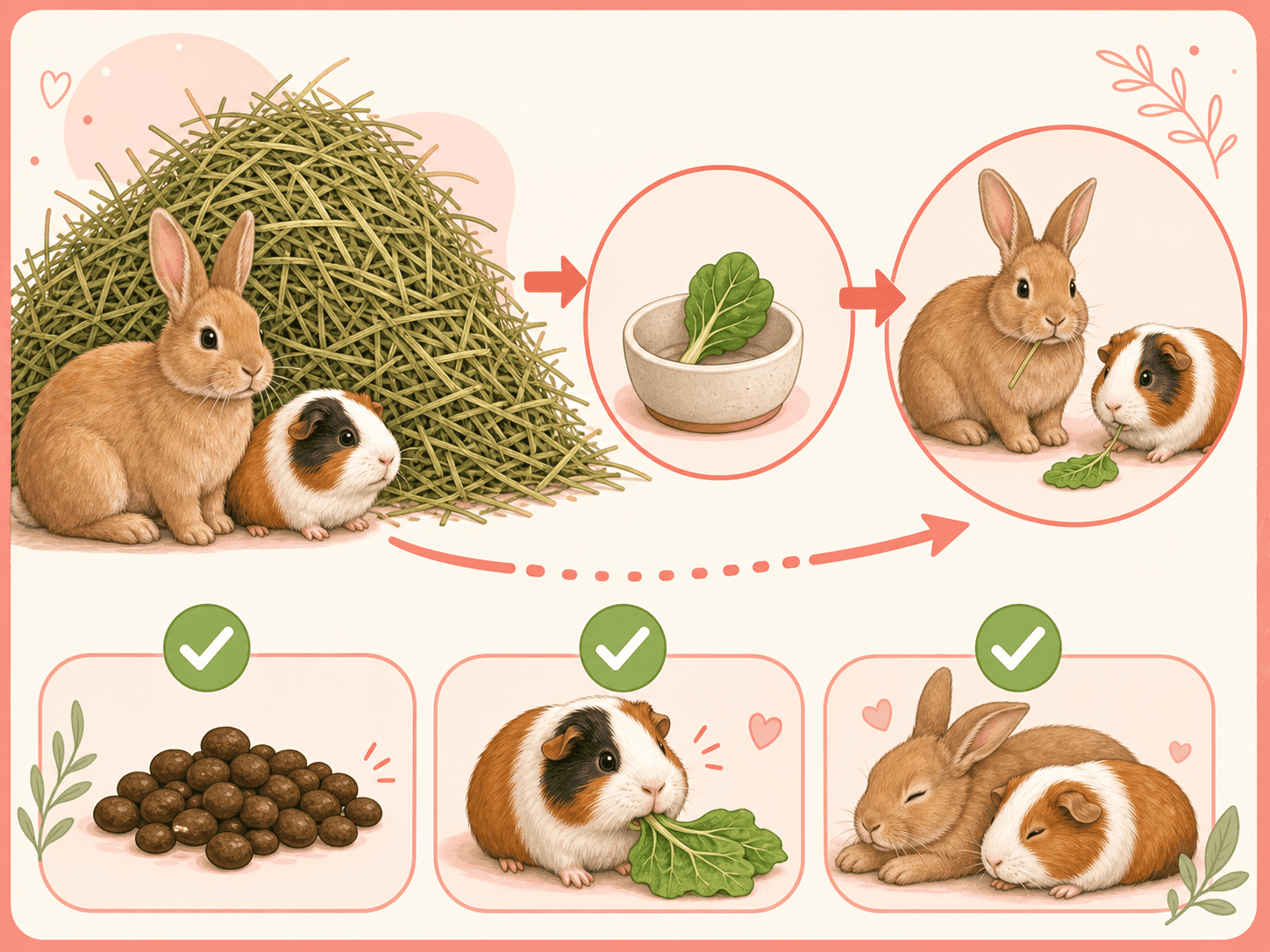
New greens should enter the routine one at a time. Start small. Watch stool, appetite, and behaviour before adding the next item.
Sudden diet changes or large amounts of unfamiliar greens can disturb digestion in both rabbits and guinea pigs (Feeding Your Rabbit, Feeding Guinea Pigs). This is not a reason to avoid greens. It is a reason to build the habit properly.
A simple rhythm works:
- Keep hay unchanged.
- Add one new green in a small amount.
- Watch stool, appetite, and behaviour.
- Keep the green if the animal stays normal.
- Pause the new item if stool, appetite, or behaviour changes.
Some greens are better as rotation items than unlimited staples. The bundle flags high-calcium greens, very watery greens, and strongly cruciferous vegetables as items that may need moderation depending on the individual rabbit or guinea pig (Suggested Vegetables and Fruits for a Rabbit Diet, What Should I Feed My Guinea Pigs?).
What changed and why
The old habit was to treat “fresh vegetables” as one broad category. The better habit is to separate the job into three parts: hay first, measured greens second, spoilage checks every time.
That shift matters because rabbits and guinea pigs have different needs. Rabbits have a weight-based greens portion in the bundle. Guinea pigs have a per-animal vegetable guide and a daily vitamin C requirement. Both need slow changes. Both need fresh, clean produce.
So the practical rule is boring, and useful: buy crisp leaves, wash under running water, dry before storage, refrigerate promptly, and rotate slowly. Small thing, done daily.
Tonight, check the greens before you feed them, measure the portion once, and make hay the part of the bowl that never runs out.
— Manja