
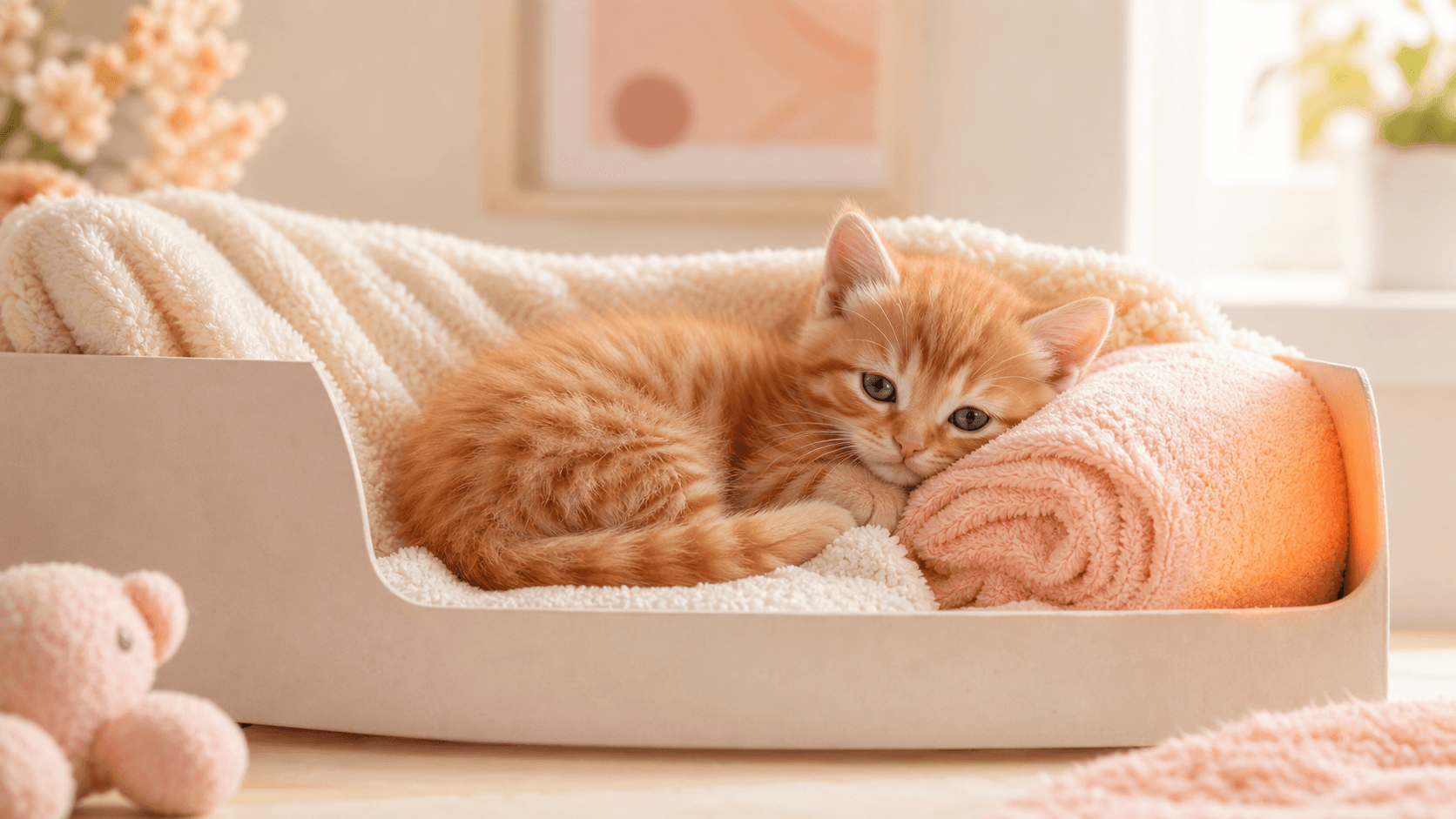
A foster kitten handover often happens in a hurry: a damp cardboard box, a few phone photos, a rescue chat full of updates, then a lift ride home with tiny voices inside. Before anyone gets a cuddle on the sofa, the kittens need one boring thing first: a quarantine room that is easy to clean and hard to escape.
For Singapore, Malaysia, and Indonesia homes, that usually means a bathroom, tiled service yard, or spare room with a closed door. The aim is simple: protect fragile kittens from infections they may already be incubating, and protect every other cat in the home from what you cannot see yet.
Manja offers practical editorial guidance for foster carers, but this is not a diagnosis. For sick, very young, or rapidly declining kittens, follow your rescue coordinator or veterinarian’s instructions.
Build the quarantine room before opening the carrier
Keep new foster kittens isolated in a dedicated quarantine space for a minimum of 14 days. Kittens have immature immune systems and may lack protection against highly contagious pathogens such as feline panleukopenia virus (FPV), so the first two weeks are not just a settling-in period.
Choose a room with tile or vinyl flooring. Bathrooms and tiled yards work better than bedrooms with rugs, fabric storage boxes, or floor mats. Porous materials are difficult to disinfect properly and can hold on to fungal spores and viruses.
Humidity matters too. In our climate, moisture can help Microsporum canis ringworm spores persist, especially in a small utility room with wet laundry nearby. Keep the space ventilated, run a dehumidifier if the room stays damp, and remove towels or bedding that cannot be washed hot and dried thoroughly.
Secure windows and balcony access before the kittens arrive. High-rise syndrome is a real risk. Fit mesh screens or metal grilles with gaps no wider than 2 cm, because small kittens can push through spaces that look impossible from adult-cat logic.
Use a disinfectant that actually works for the pathogens you are worried about. Standard household cleaners and botanical sprays do not kill FPV. Use diluted household bleach (sodium hypochlorite at a 1:32 dilution) or potassium peroxymonosulfate, such as Virkon, according to product directions. Keep cleaning supplies just outside the room so you are not walking wet paws, litter dust, or formula spills through the flat.
Create a small barrier routine at the door. A dedicated oversized T-shirt, washable slippers, and a covered bin are enough for most apartment setups. Put them on before handling the kittens; take them off before going back to your resident cats, kitchen, or bedroom. It feels fussy for about two days, then it becomes muscle memory.
Feed warm kittens, not cold ones
For orphaned kittens under 4 weeks old, the nesting box temperature is not a comfort detail. Neonates cannot regulate their own body temperature. If their body temperature drops below 34.4°C (94°F), gut motility can slow or stop. Feeding a cold kitten can leave milk sitting in the stomach, where it may ferment and trigger a dangerous digestive shutdown.
Keep the nesting box at 29.4°C to 32.2°C (85°F to 90°F) with a pet-safe heating pad wrapped in towels. Leave a cooler side so the kittens can crawl away if they get too warm. In air-conditioned flats, check the box after the room has been cool for a while, not only when you first set it up.
Never feed cow's milk. The high lactose content can cause severe, watery diarrhea, and small kittens can become dangerously dehydrated within hours. Use only approved commercial kitten milk replacer (KMR), and discard any reconstituted formula after 24 hours in the fridge.
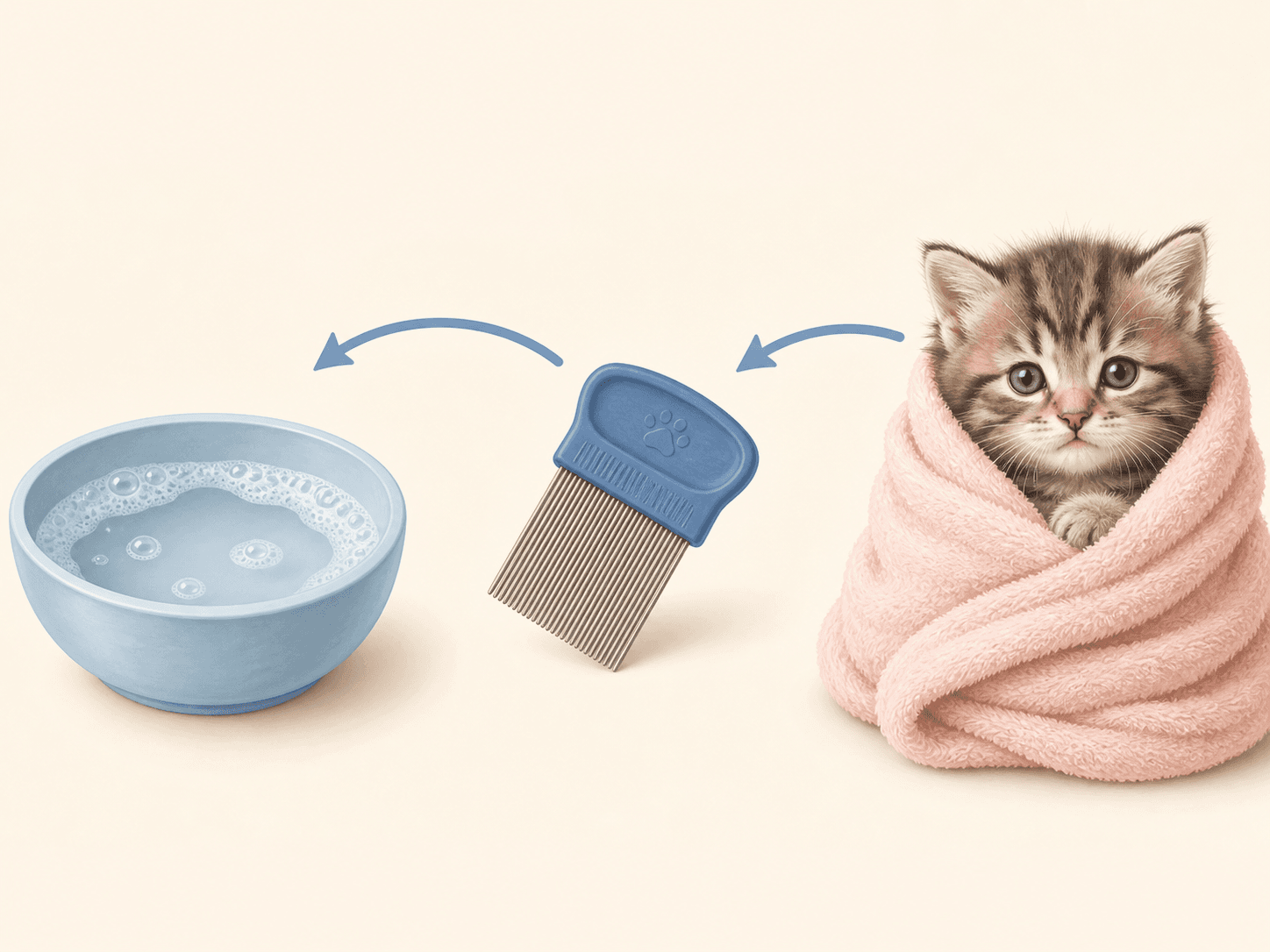
Do not use commercial spot-on flea treatments on very young kittens. Spot-on chemical treatments, such as fipronil or selamectin, can be highly toxic to kittens under 8 weeks old or under 1 kg. Use a fine-toothed flea comb and, if needed, a warm soapy bath to remove fleas mechanically. Dry the kitten immediately with a hairdryer on the lowest warm setting so they do not chill.
After every feed, kittens under 4 weeks old need help to urinate and pass stool. Gently rub the genital and anal area in a circular motion with a warm, damp cotton ball or tissue. Then clean and sterilize bottles, teats, and syringes in boiling water after every feeding session; in a warm kitchen, milk residue turns nasty fast.
Red flags that cannot wait
Kittens have almost no reserves. A kitten can move from slightly quiet to critical within a couple of hours, so do not wait to see if they bounce back the next morning.
Contact your rescue coordinator or take the kittens to a veterinary clinic immediately if you see any of these signs:
- Hypothermia: A kitten that feels cool to the touch, limp, or unresponsive. Warm them up slowly against your skin before transport; never force fluids or formula into a cold or groggy kitten.
- Refusal to feed: Skipping even a single scheduled feed for neonates, or refusing food for more than 4 to 6 hours in weaned kittens.
- Vomiting: Any active vomiting of milk, water, or bile.
- Severe diarrhea: Liquid, watery, or bloody stools. This causes rapid, fatal dehydration.
- Extreme lethargy: A kitten that does not wake up for feeds, cannot hold its head up, or feels floppy.
Do not attempt to self-diagnose, use leftover antibiotics from previous foster litters, or apply home remedies. If you need to go to the clinic, pack the kittens in a carrier with a warm hot-water bottle wrapped in a towel, and bring your tracking notes.
Keep the handover notes useful
A rescue chat can move quickly, especially when several fosterers are covering a litter. Keep one physical notebook or clipboard by the nesting box so the important details do not disappear between messages.
Record each kitten separately, twice a day:
- Exact weight in grams: Weigh at the same times daily, before feeding, with a digital kitchen scale. A healthy kitten should gain 10 to 15 grams per day. Constant weight or weight loss is an early warning of disease.
- Feeding volume: Write down the exact mL of formula or grams of wet food eaten, not just “fed well”.
- Stool consistency: Use plain labels such as firm, soft, mushy, or watery so changes are easy to spot.
If the kittens need a vet visit, bring the notebook, the formula brand, any medication or supplement already given, and the rescue handover details. A few clear numbers can save the clinic from guessing.
— Manja