

The dangerous flea mistake is not usually forgetting to clean the sofa. It is reaching for the nearest bottle and assuming the dog, cat, and rabbit can all share it.
In a mixed-pet home, flea control has two jobs: treat each animal safely, and break the flea cycle in the home. Use this as a preparation guide for your vet conversation, not as a way to diagnose or medicate your pet at home.
One household, different species
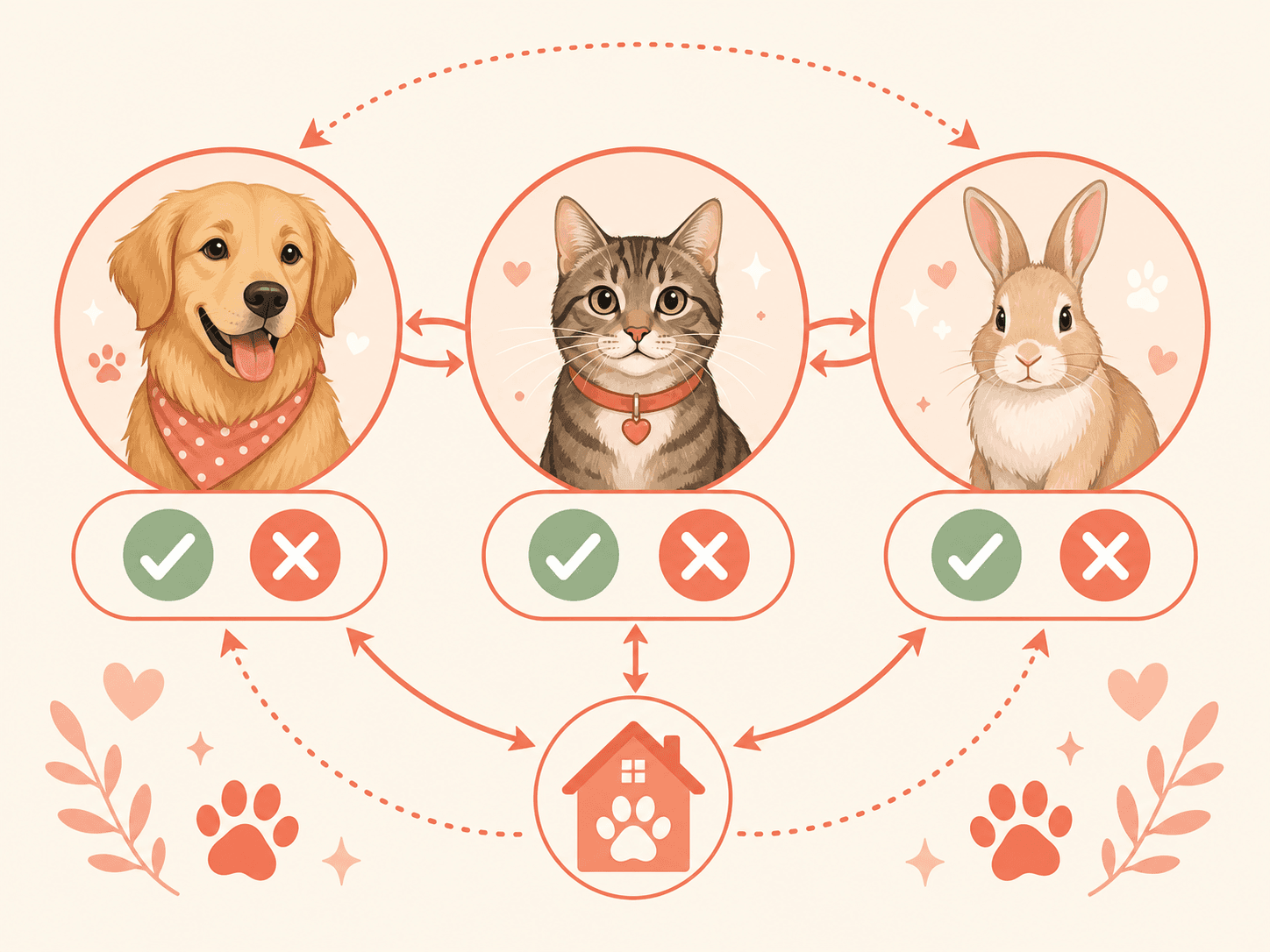
This is for homes in Singapore, Malaysia, and Indonesia where pets share tight spaces: a dog on the sofa, a cat on the bed, a rabbit pen near the living room, carriers stacked by the door, and the occasional lift-lobby chat with another pet owner.
Species safety comes first. A flea product labelled for dogs may poison a cat. Concentrated dog spot-ons containing permethrin are a known hazard for cats through direct application, grooming a recently treated dog, or close contact with treated bedding.
Rabbits need their own caution too. Do not assume dog or cat flea products are safe for rabbits unless a rabbit-savvy vet directs that use. If the label does not clearly match the species in front of you, pause.
Apartment living does not make the home flea-proof. Fleas can enter through pets, shoes, bedding, carriers, grooming salons, boarding, shared corridors, and human-mediated transfer. Warm, humid conditions also support flea development, so the home environment matters even when only one pet is scratching.
Where fleas hide

Adult fleas on pets are only part of the problem. Eggs, larvae, and pupae can sit in bedding, cracks, soft furnishings, carriers, rugs, sofas, floor gaps, and sleeping areas. That is why treating only the itchy animal can look successful for a week, then fail.
Check every pet, not only the one doing the dramatic scratching. For dogs and cats, part the fur over the rump, tail base, belly, neck, and groin. Look for live fleas and flea dirt: black specks that turn reddish-brown on damp white tissue because they contain digested blood.
Watch the pattern, not just one scratch:
- Intense itching, hair loss, scabs, or self-trauma can fit flea allergy dermatitis, even when only a few fleas are found.
- Signs around the rump, tail base, thighs, abdomen, or neck are common areas for flea allergy dermatitis signs in dogs and cats.
- Rabbit scratching, fur loss, crusting, visible fleas, flea dirt, reduced appetite, lethargy, or skin wounds need rabbit-safe veterinary advice; do not apply dog or cat flea medication while waiting.
- Small itchy bumps on human ankles or lower legs may mean fleas are biting people too, often near pet resting areas.
Make the routine plain and repeatable. Check fur. Test suspicious specks on damp tissue. Wash or replace bedding where appropriate. Vacuum the places pets actually use, including sofa edges, rugs, carriers, pen corners, and the strip of floor where everyone naps after the air-con comes on.
When this needs a vet now
Call a vet now if the flea problem comes with signs that the pet is unwell.
| Pet | Call a vet promptly if you see this |
|---|---|
| Cat | Drooling, twitching, tremors, uncoordinated movement, fever, seizures, collapse, or any exposure to a dog flea product. |
| Rabbit | Fleas with reduced appetite, reduced stool output, lethargy, weakness, neurologic signs, maggots, wounds, or suspected exposure to fipronil or an unknown dog or cat product. |
| Dog or cat | Pale gums, weakness, heavy infestation in a puppy or kitten, weight loss, severe skin infection, open sores, or persistent itching despite labelled treatment. |
Do not apply extra doses, mix products, or use another pet's medication while waiting for advice. More product is not a better plan when the species or active ingredient is wrong.
What to bring to the clinic conversation
Gather the evidence before you call or go in. Take a clear photo of the flea product package, including the active ingredient. Note when it was applied, which pet received it, and whether another pet groomed, slept beside, or shared bedding with that pet.
For each animal in the home, write down:
- species, age, and weight
- pregnancy, illness, or senior status
- current flea products and application dates
- skin photos, if there are scabs, wounds, hair loss, or flea dirt
- which pets share bedding, grooming contact, carriers, rooms, or play areas
The practical rule is simple: fleas are not just itchy in a cat-dog-rabbit home. The wrong shared product can become the bigger problem. Before the next treatment, line up every flea product in the house by species. Anything unclear goes into the “ask the vet first” pile.
— Manja