
The first few minutes of a tank power cut are not about lights, display pumps, or whether the aquascape still looks tidy. They are about air.
For warm tropical tanks in Singapore, Malaysia, and Indonesia, a practical plan has three priorities: keep oxygen moving, keep biological filter media wet, and stop adding waste until the system is stable again. This is general care guidance, not a diagnosis. If fish are distressed or water quality is deteriorating, speak to a vet, aquatics vet, or aquatic specialist.
Start with the water surface
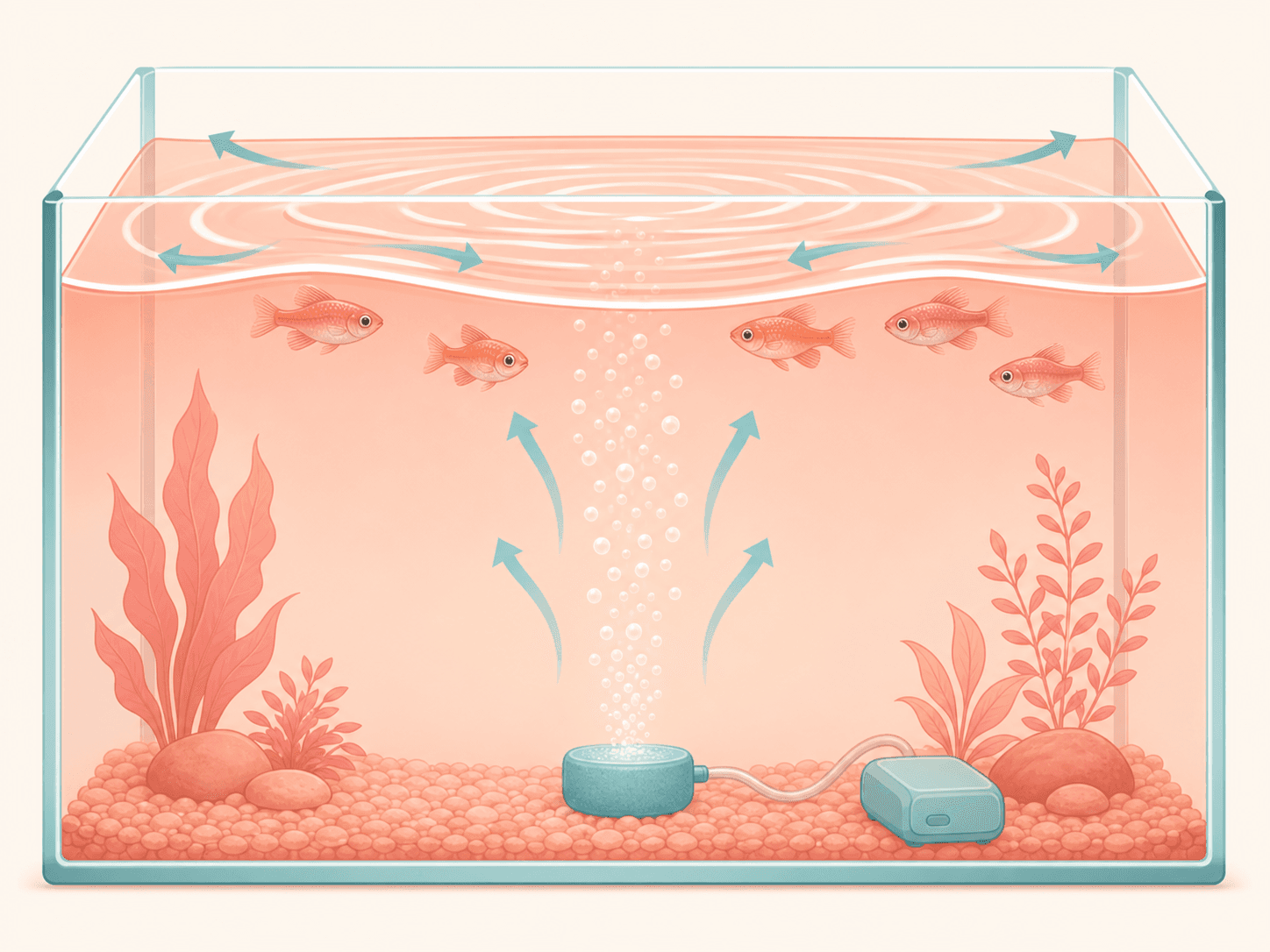
When pumps and filters stop, aeration, filtration flow, and surface agitation can stop together. Warm water holds less dissolved oxygen than cooler water, so tropical aquariums have less reserve. A heavily stocked tank, or a tank already carrying extra waste, can get into trouble faster.
Your first useful tool is backup aeration. A battery air pump, charged power bank setup, or other safe backup device can help keep air exchange and water movement going during an outage. Test it before monsoon weather, long weekends, or building maintenance notices make the question urgent.
If fish are gasping at the surface, gathering near flow areas, or showing tank-wide distress, treat that as a warning sign. It may point to low oxygen or a water-quality problem, but it is not a home diagnosis.
Protect the filter bacteria
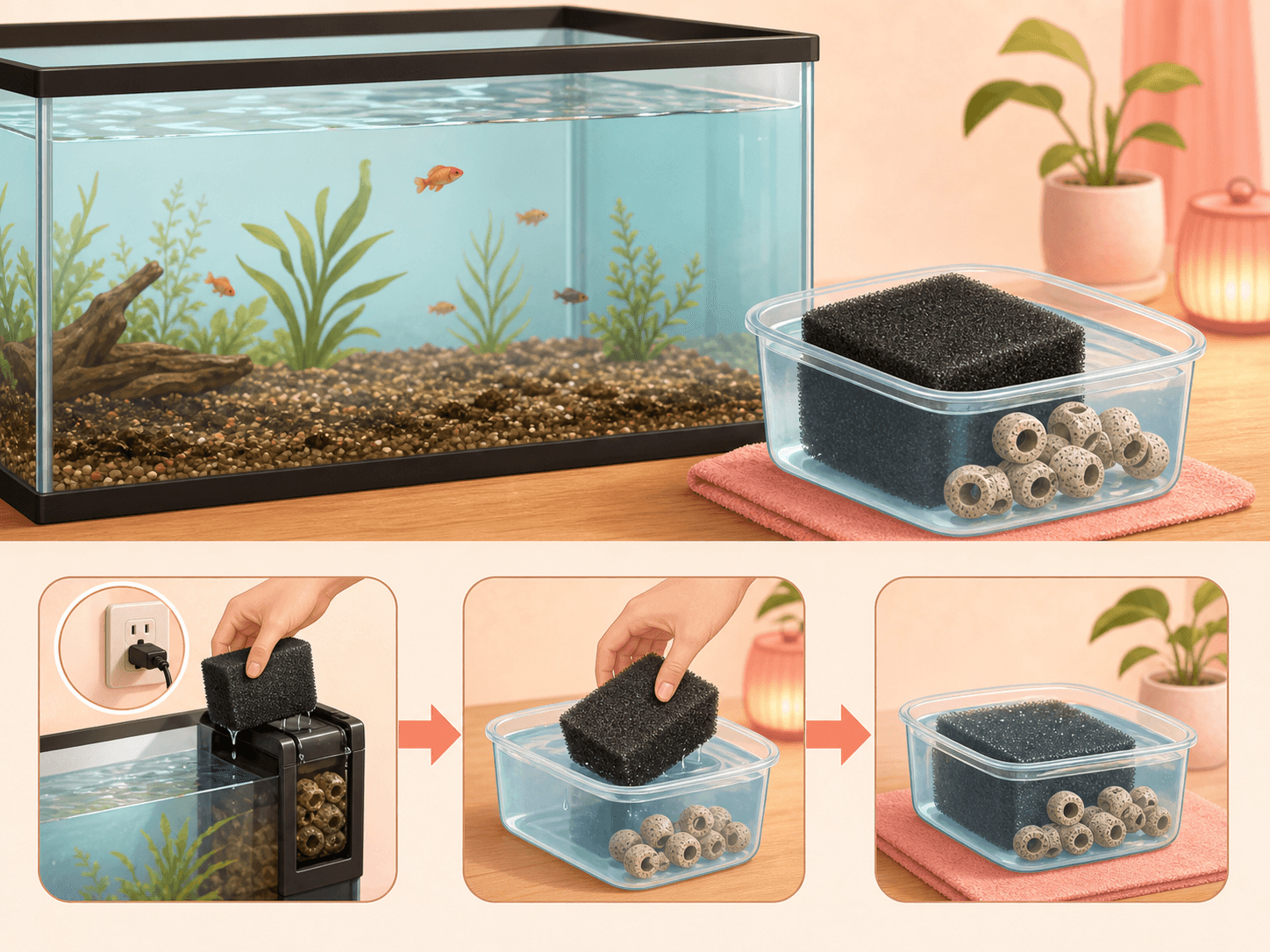
The useful bacteria in an aquarium live on surfaces, especially inside biological filter media. They help process ammonia and nitrite. During a power cut or equipment failure, your job is to avoid making their situation worse.
Keep biological filter media wet in aquarium water. Do not wash filter media under untreated tap water while trying to “freshen it up”. Harsh washing, disinfectants, and drying can damage beneficial bacteria when you most need them.
This matters in small apartment tanks too. A nano tank on a condo shelf, a shrimp setup near a sunny window, or a crowded community tank beside the TV may not have much buffer when flow stops.
Do less feeding, not more
Pause feeding during short outages or unstable filtration. Fish begging at the glass can make this feel mean, but uneaten food and extra waste increase oxygen demand and ammonia burden.
Once aeration and filtration are stable again, restart feeding cautiously. If the outage was long, the filter media dried out, or fish still look stressed, test ammonia and nitrite before assuming the tank is back to normal.
Know when the tank is not “basically fine”
Call a vet now if fish are gasping at the surface, gathering near filter flow, or showing tank-wide distress. Those signs can point to low oxygen or a water-quality problem, but they are not a home diagnosis. Use them as a trigger to act, test, and get help.
Contact a vet urgently if distress persists after you restore aeration or surface movement, if filtration has been compromised, or if many fish are affected at once. Ammonia and nitrite become urgent concerns in those situations. Test the water instead of guessing from behaviour alone.
Bring the useful facts: what failed, when flow or aeration stopped, whether biological filter media stayed wet in aquarium water, whether feeding paused, and your ammonia and nitrite results if you have them.
Do not copy-paste fixes across every tank
Freshwater tanks, marine tanks, ornamental shrimp, planted CO2 tanks, and ponds share the same first priorities, but they are not interchangeable systems. Species, salinity, CO2, stocking, biological load, and design can change the right response.
For marine, shrimp, planted CO2, pond, heavily stocked, or high-value systems, use this article to prepare for the aquatics vet or aquatic specialist conversation, not to apply generic fixes blindly.
Before the next outage
Put the boring things where you can actually find them: backup aeration, spare batteries or a charged power bank, ammonia and nitrite tests, and your vet or aquatic specialist contact. Then run a quick check that the air pump works before the next storm, lift lobby outage notice, or renovation-related power interruption catches the tank first.
— Manja