
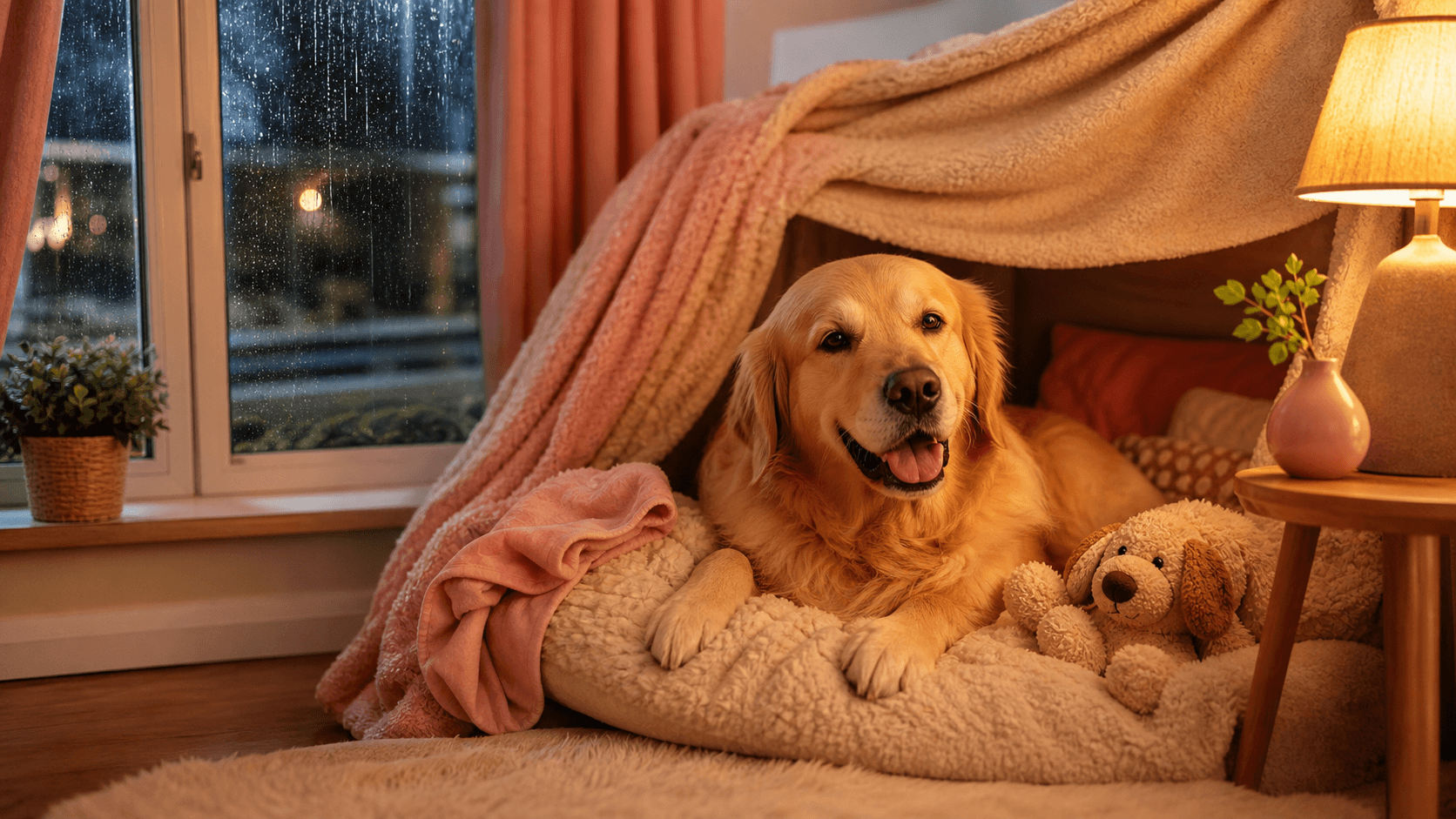
The first warning may be small: your dog stops eating when rain starts ticking on the windows, refuses the evening corridor walk, or disappears before the first burst of festive fireworks. By the time they are panting under the sofa, the useful part of the plan should already be in place.
This guide is for Singapore, Malaysia, and Indonesia homes where dogs meet both tropical storms and festive noise. Use it to build a calmer routine and to prepare for a vet conversation, not to diagnose your dog at home.
Read the pattern, not one loud night
Many dogs startle at thunder, fireworks, renovation bangs, or other explosive sounds. Some hide, tremble, pant, pace, vocalise, refuse food, or glue themselves to their owner. That is not bad behaviour. It is information.
What matters is the pattern. Act sooner if your dog panics, cannot recover after the sound stops, injures itself, destroys exits, soils indoors from fear, refuses to go outside, or starts reacting to rain, darkness, or routine evening sounds. A dog who now freezes at the lift lobby before a storm, or refuses the same void-deck route after a bad fireworks night, is telling you the fear has spread beyond the original noise.
Singapore owners should not wait for one neat storm season. Thunderstorms can happen in every month. Malaysia and Indonesia owners also need storm routines, especially around periods with frequent thunderstorms, heavy rain, and lightning. Around Chinese New Year, Hari Raya, Deepavali, New Year countdowns, school holidays, and long weekends, assume the noisy evening may arrive before your dog feels ready.
Build the safe place before the sky gets dramatic
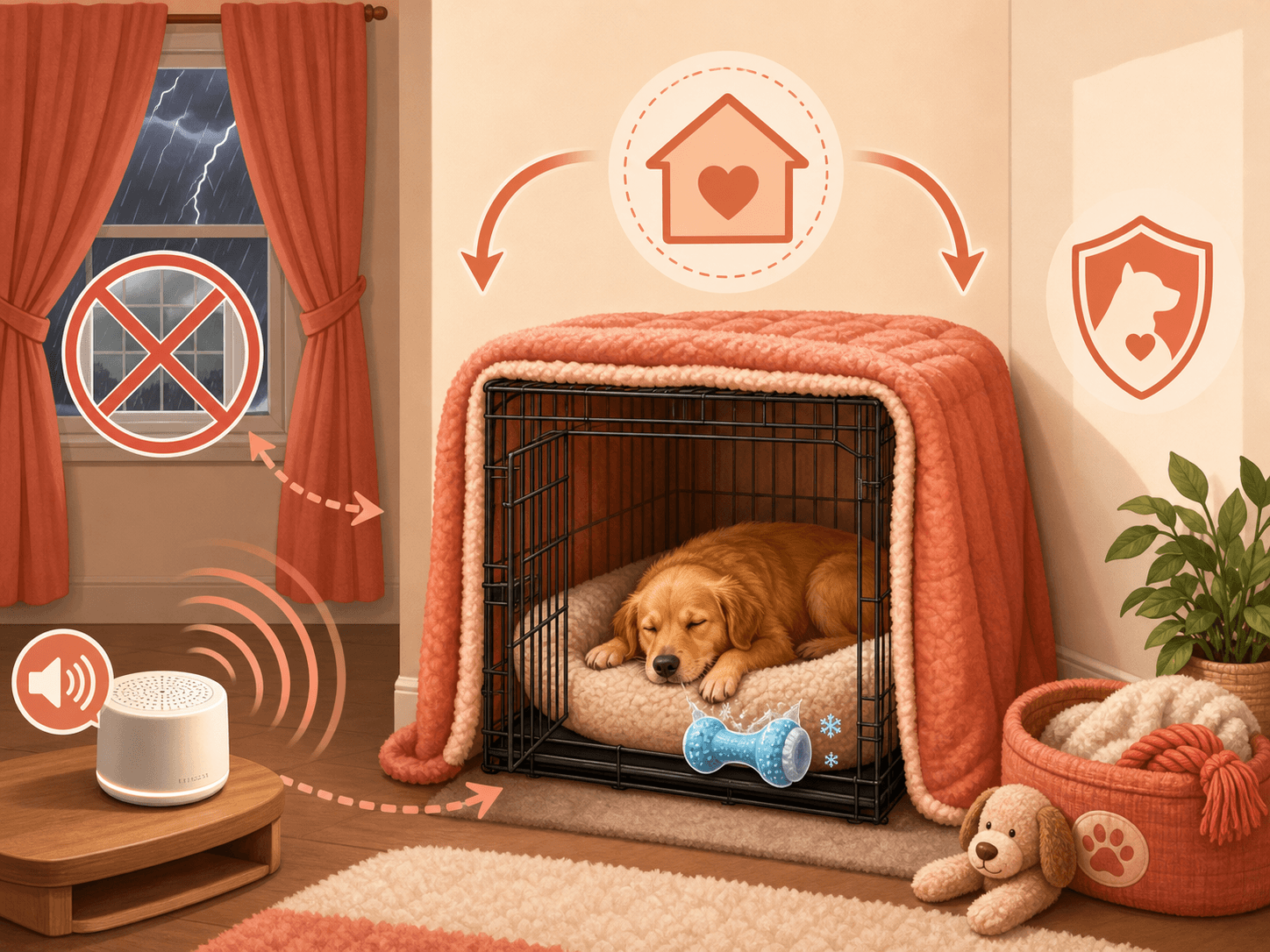
Pick one place your dog can enter by choice: a bedroom corner, an open crate they already like, a study, or a quiet spot away from balcony doors and corridor noise. Close curtains or blinds, secure doors and windows, add familiar bedding and water, and keep the space supervised. The aim is "you may hide here," not "you are locked in the panic cupboard."
Rehearse on quiet days. Feed a chew there. Scatter a few treats there. Let your dog nap there while nothing exciting happens. Calm spaces become useful because they feel ordinary before they are needed.
Use background sound gently. TV, radio, music, a fan, or white noise can soften sudden bangs, but do not try to out-blast thunder or fireworks. Loud masking can become another stressor.
If you use practice sounds, keep them low and pair them with something your dog likes. If fear appears, make the session easier. A dog who tenses, leaves the room, refuses food, or scans for danger is not being stubborn; the exercise is too hard.
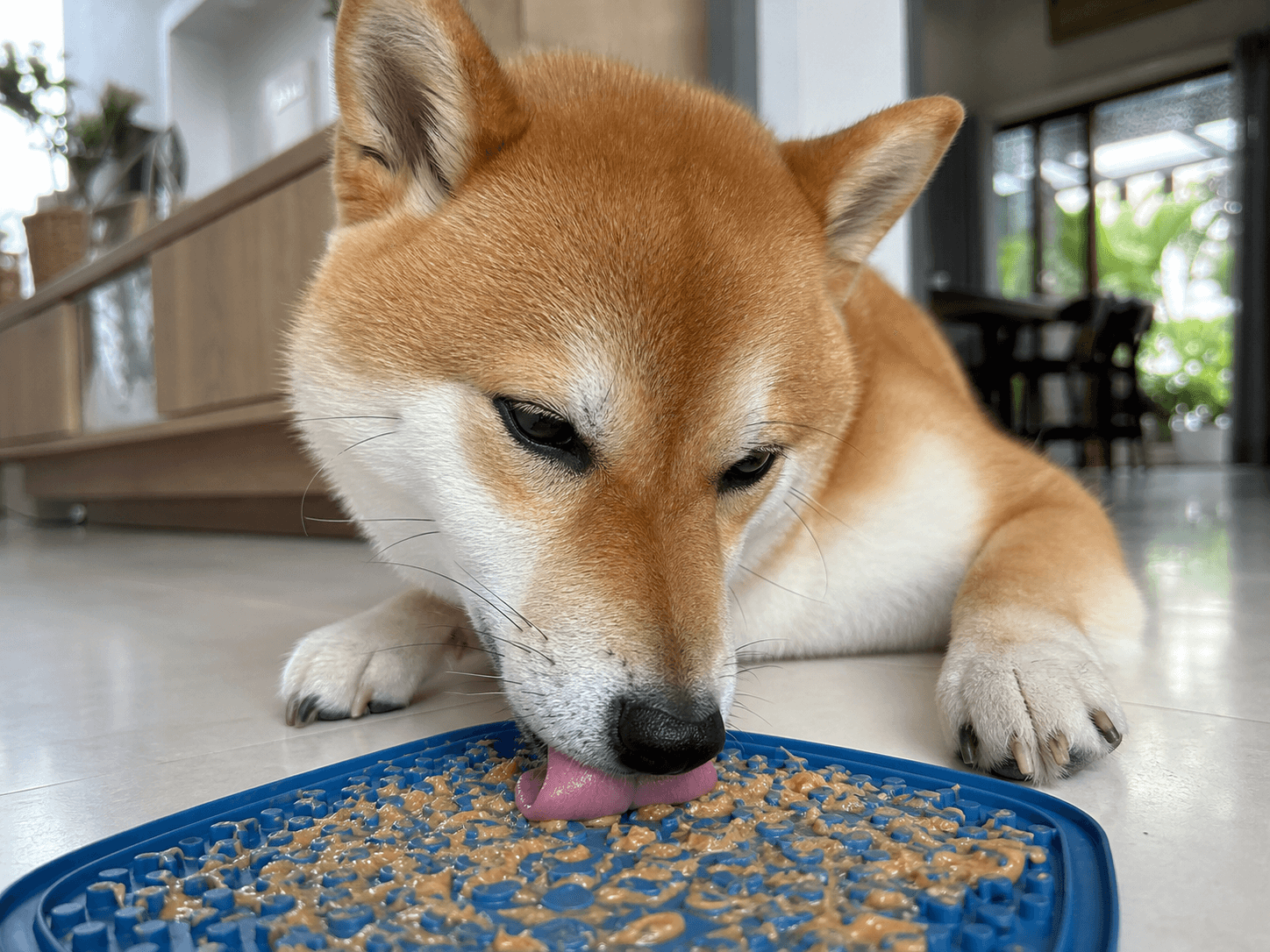
Food enrichment helps only if the dog can still eat. Chews, stuffed food toys, lick mats, and treat dispensers are useful for mild worry, but a panicking dog may ignore them. Match items to chewing strength and supervise.
Do not punish, scold, or force louder noise exposure to make the dog "get used to it." Flooding a frightened dog usually teaches them that the noise and the humans are both unsafe.
Good progress is often quiet: your dog chooses the safe space, takes food, startles but recovers, and needs less frantic help from you after recent noise events.
Your response matters
Comforting a frightened dog does not reward fear. Stay steady, speak normally, and offer contact if your dog seeks it. Some dogs want a hand on their shoulder; others want the owner nearby but not fussing. Follow the dog in front of you.
Keep household traffic predictable. If children are excited by fireworks, give the dog more distance. If guests are coming over, set the safe area before the doorbell starts. In apartments, plan toilet walks earlier when you can, especially if the dog already worries about wet corridors, lift doors, or post-rain puddles near drains.
After the noise, do not turn recovery into a test. Let your dog decompress. A short sniff, a drink, or a quiet sleep may tell you more than another training session.
When this needs a vet or behaviour team
Bring your vet into the plan when noise fear is sudden, severe, or getting worse. Pain, sensory decline, illness, or cognitive change can look like a behaviour-only problem, especially when a dog who used to cope now panics during thunder or fireworks.
Medication or supplement discussions also belong with a veterinarian. That is especially true if your dog panics, injures themself, tries to escape, cannot sleep, refuses elimination walks, or still struggles after a well-run home routine. Supplements are not a casual shortcut. They can still matter medically.
Add a qualified behaviour professional when the case is risky or complex. Severe panic, escape attempts, self-injury, aggression, or repeated failure of home measures are not internet-only problems. A vet can check for medical contributors and discuss treatment options. A qualified behaviour professional can help shape the daily training plan so it is realistic for your home.
What to record before the appointment
Keep one short note from the next noisy event: what the sound was, when it started, where your dog went, whether they ate, how long recovery took, and what helped or made things worse. Video can help if it is safe to take without crowding your dog.
Bring that note to your vet if the fear is sudden, severe, worsening, or unsafe. The goal is not a perfect storm diary. It is enough detail to decide whether this is a comfort problem, a training problem, or a vet-and-behaviour-team problem.
— Manja