
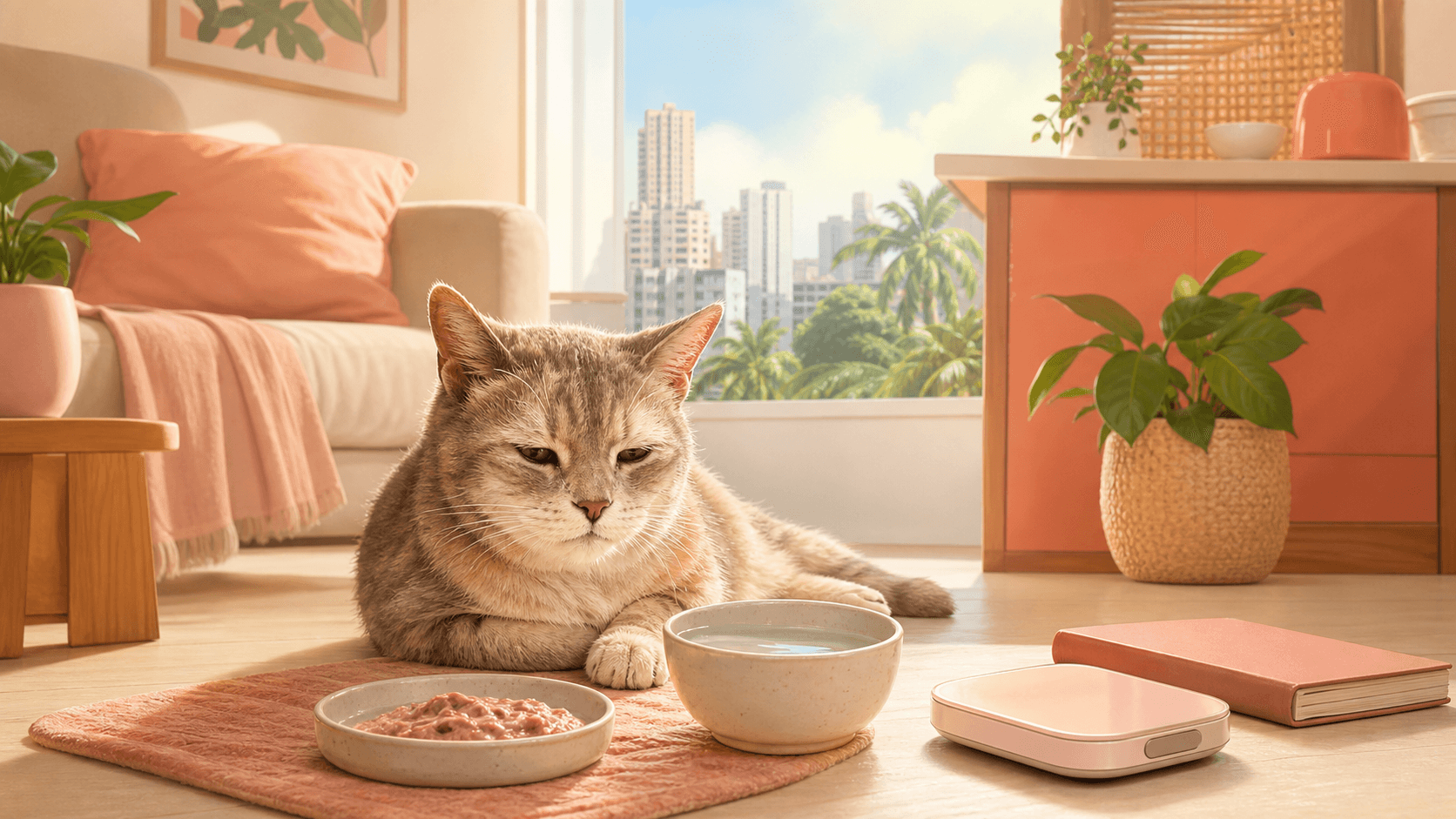
An older cat eating less in a hot week needs a measured check, not a panic bowl of random toppings. Track food, water, weight, body condition, muscle condition, and behaviour together. Use this guide to prepare for a veterinary conversation, not to diagnose an older cat at home.
Start with the cat, not the appetite
A senior cat can look “mostly fine” while losing muscle. Appetite matters, but it is only one signal. The stronger check is the nutrition screen used in veterinary care: body weight, body condition score, muscle condition score, and diet history, not appetite alone (Global Nutrition Guidelines).
For a 12-year-old indoor cat like Mimi, write down what actually went in. “She ate a bit” is too vague. “Half a pouch at 7 am, two teaspoons at 8 pm, dry food untouched” gives you and the clinic something usable.
| What to track | What it tells you |
|---|---|
| Body weight | Whether small appetite changes are becoming weight loss |
| Body condition | Whether fat cover is changing |
| Muscle condition | Whether the cat is losing muscle even if weight looks subtle |
| Diet history | What food, texture, timing, and amount the cat actually accepts |
| Behaviour | Whether appetite change sits with thirst, urination, vomiting, pain, or coat changes |
Senior-care guidance also stresses proactive screening and monitoring changes in weight, appetite, and behaviour (2023 AAHA Senior Care Guidelines for Dogs and Cats). That is the pattern to copy at home: notice the change early, record it clearly, and do not wait for the cat to look dramatic.
Water intake includes food moisture
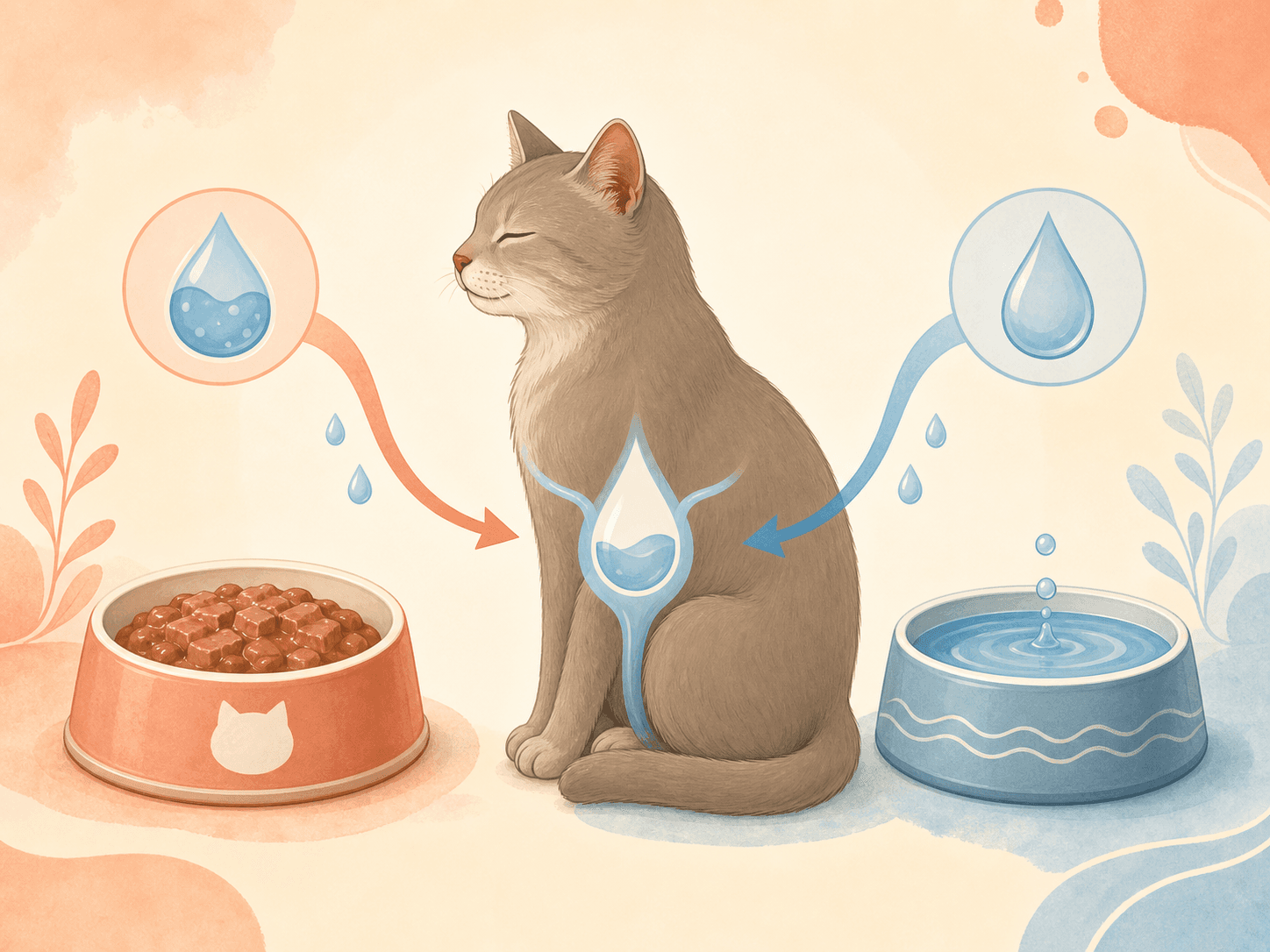
A cat’s water target is not only what disappears from the bowl. Wet food counts. Water added to food counts. Cornell Feline Health Center gives a commonly cited adult-cat baseline of about 3.5-4.5 oz per 5 lb body weight per day, including water from food (Hydration).
That matters in hot, humid homes because a cat eating less wet food may also be taking in less water. Do not judge hydration from bowl level alone.
| Senior cat weight | Approximate total water baseline per day | Counts what |
|---|---|---|
| 2.5 kg | 117-150 ml/day | Food moisture plus drinking water |
| 4 kg | 187-238 ml/day | Food moisture plus drinking water |
| 6 kg | 280-357 ml/day | Food moisture plus drinking water |
If your cat accepts it, switching some intake to wet food or adding water to food can support hydration. Keep the framing tight: this is support for intake, not treatment for dehydration or kidney disease. Increased thirst or increased urination in a senior cat is a vet-check trigger, because it can be seen with chronic kidney disease, diabetes mellitus, or hyperthyroidism (Chronic Kidney Disease, Diabetes Mellitus in Cats, Disorders of the Thyroid Gland in Cats).
Make food easier to accept for a short window
Texture and aroma changes are reasonable short-term support measures. Offer small fresh meals. Try wet textures. Warm food gently to improve aroma. Feed during cooler parts of the day. Log the actual intake, not the hopeful version.
This is especially useful for senior cats who still show interest in food but walk away after a few licks. The goal is not to outsmart a medical problem. The goal is to make eating easier while you watch the whole picture.
Wet food also has a clock. Perishable wet food should not sit out for more than about 2 hours at room temperature, using the recognised food-safety baseline for perishable food in the danger zone (Danger Zone 40 F - 140 F). In hot, humid rooms, a shorter practical window may be needed. Refrigerate unused wet food promptly and handle pet food cleanly (Tips for Safe Handling of Pet Food and Treats).
| Adjustment | Use it when | Stop experimenting when |
|---|---|---|
| Small fresh meals | The cat eats a little, then leaves | Intake stays low beyond 24-48 hours |
| Wet texture | Dry food is ignored or chewing looks tiring | Drooling, bad breath, odd chewing, or mouth pain appears |
| Gently warmed food | The cat sniffs but does not commit | Vomiting or nausea signs appear |
| Cooler feeding times | The cat eats better outside hotter parts of the day | Weight loss or clear weakness appears |
Set water stations like husbandry, not decoration
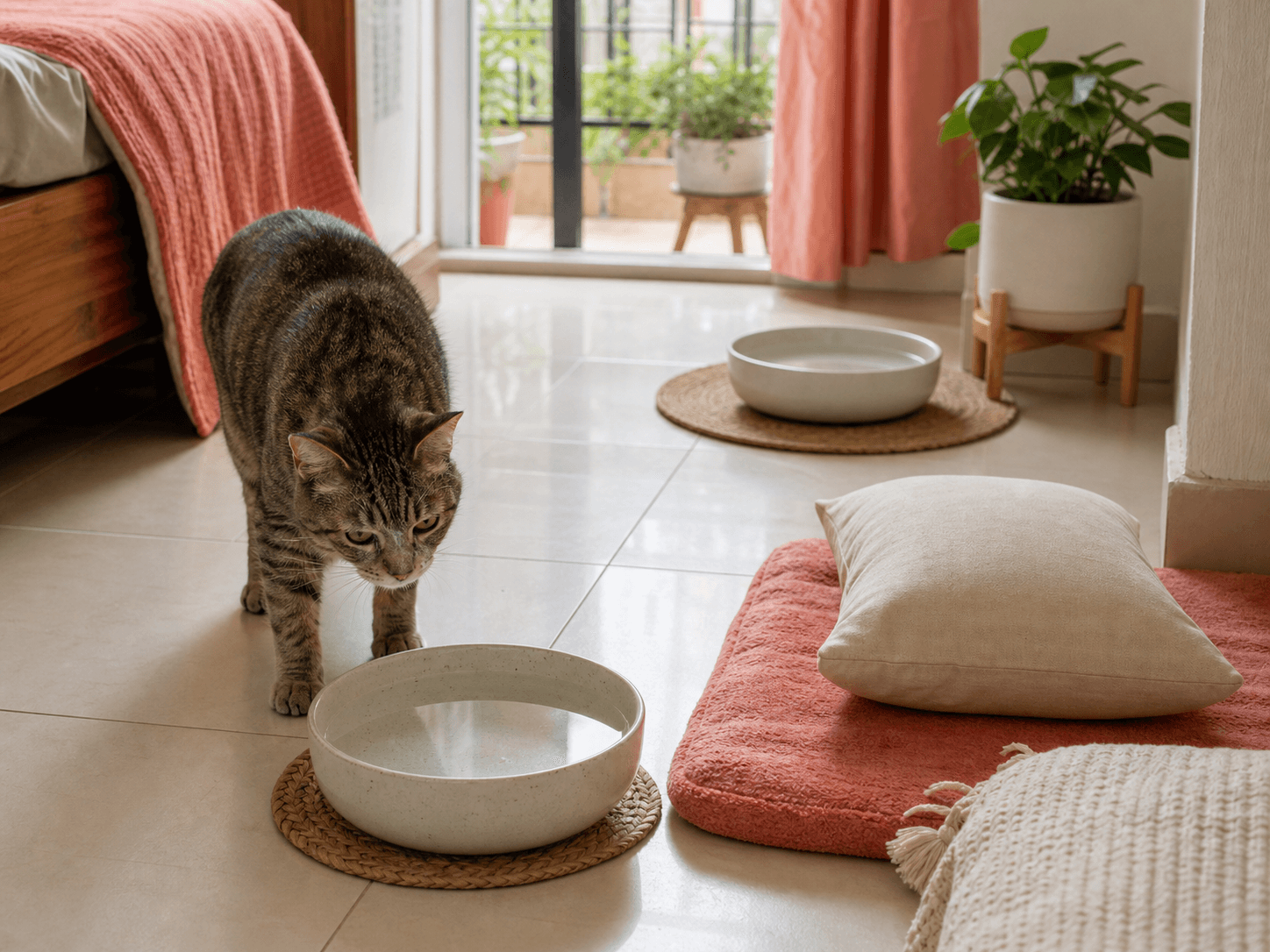
Water placement is a care routine. For indoor cats in hot, humid climates, provide multiple clean water sources, keep water away from litter trays, and preferably place it away from food. Refresh water often. Some cats prefer wide bowls, fresh water, or fountains (Encouraging your cat to drink).
This is a small thing, done daily. It also stops one blocked bowl from becoming the whole plan. Put one bowl where your cat already rests. Put another in a quiet route the cat uses. If a fountain helps your cat drink, use it. If it becomes hard to clean, a plain clean bowl is better.
Do not turn water setup into a reason to ignore symptoms. More drinking can be a warning sign, not proof that the cat is coping well with heat.
What changed, and why
Older advice often treated “eating less in hot weather” as a seasonal quirk. The better approach is narrower. A short dip in appetite can happen around hotter weeks, but a senior cat gets assessed by pattern: intake, water, weight, muscle, mouth comfort, vomiting, thirst, urination, and behaviour.
The practical shift is this: try supportive feeding changes only while you are also watching for triggers that need a clinic check.
| Monitor | Call for a vet check |
|---|---|
| Slightly lower intake for a short period, with normal behaviour | Eating less for more than 24-48 hours |
| Prefers wet food or smaller meals | Weight loss, vomiting, nausea, or drooling |
| Drinks from a new bowl after setup changes | Increased thirst or increased urination |
| Leaves dry food but eats wet texture | Bad breath, odd chewing, loose or broken teeth, or pain when eating |
Dental disease can show up as bad breath, abnormal chewing, drooling, reduced appetite, or mouth pain (Pet dental care). Older-cat guidance also flags appetite, weight, thirst, urination, dental disease, mobility, and behaviour as things owners should monitor (Elderly cats: special considerations).
Tonight, measure one normal serving, offer it fresh, record what was eaten, refresh two water stations, and check the bowl again before bed. If the pattern crosses a trigger, book the vet check instead of trying a fifth texture.
— Manja