
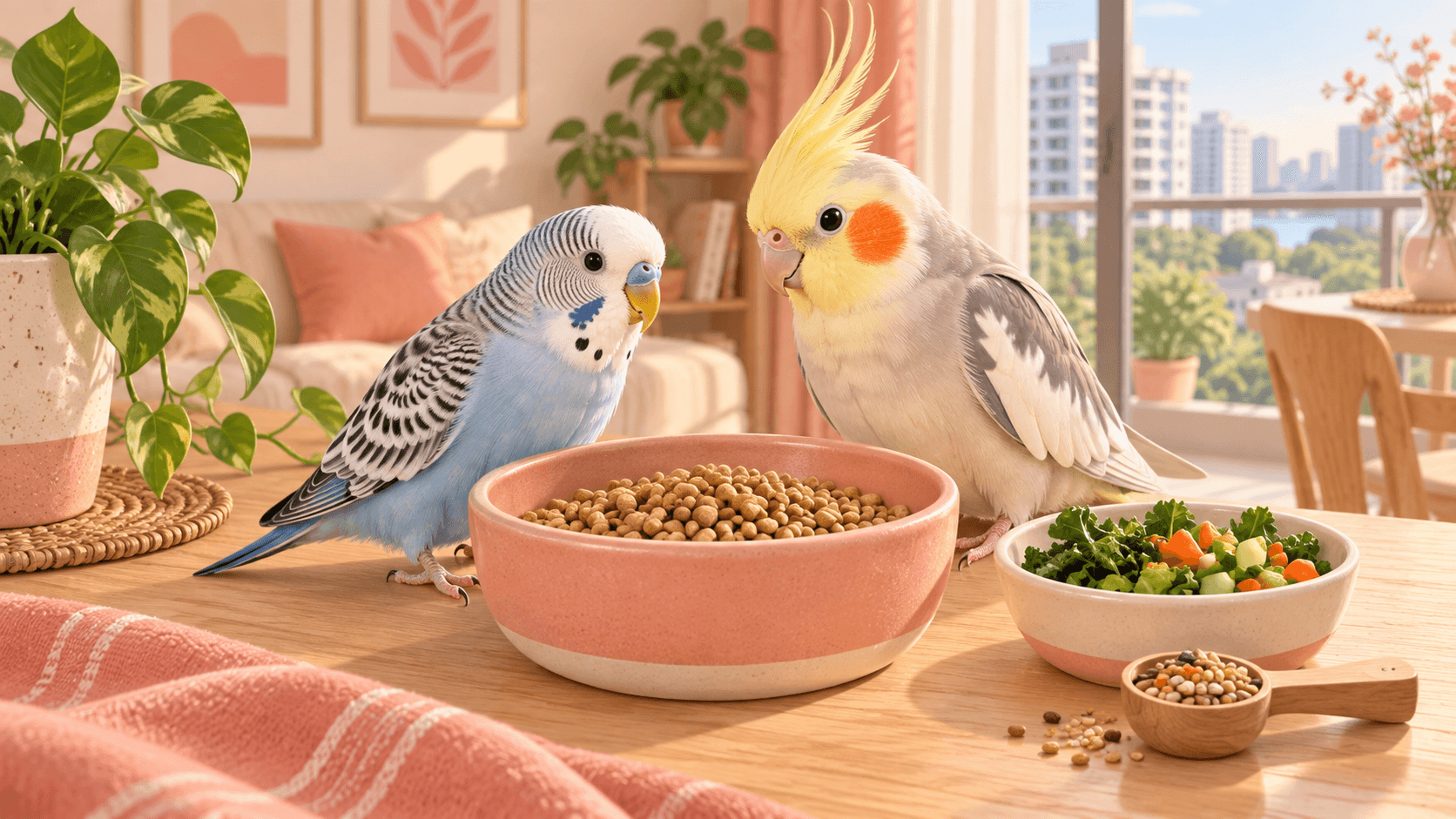
A budgie or cockatiel with a full seed cup is not “well-fed” by default. The better daily target is boring and measurable: mostly pellets, some fresh food, and seeds treated like a small extra, not the base meal. Use this guide to prepare better questions for your avian vet, not to diagnose your bird at home.
Make pellets the main meal
Small companion parrots, including budgies, cockatiels, lovebirds, and similar apartment birds, should usually eat a formulated or pelleted diet as the main daily food. Veterinary owner guidance commonly places that at about 60–80% of daily intake, with seeds reduced because seed-only diets can be nutritionally incomplete and often too high in fat (VCA, Nutrition in Birds; Merck Veterinary Manual).
That does not mean you throw away every seed today. Birds can refuse unfamiliar food. A sudden switch can leave a bird eating too little, especially if it quietly waits for the seed cup to return (VCA, Converting Your Bird to a Pelleted Diet).
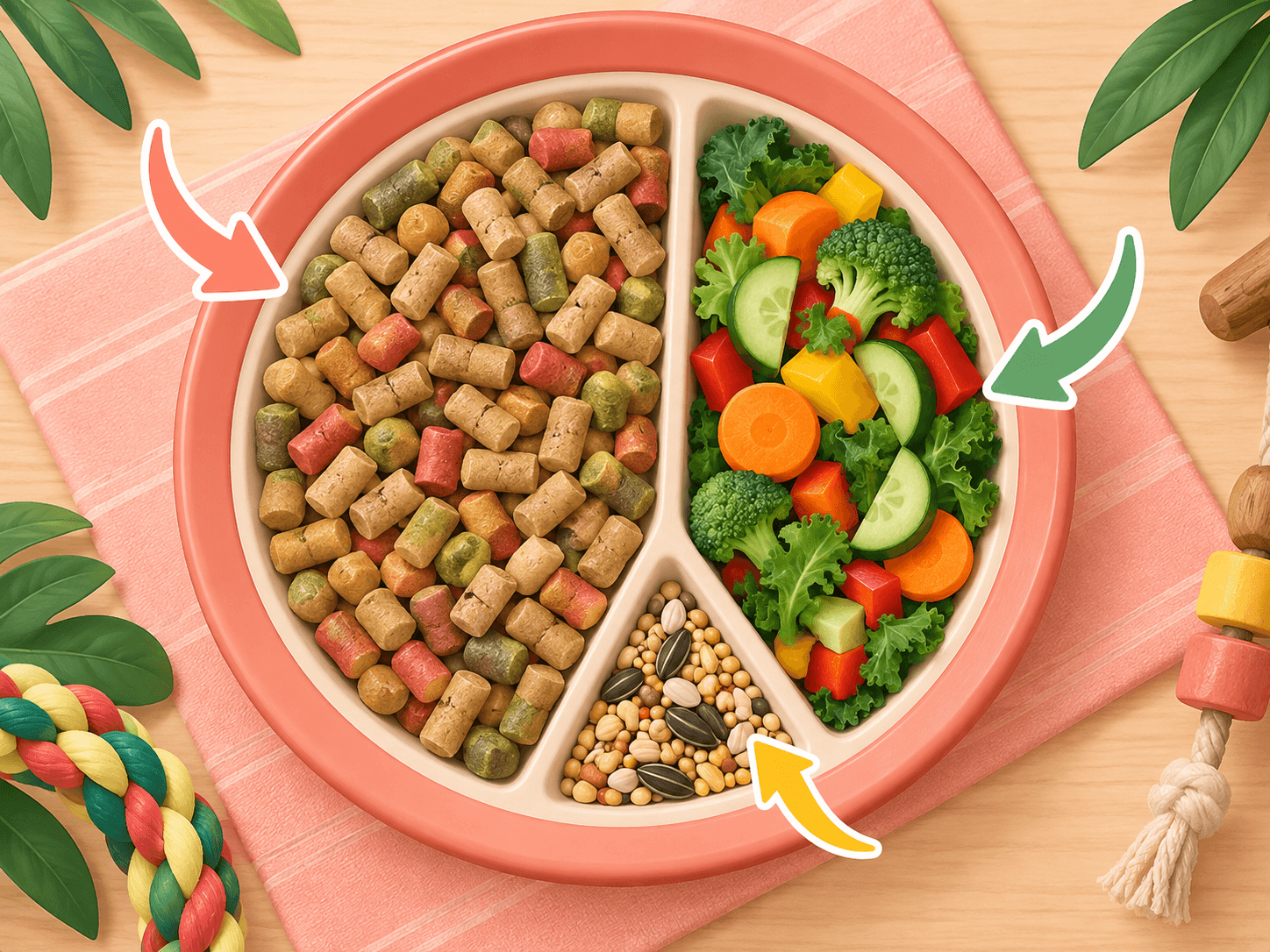
Start with a plate routine instead. Put the daily food into categories, then measure the seed part.
| Daily food category | Practical target |
|---|---|
| Pellets or formulated food | About 60–80% of daily intake |
| Vegetables and other bird-safe fresh foods | About 15–30% of daily intake |
| Seeds and nuts | Small measured treat, not free-choice food |
A pellet-heavy bowl is less dramatic than a seed mix, but that is the point. Seed mixes let many parrots pick the favourite bits first. The bird looks busy. The diet may still be unbalanced.
Measure seeds before you reduce them
Seed is not evil. Unrestricted seed is the problem.
For budgies, veterinary owner guidance commonly uses about 1.5–2 level teaspoons of seed per bird per day as an upper measured amount during seed-based feeding or transition, then reduces seeds as pellets are accepted (VCA, Feeding Your Budgie). That number is for budgies. Do not stretch it across every parrot in the house.
Cockatiels need extra care because seed-heavy diets can push them toward obesity. A full seed cup available all day makes portion control nearly impossible, so pellets should become the major diet component and seeds should be measured (VCA, Feeding Your Cockatiel; Merck Veterinary Manual).
| Bird | Seed handling during transition |
|---|---|
| Budgie / parakeet | About 1.5–2 level teaspoons per bird per day as an upper measured seed amount, then reduce as pellets are accepted |
| Cockatiel | Measure seed portions; do not leave a full seed cup available all day |
| Lovebird, conure, or other small parrot | Use the 60–80% pellet routine, but get species/body-size seed portions from an avian vet |
This is one place where “a handful” is not a unit. Small birds are small enough that casual extras add up.
Change the food, then watch the bird
A diet change is only successful if the bird actually eats.
During conversion, monitor appetite, weight, and droppings. Birds can resist new foods and selectively eat the familiar parts of a mix (VCA, Converting Your Bird to a Pelleted Diet; Merck Veterinary Manual). The owner’s job is not to win a purity contest. It is to move the diet without accidentally creating a fasting bird.
Use a gram scale. Track weight regularly. Unexplained weight loss is a veterinary warning sign because small birds can hide illness (VCA, Recognizing Signs of Illness in Pet Birds; AAV Bird Owner Resources).
| What you see | What to do |
|---|---|
| Eating pellets, normal droppings, stable weight | Keep going gradually |
| Picking only seeds from a mix | Reduce selective feeding opportunities and continue slow conversion |
| Reduced appetite, abnormal droppings, fluffed-up stillness, or weight loss | Arrange avian-veterinary assessment |
| Not eating or breathing with effort | Seek urgent avian-veterinary care |
Do not treat droppings, appetite changes, breathing effort, fluffed-up stillness, or weight loss as nutrition tweaks. Those signs can point to illness, and birds often mask disease until it is advanced (VCA, Recognizing Signs of Illness in Pet Birds; AAV Bird Owner Resources).
Keep fresh food fresh in humid homes
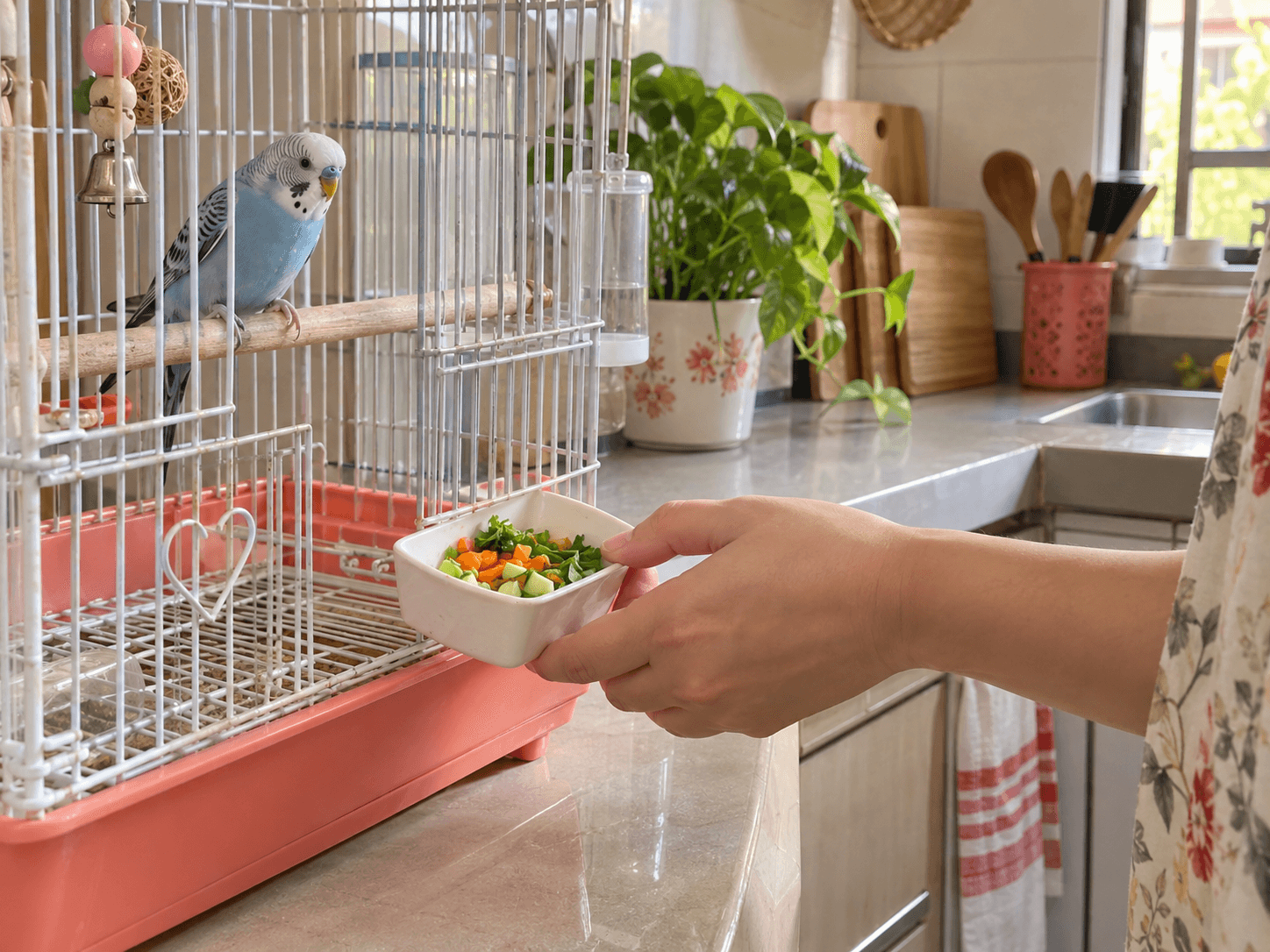
Fresh food is useful. Warm, spoiled fresh food is not.
For humid Singapore and Malaysia homes, offer vegetables, fruit, cooked grains, or other moist foods in small portions. Remove uneaten fresh food promptly, commonly within 2–4 hours, and sooner if it looks spoiled, contaminated, or warm (VCA, Nutrition in Birds; FDA pet-food handling guidance).
Wash fresh foods before offering them. Keep food and treat handling clean. Do not let a cage become a buffet table from breakfast to bedtime.
Some human foods should stay out of the cage completely. Avocado, chocolate, caffeine, alcohol, and high-salt or high-fat human snack foods should not be offered to parrot-family birds (VCA, Nutrition in Birds; Merck, Food Hazards in Animals).
Supplements need the same restraint. Vitamin or mineral supplements may be inappropriate or harmful when a bird is already eating a balanced formulated diet, unless a veterinarian recommends them (VCA, Nutrition in Birds; Merck Veterinary Manual). Product-level claims and disease-treatment claims belong in a vet conversation, not in a shopping cart.
What changed (and why)
Older bird-keeping advice often treated seed mix as the normal daily bowl. The newer owner routine is more structured: pellets first, fresh food in a smaller share, seeds measured.
The reason is practical. Formulated diets reduce selective feeding. Measured seeds reduce the quiet creep of high-fat extras. Fresh food stays safer when it is portioned and removed promptly.
Tonight’s small thing: weigh your bird, write down the number, and measure tomorrow’s seed instead of filling the cup by eye. That one habit makes every diet change less guessy.
— Manja