
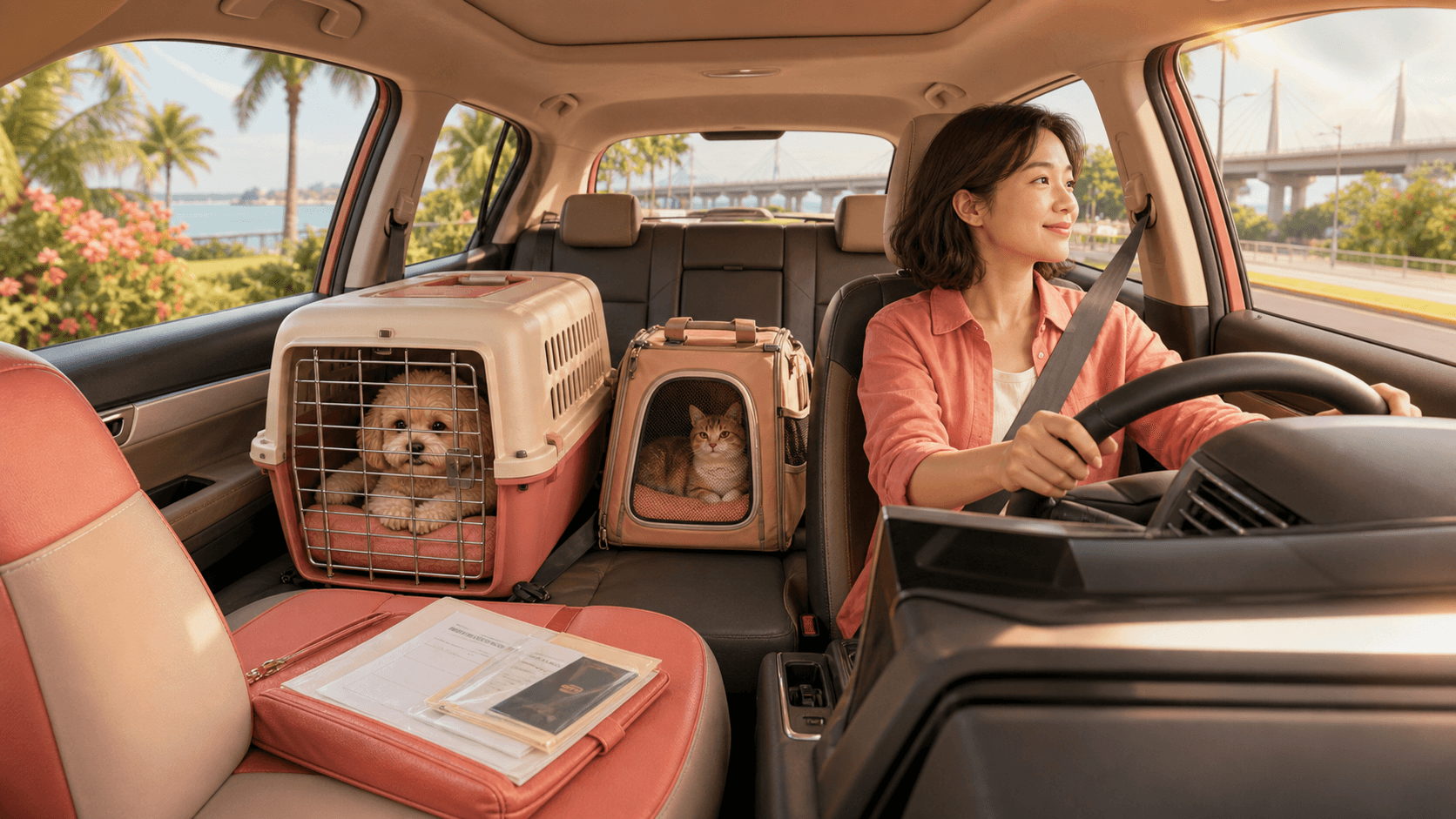
A quick drive to Johor with your dog or cat is not a quick paperwork job. The small takeaway: line up the permit, vaccine dates, microchip, health certificate, and return documents before you load the carrier into the car.
Use this checklist to prepare the vet and border conversation, not to diagnose whether your pet is fit to travel at home.
Start with the two-border problem
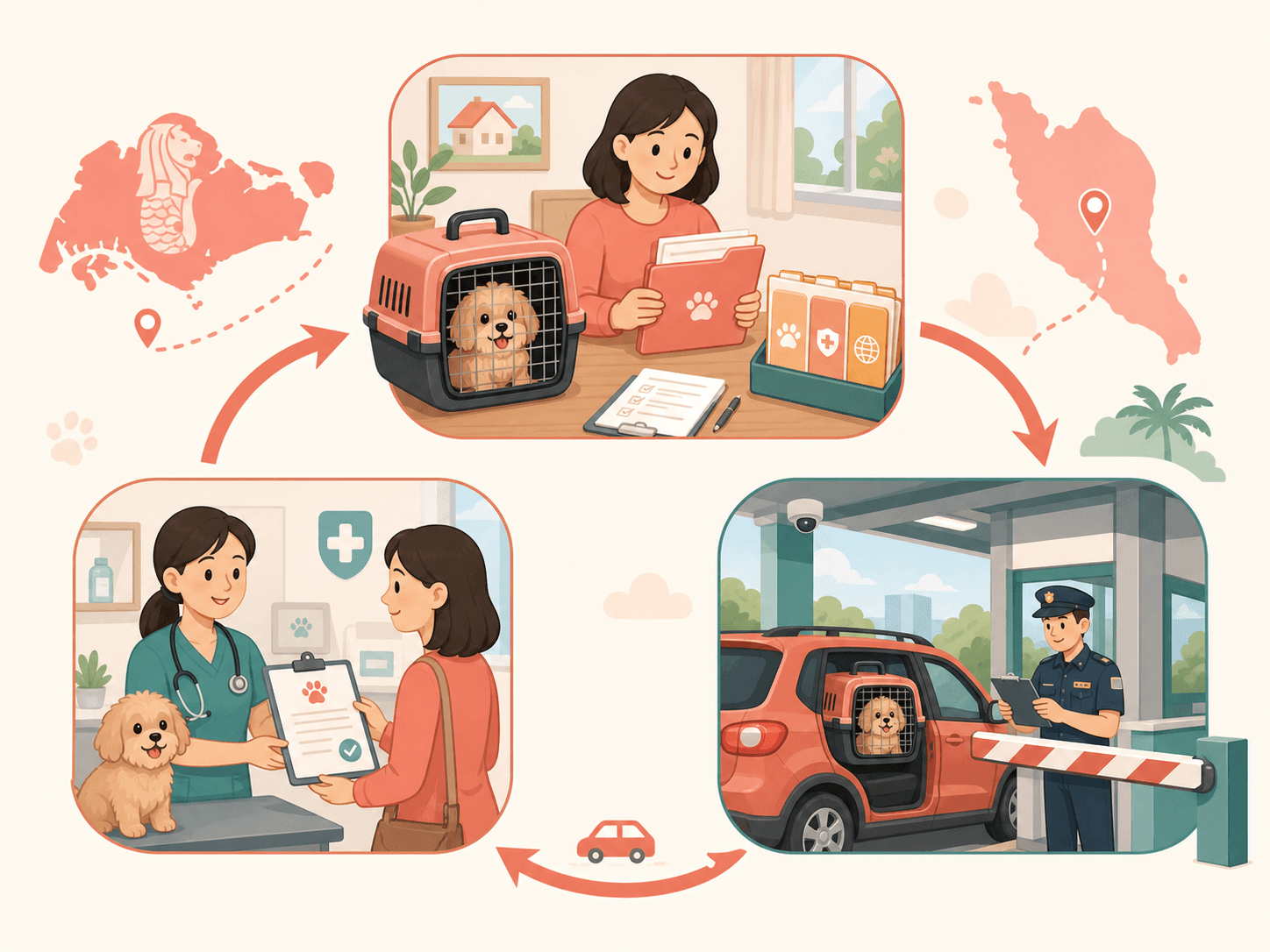
Your pet is not only entering Malaysia. Your pet also needs to leave Singapore properly, clear Malaysia, then come back to Singapore under Singapore rules.
For Malaysia entry, live animals need a valid import permit from Malaysia's Department of Veterinary Services and border inspection by MAQIS. The import permit is typically valid for 30 days from the date of issue, according to the Malaysian Quarantine and Inspection Services Official Portal.
For the Singapore side, dogs and cats leaving Singapore need an AVS export licence. The bundle source says the application must be made through GoBusiness within 30 days before departure via AVS Singapore Pet Export and Import Regulations.
Coming back is a separate step. Pets returning to Singapore from Johor need an export health certificate issued by the Malaysian DVS office in Johor, based on DVS Johor health certification guidance. Singapore AVS may also require quarantine at Sembawang Animal Quarantine Station for dogs and cats returning from Malaysia, depending on country category and continuous-stay exemptions, according to NParks AVS quarantine information.
| Step | Document or check | Timing in the source |
|---|---|---|
| Enter Malaysia | DVS / MAQIS import permit | Typically valid for 30 days from issue |
| Leave Singapore | AVS export licence | Within 30 days before departure |
| Pre-export health check | Veterinary Health Certificate from an AVS-registered vet | Clinical inspection within 7 days before export |
| Return to Singapore | Johor DVS export health certificate | Required for re-entry from Johor |
| Possible Singapore return requirement | Sembawang quarantine | Depends on AVS country category and exemption status |
Check the microchip and vaccine dates before booking the drive
The microchip is the identity anchor. Dogs and cats crossing the border must have an ISO 11784/11785 compliant 15-digit microchip, according to the Singapore Veterinary Association microchipping standard. If the chip cannot be read at the wrong moment, the rest of the file can become harder to match to the animal.
Rabies timing is the next hard check. Dogs and cats entering Malaysia from Singapore must be vaccinated against rabies at least 30 days, but not more than 12 months, before entry. Malaysia's DVS import protocol states this as at least 30 days and not more than 1 year before export in its dog and cat import protocol.
Then apply the species-specific vaccine rule. Cats need feline calicivirus, rhinotracheitis, and panleukopenia vaccines at least 14 days before entry, based on DVS Malaysia cat import health requirements. Dogs need canine distemper, infectious canine hepatitis, and canine parvovirus vaccines at least 14 days before arrival, based on DVS Malaysia dog import health requirements.
| Pet | Vaccine requirement in the bundle | Minimum timing before Malaysia entry |
|---|---|---|
| Dog and cat | Rabies | At least 30 days, not more than 12 months |
| Cat | Feline calicivirus, rhinotracheitis, panleukopenia | At least 14 days |
| Dog | Canine distemper, infectious canine hepatitis, canine parvovirus | At least 14 days |
Do not treat “vaccinated” as one box. A dog with a valid rabies date can still be missing the 14-day dog vaccine requirement. A cat can have the same problem with its feline vaccine set.
Book the vet check close enough to the trip
The Singapore pre-export clinical check sits close to departure. Pets must undergo clinical veterinary inspection in Singapore within 7 days before export to obtain a Veterinary Health Certificate from an AVS-registered veterinarian, according to NParks AVS pet export guidance.
This is where owners often get tripped up. Too early, and the certificate may not match the 7-day requirement. Too late, and there is no buffer if a document needs correction.
Bring the microchip number, vaccination records, export licence information, and Malaysia import permit details into the same folder. Paper copies still help when phones overheat, batteries run low, or the person at the checkpoint wants one detail fast.
If your dog is a restricted breed in Malaysia, add another check before you move. DVS lists specific breeds such as Rottweilers, Dobermans, and German Shepherds as restricted, with formal declaration and DVS approval required before import. The DVS restricted breed source also mentions special approval, microchip verification, and leashing and muzzling in public in its restricted and banned dog breed regulations.
Treat the checkpoint as a pet safety event, not only a customs stop
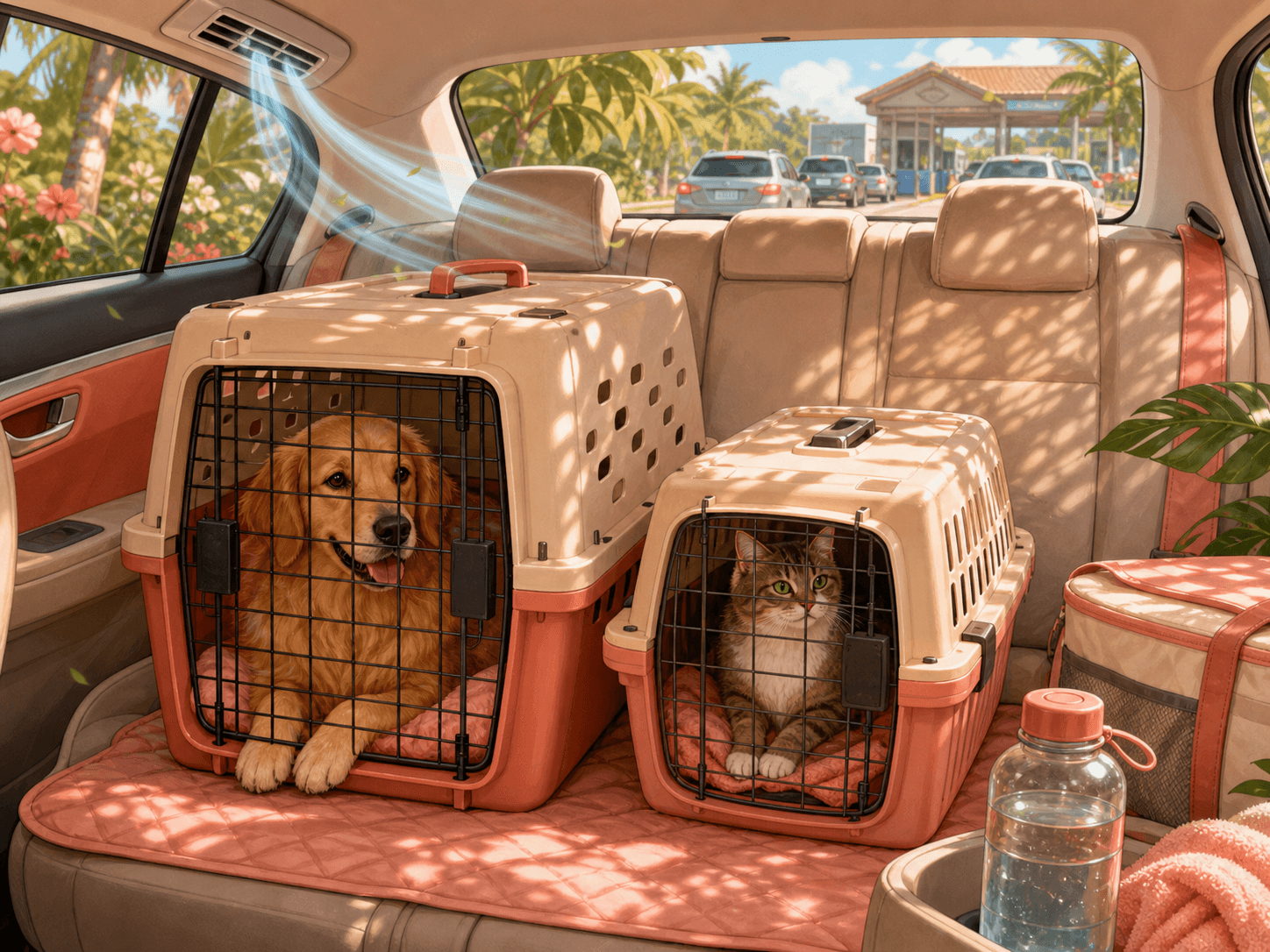
At Woodlands, Tuas, Johor Bahru, and Second Link crossings, your dog or cat should stay secured in the vehicle. The bundle source says pets travelling by car must remain securely crated during customs inspection at Singapore and Johor checkpoints, with declaration to ICA and AVS officers, according to ICA traveller guidance.
The crate must fit the animal, not the boot space. IATA's container standard says the pet must be able to stand, turn around, and lie down naturally in the carrier, as set out in IATA pet container requirements.
Heat is the practical risk that makes Causeway delays different from a normal errand. The source bundle notes that tropical traffic jams may exceed 32°C and 80% humidity, and that heatstroke in cars can occur within 15 minutes if ventilation fails, based on the Malaysian Veterinary Association tropical pet safety source. Keep the car air-conditioning working before you enter the queue. A portable cooling mat is useful only if the carrier is still ventilated and the car stays cool.
| Situation | Owner action | Source-backed reason |
|---|---|---|
| Customs inspection | Keep the pet secured in the carrier | ICA source says pets must be secured and declared |
| Carrier sizing | Use a carrier that allows standing, turning, and lying down | IATA container standard |
| Long traffic jam | Keep air-conditioning operational | Tropical heat can become dangerous fast if ventilation fails |
| Malaysia entry clearance | Prepare for import and inspection fees | MAQIS fee source lists per-animal import inspection fees |
Malaysia also imposes a mandatory import fee of RM 5 to RM 10 per pet animal, plus inspection fees at land entry points such as Bangunan Sultan Iskandar or Sultan Abu Bakar Complex, according to the MAQIS permit and inspection fee structure.
What changed and why
The old casual version of this trip was “bring the dog, show the records, settle it at the checkpoint.” That is too thin now.
The better version is a document-first drive. Malaysia wants the DVS / MAQIS import permit, vaccination timing, microchip identity, and inspection. Singapore wants its export process handled before departure and its re-entry rules handled on the way back. Johor DVS paperwork matters for the return leg. Quarantine can matter too.
For short visits, that may change the decision. A weekend meal in JB with a nervous cat may not justify a 7-day pre-export check, multiple permit steps, heat planning, and possible re-entry complications. A relocation, long family stay, or planned move is different. The paperwork has a clearer purpose.
The one-folder checklist for this week
Put every item in one folder before you book the crossing. Include the Malaysia import permit, Singapore AVS export licence, microchip record, rabies certificate, dog or cat vaccine record, Singapore Veterinary Health Certificate, and return-plan notes for Johor DVS certification.
If the stay in Johor is long-term and you have a dog, check local dog licensing too. The bundle source says dogs staying long-term in Johor residential properties need a valid dog licence from the relevant municipal council, such as MBJB or MBPJ, and MBJB bylaws require annual licensing within its jurisdiction via Majlis Bandaraya Johor Bahru.
The small thing to do tonight: check the rabies date, microchip number, and intended travel date on the same page. If those three do not line up, the Causeway can wait.
— Manja