
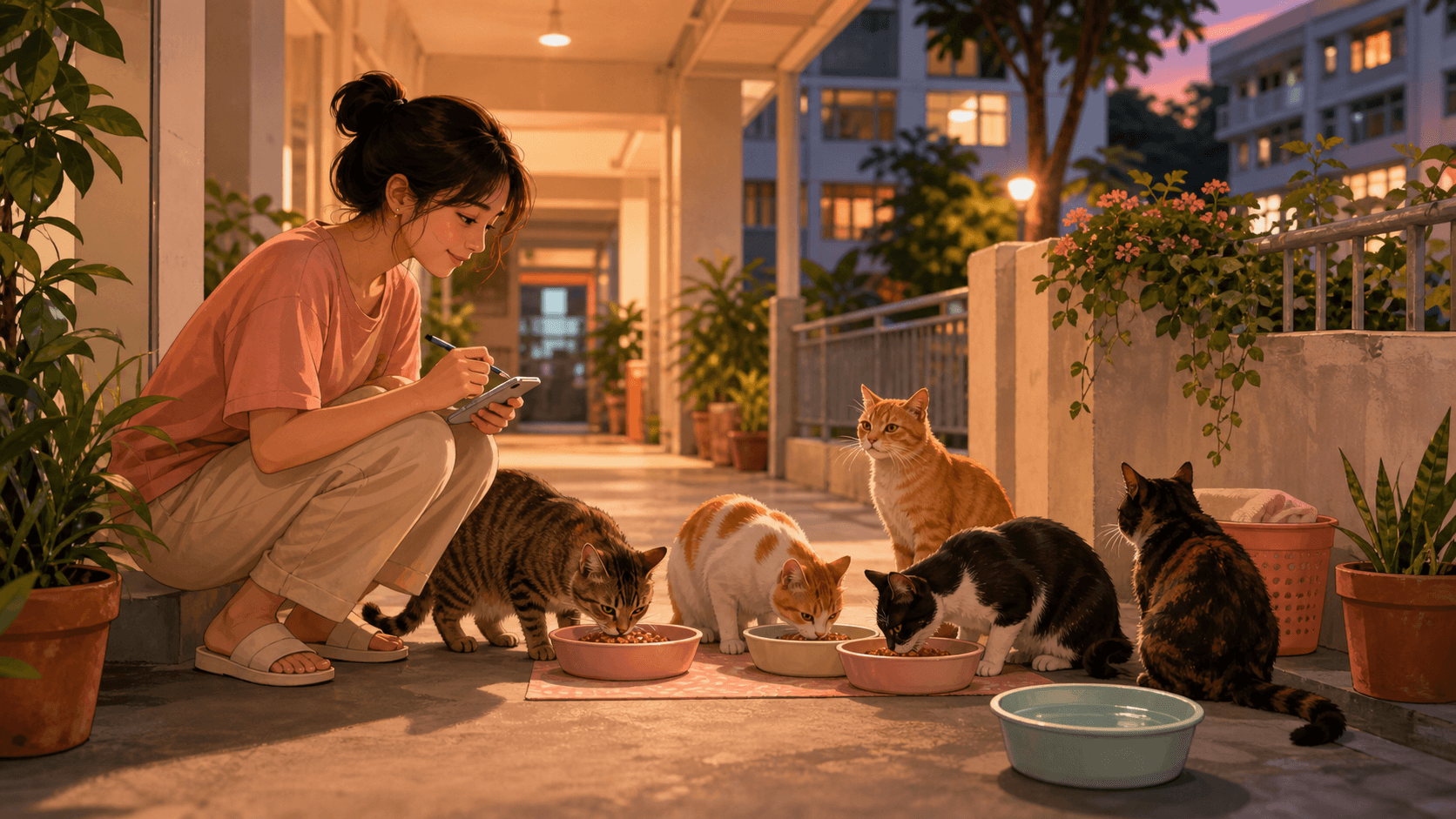
The first useful thing the feeder does is not open the food packet. It is look around.
Is the corner clean? Is the same black-and-white cat here again? Did the ginger tom always walk like that? Has anyone left rice, fish bones, or a leaking tray near the lift lobby?
In Singapore, Malaysia, and Indonesia, community-cat care often begins with dinner. It becomes more useful when someone also keeps count.
A Feeding Spot Is Also A Listening Post
The feeder in this story is composite: no name, no quote, no heroic backstory. Picture someone arriving at the same shared space most evenings, setting food down, waiting nearby, then clearing the area before residents start wondering who left the smell behind.
In Singapore, that spot may be beside an HDB block, a void-deck corner, a carpark edge, or a quiet strip behind the bins. Community cats live close to neighbours, cleaners, children, cyclists, and town-council routines. Owned cats in HDB flats now sit under licensing and responsible-ownership conditions too, so cat welfare and neighbour trust are tied together more tightly than some people realise.
A messy feeding corner can become two problems at once: poor welfare for the cats and a complaint trail for everyone trying to help them. The better version is boring in the best way. Feed at a sensible time. Remove leftovers. Keep ants, smells, and puddles under control. Cooperate with residents or town councils where needed.
The cat gets dinner. The corridor does not get drama.
Across Malaysia, the work may lean on SPCA Selangor's spay-neuter work and volunteer care-neuter-return-manage models. In Indonesia, urban cat care often depends on private shelters, rescuers, and local communities rather than one uniform street-cat programme.
This article can help you notice what matters around a community cat. It is not a way to diagnose a cat from a distance; if a cat looks unwell or injured, record what you see and ask a veterinarian or local rescue group what to do next.
The Cat Who Changes The Route
The shift usually starts with one cat who no longer fits the evening pattern.
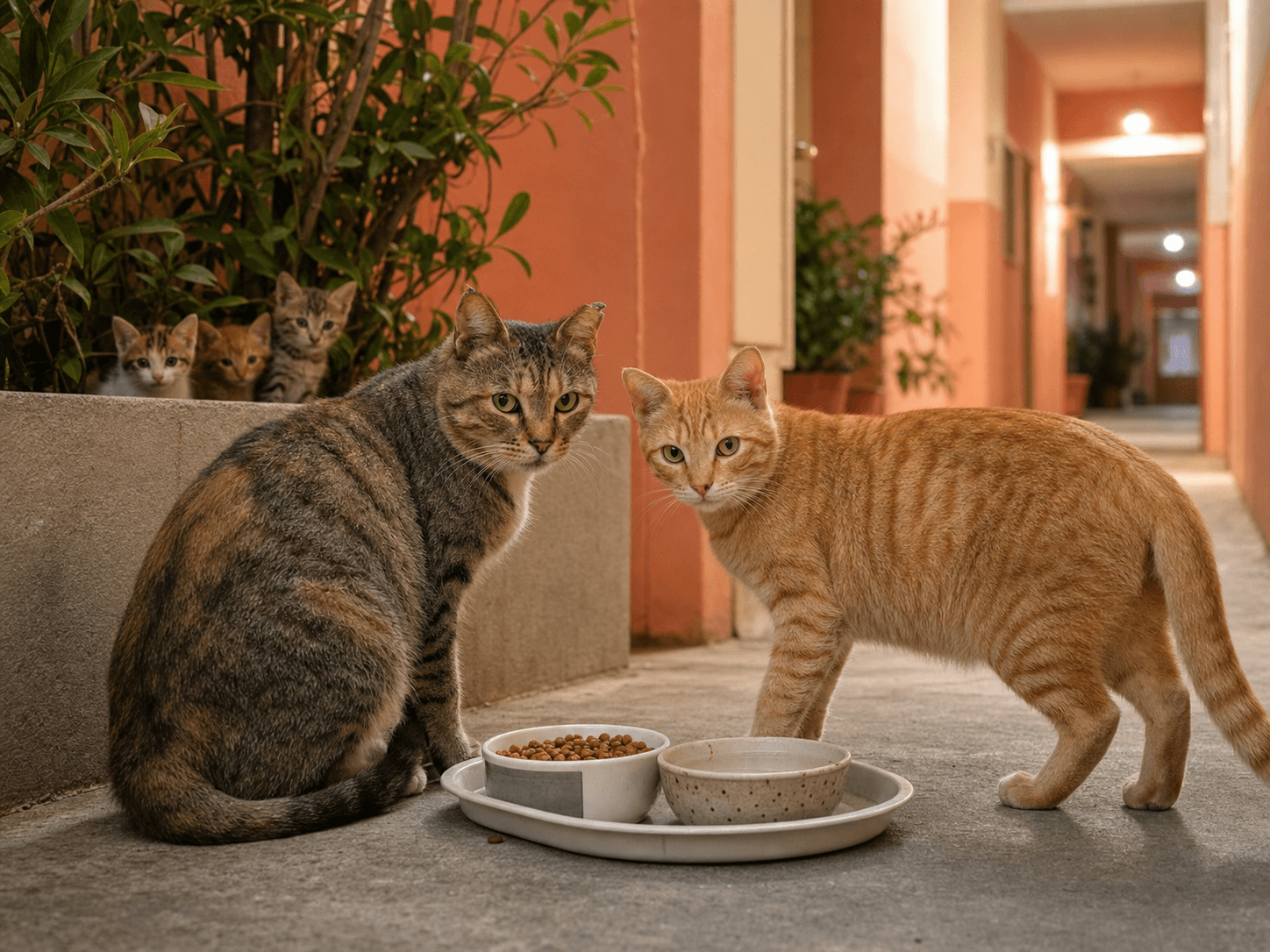
A tabby arrives limping. A ginger tom has no eartip. A mother cat appears with kittens tucked behind the bins after rain. Dinner still matters, but suddenly the notebook matters too.
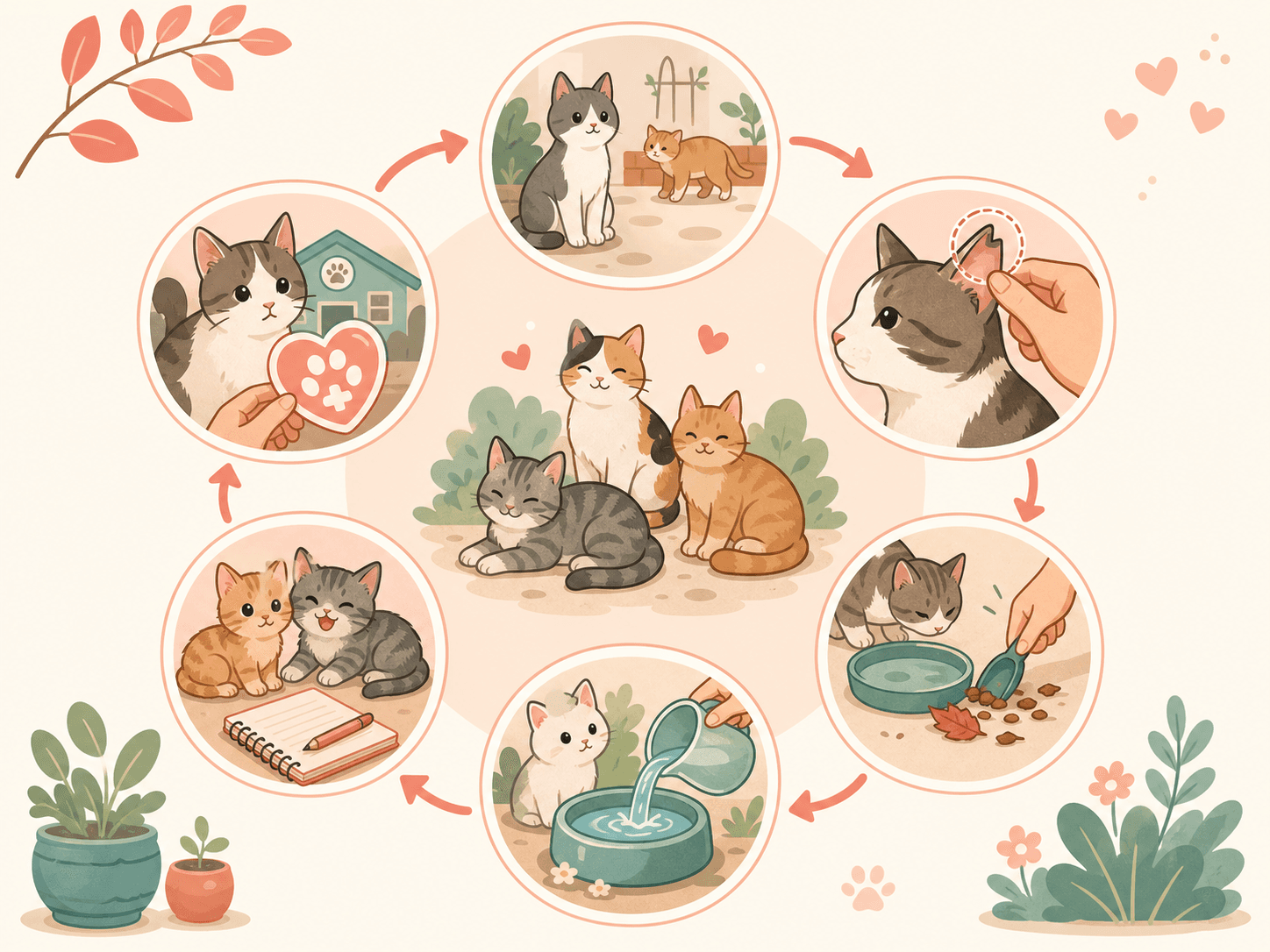
Trap-neuter-return is presented by cat-welfare groups as a humane population-management method: cats are trapped, sterilised, identified, and returned instead of repeatedly removed without addressing reproduction (Alley Cat Allies). Eartipping then becomes useful street-level information, because it signals that a community cat has already been sterilised and helps volunteers avoid trapping the same cat again (Alley Cat Allies).
That is why a better count is more than "about six cats". It separates unsterilised adults, eartipped cats, pregnant cats, kittens, and cats who may need medical help. Each category points to a different next step.
Kittens are especially easy to mishandle with good intentions. Welfare guidance says to assess age, health, whether the mother is present, and socialisation potential before deciding whether to leave, foster, trap, or seek rescue help. Scooping up kittens too quickly can separate them from a mother who was only away finding food. Waiting too long with a sick kitten can also be dangerous. The useful middle is careful observation, good notes, and early contact with people who handle kittens regularly.
What The Notebook Catches
A feeder's record does not need to look official. It needs to be clear enough that another person can act on it.
For sterilisation work, that may mean noting which cats are eartipped, which adults are not, and where the unsterilised cats usually appear. For clinic planning, it may mean transport, fasting instructions, recovery space, and post-surgery monitoring. During Chinese New Year, Hari Raya, Deepavali, school holidays, and long weekends, rescuers and boarding spaces can be stretched, so early coordination matters.
For health concerns, the notes need to be even plainer. Record the date, location, photo if safe, and what changed: limping, eye discharge, breathing trouble, bite wounds, sudden hiding, sudden aggression, heavy drooling, collapse, or a cat who stops showing up for food after being reliably present.
If you see breathing trouble, collapse, severe bleeding, a suspected bite wound, a cat who cannot stand, or a kitten who seems weak, cold, or unresponsive, call a veterinarian or local rescue group urgently. Do not try to treat the cat with leftover human or pet medicines. Do not give antibiotics at home unless a veterinarian prescribed them for that cat.
The feeding station is not only a food route. It is where someone may notice the first sign that a cat needs help.
If You Are Not The Feeder
Most readers will not be running a full route. That is fine. You can still make the route work better.
If a community cat looks injured, do not try to diagnose it from a corridor photo. Observe from a safe distance, take one clear photo or short video if you can do so without stressing the cat, record the exact location and behaviour, then contact a local rescue group or veterinarian for next steps.
If the cat looks healthy but the feeding corner is messy, the useful job is simpler: clear leftovers, avoid adding random food, speak kindly to neighbours, and support the feeder already doing the route. In Singapore, Cat Welfare Society lists practical ways residents can help community cats, including responsible feeding, volunteering, fostering, donating, and welfare support. SPCA Singapore also has organised volunteer pathways.
In Malaysia, SPCA Selangor frames spay-neuter work as a way to reduce unwanted litters and improve animal welfare. AnimalCare Malaysia describes a care-neuter-rehome or return-manage model for community rescuers. In Indonesia, groups such as Jakarta Animal Aid Network and Pet Community Indonesia show how rescue, education, and local community support often carry the work.
The thing to remember is simple: a cat count is not just a number. It is a way to see who is already eartipped, who may still be breeding, who has kittens nearby, and who needs help before the next bowl goes down.
Keep This In Your Phone
Save one local welfare contact. Save the nearest vet clinic. If you regularly see the same community cats, keep a short note with location, usual appearance, eartip status, and any changes.
That is how feeding becomes care with memory.
-Manja