
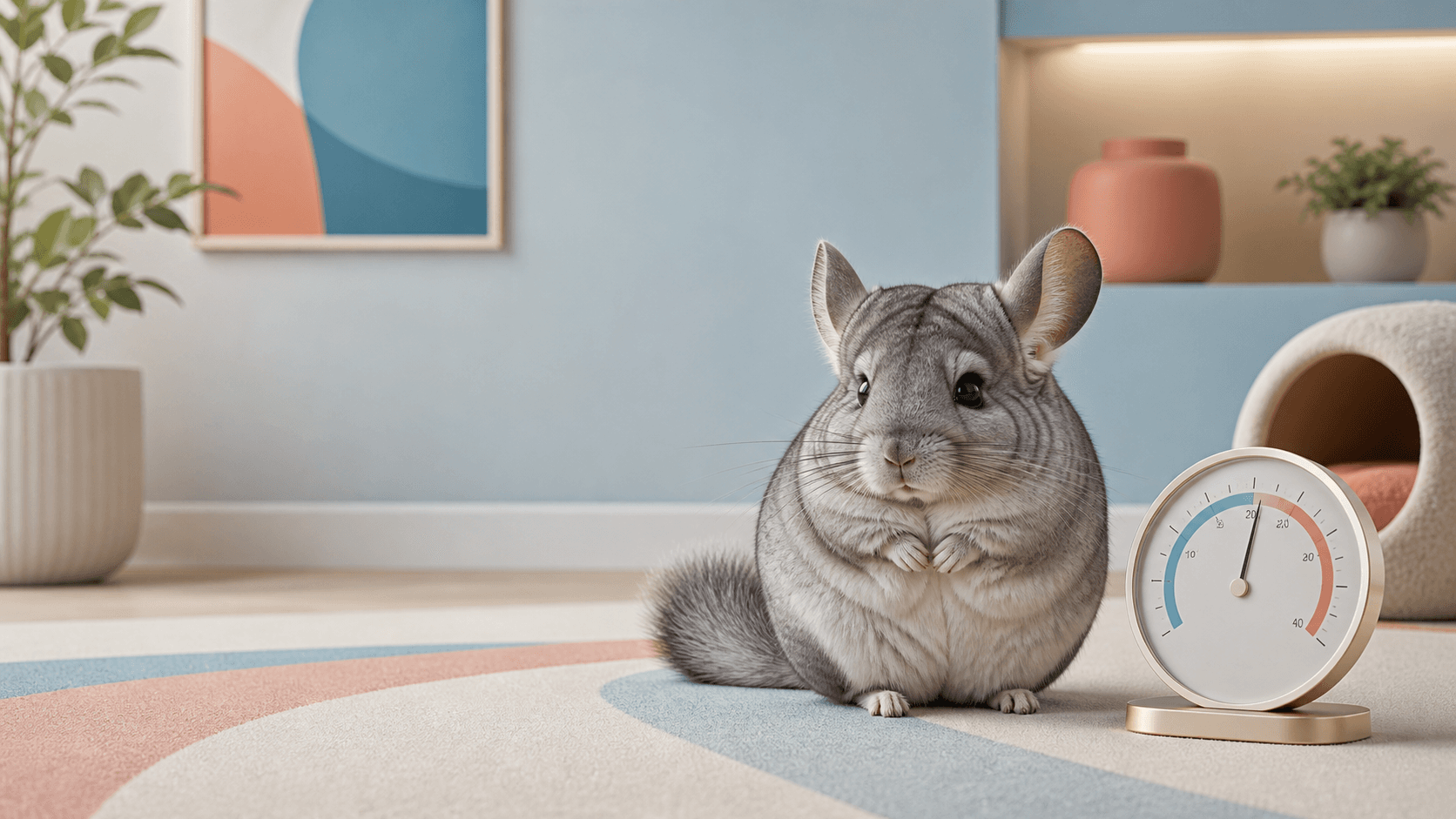
A chinchilla can look like the easiest pet in the room: quiet, neat, soft, apartment-sized. In Singapore, Malaysia, and Indonesia, that is exactly where owners can get caught out. The main question is not whether the cage fits beside the desk. It is whether that room can stay cool, dry, and safe on a humid afternoon.
Chinchillas are adapted to cool, dry environments. Tropical homes need active temperature and humidity control rather than passive cooling alone. Use this guide to prepare for an exotic-vet conversation, not to diagnose your chinchilla at home.
Start With The Room
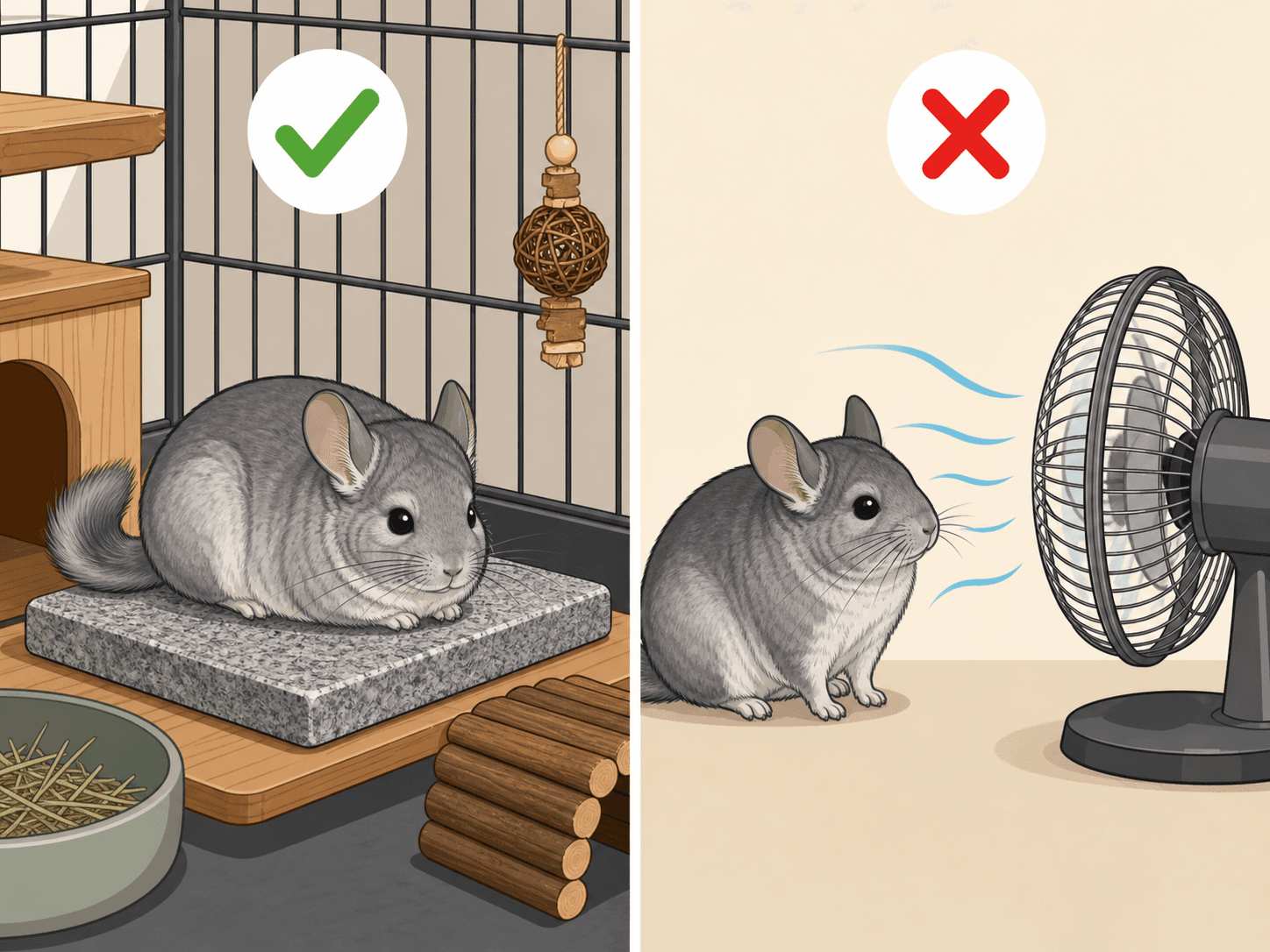
Pick the chinchilla's room before you pick the cage. A shaded spare room with reliable air-conditioning is a different welfare plan from a bright balcony corner, a warm service yard, or a study that heats up after lunch.
The recognized comfort zone is narrow, and tropical room temperatures sit above it for much of the day. The standards below come from veterinary and welfare bodies; your exotic vet adjusts for the individual animal, its age, and its coat.
| Climate target | Recognized standard | Source |
|---|---|---|
| Comfortable room temperature | 10–20 °C (50–68 °F) | Pender Veterinary Centre |
| Use air-conditioning above | 26 °C (80 °F) | MedVet |
| Heat-stroke risk rises above | ~28 °C (82 °F) | Pender Veterinary Centre |
| Can be deadly above | 30 °C (86 °F) | PDSA |
| Relative humidity ceiling | below 50% | Pender Veterinary Centre |
In much of the region, a typical living room sits in the upper 20s to low 30s Celsius with humidity well above 50% — so "near a fan" is not the same as a safe environment. A fan may move hot, humid air around; it does not make dense chinchilla fur cope with tropical heat. Humidity matters as much as the thermometer: above roughly 50% relative humidity, dense fur retains moisture, which raises coat-matting and skin-disease risk, so a cool but muggy room is still not a safe room.
For many apartment owners, the practical setup looks less like a display cage and more like a small climate routine: curtains drawn before the room heats up, air-con running before the afternoon peak, good ventilation without direct draught, and a backup plan for power cuts or long days away from home.
Then Build The Cage
Once the room can stay cool and dry, the cage matters. Choose a ventilated, chew-resistant enclosure with enough space for proper housing and solid resting surfaces. Avoid plastic items that can be chewed and swallowed.
Bigger is always better for this active, jumping species, but recognized minimums for a single adult give you a floor to build from. Different welfare and veterinary bodies frame the minimum differently, so treat the largest figure your space allows as the real target.
| Housing standard | Recognized minimum (single adult) | Source |
|---|---|---|
| Cage footprint / height | at least 3 × 3 × 2 ft (~91 × 91 × 61 cm) | Pender Veterinary Centre |
| Cage footprint / height (alt) | at least 80 × 50 × 80 cm (L × D × H) | MedVet |
| Tall enclosure target | at least 2 m high × 2 m wide × 1 m deep | PDSA |
| Wire mesh / bar spacing | 15 × 15 mm welded mesh | Pender Veterinary Centre |
| Max uninterrupted fall height | no drop greater than 60 cm | RSPCA |
Do not let cage styling distract from the basics. A tidy condo cage with unsafe materials, poor airflow, or a warm location is still a bad setup. Hay, water, safe chewing material, and solid platforms do more useful work than cute accessories.
The diet should be built on good-quality grass hay, with only a limited ration of chinchilla-appropriate pellets. The recognized baseline is that grass hay makes up the large majority of daily intake, with pellets as a small top-up rather than the main course.
| Diet standard | Recognized proportion | Source |
|---|---|---|
| Grass hay (timothy, orchard, meadow, oat) | 75–80% of the diet | Pender Veterinary Centre |
| Grass hay, alternative baseline | at least 70% of the diet | Oxbow Animal Health |
| Pellets | small daily ration, offered free-choice hay alongside | Pender Veterinary Centre |
Sugary snacks should not become the daily language of affection. If the food bowl keeps emptying but the hay rack barely moves, that is a husbandry problem to discuss with an exotic vet.
Dust Baths Are Coat Care, Not Climate Control
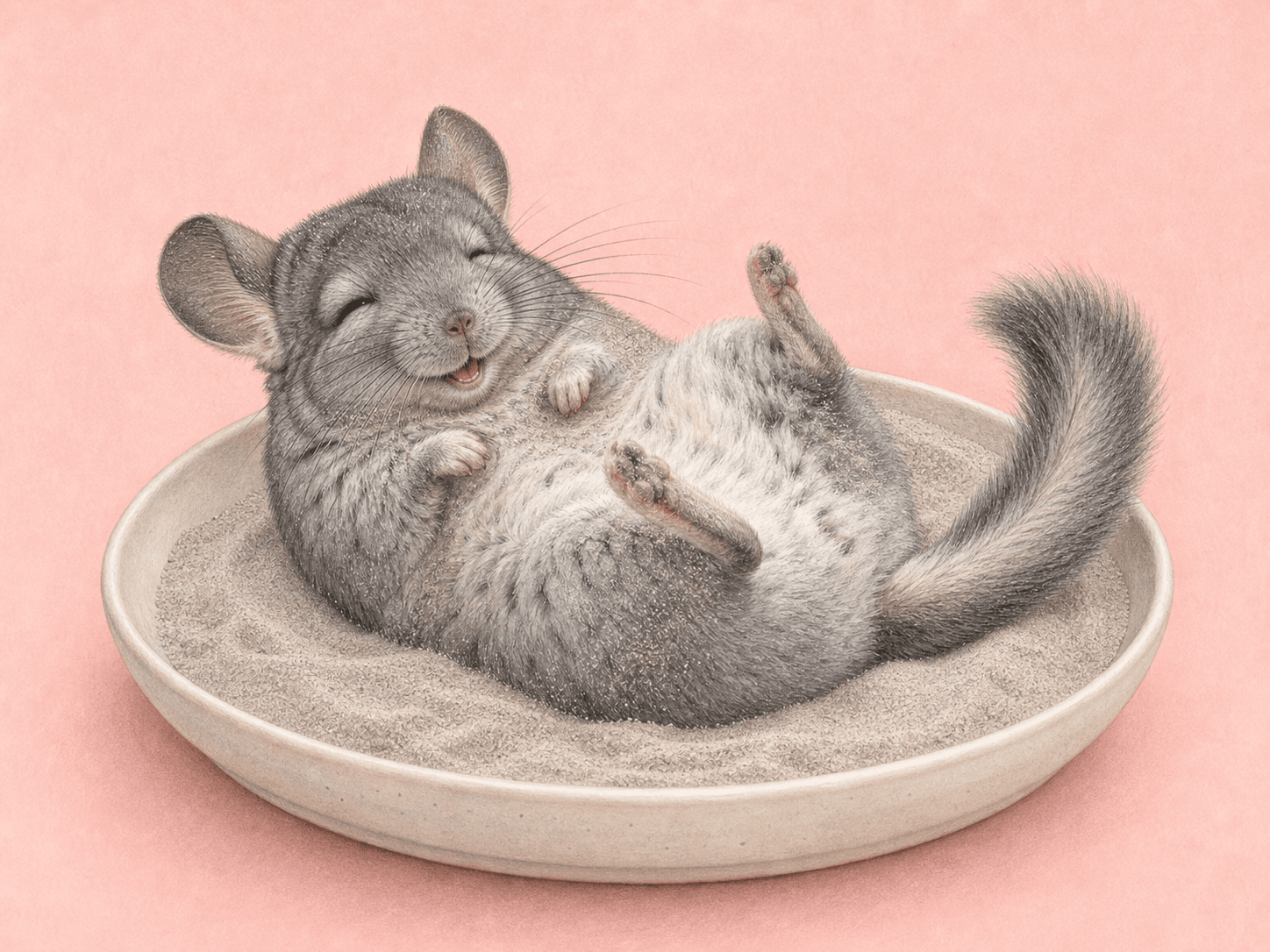
Dust baths help coat condition, but they do not replace humidity control. Offer dust baths as coat care, then remove the bath so excess dust does not irritate eyes, skin, or breathing.
In humid kitchens or service yards, even stored dust and hay can pick up moisture. Keep supplies dry, sealed, and away from splashy sinks, wet-market vegetables, laundry humidity, and floor areas that stay damp after mopping. If the coat starts looking clumpy or the skin looks irritated, do not keep adding more dust and hoping it sorts itself out.
Daily Checks That Catch Trouble Early
Make the daily check boring and repeatable. Look at the room first: temperature, humidity if you track it, airflow, and whether the cage has shifted into sun. Then check hay, water, droppings, appetite, breathing, and behaviour.
Reduced appetite, no fecal pellets, diarrhea, bloating, pain, or lethargy can point to gastrointestinal disease or stasis. Chinchillas hide illness well, so "wait and see" is a poor plan when food intake or droppings change.
Be especially alert after a warmer room, poor ventilation, high humidity, a dust-bath change, a new pellet, or chewed cage material. Those details may sound small at home, but they help the clinic understand what changed.
Heat Signs Need Urgent Help
Red ears, drooling, rapid breathing, weakness, or collapse are heat-emergency signs. Move the chinchilla into a cool environment and arrange urgent exotic-veterinary transport. Do not dunk the chinchilla in cold water.
If your chinchilla has had heat exposure and shows red ears, drooling, rapid breathing, weakness, or collapse, call an exotic vet now. Move the cage or carrier into a cool environment while you arrange urgent transport. Do not use sudden cold-water immersion.
What To Bring To The Vet Conversation
Bring a simple record, not a perfect essay: room temperature, humidity if you track it, appetite, droppings, breathing, behaviour, diet, dust-bath routine, and photos of the cage setup.
Before you need it, save the nearest exotic-vet contact and check how you would transport the carrier in a cool way. A chinchilla emergency is not the moment to discover that the clinic is closed, the room thermometer has no batteries, and the only carrier is stored on a hot balcony.
— Manja