
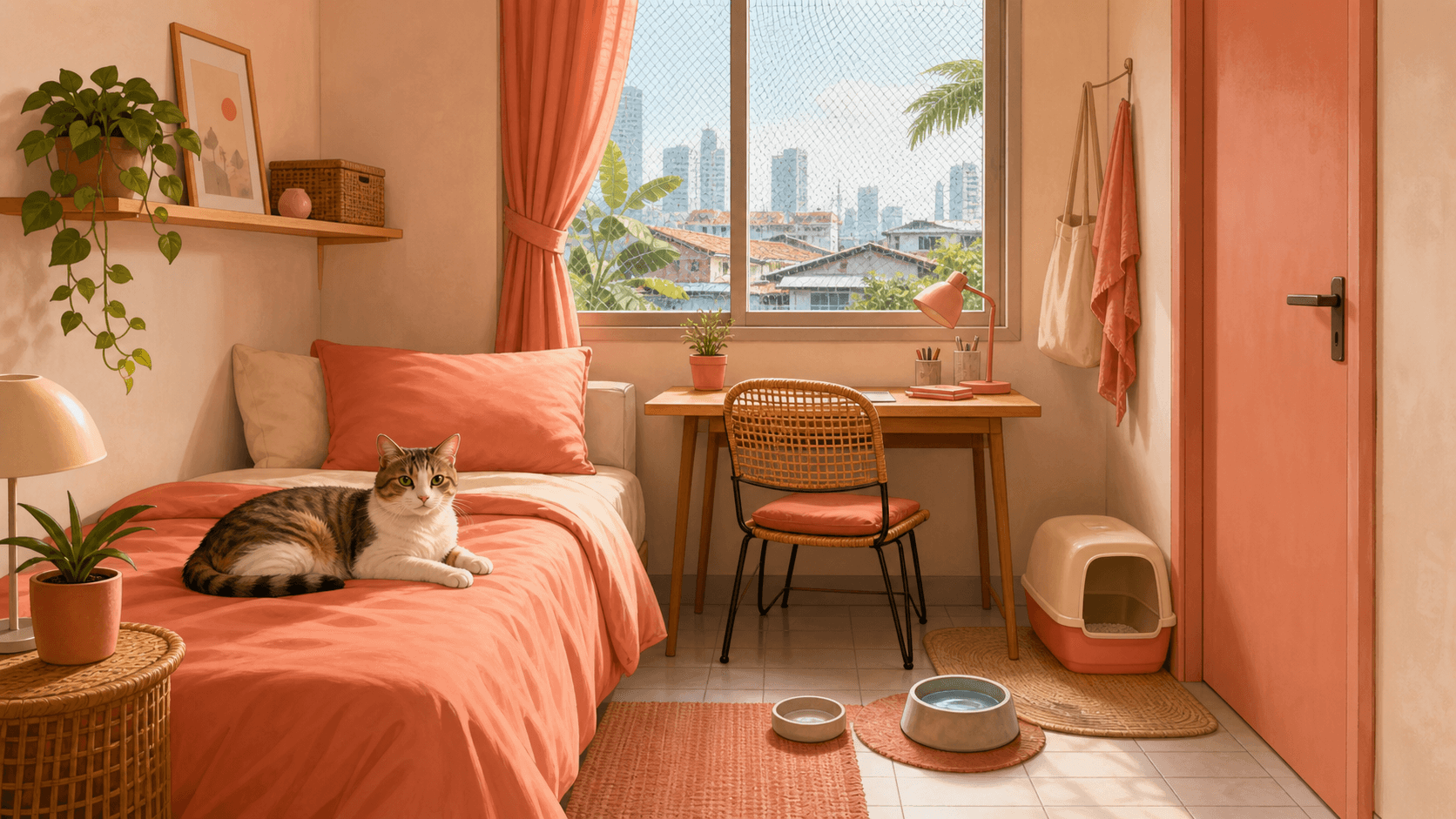
A cat can live calmly in a Jakarta boarding room only if the humans agree on the room rules before the cat arrives. Start with permission, litter, door control, and a clear emergency contact. Use this guide to prepare the house agreement and vet conversation, not to diagnose your cat at home.
Get permission before the cat arrives
Shared housing fails quietly first. Someone dislikes the smell. Someone leaves the door open. Someone says the landowner never agreed.
For Jakarta kos-kosan or coliving, get permission from both housemates and the landowner before adoption. A Jakarta coliving guide frames that step as part of the adoption checklist, after researching the animal and before bringing the pet home (Flokq Coliving Jakarta Blog).
Write it down in plain language. Not legal drama. A short chat message is better than a vague hallway promise.
| Agreement item | What to settle before adoption |
|---|---|
| Permission | Housemates and landowner agree to the cat living there |
| Room access | Who may enter the room, and when |
| Door habits | No open-door chatting while the cat is loose |
| Litter location | Hidden or designated spot that housemates can accept |
| Emergency contact | Who gets called if the cat escapes or looks unwell |
Jakarta’s pet-friendly housing scene is mixed. Reports describe pets in high-rise apartments and budget-friendly kos-kosan boarding houses, with neighbours shaping whether daily life feels easy or tense (Asia News Network). That is the real lesson. The lease matters, but the next-door person matters too.
Build the room around n+1 resources
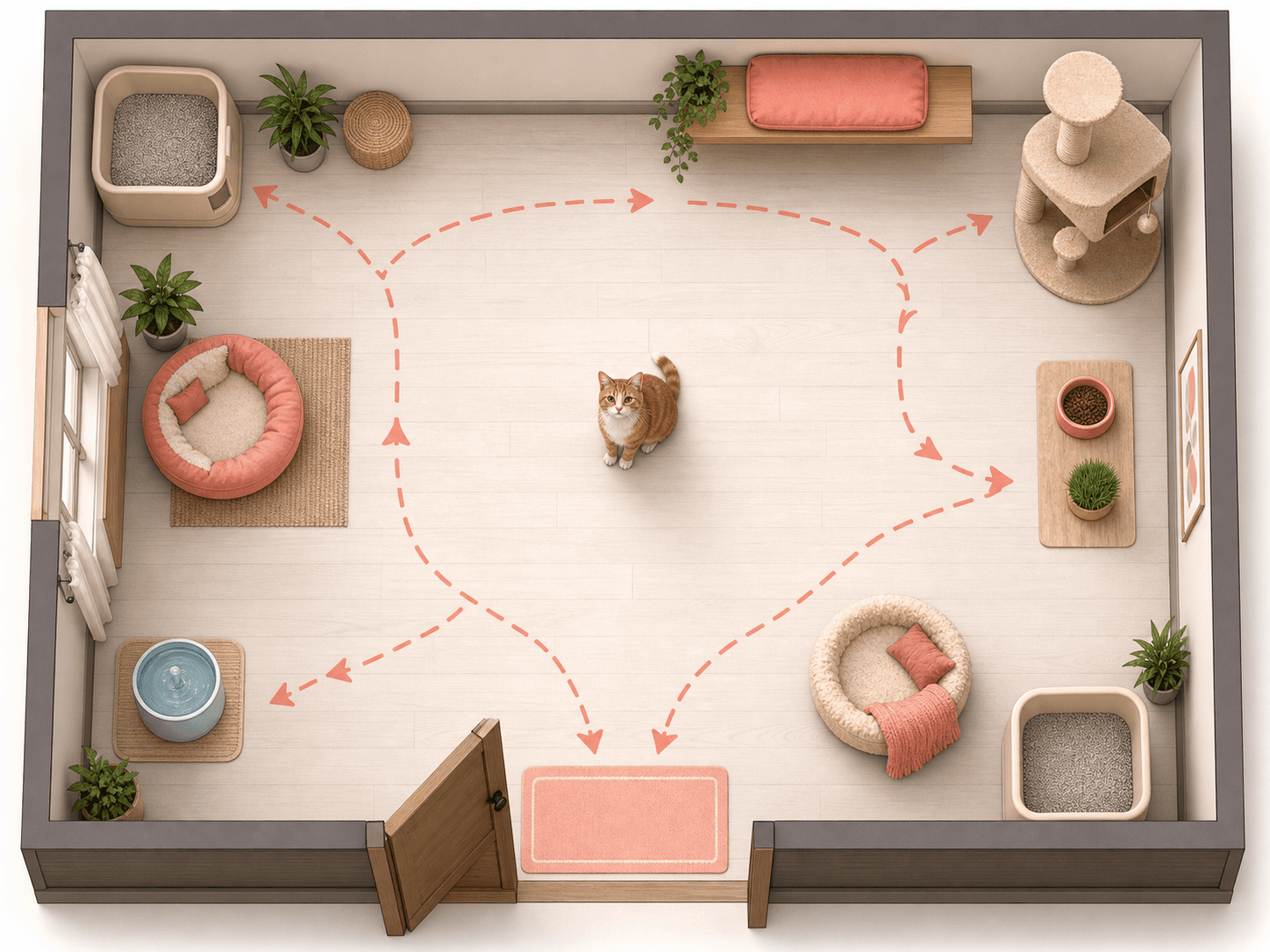
The minimum plan is not “one cat, one bowl, one box, done.” Use the n+1 rule: one extra litter box, food bowl, water bowl, and resting area beyond the number of cats. AVS gives this as a way to reduce competition between cats, especially when they are not closely bonded (AVS cat care).
For one boarding-house cat, that means two litter options if space allows, two water points, and more than one place to rest. In a small room, “extra” does not need to be fancy. It needs to be reachable, clean, and not trapped beside a noisy doorway.
| Number of cats | Minimum resource plan |
|---|---|
| 1 cat | 2 litter boxes, 2 food bowls, 2 water bowls, 2 resting areas |
| 2 cats | 3 litter boxes, 3 food bowls, 3 water bowls, 3 resting areas |
Singapore’s HDB rules are not Jakarta law, but they are a useful dense-living benchmark for regional owners. AVS allows up to two cats in an HDB residential unit, alongside one approved-breed dog (AVS cat ownership limits). The practical point is modest: compact housing needs clear limits and enough resources.
Put litter where humans will keep it clean
Litter placement is a housemate issue, not only a cat issue. If the box is too public, people complain. If it is too hidden, the owner forgets it.
Singapore boarding conditions give a useful welfare baseline for shared housing: bedding and litter trays provided for animals must be kept clean and made from appropriate material, with examples including commercial cat litter, sand, or shredded paper (AVS boarding conditions PDF). Do not invent a scoop schedule if your house agreement has no source-backed routine. Instead, agree on the visible standard: the tray stays clean, the material suits cats, and the location does not punish everyone else in the home.
Jakarta cat-facing venues show one practical model. A local cat cafe guide says litter boxes may be placed in hidden, designated areas to support hygiene and guest comfort (Ashley Hotel Group). A boarding room can copy the idea without copying the cafe. Choose one accepted spot. Keep cleaning supplies beside it. Make it boring.
Treat doors like the main risk point
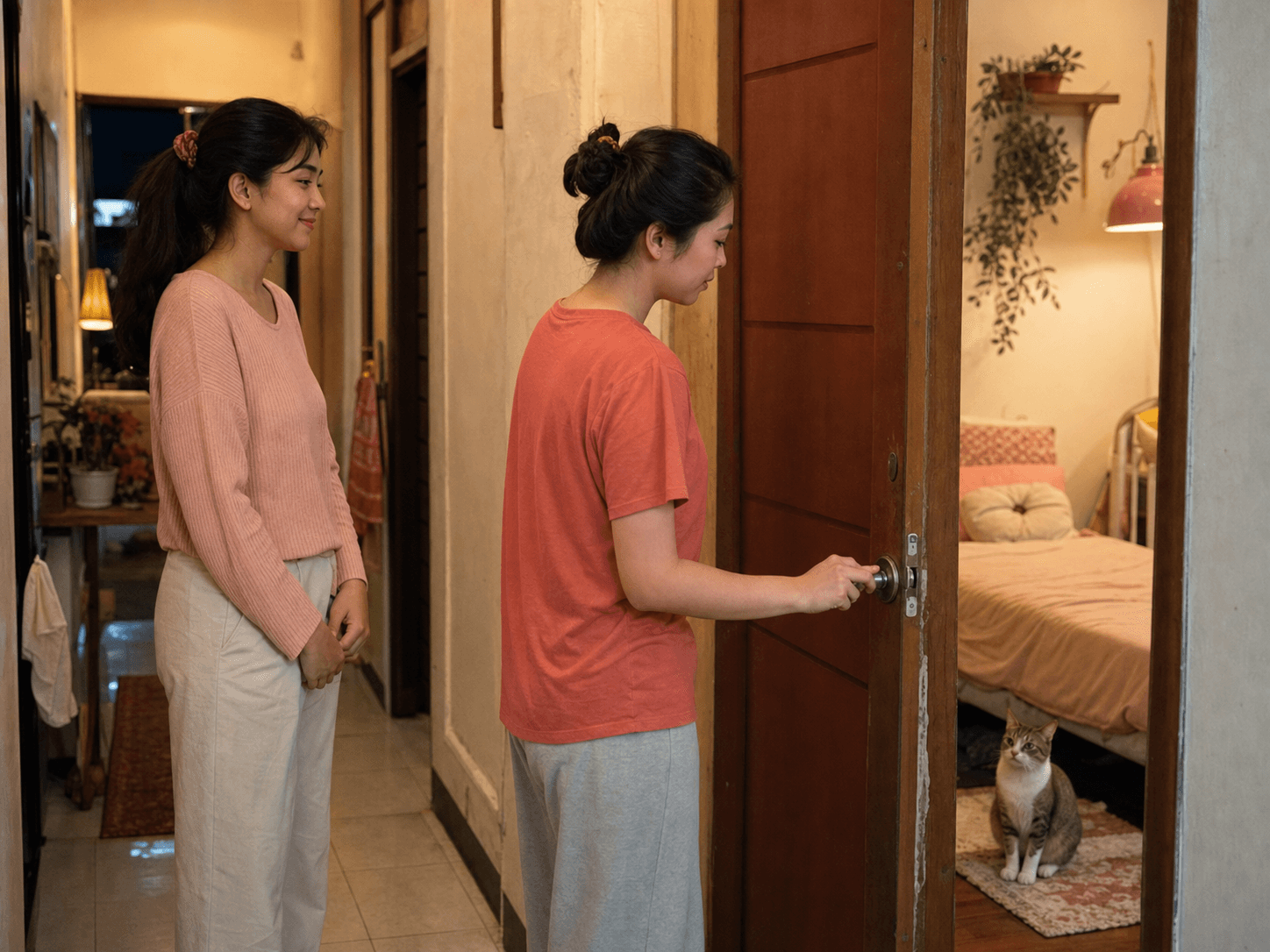
A boarding-house cat does not need a dramatic escape plan. It needs fewer open doors.
The source bundle does not give an exact Jakarta door-control setup, so do not pretend there is one perfect product. The agreement should focus on behaviour: knock first, wait before opening, close the room door fully, and do not let visitors prop it open.
This is also where housemates need a simple action chart. If the cat gets out, they should know who to call and where to look first. If the cat is injured or unwell, Jakarta Greater Area rescue guidance says to take the cat directly to an animal clinic, veterinarian, animal health center, or nearest Animal Husbandry Department for examination and first aid (Cat Rescue FAQ).
| Situation | Owner action |
|---|---|
| Cat is missing from the room | Close nearby exits, message housemates, search agreed hiding spots |
| Cat is injured or looks unwell | Go to an animal clinic, veterinarian, animal health center, or Animal Husbandry Department |
| Urinary or breathing signs appear | Seek urgent veterinary care |
| Sitter claims safety features | Verify the setup, not only the listing text |
For urgent planning, Jakarta pet-service listings describe 24/7 emergency veterinary care and flag frequent urination, straining, blood in urine, coughing, difficulty breathing, appetite loss, fever, and lethargy as warning signs (Pet Care Indonesia).
What changed (and why)
Older boarding-house advice often started with “find a pet-friendly room.” That is not enough.
The better first step is conflict prevention. Get permission from housemates and the landowner. Set the litter standard. Use n+1 resources. Write down the door rule. Keep the emergency plan somewhere visible.
Commercial boarding listings in Central Jakarta may advertise cage-free home environments, sitter ID checks, payment protection, insurance, customer support, and photo or video updates (PetBacker Central Jakarta). Treat those as features to verify, not proof that the cat will be comfortable.
Jakarta also has cat-specific care businesses. One local guide describes Meeow House in Cempaka Putih as a cats-only animal care center offering care services, grooming, vaccinations, and cat mating services (Alinear Indonesia). Useful, yes. Still, the daily peace is won inside the room.
Tonight, write the housemate agreement in five lines: permission, litter spot, door rule, emergency contact, and who pays for what. Small thing, done before the cat arrives.
— Manja