
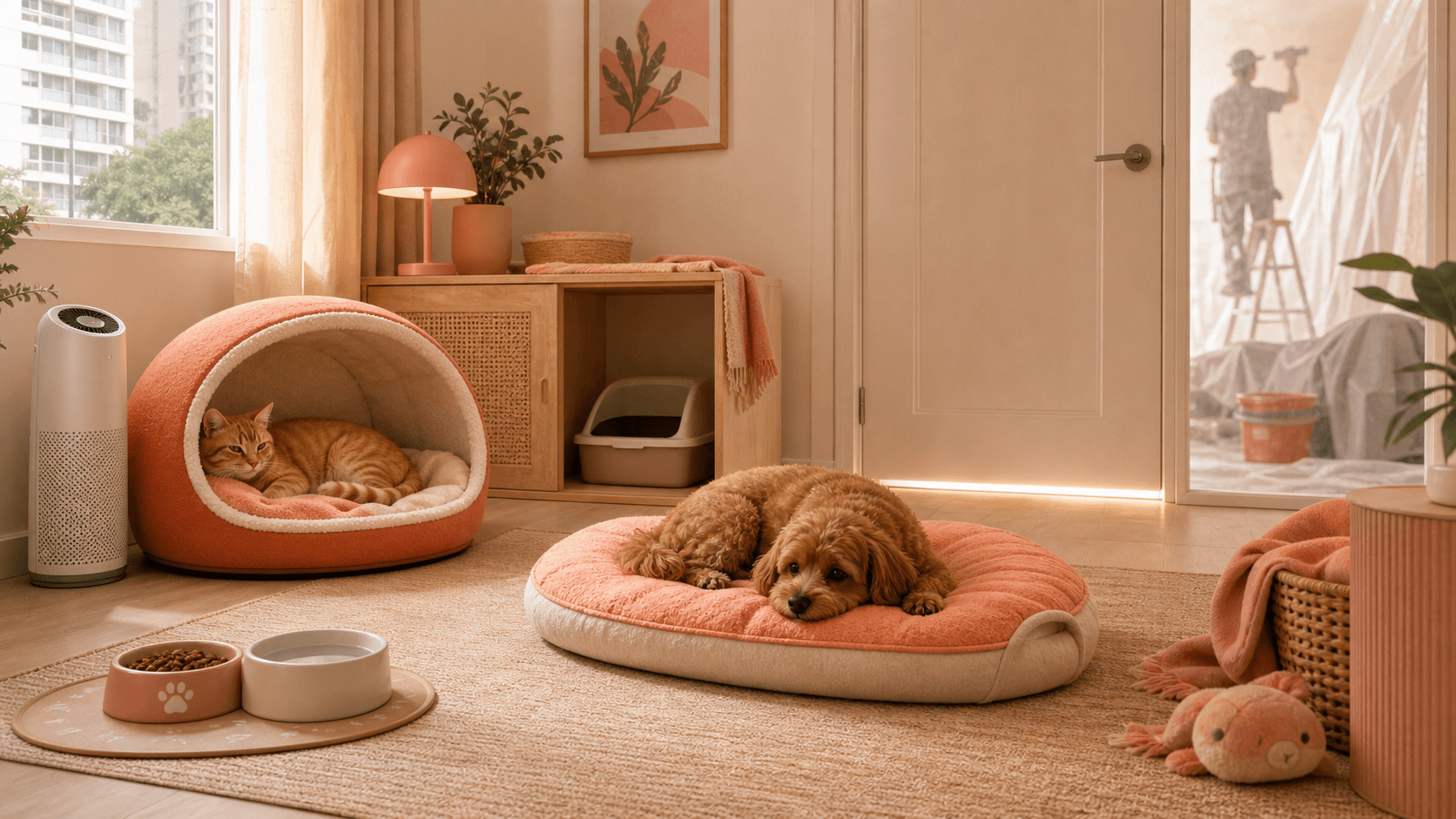
A renovation plan for Milo the cat or Kopi the dog starts with one pet-only room, two door barriers, and a boring daily routine.
Use this to prepare for a vet conversation if coughing, breathing effort, appetite changes, or stress behaviour appears, not to diagnose your pet at home. The owner job is simpler: keep the pet away from open doors, tools, wet paint, adhesive, dust, and unfamiliar workers while the home is noisy and half-open. The room is not an afterthought. It is the renovation base camp.
Set up the pet-only room before the first worker arrives
Choose the room before active works start, then make it familiar. The ASPCA home-improvement guidance advises keeping pets away from renovation zones, including paints, solvents, construction materials, tools, and open exits. That means “I’ll carry the cat when the contractor comes” is not a plan. A closed, prepared room is.
For cats, think like the home suddenly changed shape. International Cat Care recommends one secure room with familiar resources and hiding places when the home environment changes. Put food, water, litter, bedding, hiding spaces, and familiar scent items in before drilling starts. If access changes abruptly, some cats may hide, vocalise, miss the litter tray, or eat less.
For dogs, do not make the crate or room appear only on the worst day. The AKC describes crate training as gradual and positive, associated with safety and comfort rather than punishment. Start the routine before the noisiest work begins. Use familiar bedding, water, safe enrichment, and planned toilet breaks.
| Pet | Temporary-room basics | Watch for |
|---|---|---|
| Cat | Food, water, litter, bedding, hiding space, familiar scent items | Hiding, vocalising, inappropriate elimination, appetite change |
| Dog | Familiar bedding, water, safe enrichment, positive room or crate practice | Distress during confinement, missed toilet breaks, noise fear |
Keep the room boring and predictable. Boring is good here. Boring means your pet is not rehearsing escape, panic, or paint-tasting.
Control dust and fumes before they reach the pet
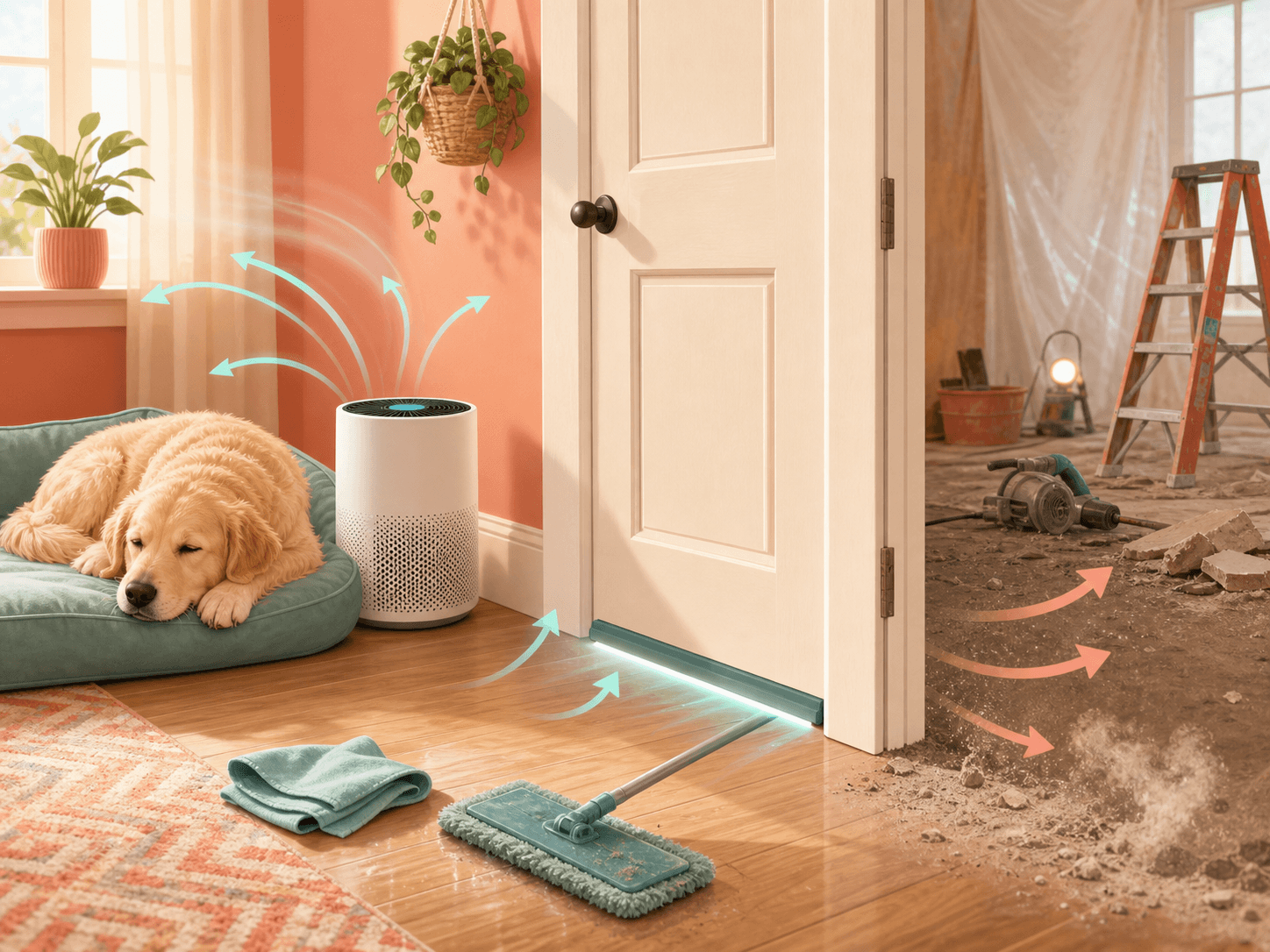
Construction dust travels. The EPA explains that indoor particulate matter includes particles small enough to be inhaled, and that renovation activities can be a source of indoor particles (Indoor Particulate Matter). A shut door helps. It is not magic.
Use source control first. Keep pets out of the work zone. Seal door gaps where practical. Wet-clean hard surfaces instead of sweeping dust into the air. If you use a portable air cleaner, choose one with an appropriate filter for particles, because the EPA notes that suitable portable air cleaners can reduce indoor particles while source control and ventilation remain central (Guide to Air Cleaners in the Home).
Do not try to “freshen” renovation air with scented candles, incense, or air fresheners. They do not remove renovation dust. They can add more irritants to a room already dealing with particles, odour, and stress.
Paints, solvents, adhesives, sealants, and pest-control products belong outside pet areas. Pet Poison Helpline warns that pets may be exposed by licking, inhaling, or walking through paint products, and advises keeping animals away until products are dry and fumes have cleared (Paint and Pets). Follow the product label for curing and ventilation. If the label says the product needs time, your pet does not get a shortcut.
| Hazard | Better owner action | Avoid |
|---|---|---|
| Construction dust | HEPA filtration, wet-cleaning, door-gap sealing, airflow isolation | Sweeping dry dust near the pet room |
| Paint or adhesive | Store away from pets until dry, cured, and ventilated by label | Letting pets walk through wet work areas |
| Strong odour | Source control and ventilation | Candles, incense, or air fresheners as a fix |
What changed, and why
Older home-renovation advice often treated pets as one more item to move around the flat. That misses the real risk. Renovation changes the whole home system: doors stay open, strangers move in and out, drilling spikes without warning, dust travels, and wet materials sit where curious noses can reach.
So the recommendation changes from “keep an eye on your pet” to “design the home so your pet cannot get involved.” That means one secure room. Two barriers between the pet and exterior-door traffic. Dust control before the pet coughs. Noise planning before the pet panics.
Singapore, Malaysia, and Indonesia homes also add a practical layer: heat, humidity, and compact apartment layouts. Singapore is warm and humid year-round, according to NEA’s climate summary (Climate of Singapore). A closed pet room still needs water, ventilation, and temperature control. Do not shut a cat or dog in an unventilated balcony, service yard, or room where air-conditioning or fans are off because works are happening.
In Malaysia and Indonesia homes, damp rooms, covered drains, and wet construction materials can worsen odour and mould risk. Malaysia’s MyHealth portal notes that mould grows in damp environments and can affect respiratory health, especially for sensitive individuals (Mould). Keep the pet room dry, easy to clean, and away from wet works where possible.
Reduce noise before your pet has to cope with it
Noise control starts before the hammering. Renovation drilling, tile cutting, and repeated knocks can exceed normal household sound levels. Move pets to the room furthest from works. Close curtains. Add bedding. Use steady white noise if your pet tolerates it. Check in when safe, but do not force a hiding cat out “to comfort it.”
The AVMA describes noise aversion in dogs as a welfare issue and recommends planning, safe spaces, and professional advice for severe fear responses (Noise Aversion in Dogs). International Cat Care gives similar logic for loud events: keep cats indoors, provide hiding places, reduce outside noise, and avoid forcing cats out of hiding.
For Singapore HDB homes, plan around official renovation timing rules. HDB publishes renovation timing restrictions, including limits on noisy renovation works and days when noisy works are not allowed, such as Sundays and public holidays (Renovation Timing). Use those predictable windows to schedule confinement, daycare, or a friend’s place.
Treat doors as a safety system
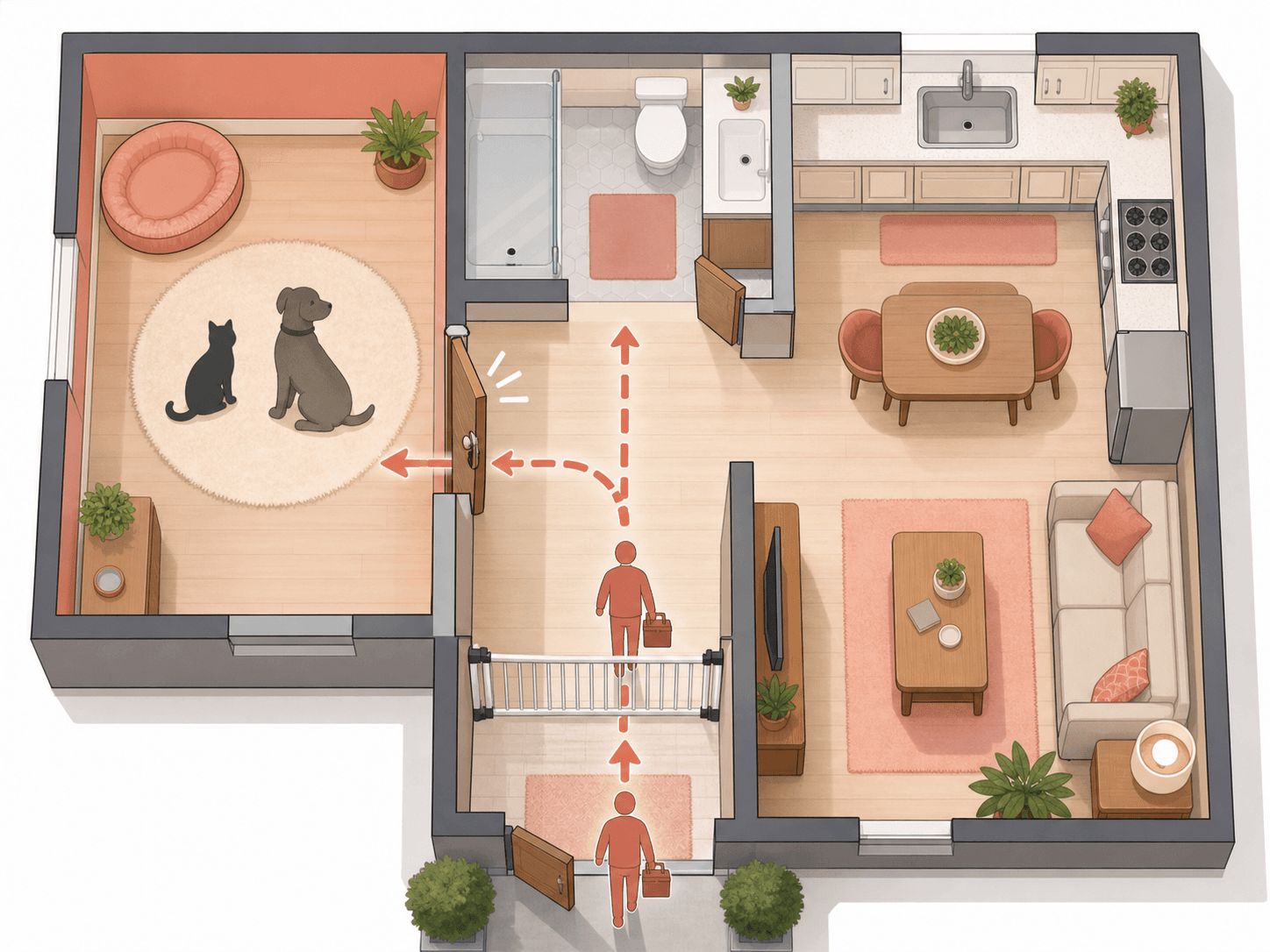
Door management is not admin. It is escape prevention. Contractors may move through exterior doors while carrying materials, and a frightened cat or dog can slip through a gap that looked too small five seconds earlier.
Before works begin, check visible ID and microchip details. The AVMA explains that microchips help reunite lost pets with families, and that registration details must stay updated (Microchips Reunite Pets with Families). The RSPCA also highlights current contact information as an important safeguard if pets become lost (Microchipping pets).
Aim for at least two barriers between your pet and exterior-door traffic. A closed pet-room door plus the main door is the minimum shape. If the pet room opens near the main door, add a gate, crate, or another closed internal door where practical. Tell contractors which room is off-limits before they start.
| Situation | Monitor | Call | Go now |
|---|---|---|---|
| Mild hiding during noise | Pet stays in safe room and eats later | Hiding continues with appetite change | Pet escapes or cannot be found |
| Dust exposure | Brief sneezing, no breathing effort | Coughing, wheezing, exercise intolerance | Obvious breathing difficulty |
| Paint or adhesive contact | No contact, product stored away | Licked or walked through wet material | Chemical burn signs or severe exposure concern |
Know when boarding is the kinder choice
Keeping your pet at home is not always the brave option. Sometimes the calmer choice is boarding, daycare, or a trusted friend’s home.
Choose relocation when works involve structural demolition, flooring removal, fumigation, strong solvent odours, repeated door opening, or a pet with severe noise phobia, respiratory disease, or escape history. Blue Cross notes that some dogs have severe fear responses to loud noises and may need careful management and professional support. ASPCA cat-care guidance also emphasises safe indoor environments and help when behaviour or health changes suggest stress or illness.
| Renovation condition | Safer default |
|---|---|
| Painting, solvents, adhesives, sealants, fumigation | Relocate until dry, cleared, and ventilated by label |
| Structural demolition or flooring removal | Relocate if dust and door traffic cannot be controlled |
| Severe noise phobia or escape history | Boarding, daycare, or trusted friend |
| Senior, flat-faced, heart, asthma, bronchitis, or respiratory patient | Lower exposure and faster escalation if coughing or breathing effort appears |
Tonight’s small thing: pick the room, put the resources in, update the microchip contact, and tell the contractor that one door stays closed.
— Manja